The Scout Group’s very first meeting took place at the Parish Church Hall, where they were then known as the 30th Midlothian (Davidson’s Mains) Scout Troop, and met on Tuesday evenings at 7.30 pm.
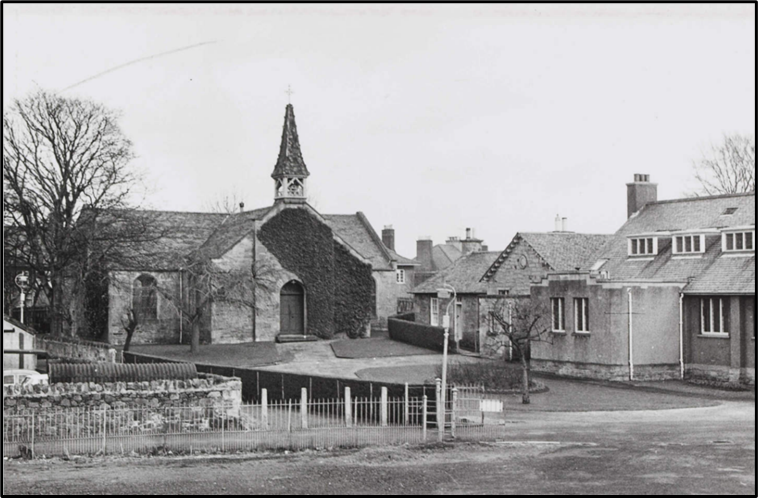
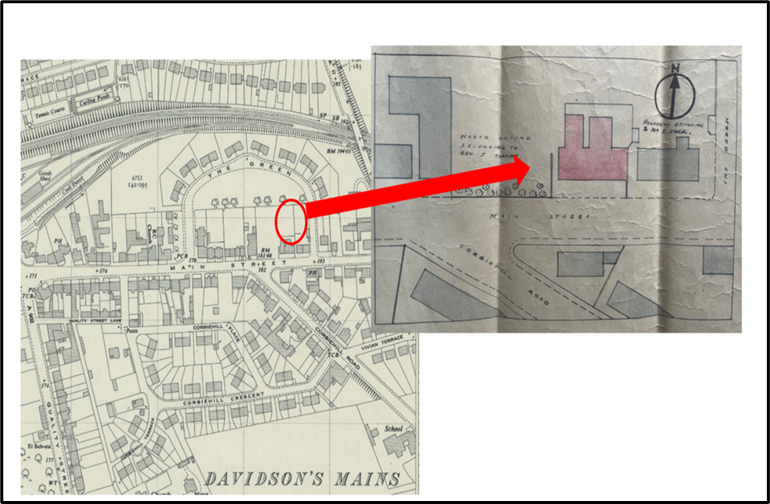
By the end of 1927, the Troop moved into its own Scout Hall on Main Street in Davidson’s Mains, on the site now occupied by St Margaret’s Catholic Church Hall. The new premises provided the Troop with a dedicated hall, kitchen, equipment room, and a small garden area to the rear.
“I would describe it as more like an old stone cottage-type building. We were upstairs, but there wasn’t a proper upstairs, so it was all on a level, and you went in the door, and I don’t know if it was a kitchen and an office on the left-hand side and then a hall on the right-hand side as you went in. It was quite an old stone-built building.”
John Blaikie (Cub, Scout & Venture Scout 1960s/1970s)
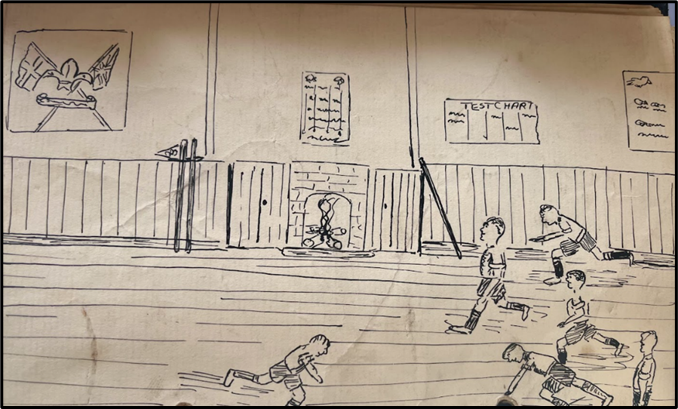
Over the coming few years, there was a marked development at the Troop’s headquarters. While it provided the 30th Midlothian with a dedicated space, the premises were not initially in the best condition.
The Group worked to extend and improve the facility, adding a small library - complete with a Scout appointed as librarian - which charged a one-penny overdue fee that contributed to the Troop's funds. Meanwhile, the Rovers converted the attic into a den, creating a comfortable space where members could relax and socialise.
“There was the old hall up opposite the chip shop, and it was two cottages that had been knocked together, and there was at least one meeting a week in there in the evenings.”
Douglas Davidson (Cub & Scout 1950s/1960s)
“Well, it was an old cottage really, but inside, gosh, I mean in this day and age, it was a health and safety nightmare. It was rickety, there was an attic with rickety stairs and of course, stuff all over the place. It had a nice big hall - everything was made of wood and stone and things like that – it was brilliant fun, and they had a garden out the back, which backed onto the Green, where sometimes they had bonfires in and things like that.”
Ian Davidson (Scout 1960s)
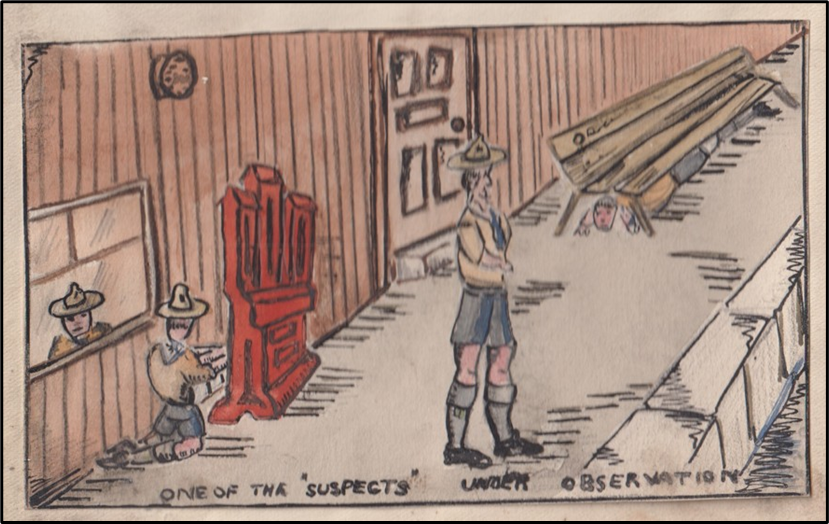
At the outbreak of the Second World War, the Civil Defence Messenger Service requisitioned the Scout Headquarters on Main Street, and although many Leaders and Rovers had been called up to serve in the War, the Group evenings continued to run.
In the years following the war, the Scout Hall had fallen into disrepair, prompting the Group Committee in 1945 to launch a series of fundraising campaigns to raise the money needed for essential repairs and redecoration.
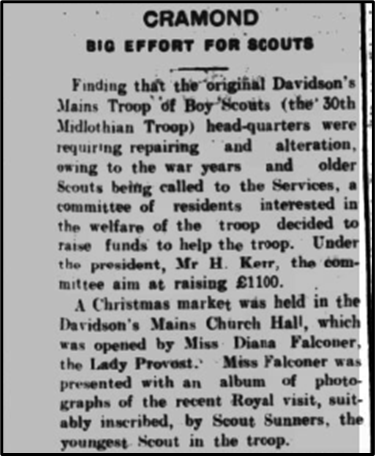
As the Scout Group was self-financed, fundraising remained essential throughout the 1950s. Members organised a wide range of events -including raffles, jumble sales, concerts, and whist drives - to support the running of the Group.
Another important source of income for the 30th Midlothian was hiring out the Scout Hall to local community groups, and for a period, it was also used by Davidson’s Mains Primary School as an early years classroom, a partnership that continued until 1957.
“It was up beside the Catholic Church, I don’t know if there’s still a chip shop there – there used to be a chip shop on the corner, and we were right across the road, and I think there was a Fine Fare, or supermarket, was the building next to us, but that was quite an old building...I remember it was the Scout Leaders who had an office down the stairs, and then the Pack leaders had a wee room upstairs – that was just a wee room, it was part of an attic”
John Blaikie (Cub, Scout & Venture Scout 1960s/1970s)
“There used to be a chip shop in D’Mains, which was behind where the Chinese restaurant was…the old chip shop was behind there, and then the Corby Cafe opened, and it was a ridiculous sixpence for a poke of chips - I wrote that down as an abiding memory - it was sixpence! When you were used to threepence, it was a fortune! But that's what we always did after we met, we’d go for a poke of chips with sixpence.”
Douglas Davidson (Cub & Scout 1950s/1960s)
“Just as you went in the door of the Scout Hall there was a loft and we had a ladder, and we had that set out with settees and chairs and a table and a kettle, I think, and after the group finished on a Friday night, which would be about 9ish probably, we’d go up there and be up there until about 11 and then go home...that was only about a five-minute walk home for me and occasionally we’d get a bag of chips or something – which was sixpence in those days...2 and a half pence!”
Peter Flanagan (Cub & Scout 1950s/1960s)
Another successful fundraising activity for the Troop would see the boys put on a series of annual concerts in their Scout Hall, which would go on to become a community highlight as they showcased their skills in performing skits and songs for a usually sold-out audience.
The popular performances were in the style of a Gang Show, which was in essence an amateur theatrical variety show where the cast was made up of members of the Scout Movement, mainly consisting of song, dance and short comedy sketches.
“There was a lot of talented people and older ones as Scouts...they had a skiffle band...with the old tea chest and everything and they were fantastic, they used to always appear at the Gang Show and these are the guys who used to write all the scripts for all the skits we did, everything was homemade and we used to spend a lot of time rehearsing them and everything and it really was the highlight of the village and it used to run from about half seven to about half nine, ten o’clock and we had songs and skits and various other bits and pieces…we sold tickets – it was a big fundraiser for us, and it would sell out very, very quickly, many the night we’ve had to try and squeeze extra chairs to let the people in course everybody was in it had their parents as well so obviously...there was the Scouts and the Cubs did a wee bit as well”
Peter Flanagan (Cub & Scout 1950s/1960s)
Towards the end of the 1960s, concerns were once again raised about the condition of the Scout Hall and in 1968, the Group applied to the Education Department for permission to construct a new hall, but the request was declined.
“That hall would have been condemned, it was really…kids would not be allowed in it from what my memory of the place would be, I’m sure it wasn’t as bad as that, but it just seemed like a really ramshackle place with bits of wood, and God knows what all over the place.”
Ian Davidson (Cub & Scout 1960s)
The following year, however, the Roman Catholic Church expressed interest in purchasing the existing building, likely due to its proximity to St Margaret’s Church next door.
The Group accepted the offer of £4,800, bringing to a close more than forty years of the 30th Midlothian Troop’s association with the old hall. Although their earlier application had been rejected, the Dean of Guild Court in Edinburgh approved a £5,000 grant in the spring of 1970 for the construction of a new clubhouse, giving the Group renewed hope for the future.
While searching for a new location for their Scout Hall within the locality, the group temporarily held Friday night Scout meetings at Craigmuir School in West Pilton, and occasionally at Muirhouse School alongside another Scout group. The Cubs, meanwhile, met at Davidson’s Mains Primary School.
However, their time without a permanent hall was short-lived; by the start of the autumn term, they had moved into their new Scout Hall on Quality Street Lane, which had previously served as the old Girl Guide Hut.
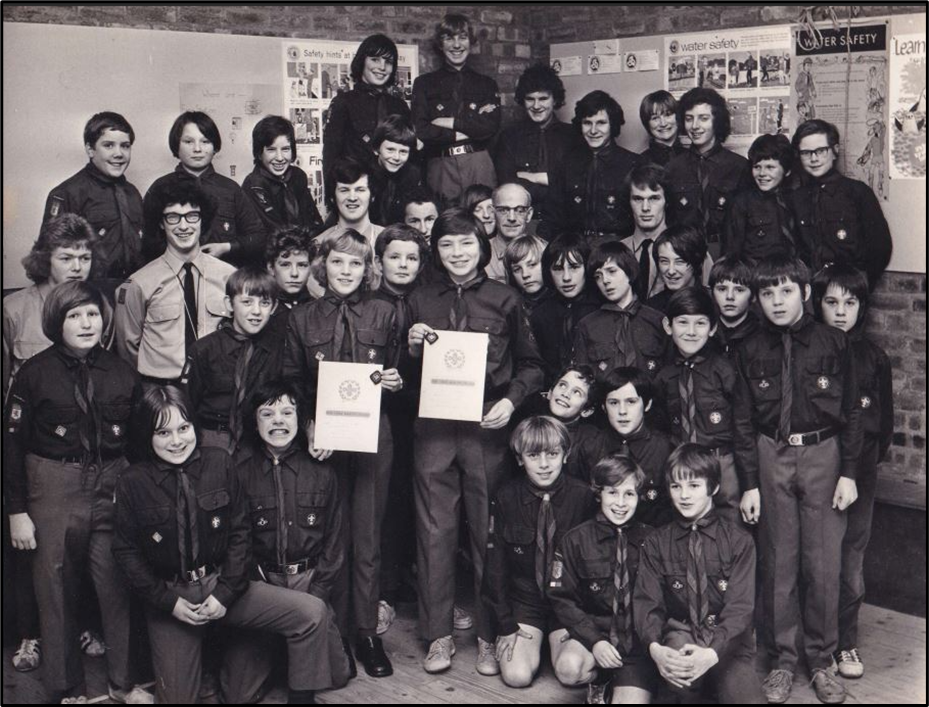
Their headquarters featured a spacious hall with brick walls and a wooden floor, complemented by a kit storage room, Scouter’s Room, kitchen, and bathroom - marking a significant improvement over their previous HQ.
“The Troop grew through the ‘70s, and I can’t quite remember when the split took place, but there were nights where we might have sixty or seventy Scouts in the hall bus plus eight or nine leaders, and it was becoming too unwieldy, too large.”
David Briggs (Scout 1970s/Leader 1980s)
Around 1972, another small Scout Troop was taking place at Holy Cross Church Hall in Davidson’s Mains, known as the 78th. However, with only two patrols and the departure of their leader, most of the boys - about twelve in total - joined the Troop now known as the 30th Inverleith Scout Group, which significantly increased its numbers at that time
“There was a troop at Holy Cross just along the road in Davidson’s Mains, but we only had two patrols, and the leader left, so we amalgamated with the 30th so we were at the 78th and two patrols came along and amalgamated with the 30th Inverleith, as we were called, and that was in 1972.”
David Briggs (Scout 1970s/Leader 1980s)
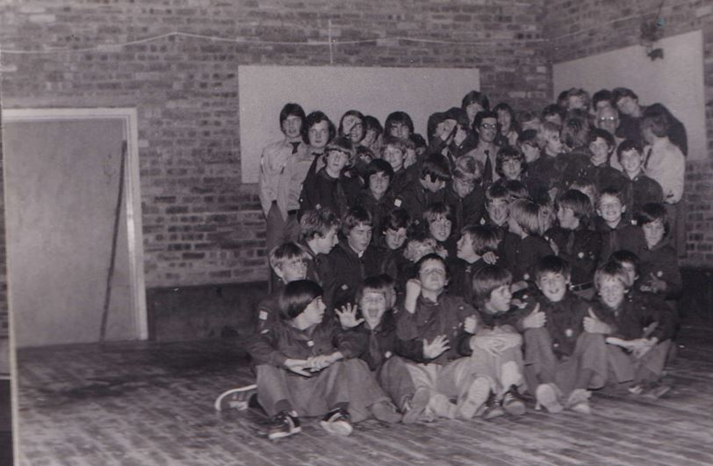
“I remember in the Scout Hall there were discs around the wall with the colour of that six. There were benches, like box benches, all the way round the hall, and there were maybe two sixes on one side and then at the top another two, and then at the other side another two, and you obviously sat in that area with your six...Each patrol had its own area in the hall and their own notice board as well. Each patrol had made like a crest or a coat of arms at some point along the line, whether it was just carving out of wood in the shape of the bird or a carving of the bird. So, they were on the walls as well, and you would go to that particular area."
Andrew Marshall (Cub, Scout & Venture Scout 1970s/1980s)
1974 saw the Troop celebrate its 50th Anniversary, with many of its old members attending an event in the new Scout Hall.
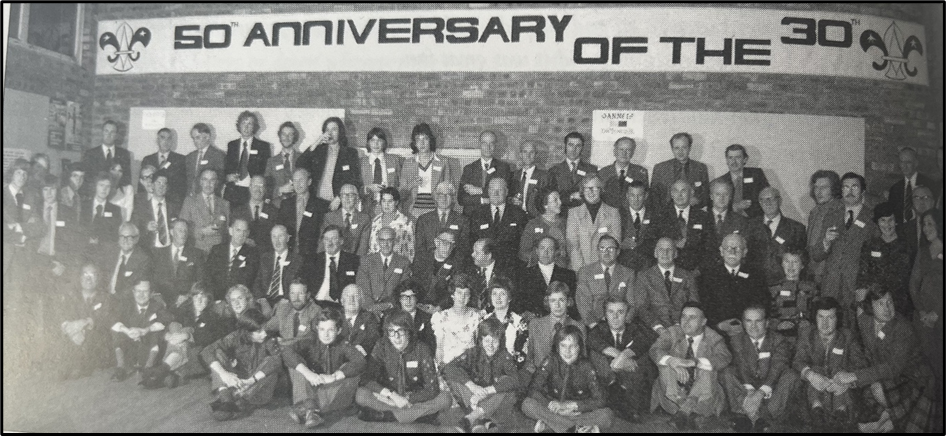
“What I strongly remember is that wooden benches ran the exterior of the hall, and they were sort of benches you could store things in. So, they had a lifting lid, and there would have been, I think, each patrol had its own locker or its own bench, as we had staffs and things, and they may have been kept in there...If you were running around playing football and misjudged it, you could bang against the edge of one of these things and regret it. And then I think it was fairly, I was going to say rustic, but that’s the wrong word, rudimentary, I think, it was a basic structure, and I remember there were one or two offices, a kitchen, much as there still is, I see. The area I mentioned we only went in once a year, was where all the camping and tent equipment was kept. We would go in when we came back from camp or were going to camp to retrieve that stuff, but it wasn’t routinely used.”
Eric (Cub, Scout & Venture Scout 1970s/1980s)
“I mean, this hall has changed. It’s a lot cleaner and, you know, more pristine because everything bounced off the wall. The walls, as I remember them, were brick, and you had the heaters and the lockers around the edge.”
Robert Armour (Scout 1970s, Venture Scout/Leader 1980s)
“It had enormous heavy storage heaters at the four corners of the hall that got a bit of a hammering when we were playing football or anything rough and tough…The hall, when it first opened, was just a main hall, and the offices…They then extended the hall to include the foyer, toilets and the storeroom to the left – that was in the early 70s, when there was just not enough room to store all the gear in the hall.”
James Allan (Scout 1970s, Venture Scout/Leader 1980s)
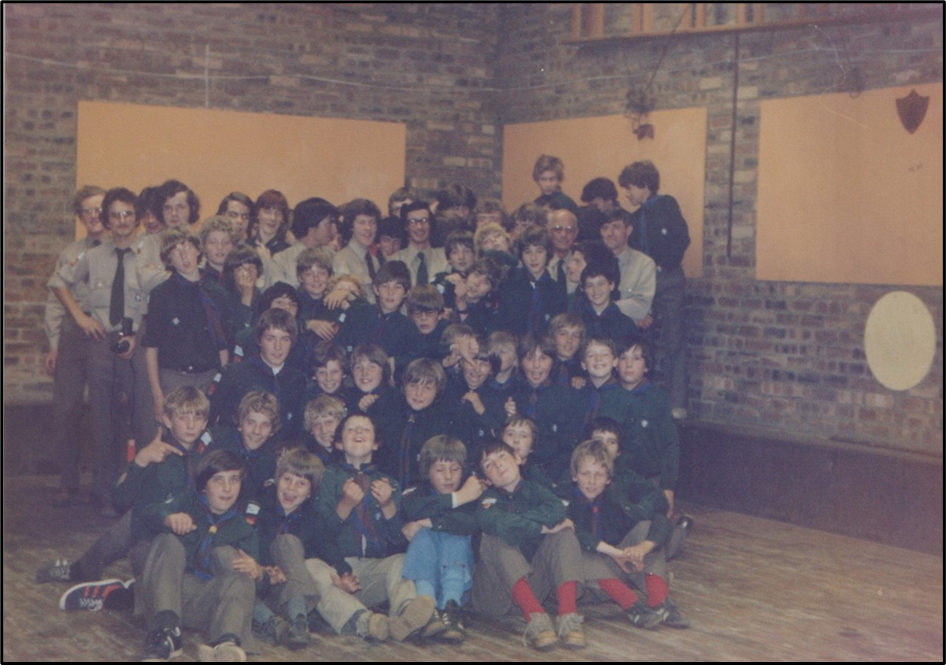
By the 1990s, the ageing Scout Hall, urgently needing modernisation, was another longstanding issue, and so fundraising became a major focus.
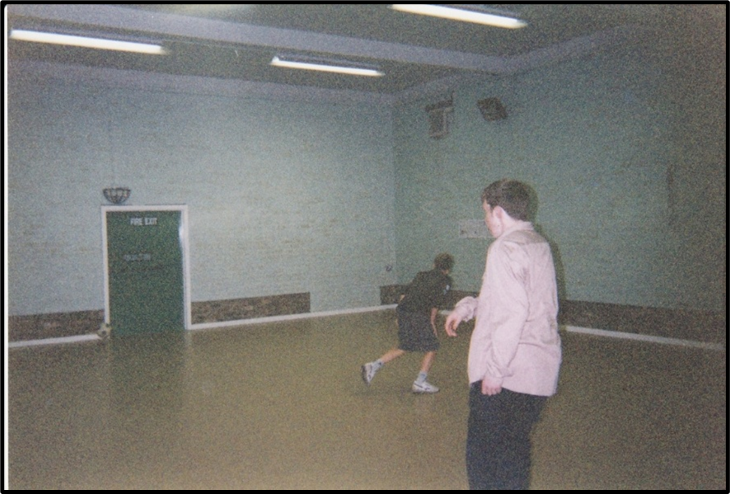
“One of the major accomplishments of the Committee when I was there for 2 years was the hall refurbishment. That was secured lottery funds to bring the hall up to the standard that you see today. I know you've, beautifully, kept it properly, in good order, but it was so dilapidated in the late 90s that it was virtually condemned.”
Ed Mackey (Committee member, Cub Leader, Scout Leader, & Explorer Leader 1990s/2000)
“The hall needed work done to it – it was in a sorry state…[work was needed] To get it into a state which was first of all, usable for a late 20th century youth organisation and secondly, to get it to a stage where it could possibly compete with the other halls in the area for lets, which would be a source of income.”
Paul Furbank (Committee Member 1990/2000s)
A major milestone came in 2001 when the Group secured £54,000 from the National Lottery for extensive renovations to the Scout Hall, including a new front extension with storage and meeting rooms. Edinburgh City Council contributed a further £4,700 to support accessibility improvements.
During construction, the Group met in local schools and church halls. The renovated building officially opened on Saturday, 26 May 2001, with Group President and District Representative Tom Woof unveiling the plaque. The event allowed parents, supporters, and former members to see the transformed hall and acknowledge the contributions that made the project possible.
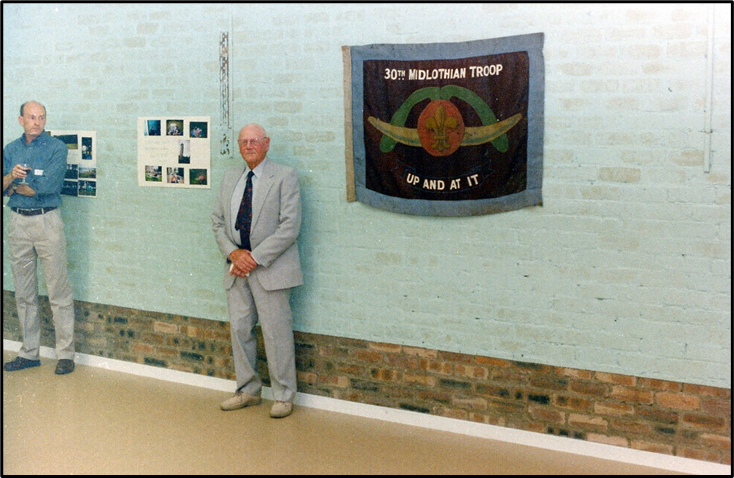
In more recent years, the Hall has benefited from a range of improvements, ensuring it remains a welcoming and inspiring space for all who pass through its doors.
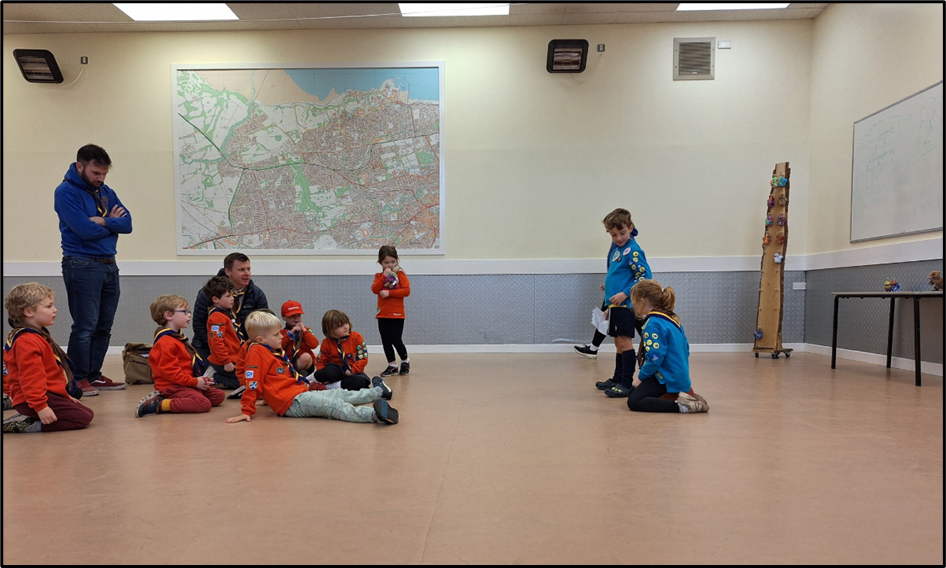
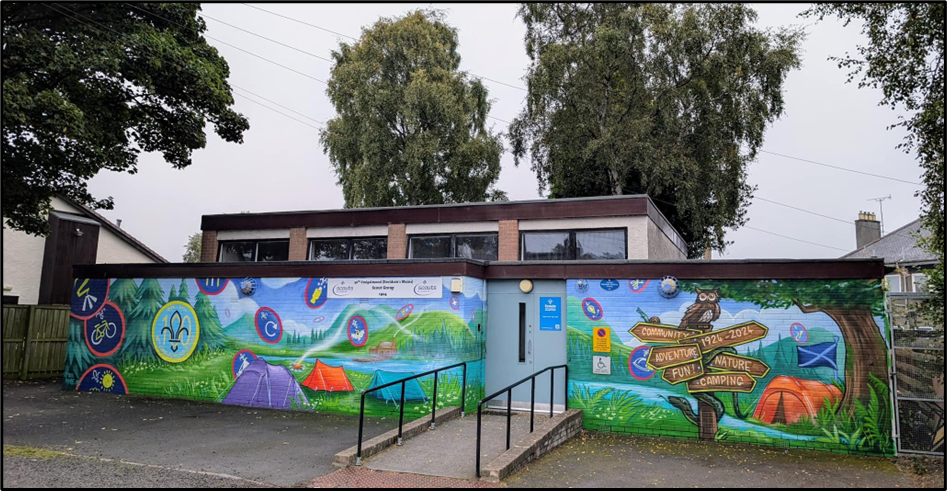
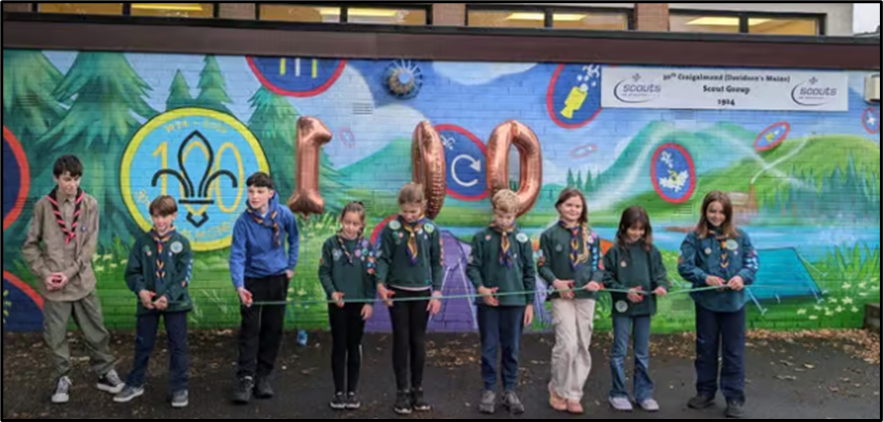
In 2024, as the Group celebrated our centenary, this legacy was beautifully captured in a striking mural designed by its young people and brought to life by Ross MacRae Art.
Over more than a hundred years, our group has grown, adapted, and flourished, shaped by generations of our members. Our Halls, both Old and New, have stood at the heart of this journey, a place where memories were made, skills were learned, and lifelong bonds were formed.