Oral histories

Aileen Thomson

Headshot placeholder with a necker

Aileen speaks about her role as District Commissioner for Pentland and Almond Valley, a position that has become known as District Team Leader in more recent years

Aileen-THOMSON.mp3
Audio file

0.33 - Where were you born, and where did you grow up?

“Well, I was born in Glasgow until I was nine, and then I went to England, to Hexham in Northumberland and stayed there until I'd done my degree and came back to Scotland.”

0.46 - Can you let me know what way you're involved with the 30th Craigalmond Scout Group and the years that this took place?

“I was District Commissioner of Pentland and Almond Valley when they decided to dissolve Pentland and Almond Valley, so the two groups at this end of it, Kirkliston and Queensferry, then became attached to Inverleith. I took over after Diane Ross retired, so I had a very small district of five and then ended up with a district of eight. I've been in that role for three years, I think, when the Region decided to merge Inverleith and Haymarket into Craigalmond. The 30th had been part of Inverleith and then, obviously, with the merger, stayed in Craigalmond. I did that role for three years, and then I gave up. I agreed to do it to get the two districts merged, but I said I wasn't prepared to take it further because there were fifteen groups in the District – it was a massive job.“

2.00 - What was your role as District Commissioner/ District Team Leader?

“ You are responsible for everything that goes on in the District. All the groups have Group Team Leaders. So, as District Team Leader, you are the line manager of the Group Team Leaders. And therefore, they're responsible, so you're responsible to ensure that there's proper training going on, there's proper safety going on…risk assessments and a decent program. And with it being a merger of two district districts, I had the problem, added problem, or added role of having to make sure these two groups and two districts merged and that all the groups got to know each other and did things. So, we had quite a lot of joint events to begin with.”

3.11 - Did you organise District Camps and similar events?

“I would be responsible for it. I didn't necessarily organise them because I would have a team to do that. I was obviously responsible for it and tended to be on the team but didn't necessarily take the lead. So yes.”

3.31 - The Interviewer asked about how many troops were in Craigalmond District when it merged, and a brief discussion was given.

4.20 - Our Troop was originally known as the 30th Midlothian, then the 30th Inverleith and now the 30th Craigalmond. Do you know why the Troop’s name changed over the years?

“The 30th was part of Midlothian, as you've rightly said; don't ask me why, I have no idea. It's easier to draw it, but that won't come up on the tape. So Edinburgh city - the city of Edinburgh have their own ones, and all the groups round about, so it must be from about the Gorebridge/Bonnyrigg, that sort of area; all the ones round the outside were Midlothian. So, you were the furthest one - you were the furthest into the city, but you still fell into it. That's why you've got a hut. Because when Midlothian gave up, the groups that had been Midlothian and were going into Edinburgh were given money from the Midlothian District and/or the Councils to get the run.”

5.34 - Can you tell us about some of the big events that took place at a District level?

“We did District Cub Camps, which was for all of the district Cubs, obviously at Bonally usually. We took part in the Area Centenary Camps - Millennium camp, which was run by Area out at Dalmeny Estate. So, at that point, Inverleith were still Inverleith, just, and they had a big contingent there. Because it was so big, it was hard to get a site to do things, so we had this, what we called - its working name was the Really Big Camp, we had it all planned, all organised, and we stuck by the name RBC because people liked it, so we carried on. Once the team had organised it and we were started to promote it, we had everyone signed up at Fordell, the only site big enough to take the whole District, and unfortunately, COVID came, and we didn't get to run it. It was to be the biggest camp ever held at Fordell, because we had over a thousand people signed up for it, and Fordell had ever only ever taken 750/800 people, so they were going to squeeze us in. Everything was planned; it was due for the first May holiday, and it just didn't happen. There is some talk to resurrect it at the moment, but I don't know whether it'll happen or not.”

7:42 – 8.34 - The Interviewer then asked if the Respondent was involved in the organising of any community action at a District level, to which she said no, as it was just too big to do that. However, many individual Scout Groups did so with District backing, such as beach and park cleans, park runs, groups joining together to fundraise (such as Haymarket and Corstorphine, who worked together at the annual Corstorphine Fair), community plant sales, etc.

8.35 - Did you ever attend any of the camps that the 30th Craigalmond were on?

“No, I didn't attend for the whole weekend. I endeavoured to make a visit. I tried to visit every camp that a group was running, but couldn't do it always; didn't always make it, but I did try. So yes, I visited, but I never stayed, I mean, I would stay at the District ones.”

9.06  - The Respondent then talks about District training weekends where the District Training Team would run residential training events for the leaders, of which she was a part.

9.45 - What do you think are the biggest benefits for Scouts to attend District events?

“A – just the size of them, just to see what it's like to have all these masses of young people working together and organising. To get to know other groups, to see the other groups - you know, because I mean this is a big group, you're self-sufficient, but there is small groups in the District as well who maybe only have one of each section, they need a lot of support from the District, so a District camp at that point is really good for them. And you learn new things because you know your leaders only know a certain amount, so if you go to another site, they'll know different things, so you do learn different things. Also, it's the usual number - you can then take on activities – because you could get Longcriag to come up with kayaking and things as part of the camp, which, as a section or a small group, you couldn't do. Being a small group, it's not an issue here, it never has been, but there is groups that do need that support.”

11.05 - The interview then moves on to talk about the National Scout Jambourees, to which usually someone from the 30th Craigalmond attends. The Respondent talks about attending the Millennium Jamboree that took place in Cheltenham, where Scouting started. She was part of the water activities team at that event. The District section that attended that Jamboree felt a little left out as most Jamborees take place abroad, so to rectify this, the section had their training camps abroad instead.

12.15 - The Respondent is then asked if she has ever been abroad on any District events, to which she says she hasn't as District Leader, but has been abroad with groups. The Interviewer asks her to share her most memorable experience, and the Respondent talks about going with the 21st South Queensferry group to Kenya. While there, they were involved in helping build a new church, visited schools and climbed Mount Kenya, where at the top she presented two Scouts with their Queen's Scout Award.

Some discussion is then given about what the Queen's Scout Award (now the King's Scout Award) entails and how it is the top award you can get in Scouts and can be taken up until the age of 25. The conversation then moves on to how the group was able to fundraise for such an event.

14.48 - Do you think Scouting has benefited your life or your personal growth, or your skills?

“All of these things. Yeah. Massively. Girls couldn't be in Scouts when I was the appropriate age, so I became a Scout Leader when I was 23. A Venture Scout Leader – Venture Scouts did exist then - Venture Scout Leader when I was 23. I went to visit my cousin for dinner, and in those days, you had to have both a male and a female leader, and their female leader was about to leave. And I had been a Guider…helped with Guides while I was at Uni and he conned me to come and see what it was like…and the rest is history… I'm still here. And I met my husband through Scouting, and most of my friends, if not still involved in Scouting, have been involved in Scouting. It happened just after I came to Edinburgh. I came here, I'd been in Dundee, I came here for a job with work, and so it was a way of getting friends, meeting people.”

16.02 - What are your thoughts on current Scouting, and do you think you'd change it in any way from how it was in the past?

“We can't really compare, I mean, it's over 40 years ago when I joined Scouting. The world was a different place; you can't really compare it. I think what they are doing now we're maybe a bit over safety conscious. I don't think we should be unsafe but i think we maybe be tie people down too much and I think it puts some people off. The training is much bigger, heavier. I mean, we did train, don't get me wrong we did training then back in these days as well. But I think the training is a bigger commitment now. In the past again there's only one level that was compulsory that you had, now there's a lot more of it today. Although, it's gone back again - there's less modules that we have to take.”

17.02 - Some discussion is then given to the training modules that leaders are currently required to take.

17.25 - Did any of your family members attend Scouting or recommend Scouting to you?

“My cousin recommended Scouting - to get into it. Since then, then, as I said I met my husband there, we have come up through [Scouts] We have three daughters, and all of them have been Scout leaders in various sections all the way through and one of them still is and the other one would love to be but she hasn't got the time. So yeah.”

17.55 - Do you have any other thoughts or memories you want to share about Scouting?

“I think it's an amazing organisation for young people, I think it's wonderful, as any leader actually will tell you, to watch a young person come in at and, well, I suppose Squirrels…there wasn't even Beavers when I started Scouting! When they come in at Cubs and watch them grow up and change and become confident young people. And I think that what they learned lasts them for life, things that you learn in Scouts. I mean, as a leader, as a District Leader, often with the recruitment cap on, I mean, the number of people that come back and say I want to give back because of what I got out of Scouting as a young person, that to me is just sets the whole thing. And it's incredible what you learn and what you get out of it, and I would imagine 90% of young people don't even realise that this will benefit them in the future when it's done for them until they're an adult. I’m not degrading people of your age, it's just that's life, you don't realise what you've got until later. So yeah, I don't think you can fault it, I think, but there’s always things that can be better, don't get me wrong, there is always things that can be improved. But I think you're hard pushed to get an organisation that can involve so readily many different orientations, the inclusivity is amazing.”

19.35 - The Respondent was then informed that this was the end of the interview and thanked for her time and for sharing her memories with the project


Alison Thomson

Headshot placeholder with a necker

Alison reflects on her involvement with the Scout Group in the 1970s, when her husband, Ken Thomson, was a Scout Leader

Alison-THOMSON.mp3
Audio file

0.00 - After welcoming the Respondent, the Interviewer asked about where and when she was born, then invited her to share how she was involved with the 30th Craigalmond Scout Group.

“My husband was this Scout leader in the 1970s, maybe even 1969, and we used to have the boys around to the house a lot, and I used to go to camp with him.”

0.54 - The Respondent goes on to explain that there were around sixty in the Troop at that time, and in those days the older boys would go out on night hikes or take part in Patrol Leader meetings.

“I remember them coming back one time on a night hike, and we lived in a flat, and they piled into the living room and slept because it was too late to go home, and all you saw in the morning were boots going up each set of steps [laughs].

Interviewer: So, does that happen quite a lot then? Did your house just get taken over by teenage boys?

Respondent: Yes, definitely. I think it was particularly the group that there was then - there was a really strong bond between the group that was there and Scouters and things. My father had been involved in Scouting in Johnson, so it was just part and parcel of my life.”

2.20  - The Interviewer asked whether the new Scout Hall was already in place at that time - she confirmed that it was, although she could not recall exactly when it had been built.
The conversation then turned to her involvement with the group, and she explained that she was often asked to help out at various events and camps. Through these experiences, she got to know the Scouts well and described them as “lovely boys.”

She also recalled an occasion when the Scouts returned from a night hike and ended up camping out in her living room. Afterwards, she and her husband couldn’t find their cat, who had gone into hiding to escape the sudden invasion of teenage boys.

She was then asked about her husband’s involvement with the 30th Craigalmond Scout Troop, and she explained that he had first been a Cub, then a Scout, before later becoming a leader.

The Interviewer noted that, according to previous interviews, her husband, Ken, had played a significant role in the development of the Troop and encouraged former Scouts to return as leaders. She was then asked whether he had been very passionate about Scouting.

“Yes, I would say so. but he was a kind of, I’d say, a non-threatening type of person, so people took to him, and he worked hard. He did…he had lots of amazing activities. Bobby Brown, who was a Scouter - I can't remember, but I think he was probably in the District as well - wrote an article for Scouting and Ken adopted a lot of his ideas, and I think it was the variety of activities that attracted them and kept them because they were always doing something. I mean, I would say maybe two if not three weekends a month - they were out doing lots of activities. As I say, when he started off, he had a Troop, and then I think it was maybe in the teens–in the teens, the numbers, and by the time he left, it was about 60, and that's when they decided to split the troop because it was a bit congested out there.”

5.48 - They talk briefly about how busy the new hall would be with so many Scouts at that time, and the Respondent recalls a story about why the lockers, which used to be in the hall, may have been removed.

“One of the funniest things was they were playing football one night, and Ken caught his foot on the lockers and damaged a toenail, and he was absolutely incapacitated. The next morning, he decided he had to go to the doctor to get something done about this, and I was watching him, and he went up to the bus stop and nothing in sight, not a bus, no, not a person. All of a sudden, this dog appeared and stamped on his toe, so I think after that, I can't remember whether they actually took out the lockers.”

6.48 - The Interviewer went on to ask whether her husband’s love of Scouting might have been inspired by the leaders he had during his time as a Cub and Scout with the 30th. She explained that Ronnie McPherson had been the Scout Leader at the time, with his wife serving as the Cub Leader, and that Ken had a very good relationship with him.
When asked about the kinds of activities her husband enjoyed, she said that he loved the outdoor focus of Scouting. Since there were fewer restrictions in those days, activities took place most weekends. She felt that for many boys, the camaraderie within the Troop and the opportunity to get outside and be active were what made Scouting so appealing.
She added that in later years, Ken became involved in training leaders in how to deliver outdoor activities. The Interviewer then asked what she could recall about the camps that took place during those years, to which she remembered attending camps at Hunam in the Borders and Loch Venacher. She went on to tell a story that took place at one of these camps.

“Ken got wind of the fact that some boys, some of the older boys, had bought drink on site and so they decided to have a look through the tents, you know but could not find anything, could not find anything. 9.35 – 10.17
And they came out and there was a spade lying and somebody - you know how you take the take the turfs off if you're doing certain things – and there’s this pile of turf and somebody lifted the spade, put it through the turfs and this sprinkling of alcohol came out [laughs]”

10.17 - The conversation then moves on to camp cooking.

“The one thing that Ken was very keen on, as far as camping was concerned, was that it had to be patrol camping, patrol cooking - sorry because he felt that they weren't getting the full experience if they didn't have to do that. And one of the things… can't remember whether it happened every night…was that the Scouters took it in turns to go around the different groups. And I remember when we were down at Hunam - I was going to patrols and obviously must have been very nervous because the food was always dire [laughs] everybody else got good food. But one of the ones I remember was it was the time of Smash, and I went to see how they were getting on because I had never been called for my tea. I went to find this soup, because what they've done was they'd boiled the water and added the Smash, and of course they’d boiled far too much water, and it ended up as liquid, then what they've done is they'd boiled it hard, and it ended up this crust.”

11.45 - The Respondent went on to explain that at camps the patrols were often in competition and activities such as cooking would gain them points so the boys would try their best to win. She was then asked if she could recall any other camp activities

“When we were at Loch Venacher you certainly canoed, because we weren't quite beside the loch, but we were up there, and we would go for a day hike or things like that. The other thing I remember about that camp in particular was that everybody, not everybody – experienced people got a camp name May not have heard it because it might have been in the other ones when they got together, but I remember one of the highlights of the camp was Scouters getting round together at the end and trying to work out camp names, you know, like Eagle or you know and so on.”

13.20 - She went on to talk a little more about this, mentioning some of the nicknames given to the Scouters and noting that receiving one was considered a badge of honour.

The conversation then turned to cooking, and she was asked whether the Scouts had any say in what food was prepared at camp, though she couldn’t quite remember.

They also discussed the number of leaders who volunteered at camp, which she estimated to be around six, with Scout camps typically taking place once a year, at different locations, and lasted about a week.

She was then asked about the Scouts’ behaviour during these camps, to which she said the Scouters took on a paternal role, but overall, because of the patrol competition at camps, the boys were usually behaved, and although there were a few “rogues” among them, she could not recall any major incidents where Scouts were sent home.

The Interviewer then asked about travel to camps, to which she said that they would usually use a lorry, although she travelled by car.

They then return to talk about cooking, to which she explains that they cooked over the fire and managing this would be part of the patrol competition. The conversation moved to whether any Scouts got homesick.

“They were kept very busy, and, in those days, they didn't have mobile phones, and they were often in the back of beyond. So, you know, there wasn't even a call box nearby.”

18.53 - The conversation continues a little more about camps, then moves on to talk about the types of activities introduced into the group at this time and how they managed it.

“I feel that nowadays there's not the camaraderie or the opportunities for leaders to mix that there was in those days. And I think The Scouting came out once a month, and Bobby had great ideas, and there were quite innovative parents, where it was almost pre-empting that, you know, this technological era. You know, there was a parent who worked at Heriot-Watt University, and it was before the beginning of computer stuff, and it was something to do with that. So, you know, Ken just used what he had around, but there was a lot of people, you know, that he knew, and he was also a teacher, so he was creative that way.”

20.52 - The Interviewer asked if there was much community input in terms of people coming in to run sessions or teach skills, to which she said there were enough skills in the group, as it was a diverse group of leaders in terms of skills. She was asked how easy it was to recruit leaders in those days.

“Two things. In those days, you also had Rovers, and I think the strength of the group was that, apart from when they went away to university, you know, people… boys wanted to stay within the group.”

21.44 - She mentioned two leaders who had come from outside the 30th but noted that the majority were from within the Group. The discussion then turned to former Scouts who had returned to become leaders in the Troop.

The Interviewer remarked that many of the previous leaders interviewed had described Ken as a nurturing mentor, to which she agreed, adding that the Group was particularly close-knit at that time.

“I don't think anybody felt they had to bond – I think they wanted to bond. They just enjoyed each other's company, and I mean, if you'd been with the group that were there, you would understand totally why, because they were just…they just gelled.”

23.20 - The conversation then turned to how the leaders from that period continued to stay in touch over the years.
The Respondent reflected on the importance of leadership, noting how much time Ken had for the current Group Scout Leader, Dylan.

She remarked that although Ken’s relationship with his own GSL had not always been straightforward, he nevertheless admired him, and he supported many of the group’s activities.

The Interviewer then observed that her husband’s commitment to the Group must have taken up a great deal of his time and asked how this had affected their family life.

“I was used to it - my father was out at Scouts all the time so it didn't bother me, and where it was appropriate - then you know, I got involved, and I did Guiding at that time.”

25.23 - The conversation then moved on to her husband’s Scouting career. She explained that after leaving the 30th as a Scout Leader, he moved to Liberton, where he became the District Commissioner, a position he held for several years. He later served as Area Commissioner for Edinburgh and subsequently took on the role of Chair of the Scottish Board. In addition, he was a member of the Board in London, where he chaired the Finance Committee for the entire Scout Association.

The Interviewer then asked whether there were particular areas of Scouting that he felt especially passionate about or sought to change. She replied that his greatest passion was for outdoor activities and for developing these within the organisation.

They went on to discuss some of the activities that took place in the hall when he was a Scout Leader, noting that the game British Bulldogs was a particular favourite. She then spoke about the kinds of activities that the young people remembered most fondly.

“It’s the extreme things, you know, like the night hikes and, you know, being taken out and left somewhere. Those are the things that young people remember, and there were never because you were in danger, I suppose you were in danger with British bulldogs, but you know it's calculated. You know, I think nowadays people are so risk-averse - that's one of the reasons why young people have such difficult mental health, because it's always ‘Oh you can’t’ You know, whereas they don't learn their own boundaries.”

28.21 - The conversation then turned to whether she believed that the skills learned through Scouting helped young people become productive members of society as they grew up. She replied that she did, noting the number of U.S. Presidents and British Prime Ministers who had been involved in the movement.

“It gave a lot of the leadership skills at an early age, and you know, I think it was one of the things that was good about when the boys were older, because you had 15, 16, 17-year-olds looking after the younger ones and that really, you know, that really did bring on their leadership skills.”

29.28 - The Respondent was then asked for her thoughts on modern Scouting. She explained that she didn’t feel she knew enough about it to comment in detail, but said she had sympathy for today’s leaders due to the increase in risk assessments and paperwork. She felt that many activities, which once took place, might no longer be possible because of health and safety restrictions. The Interviewer then asked whether she thought parents viewed Scouting as a positive experience for their children or simply as a way to get them out of the house. She replied, “Both!” She went on to explain that in those days, there were few alternatives for young people, and for many, it was a valuable opportunity to experience the outdoors. Some discussion followed about how the Scouts joined the Troop—some progressing from the Cub pack, while others joined directly as Scouts.

She was then asked how well the Scout Troop managed when it was divided into two nights, but she was unable to answer, as Ken had left by that time. She recalled, however, that Jim Campbell was the leader on one night and Peter Harnden on the other, noting that the two men had quite different leadership styles. The conversation then moved on to community activities. They discussed the popular Jumble Sales that served as fundraisers at the time and briefly mentioned Bob-a-Job Week, though she was unsure how it had been organised. She was also asked whether the local community had been supportive of their activities.

“I think it was everywhere, you know, that was part of life at that time, because you know, as I said I lived on the other side of the country and Scouts did Bob-a-Job and everything like that. It was just an accepted part of things.”

35.40 - The discussion moves on to talk about the 30th interacting with other Scout groups.

“I know there were rivalries [laughs] I’m sure the 23rd – I’m not sure how well they got on, but I don’t know -I can’t think of any others, but there could have been. I don’t know.”

36.42 - The conversation continued, and she was asked whether most of the Scout Troop members came from Davidson’s Mains, to which she replied that they did.

The Respondent was then asked if she remembered anything about Gala Day or the Remembrance Parades, but she said she couldn’t recall much about them.

The Interviewer went on to ask about her memories of Troop members receiving the Chief Scout Award - she said she did remember some members achieving the award and noted that it had been considered a significant accomplishment. She was then asked how the Group supported its young people in working towards it.

“I think achievement was very much part of the philosophy of the group, and so boys were motivated to work towards getting as many badges and so the leaders just facilitated that.”

39.20 - She was asked whether she thought the Scouts had a say in the badges they worked towards. She wasn’t entirely sure but believed that was probably the case. She reiterated that the Scouts were a very motivated group at that time, and that Patrol Leaders’ Councils were in place so the boys could express their views, which were then passed on to the leaders. Returning to the topic of how camps were planned and organised, the respondent explained that Ken would travel around the country looking for good camping sites and would arrange all the activities. She laughed as she added that, quite often, this was done instead of the two of them going on holiday.

“It would be on a landowner’s land – I mean they weren’t proper campsites as such. The one at Hunam, it was somebody who had a large house and she allowed people to use this area. It had an old church, it was lovely, and we would go along on a Sunday to the church and to the service. So, Loch Venacher, that was a kind of area, I think he got it off a list – it was in the middle of nowhere. So, it all varied but they always went Scouting for campsites.”

42.04 - The Interviewer asked if they were keen campers out with Scouts, to which she laughed and said they weren’t – it was only something they would do with the group, mostly because they didn’t have much time.

The conversation then turns to how she and Ken took a group of young people to Sri Lanka to undertake a UNICEF project in 1985. She was asked to talk more about this.

“The Area decided they wanted to do an overseas project, and we had been to Sri Lanka in 1979, and in those days, people didn’t travel. So, they approached Ken and then they asked me if I would go as joint leader, and we took a group of 33 people out there. It was a young people-led group – they did all the decision making, organised their fundraising, everything like that, and when we went out, we worked with the Scout Association of Sri Lanka and UNICEF, and we put in wells and latrines and did a health project.”

43.43 - The Respondent explains that this took place in 1985, and the following year, Sri Lankan Scouts visited Scotland, staying at Bonally.

She recalled that there was much group fundraising for the trip, including the establishment of the Scout Post.

“I remember being here, I think it was 1984 – Christmas 1984, I think, and we had chairs all around the place of different areas of Edinburgh, and they started Scout Post.”

44.50 - The conversation then turns to Scout Post, where the interviewer asks what she remembers about it. She explains that Scout Post had already been running in other parts of the country, and the Group decided to replicate the idea as a fundraising initiative. She recalls that, in the first year, the collection and sorting of the mail took place either in the Davidson’s Mains Scout Hall or on Valleyfield Street, though she isn’t entirely sure which. She remembers that around ten thousand cards were handled that first year, with the young people largely organising it themselves, so it wasn’t always particularly well structured. She also recalls helping with deliveries, noting that she and Ken covered about two hundred miles in their car during that period. The scheme, she believes, ran for about two years before it grew too large for the Group to manage, at which point it was taken over by the Area. The conversation then returns to the fundraising efforts for the Sri Lanka trip.

“If you ask Ken and myself, what was the best thing you have ever done, it would be that because we took 33 people out for a month in quite trying circumstances and we never had a cross word.”

47.49 - The conversation continued about the International Project, and she was asked what had motivated them to take part.

She explained that the initiative had come from the Area, which had wanted to be involved in such work. They had liaised with the Sri Lankan Scout Association, and she recalled that three or four groups had travelled there at different times – one from Jersey, one from the south of England, though she couldn’t remember where the others had come from. She explained that the groups stayed in various parts of the southwest of Sri Lanka, noting that at the time the country was a war zone. Her group had been the second to go out, and UNICEF had identified both the area where they stayed and the projects they would support. They camped in a village called Walakada [?], setting up on the playing field of the local school, and their main task initially was to conduct local health surveys.

She shared a memorable story about how some of the local children were initially frightened of her because she had freckles. In their community, pale spots on darker skin could be seen as a sign of illness, but the children soon became comfortable around her. She remembered the local people as extremely kind, often sharing food despite having very little themselves.

One amusing memory was how fascinated the villagers were by the Scouts’ daily routines — many travelled miles just to watch them brush their teeth. In terms of the project work, she explained that the local community always had input into the volunteer projects. The villagers would dig wells and latrines, while the Scouts were responsible for the brickwork and concrete. It was agreed that whatever was built should be simple to maintain after the volunteers left.

She also recalled how they bought paddy rice, which she would spend up to an hour each day cleaning to make it suitable for eating. On one occasion, she was away in Colombo for a day, and when she returned, there was a terrible smell — the rice had been cooking, but the Scouts hadn’t cleaned it. Fortunately, the local women stepped in to help them.

When asked about communication between the Scouts and the Sri Lankans, she explained that English was widely spoken. Some locals who owned televisions had watched Take the High Road and thought one of the team members, Ken, had appeared in the show because of his accent. She noted that ten years later, Scout Leader Jim Campbell returned to the village and was warmly welcomed by the local community.

When asked how the Scouts were selected for the trip, she explained that several training weekends were held, including practical sessions such as bricklaying, where leaders could assess who would work well in the team. Volunteers could be up to 25 years old, though she wasn’t sure if any had come from the 30th Craigalmond Group, apart from another leader, Jim Campbell. The Scouts had many opportunities to experience local culture and interact with the villagers, including evenings of entertainment and shared activities. However, one memorable mistake was bringing haggis as a gift — something that turned out to be inappropriate for cultural and religious reasons.

She mentioned that a 40-year reunion of the group was being planned for September, and that those who attended had a very positive experience, growing as people as a result. She also mentioned that about seven Sri Lankan Scouts had made a reciprocal visit the following year.

1.00.58 - The Respondent was then informed that this was the end of the interview and thanked for her time and for sharing her memories with the project.

Alistair Reid

Headshot placeholder with a necker

Alistair, the current Group Chair of the Craigalmond Scout District, has been involved in the District for many years, holding a wide range of roles and receiving the prestigious Silver Acorn in recognition of his service to Scouting. Although not a direct member of the 30th, his leadership at District level has helped shape the Group over the years. This interview reflects on his Scouting journey.

Alistair-REID.mp3
Audio file

Andrew Marshall

Headshot placeholder with a necker

Andrew looks back on his years with the 30th, recalling his time as a Cub, Scout, and Venture Scout throughout the 1970s and 1980s

Andrew-MARSHALL.mp3
Audio file

0.19 - After welcoming the Respondent, the Interviewer asks when and where he was born, and then invites him to share how he became involved with the 30th Craigalmond Scout Group.

“I was in Cubs, Scouts and Venture Scouts - Cubs from around 1974, can’t remember the exact date, to 1977, I think. Now at that time there was two Cub groups – Wednesday evenings with Mrs Broomfield, which was the one that I was involved in, and there was also Cubs on Thursday with Mrs Troop. And then Scouts from ’77 to around ’82, then again, just because of the numbers of Scouts around 1979, they split them into two troops. It was originally just Friday nights and then there was a troop formed on Monday nights, which I went to, and that was with Peter Harden was one of the leaders, and then eventually that became Ian Dewar and Ron Jack. I think when I started Ken Thompson was leader of the Friday group and then when he left and things split, there was Jim Campbell, Ken Deans, Dave Bryce, Robert Armour, James Allen. They were all leaders and helpers on the Friday, and I think on the Monday, I think Robert Armour went with Peter Harden, who I think was one of the sort of area District Commissioners at the time, and then he became the Scout Leader of the Monday one I think it was the 30th Swifts they were called. His son…Peter, or Peter’s son - Phillip was in the Friday Scouts. Around again about ’83, I went to the Venture Scouts, and then the Venture Scouts leaders I think was Ken Milne, to start with, and then he moved away from Edinburgh and Paul Nesbitt took over and then I think it was about 1988 that I left.”

2.53 - The interview moves on to talk about a typical night at the Cubs and Scouts

“Cubs… things I recall about the Cubs – you were obviously in sixes which were called after colours.

I remember on the Scout Hall there were discs around the wall with the colour of that six. There were benches, like box benches, all the way round the hall, and there were maybe two sixes on one side and then at the top another two, and then at the other side another two, and you obviously sat in that area with your six. As I say, there was a coloured disc on the wall that corresponded to a coloured woggle, the colour of woggle that you wore, so if you were in the red six then you obviously had the red woggle…

Interviewer: Do you recall what you were?

Respondent: To be honest, no, but you probably moved sixes when you became a seconder or a sixer – you would have probably moved. So, I remember at the start of the night there would be an Inspection, so you got your uniform inspected and you were expected to carry things like a clean handkerchief. There were coins – I can’t remember exactly how much it was, but it was maybe like two pence for the phone, just in case you needed to use a public call box. I think it was two pence was the charge of a call then, so you were expected to have that and pencil and paper. So, everybody would be inspected: their hands would be inspected, to have clean hands, clean fingernails, that you were in full uniform. Then there were obviously marks awarded for each six. There was, I think, a running competition. I can’t remember how long it was over – if it was maybe over a month – and there was some kind of award, whether it was a shield or something that got presented to the six that had the most points at the end of it. So, there would be an Inspection, and after that it was just games in the hall. Scouts pretty much followed the same format. There would still be Inspection, and you’d be in patrols. The patrols were called after birds when I started. I was in the Curlews. There were Curlews, Eagles, Owls, Falcons, Ravens. That was when we were all together as one patrol on the Friday. I think they moved to animals – I may be wrong – when we became the Monday, but that sort of sounds familiar. There was something like… I couldn’t even name them all. I remember there was the Panthers was one of them, but I can’t remember the other patrols. But each patrol, rather than the coloured discs that they had around, it was the same in that each patrol had its own area in the hall and their own notice board as well. Each patrol had made like a crest or a coat of arms at some point along the line, whether it was just carving out of wood in the shape of the bird or a carving of the bird. So, they were on the walls as well, and you would go to that particular area. And again, there would be an Inspection at the start, there was the running competition, and then it would be games. Sometimes in the summer we would have the game outside, so you would go out in your patrols around the area following clues and things they did. I remember doing tracking games where they would have signs with sticks, like arrows to follow, and the circles of stones with the stone in the middle meaning “going home” at the end. So, there were games like that. There was another thing with Scouts: there was always the flag-break at the beginning. I think there was a duty patrol leader, and they would be responsible for folding the flag and then breaking the flag. The flag would come down and I think everyone would salute it, and then at the end of the night the flag would be lowered as well. Again, it was the duty patrol leader – I’m sure they had to march out to the flag and lower it.”

8.08 - The Interviewer goes on to ask where in the local area would the Scout group play its games

“Davidson’s Mains Park was a popular one, the lane around here, the area around here. Certainly, when we went to the Monday Scouts, Peter Harden, who was the leader, had a great imagination and was very good at coming up with these games. They were called ‘wide games’ and he was very creative, I seem to remember. I remember one particular one where the scenario was around a spy who had stolen blueprints to somewhere, and you got clues, and you had to go up and collect these blueprints from somewhere. He obviously knew somebody that lived up at Barnton Avenue, because I remember that we ended up in some huge house at Barnton Avenue and we collected these. I seem to remember that they were just a photocopy of the plans for Concorde or something like that. I’m sure he worked for Parsons Peebles, so whether he got it through his work or whatever, this was part of the game. Some of them were quite creative. They were always good. Lauriston Castle as well – I seem to remember being in the grounds of Lauriston Castle.”

9.28 - The Interviewer asked whether this was a period of growth for the Scout Troop and if the Respondent had been given a choice of which nights to attend when the second Cub and Scout packs were created.

He explained that he could not recall having a choice about which Cub night to join and simply attended the one his older brother was in. Regarding Scouts, he noted that he was already a member when the Troop split into two nights. On that occasion, he did have a choice of which group to attend, although he could not remember why he chose the Monday night group.

The conversation then moved on to Scout badges.

“There was badge work every week, or most weeks, so that would be part of the meeting as well, that you split up to do badge work. Because there were four badges that made up, that you had to have before you went and got your Chief’s Scouts Award. I remember one was maybe red with maybe white stripes or chevrons on it. But yeah, there was work every meeting on that and you would split into groups depending on what badge you were working on.

But there were also sort of interest badges, the hobbyist badges that you could do. I can’t remember exactly how they maybe said, ‘Right, we’re doing whatever badge,’ and you would come in with whatever work you needed to do that. Some of them, like the Camp Cook badge, you would have to do at summer camp. But yes, there was badge work every week as well.”

12.07 - The Interviewer asks if the Respondent remembers anything about the uniform he wore.

“Scouts it was a green shirt, green shirt, beige trousers, Scout belt, it was a brown belt with a Scout badge on it, I’m trying to think was it - the belt doubled as a bottle opener, the two parts went together, one was a circle with the Scout crest on it which clipped in through and then doubled back on itself on the other which was a rectangle with a round hole on it and that section doubled as a bottle opener.”

12.44 - He goes on to talk about the Cubs uniform.

“In Cubs, it was a sort of dark green pullover, there was neckerchiefs in both because obviously there was a coloured woggle for the Cubs and then the Scout one was just a leather one with a gold Scout crest on it. The Cubs had the hat erm the cap as well, the green jumper, the neckerchief, there were shorts, you just wore your school shorts, they were grey shorts and there was sort of the green bits – garter flashes on your socks.”

14.46 - The Respondent is asked if any leaders stand out to him and why.

“I’ve mentioned Peter Harnden; he was so keen and great, you know, with everything, the way he ran the Scout Group. I remember he was really into his hillwalking, and he would go away at either Christmas, Boxing Day, and New Year’s Day for hikes in the Pentlands, and would run a New Year’s Day hike for the Scout Troop. So, this always stuck out. He was away doing things all the time for the Scouts. You know, he was giving up so much and it really was quite a dedication. And thinking back as well, people like Ken Deans, Dave Briggs, Robert Armour, who were all, you know, now when I think, young guys that were giving up so much – they must have just left school or been at university – giving up so much of their social time to put into Scouting. Even at the Scout camps that we went on, the sort of things that they created, like rope bridges and, you know, zip lines and things like that, you know, that was amazing skills thinking about it. I remember there were logs. I think it was the first Scout camp that I went on. It was down in the Borders, in a place called Rutherford. And I remember we had a coach, a single-decker coach, pulled up outside the Scout Hut and we loaded so much onto that coach. There were these big, huge log beams that were kept in the roof of the Scout Hut that came off there onto the roof rack on this coach and were transported down to the Borders. They were then used as supports to make a rope bridge across the river. But these guys really stuck out to me for their commitment.”

17.26 - The Respondent went on to describe becoming a patrol leader, reflecting on his experiences both as a patrol leader and as an assistant patrol leader in the Cubs and Scouts. He then discussed the patrol boxes, which were stored in the benches that lined the hall. These boxes had lids and padlocks, since the hall was shared with other users, and the patrol leaders were entrusted with the keys. In addition to the general Scout subscription for the term, there was also a patrol subscription. This was used to buy items for the patrol to support their activities.

19.56 - He then discusses a visit made by two of the leaders and patrol leaders to determine the site of a summer camp.

“We went down for a weekend, and we were choosing the campsite, now there was maybe various farmers who had offered Scouts use of his fields or whatever, an area on his land, cause we visited two or three to choose what site we were going to have the summer camp so we had like a mini-camp for the patrol leaders. I remember a funny story about that – I think it was Ron Jack’s mother’s car, he lived with his parents, and he had this wee Citron 2CV, it was either yellow or orange, and so he’d parked it in this field that we were staying, that we’d pitched our tents in and I remember that the cows had been attracted to this car and started licking it and the cow’s tongue had caused paint blisters on this car.”

21.46 - The Respondent is then asked, aside from playing games and camps, if there were any other outdoor activities that he did while at Scouts.

“We went to Hadrian’s Wall and did, I can’t remember where we stayed…if it was youth hostels, probably youth hostels that we stayed, and we walked part of Hadrian’s Wall. Now I think that was just a long weekend and then I think we went to, after that, we went to the Lake District as well. So the Lake District, we went to…again it was walking, because - Peter Harnden - it would be walking, and we climbed…we went to Helvyllan, I remember a mountain called Striding Edge which is a ridge in the Lake District and it was just mist on both sides and I remember walking along this really narrow ridge and these memorials every twenty yards about somebody who had died on the mountain.”

24.10 - The interview moves on to ask the Respondent who he attended Scouts with – whether it was friends or siblings.

“My brother as I say was in the Cubs and the Scouts and the Venture Scouts so yeah but you sort of made friends through the Scouts and then you would get people who were at school with you that were in the Scouts and the Cubs so you sort of became probably more friendly with them and there was maybe people in your class that you didn’t know that well but then you knew them through the Scouts. I remember going to High School and being friends with people who I knew through the Scouts that you know weren’t necessarily my friends beforehand, so they became your friends. Certainly, the Venture Scouts it was probably, you know, I made friends through the Venture Scouts, people that I subsequently, you know, out with the Scouts, I remember going on a skiing holiday with two or three of the guys that I became friends with through the Venture Scouts.”

26.49 - The Respondent is then asked about the types of games that were played at Scouts when he was there.

“Right…games in the Scouts…Murder Ball was one of the games we played, British Bulldogs…that one that was Port, Starboard and run to whatever area. When we were in the Scouts and again, I think it was after we had split into the two Scout Troops, I think it was our troop had bought it was called Uni-Hoc and it was just plastic hockey sticks with a plastic puck and that was again quite often we would have like indoor hockey competitions that was just like ice hockey with a plastic puck in the hall. There was gaps at either end between the benches and that was taped off with your, like you know, your black and yellow sort of chevroned tape, your sort of danger tape, that was round in the brickwork in the shape of a goal and that was often used for five-a-side football in the hall and Uni-Hoc. There was always five-a-side football at the end; I think it was maybe like the older people who stayed and played, you know, five-a-side – when I say five-a-side, it was just football, and it was any number of people aside, but we’d always stay at the end of the meeting like the older Scouts.”

28.44 - The Respondent then asked about the Scout’s Canteen.

“Again, that was in one of the locked benches that the Scout Leader would have the key to that padlock, and it was just sweets; it was like a tuck shop. So, you would bring along money and just buy juice or sweets and crisps and stuff your face with that at the end of the night.”

29.38 - The interview moves on to ask which activities at Scouts were the most memorable for the Respondent.

“Camps were always great; they were always in the first week in July. Again, there was a running competition between the patrols, and you weren’t in your own patrol for it – it was just a patrol that was created for that camp. The camps would be mixed between the Mondays and the Fridays. Once we’d split into two troops, they would amalgamate for a summer camp. So, they were always good, and I always went. Always wet. I think there was one that was sunny, but I particularly remember the Kingussie one being so wet. There would always be a river that went through the camp, so you would do things like canoeing and things like that. But I always remember it being particularly wet and them thinking, you know, what can we do in the rain? And then them coming up with some activities. Don’t know if you remember It’s a Knockout, the television programme? They came up with an It’s a Knockout type tournament. They had a big polythene sheet down this hill that was like a waterslide, and you’d have to carry pans of water from the top, slide down there without spilling any, and get it to… it was a race, like a race to see who could fill up their container first.

So again, it was sort of, you know, very creative in what activities we can do. Because you’re getting wet anyway, so you might as well do that in the rain, or you’re getting wet in the canoe so you can go canoeing. So, I always enjoyed the camps.”

31.23 - The Respondent goes on to discuss the Venture Scouts having a yearly expedition, and he mentions one trip, which was inter-railing around the Alps. He talks about travelling all around Europe carrying everything you need on your back.

He recalls hiking in the mountains independently with a partner and being caught in a terrible hailstorm where they had to take refuge in a cable car station on top of a mountain throughout the night. This story then sparks another memory about a summer camp with the Scouts.

“There was also a sort of midnight hike for the patrol leaders, again they were given a route, and you would go off hiking yourself, following co-ordinates on a map, there was always a lot of map reading that you would do, and you would hike through the night and end up at a particular point. We did other hikes as well with the Scouts that were arranged, not at a camp, I remember we did a night hike to Aberdour, now it was I think a bothy that we ended up staying somewhere in at Aberdour but we…and they were always arranged for full moons so there was like enough light as possible…and I remember leaving here walking into Queensferry Road cross the Forth Bridge then some route following the coast and ending up in Aberdour.”

37.11 - The Respondent returned to the subject of the Venture Scout trips, explaining that the first week was always dedicated to an organised hike, while the second week focused on recreation. He recalled trips to Austria and to Yugoslavia, which at the time was under Communist rule.

He remembered noticing the large number of people in military uniform and described it as a striking cultural contrast. He also recounted how one of his fellow Scouts, who held both British and American citizenship, had his passport temporarily confiscated, as Americans were viewed with suspicion in Yugoslavia at that time. He went on to describe another trip to the island of Crete in Greece, noting that at the time it was still largely untouched by tourism.

41.50 - The conversation then moves back to Scout camps and some of the traditions and experiences of camp life.

“There was a flagpole, I seem to remember, that was always erected in the centre. And then there was a signal that was a number of whistles – I can’t remember how many – and there would be sort of everybody round the flagpole because there would be an announcement, or whatever they were going to tell you what was happening or whatever. So, everybody would run round that. So again, there must have been…I don’t particularly remember, but there must have been…I don’t know if there was a daily flag break or if there was a flag that went up at the start of the camp and came down at the end. Then there were campfires. There was maybe, in a week, maybe three campfires. There was one on the last night, which was always a sort of big ceremonial one. People would be getting awards and things like that. Whoever had won the competition would get the trophy for winning it. And then there were a couple of mini ones – a couple during the week.

Interviewer: Any favourite campfire songs?

Respondent: Songs? I can’t really remember any songs… I couldn’t even tell you… I’m trying to think of songs. There was one about somebody who invented a sausage-meat machine. I couldn’t tell you what it was, but I remember the story: somebody invented a sausage-meat machine and then one of the lines was about the pussycats and all the rats would never more be seen, as they’d all been turned to sausages. And then I think something went wrong with the machine and the guy climbed in it and the guy’s wife switched it on and he’s now sausages. That’s the only one of the songs I remember. I remember as well that each patrol had to do like a sketch or sing a song, some kind of entertainment at the campfire. And again, the only sketch that I can remember, that was always at every camp, would always pick on a volunteer. And it would always be the youngest person who had never been at camp before, because otherwise they knew what it was. And there were people from one patrol standing with a blanket, and they would say, ‘This is an enlarging machine.’ You would throw like a teaspoon over and you would get a big ladle thrown back. You would throw the smallest pan over and then you would get the biggest pan. Then they would say, ‘Right, spit over it,’ and this huge bucket of water came and soaked the guy after it.”

44.35 - The Interviewer then asks whether the Respondent recalls attending any Scout Jamborees. The Respondent remembers that the events took place but did not attend any, and he is unsure why. He does, however, recall a Cub activity held at Bonaly, where each Cub Troop was assigned a country. His group was given “France” and had to create something representing that country within their designated area. The Cubs were provided with a “passport” that allowed them to visit the various countries represented by the other groups.

46.24 - The Interviewer asks about local community activities that the Respondent would have been involved in with the Troop.

“I remember Bob-a-Job then it became Scout Job Week. I remember doing that myself you know a couple of years and was just things like…a lot of people just gave you a donation because they just wanted you away from the front door, but there was things like polishing shoes and sweeping the path were the most common ones.”

47.03 - He is then asked about any events that were particularly impactful within the community.

“I remember there was Davidson’s Mains Gala Day, and I remember raising money for charity to do with a cycle, but it was a bicycle that was on these rollers, so it wasn’t quite static and I remember somebody having to hold the bicycle because the person was like all over the place and people were over and falling off it but it was to cycle however many miles of distance so it was a sponsored event at that took place at Gala Day.”

47.55 - The Respondent then talks about Remembrance Day – which, unlike now, wasn’t a parade but was a Church Service. He did not have any recollection of the Gala Day Parade; he said his sister, who was a Guide, took part but did not think the Scouts did at this time, although he wasn’t sure about this as he does recall the Scout Flags.

“I got my Chief Scout’s Award, I don’t know again how much of an accomplishment that was, but you know I think just generally everything you did; you know you wouldn’t do half the things or I wouldn’t have done half the things I’ve done had I not been in the Scouts, like abseiling, again I think that was Venture Scout. We regularly went abseiling and hillwalking, probably you know we talked about the Venture Scouts Summer expeditions and that I think that gave you a lot of self-responsibility, you’ve not got anybody telling you what to do, what to buy for your food because you had to buy your own… you were given money to budget, and so you would have to buy your own meals, cook your own meals, you would have to plan your own routes, find your own accommodation - well, accommodation in where to get permission where to pitch your tent or you know [illegible] in Crete and things like that so I think it certainly gave you a lot of sort of skills in self-management and responsibility that had I not been there you would have had to wait until later in life to develop.

Interviewer: So, there’s definitely skills that you learned in Scouting that you use now?

Respondent: Certainly, I think it made you more mature at a younger age than it would had you not been in the Scouts and even things like cooking skills and things like that that you know you cooked all your own meals at summer camp in Scouts and that was part of the competition over the week that a leader would be delegated to each patrol every night for a meal so as well as cooking your own meal, you would cook a leaders meal so they’d come and have dinner with you then give you marks based on the quality of your meal and then it would rotate on a daily basis so they would move round to a different patrol so they were marking everybody. So certainly, yes, cooking and things like that that you would not have learned until later.”

52.55 - The Respondent mentions that his daughter did not become a Scout but had been a Brownie and is now a Guide. He and the Interviewer then discuss some of her experiences in those groups.

The Interviewer asks whether the Respondent still lives in the area and, if so, whether he is aware of the Troop's activities. He explains that, although he no longer lives nearby, his mother still does and has mentioned that the Scouts donated wooden planters to the community.

Finally, he is informed that the interview has concluded and is asked if he has any final thoughts or memories about his time with the group.

“I don’t know if they still have it in the Scouts, but I remember the Scouts ran…they had a selection of ski equipment at Valleyfield Street, they had a place at Valleyfield Street up at the King’s Theatre, and they used to in the winter they used to run a bus up to Glenshee every Saturday for a sort of nominal fee and you could hire your ski equipment and you’d get transport up to Glenshee and you know we did that with the Scouts and you know it was through that taught me how to ski. And you know, again, I suppose another activity that was introduced to me just purely through the Scouts, so going back to ’81, possibly ’81,’82, and you know it then became a hobby of mine. I think with the Venture Scouts as well, we hired a cottage two or three times, two or three years up at Kirkmichael just down from Glenshee, and you know you drove up to Kirkmichael and stayed in this cottage then you’d drive up to Glenshee but you were making use of the Scout Equipment, the cheap ski hire and everything like that, you might even have got cheap ski passes as well I don’t know but again its opportunities that were given to you for being a member of the Scouts”

56.35 - The Respondent was then informed that was the end of the interview and thanked for his time and sharing his memories with the project.


Andrew Pedan

Headshot placeholder with a necker

Andrew recalls his time as a Cub and for a short period, as a Scout with the Group in the 1980s.

Andrew-PEDAN.mp3
Audio file

00.27 - Where were you born, and where did you grow up?

“So was born in Edinburgh and grew up in Edinburgh. Had moved away for a little bit…a little bit of travel and then moved back here. Had kids and felt I had quite a good childhood, enjoyed myself here school-wise and Cubs and Scout-wise wise and thought I would like to have my kids to experience that as well.”

01.09 - How were you involved with the 30th Craigalmond Scout Group and the years that you were here?

“So, there was only Cubs, Scouts and Venture Scouts at the time when I was there. I was involved in Cubs right from - I'm not sure how old I would have been when you're allowed to be in Cubs…is it 8? So, I would have been in Cubs for two years, three years? and then Scouts for similar, so up until up until Venture Scouts. I think I maybe did one or two sessions and then left. I wasn't really into that. I think the crowd or group I was in just kind of dispersed or moved on, so my key mates weren't into that either, so…yeah, years 1984 to 1990ish.”

02.07 - Can you recall what a typical Scout evening was like?

“So, games, there would be the usual… a bit of a rammy to start off, and then you'd line up in your patrols – P.L., A.P.L., one on either end. You'd have your set side of the hall. I think you would do… do start the little sort of flag pulling up or down, or maybe there was a bit of folding of the flag, and that kind of thing or unfolding. And then there'd be a few, depending on what's going on, there might be some first aid stuff through here, and there'd be some games and things like Crab Football and British Bulldogs that sort of spring to mind. And then maybe, I don't know, something more problem-solving. I think that would be sort of typical night there. Quite a few activities.”

03.09 - The Interviewer then asks the Respondent about lining up in his Patrol.

“So, you had back in the day, you had, what would you call them… trunks or side benches, but they opened up, and they had, I think they had a lock on them, so you each had a corner, and I think we maybe had stuff in there as well.”

03.41 - Do you remember taking part in any of the ceremonies or traditions?

“So, yes, so they… You know what? It's very loose memories but yeah, I think… I can't remember how it went, but I do have a vague recollection of the flag and specific folding of it or wrapping in it so, that's right, so you would pull it up to the top and then you give a tug, and it would fall down. Do they still do that?”

04.36 - Do you remember much about the uniform in Cubs and Scouts?

“Yeah, so… Cubs, I believe, was more, I feel that was more jumpery? Green [points to his arms] badges and stuff. And back in the day, it was all sewing on by a parent…and [points to neck] your necker and toggle with your colour of your Patrol. And Scouts, I felt, was more of a shirt with the same sort of badges and whatnot was sewn on.”

05.17 - Do you remember the name of your Patrol?

“So, I think I may be moved, but I was Curlews. I believe was my Scout one and Cubs, I felt was a colour, so I have a feeling it was red.”

05.42 - Were your friends also in the Scout Group?

“Yes. So, Cubs, I think you knew a lot more from school, primary school and stuff. The Scouts, I think there was less but i had less, but I had a sort of a key group of maybe 3-5 really good mates. And we weren't necessarily in the same Patrol, but we were here on the same evenings.”

06.10 - So, you came up with them?

“No, I didn't. I was in… So, they lived up more Corbiehill way and up Drylaw Crescent way, and I was down in Silverknowes, so I did another car share with someone else down Silverknowes way.”

06.31 - The Interviewer then asks whether the Respondent remembers any leaders. He replies that he does, though his memories are stronger from his time in the Scouts rather than the Cubs. He recalls Ron Jack as a prominent leader, describing him as funny and noting that he drove a Citroën 2CV. He also remembers Gordon Drysdale, David Wilson, someone named Neil, and another leader who had a beard.

07.48 - What were the leaders like? Were they quite strict with things like uniforms, behaviour?

“I don't remember them strict with uniform. I think they seemed quite lenient for the most part. In fact, you know what? Sometimes I remember there's maybe a bit too lenient just with some of the games and whatnot might be…quite rough shall we say [laughs] Especially when you go up to Scouts as there is quite a bit of disparity between the P. Ls at age group and the ones that have just come up. But you know you just kinda got on with it [laughs] They were, I wouldn't say they were overly strict, just kind of… standard.”

08.35 - How did you address them?

“I can't remember, I think it may have just been first name.”

08.44 - Did you ever become a Patrol Leader, and was it a tough job trying to rein in your Patrol?

“I did. So no, you had your A.P.L. as well, and you kinda worked as a team, and no, I think on the whole everyone kind of toed the line, you kind of knew what was required of you. I suppose it depended on who was in the Patrol at that time… some kids are a little bit more lively than others. But… No, I remember doing some of the Area Camps and stuff like that. So, no everyone was quite well behaved.”

09.30 - Do you recall any particular badges and the work you had to do to get them?

“So, I remember, I don't know if this was Cups or Scouts, but I remember the Music Badge. I did that one. So, there was a Pathfinder one, maybe a greenish one, there was the one before that, I recall a white one with a purple on it. I don't know if they were sort of bigger rectangular ones rather than your actual individual badge things. I think…like Athletics Badge… I remember the piano I had to go…I believe the woman's name was Akela; she was one of the Cub Leaders, and I had to go to her house and play the piano for her. I got my badge.”

10.36 - Can you share a memorable outdoor adventure or trip you had with Scouts?

“I suppose the one that springs to mind is the Gang Show, so yeah, that was always a great trip out. That was an annual thing, and not wanting to blow my own trumpet, but I was in the Gang Show a couple of times. So I was in with Cubs, I think it was their 75th year thing, and then I was in with Scouts as well for one show.”

11.20 - Did you enjoy that experience?

“So yes, and found it quite nerve-wracking and stuff. But the lead-up, the practice and stuff we were up at Tollcross Primary School. Yeah, up there at the weekends for rehearsals, and it was just great, such good fun, loads of just cracking people, just a good laugh and yeah, so enjoyed that.”

11.44 - The Interviewer then asks whether the Respondent has kept in contact with any members of the Scout group. He replies that there are only two friends he keeps in touch with. When asked if his decision not to continue with the Venture Scouts was influenced by his friends leaving, he agrees that this was true to some extent.

12.26 - Do you remember what games you played at Scouts, and did you have a favourite?

“So, I think everyone's favourite, especially the bigger you got, was Murderball and was it the same as British Bulldogs? Similar sort of thing. Very rough. So British Builders was great. Everyone's at one wall at one end of the hall, someone's in the middle, you're trying to person, grab them, lift them off their feet and then you're in the middle with them and so on until there's one person standing and that was good. It was good if you're bigger. I was never that big, so yeah, when you first come into it, it was quite rough. Toughened you up a bit. Crab Football was not a favourite, that was on the card quite often… Is it just rubbish…a Rubbish game? Do they still play that? [laughs] That was not enjoyable. Maybe kids have changed nowadays and enjoy that a little bit more. I'm trying to think what else…you had Dodgeball, probably playing football and stuff as well. Maybe less so that just because Crab Football seemed more manageable [laughs] tired folk out more walking on your hands and feet.”

13.49 – 14.30 - The Interviewer then asks the Respondent whether he remembers going out into the community as part of his Scout nights. He recalls that most activities took place in the hall and feels that Scouts today are probably more involved in the community than they were in his time. When asked about taking part in community events such as litter picks or beach cleans, he cannot recall being involved in any. However, he does remember taking part in Bob-a-Job Week and is invited to elaborate on that experience.

“You try to raise money by going round to help the local people with things, like neighbours and stuff. So, I remember one specifically…I had this dog on my street - this big black lab you'd see getting walked every day, and I thought I could walk the dog for them And the lady, we knew them well, I was quite small with this big lab and she's like, yeah, yeah, it should be fine and it wasn't wanting to go at all so she gave me a sausage to take with me up the road [laughs] And, you know, I got to maybe the end of our street and up to me and I was like. No dog was not for…munched the sausage and wanted to go back home. But yeah, that kind of thing…raking up leaves in elderly people's garden, that kind of thing. It would be more local to your street, maybe to your street and then maybe one on either side.”

15.51 - The Respondent is asked whether he remembers taking part in the Gala or any Remembrance Parades. He does not have any specific memories of these events but recalls attending the Gala and playing in football matches, though he is unsure whether this was with the Scouts or his primary school.

16.54 - Do you remember taking part in any camps in Scouts or Cubs and what was the experience like?

“Yeah, so I do remember…really fond memories of camps, so Bonally was a popular one, Fordell Firs was another one. We were really fortunate or lucky, we managed to get through quite a lot of, I don't know what the different regions were, but we'd do like an Area Camp sort of one - it was all like points or whatever and then you'd get to the next stage maybe like a County one or a Scottish one I remember going quite far on that a few years. One was just as a, I'll not use a derogatory term for the people we were called before you were an A.P.L. or a P.L., but as a smaller person and, as definitely as an A.P.L., and I think a P.L. as well. We sort of, you know, progressed on those, and they were just brilliant because there was a few folk when I was there as an A.P.L. or lower. There were other people, we knew from folk from other schools and maybe in high school as well, so it was just great. So much fun out in the wild…bonfires…all that kind of stuff, just getting away with a little bit more mischief than we should have been doing, which was great, just to be away and doing that kind of thing.”

18.31 - Do you recall what kind of accommodation you would have been in?

“Tents, yes, I'd say always tents, I think. I remember we'd have our Karrimore mats and stuff, and we had, can I talk about pyrokinetics? You can edit anything out, but I don't mind. So we were quite fond of fires and so folks would have flints, so if you were really sort of outdoorsy and you can make your own but people also had deodorant at the time and deodorant was combustible [laughs] We never had any major incidents, but that's what, you know, our carry mats came back maybe not quite as pristine as they went away shall we say that was quite entertaining with them bubble up. I can't remember soggy ones [camps] but I'm sure we did get, suffer the Scottish weather with our tent.”

19.48 - Do you recall any traditions or ceremonies while you were at camp?

“Yeah, so campfire songs. Things like… Wild Rover... "you've been a wild rover for many years" that song, also Green Grow the Rushes Grow [laughs] I can probably still bang these out if you want [laughs] Swing Low Sweet Chariot, you used to sing, I’m not sure if I can still sing that up here. If I had longer, I could probably write down a few more songs. But there was also we would have, round the campfire, it would be performances - like Patrol performances or in your in your group. You'd have maybe get some props or you'd have maybe 10, 20 minutes to go and come up with that a show that you're going to play for everyone so you know things like… you'd maybe have a big blanket up or something like that and it'd be like the magic enlarging machine or shrinking machine so you know you'd have a big ladle and then that would go in and someone would chuck out a spoon… that kind of thing.”

21.18 - Do you remember anything about the food at Scout camp?

“Cooked ourselves, yes. Baked potatoes were quite popular…foil them up, just chuck them in. I remember spaghetti Bolognese. I'm sure we must have had burgers and things and sort of hot dog sausages, but I can't remember so much. Interviewer: Was it a high point or a low point in your camping experience? Respondent: No, you know, so… Definitely, I'm thinking now, just remembering the cleaning of all your pots and pans, which was…yeah, that wasn't a great job, so I remember the food was fine, I don't remember thinking any of the food was terrible and going away hungry. Yeah, washing the pots and pans and them being just covered in black, you’d have those Brillo pads to try and clean them down. Do the kids still get to cook their own food now? I do remember another pyro story…you would get left to your own devices, which was great, and you were sensible enough that you weren't going to do anything ridiculous, but folk sort of worked out with cooking oil or butter or whatever you could get, how a chip pan fire worked. So, you can get a little bit of fire there pour a little bit of water, and you could get a big flame - we experimented with that. So you could get a can of Coke and kind of put that in your fire, get a leaf flame on that, and you could just ladle in a bit of water, you could get like a big firework display out of that [laughs]. Edit all of this out if it's not appropriate or wanting to be shared [laughs]”

23.44 - The Interviewer then asks whether the Respondent ever took part in any Scout Jamborees or international camps, to which he replies that he did not. He is also asked whether he worked towards his Chief Scout Award; he remembers earning some badges but is unsure if he pursued the award itself.

24.44 - Were there any moments during your time with the 30th where you felt a sense of accomplishment?

“Winning some of those camps that felt good - winning and then getting to the next stage- was good, and that would be one of the bigger achievements.”

25.06 - Do you feel Scouting impacted your personal growth or skill set in any way?

“So personal growth for sure - I have always said I had such a good experience at Cubs and Scouts that I would, at some stage, feel I wanted to get back and wanted to be a leader. For the record, I do help out with the Athletics Badge, and I've run some classes for leaders and parents as well, and I will continue to help out on the front but I had a really positive at Cubs and Scouts and it definitely enriched my life with loads of the camping experience, the wilderness, making bivouacs and, you know Bear Grylls kind of outdoorsy stuff – that made quite an impact on me.”

27.26 - The Respondent is then asked for his thoughts on Scouting today and whether he sent his children to the group. He explains that he did not, noting that he has daughters and was unaware for some time that girls were allowed to join Scouts. He is then asked whether girls were permitted in Scouts during his time and if their inclusion would have changed his experience. He reflects that it would likely have been quite different.

27.30 - Are there any last thoughts or memories that you'd like to share?

“Overall, just to sort of reiterate what I said in that last question, I think it was just It was a really positive experience. I loved coming to Cubs and Scouts each night. It was great, it was good fun. I got to see my closer group of friends, but also you got to see a wider group of folk, and you knew most of them, most of them were at the local school, and that was great. Yeah, really, really enjoyed it. It wasn't one of these ones that your parents kick you out to, you're getting dragged, kicking and screaming to, I loved my time here. It was great.”

28.08 The Respondent was thanked for his time.


Anthony Ozkan

Headshot placeholder with a necker

Anthony recalls his experience as a Cub and Scout with the 30th during the 2000s.

Anthony-OZKAN-part-1.mp3
Audio file
Anthony-OZKAN-part-2.mp3
Audio file

0.00 - The Respondent is introduced and thanked for attending the Interview. He is asked where he was born and where he grew up.

“So, I was actually born in Turkey. I’m half Turkish. I came over here when I was a baby, and I grew up in Edinburgh. [Interviewer] Local to here? [Respondent] Originally Dalry, and then we moved around here when I was about 4 or 5, maybe.”

0.52 - The Respondent is asked how he was involved with the 30th Craigalmond Scout Group and his years there.

“I remember, it must have been about 2004, we just moved house, and I got a place at Davidson’s Mains Primary School, and I can’t remember if it was my Mum or my Dad, but they said would you like to go to the Cubs, as it was then. I remember going. I think they used to be on a Wednesday night after school and everybody else who was in my year was all involved in it so it was quite nice, you saw all your friends at school you saw at Cubs later on, so it was just like a continuation of that really. That was my first memory of joining, and I think I must have left, I want to say, around 2010, maybe 2009, my memory is failing me a wee bit there, but I remember being in the Scouts, like progressing from Cubs to Scouts.”

1.49 - The Interviewer then asked what the Respondent remembered about a typical night when he was a Scout.

“Yeah, it depended on what time of year it was, so if it was summer, you’d do stuff outside. There used to be lots of stuff in D’Mains Park; sometimes, we used to go to Longcraigs, the sailing centre, by South Queensferry, and we used to do sailing there whenever that was organised, and that was great. That was in the summer, but in the winter, we used to go in here, and we sometimes did ropework, more theoretical stuff, maybe some games as well. I remember, before Christmas, we used to, I think this was in Cubs, we used to build stuff out of newspaper, big structures – everyone used to get a few newspapers together, and we used to build big, massive things, a lot bigger than I was! You just used to build them, it took you all the time that you were there, and you just used to trash them all at the end [laughs].”

02.47 - The Interviewer goes on to ask if he remembers taking part in any traditions or ceremonies, such as raising and lowering the flag.

“Yeah, we used to do that at the start; I can’t really remember much in the Cubs, but in the Scouts, we definitely used to do it at the start of every session, and it used to be like, I don’t know what you call it, but like the senior scout or whatever used to be the one who was conducting it, and then maybe sometimes they would choose different people to raise the flag at the start of the hall -that was at the Scout Hall. I remember being in the Centenary Camp; I think that was in 2007 or 2008, just when I joined High School, and I remember it being the hundredth year Centenary Camp at Dalmeny. I remember that, yeah.”

03.39 - The Respondent is then asked if he recalls much about the uniforms in the time that he was there.

“Yeah, so in Cubs, it was like a jumper, a green jumper that you wore, and I can’t remember if you had the little tie over it; I think you might have. And Scouts was a shirt, an actual shirt that you had to iron and you had like you could fold it up, it was a good bit of kit, I think, you know, a sturdy shirt, you put all your badges on it and wore like a woggle, I think it was called, and you had to wrap up the brown and blue tie as well. I remember that, yeah. Yeah, it was a decent uniform.”

04.15 - The interviewer asks whether the respondent remembers anyone in Cubs wearing the old Cub cap. He replies that he does not, adding that he disliked wearing hats of any kind and would not have worn it himself. He is then asked if he remembers the name of his patrol.

“I think I was in [pauses]. I want to say it’s called Wolves, as I remember the little symbol had a wolf on it, but I don’t know if that was the actual name. I remember the symbol was blue and red and had a wolf – I remember that. It's annoying as my Mum still has my Scout uniform somewhere, but she couldn’t find it for this interview. I think she knows where it is – I want to see it again, you know, try it on [laughs].”

04.57 - The Interviewer asks if the Respondent remembers any leaders.

“I remember Dylan Lynch, I remember him; he was big into like Scouts and Explorers and all that, and I think he still is. I remember a guy called Nikki Vohra, and before him, I can remember the faces but not the names. Those were the two main people that I can remember.”

05.28  - The Respondent is then asked if he was ever made a Patrol Leader.

“Yeah, I remember becoming a Patrol Leader. I had been in the Scouts maybe four or five years, so I think [had] a bit more experience. I remember being the Patrol Leader for my little patrol; we used to stand just by the door [laughs]; that’s where we always used to stand cause I think back then you had like different patrols used to be in different corners, and they had a little symbol of where they were, and ours was always there.

Interviewer: How many patrols were in the night?

Respondent: Four, I think, four, I can’t remember what the other ones were called, but I’m pretty sure there were four.

Interviewer: How many Scouts were in each patrol?

Respondent: Four or five, so maybe twenty people in total.”

06.08 - The interview moves on to badges and if the Respondent remembers receiving any and what kind of work was involved in that.

“I remember there were two types – there were ones that were the shape of a diamond that went on your chest, and there were ones that were the shape of a circle that went on your arms. I remember the diamond one I received for navigation, I think, which I was quite proud of cause I was never really good at it [laughs], so I was quite happy that I got that. I remember the circle one was… like sometimes you had to research stuff like either a different language or just different things, and you had to present it to everybody else, and if you done that, you got the wee circle badge. But I remember one of them was ropework, and I always remember like some of the knots we were taught – like the reef knot, the bow line and stuff like that we got taught, so I always remember them, just muscle memory – I could probably remember them still today [laughs].”

7.01 - The Respondent was then asked if he recalled any outdoor adventures or trips that he attended.

“Like I said, sailing was a big one, I think, down at Longcraigs. That was really good as I had never sailed before, it was just cool going out in the Firth of Forth, and you know seeing all these big ships going past you in your little sailing boat, so that was really good, we done that quite a few times actually and that was quite nice. But we also…like in the summer, we used to go out all the time to D'Mains Park, Corstorphine Hill, we used to learn different themes each time so I remember once we learnt about all the trees that were there and they were telling us how to tell if a woodland was native or if it's been like planted by humans, so I remember that. And other stuff used to be just playing a game of like hide and seek or something like that, where you know people were happy just trying to find you and stuff like that.”

07.58 - The Interviewer asks if he remembers any other games that he used to play to which he couldn’t at that time. He was then asked if he remembered any of his friend groups during his time at Scouts.

“Used to be a few guys who was in my year and a few guys in the year below…I can’t remember their names anymore…one was called Kieran, I think; he was in my year and then a few people who were below, in the years below me, who also went as well. It was great to meet like different people who were at your same school, but you never got to see otherwise, so it was good for that. Like I said, a lot of people who were in my class at school went to Scouts, so it just sort of seemed like a natural thing to go to

Interviewer: Do you keep in touch with anybody?

Respondent: Not specifically from Scouts.”

08.54 - The Respondent was asked about his favourite activities and experiencing in Scouting.

“Definitely, it was the camping, I think and the sailing. I think just like all the nights that you come here, and you don’t necessarily know what happened but just coming here, and I remember one thing – it was near Christmas, and you used to do the Scout Post, so we used to fundraise down at Tesco or Somerfield or whatever it was called back then, and we used to raise all this money and then we used to come here and sort out everyone’s post for the local area and we used to post it. So, I think they stopped doing it in 2008/2009 or something. But I remember, this is a bit nerdy, but I remember watching Pippin when I was little, and they followed the Royal Mail. I just remember like them sorting out all the letters and stuff like that, and that’s how I remember it! [laughs]. Interviewer: So that would have been like a community project. Was it Christmas Cards you were delivering? Respondent: Yeah, only Christmas cards.”

09.47 - The Interviewer asks if he remembers any other community or volunteer projects.

“I think we did litter picks around D’Mains Park quite a few times, and I think we also done Remembrance as well, that was always really important and the Gala as well, I remember that – we used to march at the Gala.”

10.04 - The Respondent is asked about marching in the Davidson’s Mains Gala.

“That would have been with the Scouts, and we started off at the Green, and we would have followed the procession, and somebody would have had the colours, and someone would have had the Union flag. We used to just march all along the road with everyone else, going up until Lauriston Castle.”

10.25 - The Interviewer mentions that the Gala used to take place in Davidson’s mains Park, and a brief discussion about that followed.

The Respondent was then asked about his experience with Scout camps.

“My favourite was a place in Fife, I forgot the name Interviewer: Fordell Firs, maybe? Respondent: Fordell Firs is the one, yeah, that’s it! Fordell Firs was a good one – I think that it was just that much out of the city that you got somewhere a bit different – Bonally’s great but you can still see Edinburgh, you can hear the traffic whereas Fordell Firs you can just not hear anything which was great. So, I remember we went there once or twice getting the train from, as I can’t really remember where we got the train from, but getting the train from the nearest station and walking. But I remember my first was Bonally when I was in the Cubs, and I’ve still got the little T-shirt that says, ‘Pirates of Bonally 2005’. The shirt does not fit me anymore, but I remember for a time that it was massive! Yeah, I remember the Centenary Camp at Dalmeny; there were loads of different Scout Groups from all over, from, I guess, the central belt, but you saw just the tents that were there just everywhere, so I remember that one.
Interviewer: Were there flags to kind of differentiate them? Respondent: Yeah, so like, people obviously had their flags and then like, as you do, people get together and they are all tribally [laughs] everyone marked out their own little area, they stuck stuff in the ground, they put little ropes around to say this is our area, this is your area. There was an area in the middle where everyone used to walk to different places.“

12.02 - The Respondent is asked about the kind of accommodation he stayed in at camps.

“We always stayed in tents. I think one time we went somewhere near Glasgow way. There was like an air rifle range below where you were staying. That was the only time I remember staying in accommodation, but otherwise, it was just the Stormhaven tents.”

12.07 - The Respondent is asked whether he remembers camping with his patrol or a group of friends. He replies that it was a mix and largely depended on how many people attended the camp. The interviewer then asks if he recalls any camp ceremonies or traditions.

“On the last night, we used to have a bonfire, I remember that, especially at Bonaly, because they had that place by the actual activity centre or the buildings. I remember having a fire, and obviously, at the hundredth anniversary, or the Jamboree as it was called, there were lots of activities throughout the day and the night and on the final day, there was like a big ceremony at the end. I remember at Bonally, they used to do a ceremony as well because they had a flagpole, so they used to do a raising of the flag, and the lowering of the flag was more important, I think, cause everyone got there at different times, so there was no point waiting for everybody, it’s all dark and you can hardly see [laughs].”

12.42 - The conversation then turns to campfire songs, though the Respondent cannot recall any. He is asked about international camps or Jamborees and explains that, while these opportunities were available, he never attended any and did not receive the Chief Scout Award. The Interviewer then asks about his most memorable experience in Scouts.

“I think like when I was in charge of the patrol just like whenever you were camping, making sure they had all the stuff they needed and just like showing new people around and stuff like that – this is what you do here – I think that’s quite a memorable thing for me. But I think the biggest memory for me, I don’t know why but doing the Scout Post was always a memorable thing because I always like Christmas and it always…it used to be Remembrance, which I remember and then you know Christmas used to happen so the Christmas lights got turned on here and then you’re doing Scout Post and it was quite a nice progression of things really but yeah its really weird as I’ve got different memories about it but they are all pretty positive yeah there all positive.”

14.00 - The Respondent is asked if he believes that Scouting made a positive impact on his life or personal growth.

“I think so, yeah, I think it’s a really good thing for young people to get involved in, and I think I’m really happy that I did get involved in it. I’ve always liked the outdoors and think that Scouts makes you comfortable being, and you know, sleeping outdoors, sleeping on the ground, getting used to being a bit cold, a bit wet, getting used to wearing boots, getting used to you know pushing yourself outside your comfort zone. And it teaches you to sort of like interact with other people cause, like you say, I was with people a bit younger, a bit older, and I wouldn’t have spoken to them otherwise, there was no reason for me to.”

15.25 - The conversation then moves on to talk about his thoughts on current Scouting.

“From what I’ve seen here, I’m glad that it's still going strong, and I’m glad that they’ve got the Squirrels for really young kids – I’m glad that that’s still a thing and I’m glad that it's still available. I hope it can stay, to be honest, cause I think it is really good; obviously you have the cadets and stuff like that, and I think that’s great but if you’re not wanting to be in the army or you don’t want anything to do with that then I think Scouts is a really good option and I do think you learn a lot of skills that you wouldn’t learn otherwise.”

16.03 - The Respondent is asked if he ever went on to have kids – would he send them to Scouts

“100% yes. I’d want to get them involved in some kind of organisation like it where they are part of something bigger. I think its really good.” 

16.18 - The Interviewer asks that other than the Scout Post what was his favourite memory.

“One of my favourite things to do with the Scouts was either just to go up Corstorphine Hill or Davidson’s Mains Hill and just looking at the land that was around you and you had someone that told you what it used to be, you know, why the woods were the way they were or why nature was the way it was and just sort of connect you back with the outdoors and just really explain like about Scouting and saying ‘look you know as a Scout we want you to know all about this stuff because one day it might become useful. One day you could be helping conserve all this stuff, so I think it’s just instilling that you know. It’s like those days you don’t necessarily remember but you still remember the feeling if you know what I mean?”

17.04 - The Interviewer asks for his final thoughts about the 30th and his experience with them

“I’m just glad it was a part of my life and when I look back on it like it really set me up for later in life, it was a good experience. Yeah, I think the 30th has set me up great for later on in life. So I went on to join Mountain Rescue, something I’m incredibly proud of, and I think without the exposure that I got here at the 30th, I wouldn’t have done that because it got me used to being outdoors, got me used to being outside my comfort zone, which a lot of time in Mountain Rescue you are and all things start somewhere and that’s where it started for me.”

17.35 - The Respondent was then informed that the Interview had ended and thanked for his time and for sharing his memories with the project.


Colleen Patterson

Colleen leading an activity for some young people

Colleen reflects on her current role as a Beaver Leader and the key part she played in establishing the Group’s Squirrel Section

Colleen-PATERSON.mp3
Audio file

0.00 - The Respondent was welcomed to the interview and asked where she grew up and how she was involved with the 30th Craigalmond Scout Group.

0.51 - She explained that she was born in Memphis, Tennessee, and grew up outside of St. Louis, Missouri. She first came to Edinburgh for university and then returned to settle in Silverknowes in 2020 with her husband and young family. She wanted to get involved in the local community and had heard that there was a Scouting group that was highly regarded. She reached out to inquire about adding her daughter to the waiting list for Beavers and to explore the possibility of volunteering as a leader, which she stated she had begun in November 2021 and has been doing weekly ever since.

03.40 - The Interviewer asks what a typical night as a leader in the Scout Group is like.

“A typical Beaver's evening. Well, it's quite loud, and we try to get the Beavers in a calm state. It works best if you can get them in and kind of get them in a circle right away, but that doesn't always happen, so usually there's quite a bit of drift in and leaders' kids are there early sometimes, and they kind of start playing games and stuff like that. The typical evening, once everybody's kind of in, we have 20 beavers on a Thursday night, which is the Beavers night that I do, usually there's a few missing or, kind of, for various reasons, but up to 20. We always start off getting them in a circle and singing the opening song, which I won't sing for you, but you probably know it. [laughs] Then we introduce the topic or the theme that we're going to do, and kind of tell them a little bit about the activities we're going to do, and then we do activities for 45/50 minutes, and that can be kind of anything. Sometimes we meet outside the hall and go to the park or go to other local places. If we're in the hall, we usually set up tables kind of in four different quadrants, so we can split them into groups more easily, or maybe have an outside bit and sort of an inside bit, and we do all sorts. We do crafts, games, quizzes, like, little, kind of, learning opportunities, cooking sometimes, or food elements, like decorating cakes and stuff like that. If we're outside, we do a lot of nature stuff, like trying to get them to gather up stuff, do scavenger hunts, or just do walks and get them to go around different places, and we often end by trying to end with like a sort of wide game that they can all play. We often play Dodgeball, that's the sort of most popular favourite at the minute, and then we sing the closing song, and yeah, that’s pretty much it.”

05.42 - The Interviewer asks if the opening and closing songs at Beavers are part of a regular routine.

“Yeah, absolutely, yeah, they get really upset if you forget, which I have done in the past, and then they get kind of on you, yeah, absolutely, they hate to not sing the opening and closing songs. Oh, and we have, on our night, I think Mondays do this as well, we have Bob the Beaver, who's a little plush beaver toy. He gets given, at the end of the night, to the Beaver that's been kind of best behaved, or maybe tried something new, or we try to make sure everyone definitely gets him once, kind of within, like, a 6-month period. Then we try and go around again, but it's not always, you know, sometimes Beavers say they've never had them, and they actually have, and that sort of thing. So we just try to make sure that it's evenly spread, and that it's a reward for some kind of good behaviour, so they love that as well, and sometimes they'll come back the week after with Bob and say what, you know, have pictures of what they did with Bob, or what Bob got up to with them.”

06.44 - The Respondent is asked if he recalls any of the ceremonies that take place during the year with the Beavers.

“Yeah, so every term, at the end of the term, we invest the new Beavers, so that's very ceremonial, or we try to make it so, but they're usually, like, not very, uh, well-behaved during it, but that involves them doing their Beaver Promise, and getting their necker and their first badges, like the ones that go on the arms to identify what group they are in, and the Promise Badge for doing their Beaver Promise. We do that at the end of the term, and then usually we've Beavers moving on to Cubs as well. For them, we award the Bronze Award if they've achieved it, or any other badges they've earned that term. And usually kind of trying to make a little bit of a fuss over them and have them shake our hands, and say, well done, everybody claps, and then we get all the other Beavers to go into a kind of tunnel with their arms, you know, in pairs, like, holding their arms up like a tunnel. And then we have the Beavers that are moving on, the Cubs run through the tunnel, and shake the hand of, we try and invite a Cub leader to come along and shake their hand and say ‘Welcome to Cubs’, which they all really like.”

08.00 - The Interviewer asks about the Beavers’ progress on their Bronze Award and other badges during their time in the section. At this point, the Respondent adds that she forgot to mention her involvement in establishing the Squirrel Section of the 30th Craigalmond Scouts before returning to discuss the Beavers’ badge work.

“We do all sorts of badges. We have done, we have a very capable admin, Helen, who kind of keeps us on track with what badge requirements are for each term, so we can plan out a bit. Let's see, we like to do the International Badge, because we have, like, quite a good night set up for that that we can repeat, that's, like, they visit different countries and learn a little bit of the language, try food from that country, learn about Scouting in that country, and then they all get on a plane, which is set up in the middle of the hall, and they pretend to fly to the next country and kind of go around like that. So that gets your International Badge, which I like. I really like doing the Cooking Badge stuff, they have to do, I think, three dishes - I think one has to be savoury, and two have to be sweet or something. It's always fun to do a cooking night, we did that recently, had them make pancakes on Pancake Day, that was fun.

Let’s see, what other badges do I like? Fitness Badge we've done, that's a fun one, because you can do, like, fitness in the park, or you can do little sports day type of stations in the hall, which they all really enjoy and get on with. Then there are the nights, I should really know more about these, but like Challenge Badges that they get, that are red backgrounds. They get those usually kind of over the course of the time they are at Beavers, so it's like kind of doing an outside adventure, like going on a trip, or when we do camps, they often tick off a lot of requirements for that, because you have to sort of help make a campfire, or I think one of them is you're supposed to help erect a tent, so when we do a camp prep night, we always try and get them to set up a tent, but, you know, really they're not doing much, but they're at least experiencing it.”

10.14 - The Interviewer then asks whether the young people are involved in planning the term’s activities. The Respondent explains that there is a strong emphasis within the Scouting movement on youth participation. While the leaders make an effort to include the Beavers in planning, she notes that this can be challenging given their age. Typically, this planning takes place on the welcome night after the holidays, when the Beavers are invited to vote on activities they’d like to do during the term, or to suggest special events or trips. Past choices have included activities such as Ninja Warrior and a sleepover in the Scout Hall. The respondent adds that many of these activities and trips are designed to support specific badge requirements. The Interviewer then asks her to share any particularly memorable outdoor adventures or trips.

“You know, we do lots of fun outdoor stuff. Let's see, the thing that we've most recently done that I like the most is we did orienteering at Cammo Estate, so that was actually really fun, we just split into groups, and each, I think, we had a couple of leaders, or a leader and a young leader with each group, and we gave them a map of the different kind of things that they can see at Cammo, like the old stables and the big tower and stuff, it was all kind of within the front half of the estate, but they really, really enjoyed that. They got on with it kind of much better than I had kind of felt like we were looking at the map and trying to work out where everything was, that was really fun. We've done walks, like, along the River Almond, I really like doing, that's a decent kind of walk-in, you can end at the beach, which they like. We've done beach trips as well, we do lots of stuff in the park, like litter picks and stuff like that, and we also do camps and sleepovers. Yeah, so, and I really, really like doing camp, so that's kind of my favourite thing to do.”

12.59 - The Interviewer asks about her favourite camp.

“Maybe the first camp that I did at Bonally was really fun. That would have been in September 2021, I think or maybe 2022 - Yeah, that's right. We just really enjoyed that one, because I think, as it was my first camp, and I was quite nervous because I'd only ever, like, sort of dealt with the Beavers for an hour at a time [laughs], and I was like, what am I gonna do to entertain these kids for a day and a half? It’s kinda crazy, you know [laughs] But, I just ended up having such a good time, and I think it's such a good opportunity to get to know all of them a little bit better, like, you don't get to know the kids as much when you're just there for an hour a week, but over the course of a weekend, like, especially because it's Mondays and Thursdays Beavers together, and unless we have a joint night, I don't often know that much about those Monday kids.

So I think it's really fun and special to get to know them outside of the hall and just do fun activities; we always have lots of fun. It’s a good atmosphere and they love sleeping at Bonally, in the, like, bunk beds and stuff. Yeah, they all just get on really well, and you can see kids kind of really come out of their shell, or kids that are a bit shy, they just get…I don't know. And my favourite part is watching them all come down, like, in their PJs in the morning, and they're so sleepy and cute. I just love it [laughs]”

14.27 - The Respondent is asked if they had any aims as a leader to support the young people in the community.

“I guess I just feel like it's, like with anything in the community, I'm so happy that the Scout Group is here and active, and kind of doing things. It just means well, I mean, from a sort of selfish point of view, it means my kids can engage with Scouting, which I think is really valuable for them, but I think it's valuable for a lot of kids. Like, not all kids take to it, but I think the ones that do, it just can mean so much to them. It can really help them be more self-confident, help them have adventures, help them do things they wouldn't normally do, all that kind of stuff. And so, it's like anything, it's like, I just thought you know, if I want it to continue, then I need to put my money where my mouth is, and kind of help it continue, and I have the time, I only work part-time, and, you know. The leaders are really good, it's such a good team doing Beaver leading, so I really have enjoyed it, and yeah, I just thought -why not get involved and help if I want it to continue, which I do, and then, pleased that the group is – yeah, continuing [laughs]”

15.43 - The Interviewer asks about her fellow leaders and how they work together.

“I think we've got a really great team, to be honest -Beaver leaders. There are quite a few of us, amazingly enough [laughs]. It's, like, the only volunteer thing I've ever done in my life where there's enough people [laughs] because I've done stuff, like, I've been involved with, like, I don't know, church groups and, school stuff, you know, with the kids' school, or like all of that type of stuff, where it's just the same people are kind of always doing everything, and it kind of gets a bit like, you know, it's a bit of a chore. Whereas with the Beaver Leader Group, I never feel like I have to do, you know, I feel like we all kind of pitch in. Everyone is very keen, and they all give what they can give. Like, when we have our planning nights and kind of come up with plans, people are really jumping in and saying, ‘Oh, we could do this, so I thought of this night.’ Like, you don't just get people sitting with their arms crossed and being assigned something. You really have people who have ideas and bring ideas to the table and say, like. ‘Well, I thought we could do a trip here, ’ or ‘I've looked into this and, you know, I thought maybe we could do a sleepover here’ or something, like, it's just a really cool, kind of collaborative group, because there's enough of us, there's, like, a good team. It doesn't feel like, you know, if I had to miss a night, which I sometimes do, or if I was sick or something, that there wouldn't be, ‘oh, it can't go on’. Like, it would be like, ‘oh yeah, there are enough people that if you miss a few, it's not a problem. Turn up when you can. And yeah, I think everyone is also really good at different stuff, like Scott Henderson, because he's got his Night’s Away Permit, and because he's keen, I guess, he always, like, kind of plans, takes the lead on planning the camps, and that's extremely valuable to have somebody who is willing to, like, do the work of planning the camp, and it probably means that he doesn't plan as many nights, but none of us mind because that seems good, he always turns up, and then, you know, some people who are kind are a bit more casual and can turn up when they can, don’t take on as much leadership role, but then when they do come for a night, they are really good, they’re really engaged, you know, not on their phones or whatever. Everybody's kind of got their own skill set that they bring to it.”

17.57 - She is then asked whether the leadership team stays in contact outside of group nights. She explains that they try to arrange social gatherings throughout the year and mentions that she and several other leaders have gone camping together with their families. She also keeps in touch with many former leaders who have since moved on from Beavers, noting that it remains a friendly and supportive community.

“The uniform we wear is like a beige-coloured shirt. I have a long-sleeve one. I did see someone wearing a short-sleeve one, and I did not know that was an option, because I might have preferred that. It has the badges on it, it's like a button-down, beige shirt, and then there's the necker. Which is brown, blue, and gold, because of our Centenary year, we are all supposed to have that as Beaver leaders, and I wear it, I usually try and wear it, like, well, it just sort of depends on the weather, but there are certain times when I try to wear it, you if we are doing a ceremony or helping at a public-facing event, like the Gala. On most nights, I usually wear my blue hoodie, which has my name on the back, which is kind of handy for the Beavers who can read because you can point to it and say ‘that’s my name’ as sometimes they don’t always know who you are. But yeah, that’s our uniform. The Beavers' uniform is a teal-y kind of coloured jumper. I find that they are quite tight on the wrists, like my kids can never get their hands through the little wrist bits, because they're just, like, the elastic is, like, so tight. It wears pretty well, and it has Beavers in like little embroidery on the bottom, which is also handy, because the Beavers, like if you ask them to write Beavers down, they’ll say ‘I don’t know how to spell it’, and you can tell them it's on their jumper and they can write it down. And then there are lots of badges they can put on it, obviously, the group badges go on the arm, and then there’s the Promise Badge goes on one side, and all the other ones go up and down the other. I'm sure by the time Harriet left the Beavers, she’s almost ran out of room with that arm because there are so many badges they can get.”

20.38 - The Interviewer asks about the games the Beavers enjoy playing. The respondent explains that Dodgeball is a favourite among the group and mentions that she particularly enjoys a game called Red Red River. In this game, a caller shouts out descriptions—such as wearing a certain type of clothing or having a particular hair colour -and those who match the description attempt to cross. She likes this game because when a young person is knocked out, they can take on the role of the caller, which softens the disappointment of being eliminated. She also lists other popular games, including Traffic Lights and various forms of tig, such as Chaos Tig and Toilet Tig. She notes that the Beavers already know many versions of tig from playing it at school.

“Like I said, I really like doing camps, I think that's fun, like, doing campfires and singing songs is really fun. Yeah, my kids and I were away for Easter this weekend, and they wanted to sing campfire songs while we were walking, so they were just singing like ‘Boom, chicka-boom’ and stuff like that. So they, obviously, that makes a huge impression on the Patterson family. [laughs] I'd really like doing camps, I love doing… I quite like doing cultural celebrations. I like the stuff we do for Burns Night, like we usually have them do the ceillidh dancing thing. And we recently did, like, a really fantastic night to celebrate Eid at the end of Ramadan, that one of the leaders planned henna tattoos, and we made these little North African cookies, that was a big hit. I really liked doing that because you can kind of get them. I love doing the parties, we always try and do like a Christmas Party and do a Halloween Party for the kids, and that can be really fun. It's more like a party, and you’re not trying to, like, drill something into them and say you’ve got to learn about this [laughs] I like that, but it's kind of not the most popular with the kids. Anytime we can get out, I think, is really fun, we've done, scavenger hunts at Lauriston Castle or at the park, I think that really fun because it's almost easier to control them when they're outside, weirdly, even though… the hall just gets kind of a bit noisy, and even if it's, like, a joint night and you've got loads of them, for some reason, it's just easier yeah, when they're outside, because, I don’t know, they just seem a little more chill, even though they're outside and you'd think they'd be running off and trying to, like, run into traffic, but they're usually not they just like being outside”

24.09 - The conversation then shifts to community volunteering projects and whether the Beavers have participated in any.

“Yeah, we've done litter picking, we did do a beach clean at Silverknowes Beach, which felt really good, although it was a bit of a bad day for it, because it was really windy that day and cold.[laughs] But that was cool, it was organised by one of the leaders who got in touch with the Marine Conservation Society, I think they're called, and they had someone come out, she was great, and, like, told us a little bit about it, and how to kind of do it, and then we had them all get split into groups and pick up all this litter on the beach in bags. And then she had scales so she could weigh how much there was, and we also had to write down, like, there's this many baby wipes, there's this many, like, plastic bits, and kind of catalogued what's there. And it was very eye-opening for all of us, because of how much baby wipes and, like, or just wet wipes there were on the beach was disgusting, but that was a really good night, I really enjoyed doing that. I liked doing litter picks, I like participating in the Gala, like, we do the parade for the Gala, I think that's fun, and oh, I like doing the parade for the Remembrance Sunday, that's a community event that we're always, like, that Scouts always have a presence at and I think that's good for the kids. We usually try and tie it into a night, you know, to talk about Remembrance Sunday and why it's important, and they, yeah, they seem to really get it, and they're actually, always very well behaved at the ceremony, which I think is nice.”

25.38 - The Respondent was then asked about the role of the Scouts at the Davidson’s Mains annual Children’s Gala.

“Yeah, so for the Gala, we parade down Main Street. Last year, I think we had a float, yeah, I thought it looked good, but we had a balloon that said ‘100’, but then a certain Beaver let go of one of them, and so it just hit ‘zero-zero’. We should have tied it to his wrist but he said it was too tight, don’t know if I believe him, I won’t name names [laughs] Yeah, we start at the Green, and we all just process down in our group, that’s always fun, because the Beavers, it's, like, sort of…. You know, they love to, like, see their moms and dads and their friends from school and stuff along the way. They love to sing the Beaver song as they go. Last year, we did a Centenary Night and me and Layla, one of the Beaver leaders, helped them make this, like banner that says ‘Beavers’ we helped them sew felt letters on, and it looks very cute, and I think that's fun to bring out. We let the oldest Beaver carry the flag at the front, usually, which is a nice thing to let them do. So then at the Gala, we, like, processed with all the other community groups to Lauriston Castle, and then we all form a kind of honour guard, I guess, for the courts, the Gala Court to come and officially open the Gala. And, yeah, the Scouts also usually serve, like, hot dogs and food, and I’ve helped out with that a few times, and I just signed up to do that again this year and think that's quite fun, because. I mean, it's such a big event, you can see loads of people that you know, but also just people that you don't know, it's nice to have a kind of chat with everybody. For Remembrance Day, we do the same thing, kind of, it's a different direction, because we meet at the park and then process down to, like, the little Green across from the Village Bistro. I like that one, it's a bit more solemn, because, you know, it's a more solemn location, but I think the Beavers find it, I don’t know, kind of meaningful to be seen, to be part of this, and then we all, like, wait on the Green and have like a little speech or prayer from a church leader, and a moment of silence. They read out the names of men who fought and died in the War, and I think that's quite meaningful. We always try and impress on the Beavers, like, oh, you can hear addresses that you might be familiar with, like, saying where people lived back then, who died, it's like, connected to the community they still live in, if you know what I mean? So yeah, that's always a kind of nice, gentle morning, and we always do, like, a craft. We used to do wreaths, last year they did those windmill poppies - they liked making those, we kind of make those the week before, and then sometimes we'd have to make a poppy that they can wear, which they all like.”

28.39 - The Respondent is then asked if she has had memorable experiences as a Beaver leader where she felt a sense of accomplishment.

“I think it's always nice to see kids kind of come out of their shells a little bit, like sometimes when Beavers start young, they're only 6, so sometimes they can start off just being a bit shy, I guess, like, they sort of want to sit at the side, or they don't like the noise, and, you know, that kind of stuff, and then, yeah, if you can kind of keep engaging with them with a kind of light touch, then sometimes they do kind of start out to open up to you, and II think that's always really nice, like, especially if they go and do a camp. We often have Beavers that are, like quite homesick, or kind of that their parents warn us, like, what they're going to be really homesick, I'm not sure they'll make it, I'm not sure they'll, like, go to sleep, you know, call me if you need me, whatever, but I don't think we've ever had to call anyone for that reason, like, because they do eventually kind of get it, and its just kind of nice to, sort of, help them, I don't know, realise that they can do something, I guess. I think the last few camps I've been on, we've had a couple of Beavers that have, like, had a hard time really getting to sleep, and we've all, like, taken turns, kind of patting their backs, or reading them a story, or whatever, and then when you see them after they do eventually sleep, and you see them in the morning, and they're so happy that they, like, had a sleepover with their friends, basically, kind of thing. Like, they always feel, it seems to me that they're always kind of really proud that they did something that they weren't sure they could do, and I think that's really good. I also kind of like the badly behaved Beavers, because if you get them alone, like, they're usually quite funny, and interesting, and even though we often have the kind of ones that are a little bit, like, rowdy, I think it's so cool when you kind of chat to them one-on-one and find out what they're into, and they always have, like, really interesting things to say about, like, Marvel movies or, like I don't know, football teams, or any that they're interested in, and once you kind of chat to them, you get to know them a bit better, and then they're kind of like, yeah, these kids are alright, even if they are kind of, like nightmares when it comes to sitting in a circle or being, like at all chilled. But I like that moment of feeling like you've engaged with the kids one-on-one, and have got to know them a little bit, and then you see them around, you can say hi to them, and they can engage with you on a level that isn't just, like, ‘stop doing that, don't do this. Stay away from there,’ kind of thing, yeah, I think that's cool.”

31.18 - The Interviewer then asks if she thinks that Scouting has impacted her life and your personal growth.

“Yeah, definitely, I think, like, despite having my own kids, I wouldn't have said I was very good with kids before I started doing Scouting stuff, and I just thought, oh, well, I'll give it a go, and maybe I'm not still very good with kids. But I think I've come on a bit more in terms of, like, knowing how to handle different personalities of kids, and kind of handle different experiences. Yeah, it's just been really good, and I've loved getting involved in the community. I've met so many people, and you really get to know all these kids, like a lot of whom I do know from my own kids being similar age, but a lot of them I just don't know only through Beavers, and it's really interesting to kind of get to know everybody. Yeah, I think I've grown. I've learned how to toast marshmallows properly, I learned how to start fires properly, I've learned, like, first aid, I think, is really interesting, like, kind of important. I'm renewing that soon, actually. And I've used that, like, I use it to be the first aider at school events, because I'm also involved with, like, the PSA at the school -Parent Staff Association at the school, and yep, it's been good.”

32.37 - The conversation shifts to discuss her thoughts on the current Scouting Movement.

“Well, I think, I don't know, I think, it kind of all depends on the local group, like, I think we've got such a good group here, we've got really engaged volunteers, we've got a great leader in Dylan, like, we've got enthusiastic parents who are usually kind of really willing to help out and become leaders themselves, or just help on nights and stuff like that. So, I think that we've got a really, particularly good group. I think it probably depends, like, I have done trainings and stuff with people from other groups, and sometimes they've said, like, ‘oh, we can't get volunteers to stay’, or like, you know kids kind of start dropping out at a certain point, and I don't know, I would like to diagnose why that is, but I think overall, it's doing well. I know other people who are involved in Scouting in different, kind of areas, or in England, North Wales and stuff, and if they've got a good group, like, with the good volunteers, then they're having a great time, basically, and I think if you don't have the volunteers, then you don't have the group. Lack of leadership in the group, then maybe you're having less of a good time.”

33.45 - The Respondent was then asked about her thoughts on Scouting now compared to the past.

“Well, I don't have much to compare it to, because I didn't grow up in this country, like I did do Girl Scouts, which is the American version of Girl Guides, and it was fine but I feel there’s a bit of a transatlantic divide there. I have been really impressed with how Scouting has kind of moved with the times. I think it's generally, like, I think the training that we do about inclusion and diversity is really good. It seems to me that the kind of national leadership for Scouting is thinking a lot about inclusivity and how to include people with disabilities or with neurodivergence, I think that's good, and I think there are stuff on, like, LGBTQ stuff is also quite good, with the training videos they have and the ideas, they have for running nights around that topic. And I appreciate being part of an organisation that takes, like, a pretty strong stance that those things are important, and that Scouting is for everyone. I think it's great that girls are included now, obviously.”

35.05 - The Interviewer asked if she would recommend it to others, to which she said she quite often recommended it. She was then asked if she had any final thoughts about her time with the 30th.

“I really enjoyed, uh, setting up… helping set up Squirrels, which I did, kind of as an adjunct to being a Beaver leader for a while, and there's a good group, hopefully you get some Squirrels leaders in to do their oral histories. But that's been really fun to kind of start up a whole new section, I guess, within the group. Learning about how it differs from Beavers, because of the age difference, and kind of some of the things that… some of the program ideas, I think are really, like, I think the program, actually, for Squirrels is really good, and I really enjoyed, like, putting some of those into practice, like, some of the activities and stuff that the National Scouting, that Scouts recommends for Squirrel age.”

36.04 - The conversation then turns to the activities that Squirrels take part in and the badges they can work towards, including the Acorn Award, which she feels is well-suited to their age group. Many of the activities are focused on personal development and community engagement.

She notes that, given their young age, the Squirrels are often more interested in simple activities such as visiting local shops or listening to a story than the Beavers are.

She concludes by saying that she thoroughly enjoys being part of the group and hopes to continue her involvement for many years to come. She is thanked for her time, and the interview concludes


David Briggs

David as a Scout back in the day

David recalls his time as a Scout with the Group in the 1970s, as well as his experience serving as a Scout Leader in the 1980s

David-BRIGGS.mp3
Audio file

0.00 - The Respondent was introduced and thanked for attending the interview.

He was asked when he was born and where he grew up, to which he stated that he was born at the Simpson’s Memorial Hospital in Edinburgh in 1959 and had always lived in Edinburgh.

0.33 - The conversation then turns to how the Respondent was involved with the 30th Craigalmond Scout Group and his years there.

“There was a troop at Holy Cross just along the road in Davidson’s Mains, but we only had two patrols, and the leader left, so we amalgamated with the 30th so we were at the 78th and two patrols came along and amalgamated with the 30th Inverleith, as we were called, and that was in 1972. So I was almost 13 at the time in 1972.”

1.11 - The Interviewer asks if he can recall when the 78th Troop started, to which the Respondent stated that he thought it may have started in the mid to late sixties by a gentleman from the Church called Bruce Cameron, who the Respondent believe went on to become the Bishop of Aberdeen in later years, so moved away from the area in relation to this and so the Troop folded.

The Interviewer goes on to ask if there had previously been any competition between the two groups.

“No, we were much smaller along there. The 30th was always quite a bit, quite a bit bigger, no, I don’t recall a competitive element at all.”

02.16 - The Respondent is then asked if all the Scouts from the 78th moved to the 30th.

“Yes, when you say all the Scouts, there was about twelve of us, and there were two patrols worth, and we came along, and one patrol became the Ravens, as they were, and the other became the Ospreys.” Interviewer: Okay, so you didn't amalgamate the two patrols. You became your own patrol within the 30th ? Respondent: I believe the Ravens was a complete patrol, and I think, as I recall, the Ospreys were almost complete. But I had to join a different patrol, because my brother was the patrol leader of the Ravens, and I wasn't allowed to be in the same patrol. Interviewer: I haven't heard that before. Respondent: So I became a Falcon, and I met some very good friends in the Falcons.

Interviewer: So very much bird- themed names of the patrols at that point?

Respondent: There were eight of them. If you want the names, I can remember them. When you go round the hall in clockwise order, it is the Curlews, the Falcons, the Peewits, the Owls, the Ospreys, I think, the Ravens, the Woodpigeons…oh and the Gannets, I had missed out the Gannets. I think that’s eight.”

03.46 - The Respondent is asked what he recalls about being a Scout and if he enjoyed the experience.

“Yes, I loved it. I mean, initially, I felt a little bit out of place because I'd been sort of almost removed from the patrols I knew, and put in a different patrol. But my patrol leader then was a chap called Alan Donaldson, and he took me under his wing and he made me feel very comfortable. Cause he would be 15, 16, and I was sort of 12, 13 and quite a bit younger, but I was very, very comfortable, and yes, I very quickly took to the Troop, and I loved my time as a Scout here.”

04.29 - The interview moves on to the activities the Respondent did as a Scout.

“Gosh, every Friday night would be Troop night, of course. We had games and badge activities in the hall, and we would often go up to D’Mains Park for wide games and things, and we would be round and about the local area a lot. We had things like night hikes, which were always very exciting. We were on the hills, we were on the Pentlands a lot. Scouts introduced me to the outdoors, for which I'm eternally grateful, and camps, of course, which were great. Our leader at the time was Ken Thompson. He was very much a hero of mine when I was a Scout – I’m sure you’ve heard a lot about Ken already!”

04.33 - The Respondent talks more about the Scout Leader, Ken Thompson.

“Ken was only… I was maybe 12, but he was only ten years older, at 22. He just graduated, I think, but he seemed like a much older person to me at 22 years old. But he was terrific.”

05.45 - The Interviewer then asked if he would usually come to Scouts with friends from school.

“No, it was a church-based organisation - the other one that I went to it was Holy Cross, just on the junction there. I did have good friends there, and one of my friends is actually going to be interviewed later, Robert Armour. We were at the same school as well, but otherwise, it was mostly a church-based group.”

06.17 - The Interviewer explained that throughout the interviews, there had been some discrepancies about how much the Church was involved with the Troop and asked the Respondent about this.

“Well, sorry, that was the old one, but, yes, that was very linked to the Church. The 30th wasn't quite so linked, we were linked slightly to the Church along the road – Davidson’s Mains Church.”

06.42 - The Respondent is asked if it took place in the old hall beside St Margaret’s Church when he attended Scouts.

“Uh, no, sorry, the one I came from? Interviewer: Uh-huh Respondent: No, in fact, it burned down, unfortunately. It was on the grounds of Holy Cross, just on the junction of Quality Street and Main Street, it was in the grounds there. Later on, the hall burnt down so it doesn't exist anymore, but it was just really almost a shed, I think, at the side of the Church.”

07.11 - The Interviewer explained that the original Scout Hall of the 30th was beside St Margaret’s Church in Davidson’s Mains and asked if he knew of any connection the Troop had to that Church.

“I'm not quite sure. I was only ever in the old Hall, maybe one or twice, for some investiture ceremonies as people came up to the 30th. My recollection was that it was maybe a couple of old cottages knocked together at the time, I think that’s correct. A couple of the folk coming in later this afternoon were based there, so they will know. I think it was almost quite a ramshackle couple of old cottages, quite exciting to go into, but I don’t remember too much about it.”

08.11 - The Respondent was asked what he remembers about doing badges or going to any camps.

“Yes, oh yes, indeed. The first camp I went on was a summer camp, we went up to Dunkeld, near the Loch of Lowes, just above Dunkeld. That was tremendously exciting for a young kid, because we, at the time, we travelled in the back of furniture vans, if you believe it. You've probably heard these stories already, but..

Interviewer: Not a furniture van; I’ve had a coal truck.

Respondent: Right, right. This was definitely a removal van - T&S, I think they're still in business – “T&S moved the best.” So it would back up the lane, we would… all the kits would be piled on there, the tents, the pioneering poles and then all the Scout’s kit would then be lobed on top of that, so that half the van was full of kit and then the Scouts would all get on and we would lie on top of the kit, except the patrol leaders, they were allowed to hang over the tailgate. That was the pride of place. They would hang over the tailgate as we went up the road [laughs] I think health and safety would have a fit these days; it doesn't happen anymore. But yes, travelling up in the back of a furniture van to the camp was tremendously exciting.”

09.30 - The Interviewer asked what camps he had gone to.

“So that was the week-long summer camp. It was about I think, ten days at the time, and we were in our patrols. There would be about five patrols there, I think, and we did all sorts of things. There were hikes, there’d be some swimming in the loch, and all sorts of competitions and of course, campfires. Every time I smell… wood smoke these days, it just takes me straight back to the Scout camps. Yes, campfires and learning the songs and things Yes, tremendously exciting for the first time.”

10.15 - The Interviewer asks about his experiences as a Scout at Camp.

“It was quite relaxed, but there was a definite programme to each day. There would be inspection in the morning, rations would be handed out, and the meals would be at specific times of the day. The Scouters kept an eye on us, I think. I think it was pretty well organised, I don’t think we wandered too much on the hills on our own [laughs]”

11.04 - The Respondent is then asked if he received his Queen's Scout Award or any other badge as a Scout, to which he said he didn’t and wasn’t much of a badge collector. He did recall a collaboration with Heriot-Watt University to receive one particular badge.

“I do remember at the time, it was quite an innovative thing, they had a collaboration with Heriot-Watt University to do the Map Makers Badge and then the Map Maker’s Instructor Badge. So I actually got the Map Maker Instructor Badge in the second year, and we were using exciting things like tape recorders and things like that [laughs], which were quite novel in the 70s, and we were allowed to use university equipment for the training, so I do remember those badges quite clearly.”

11.50 - The Respondent was asked if he remembered any other collaboration, which he said he didn’t. He received some documentation, however, from Alison Thomson regarding this collaboration that he would pass on to the project.

12.15 - The conversation then moves to other Scout Troops within the area, and he is asked if they interacted much with the 30th when he was a Scout.

“It was mostly the 23rd - Blackhall; they were our main competitors in the district, I think. Each year, there would be a District Flag Competition for patrols from around the district. There used to be about ten troops in the district, I think. So it would be one or two patrols from each Troop, and if the 23rd didn’t win, then we would win usually. Interviewer: So was it a direct competition between the two? Respondent: Well, yes, but there were others involved as well, we didn’t always win between us. The 23rd were quite strong – they used to win quite a lot.”

13.07 - The Respondent is asked how he became involved as a Scout Leader at the 30th

“Right, so yes, that would be in 1977, so I’d left Scouts as a 16-year-old in 1975. And then became a Venture Scout here, which I think had recently been starting up, the Venture Scouts here, that was from 16 to 20. And then when I was about 18, in 1977, Ken Thompson invited me and Robert Armour, who’s coming in later, to come to Summer Camp that year, which was held in the Borders. So that was 1977, it was a very hot year, if you remember the summer of ’77, it was a very warm year and I think some of the trees on our campsite became on fire that year. So that was ’77 when I was 18.”

14.25 - The Interviewer asked if he remembered what a routine evening was like as a Scout Leader.

“The leadership team was almost a patrol in its own right. There would be about 8 or 9 of us lined up at the end of the hall here, and that was terrific fun, it really was. So we would appear before seven o'clock, things started at seven. There would be a duty patrol [that] would be looking after the evening, and we would have a flag break at seven, with the duty patrol leader would break the flag, and then there would be inspection and then a variety of games and badge activities after that – pioneering, knotting and first aid, all those sorts of things. At the end of the evening was probably the most fun for the leaders, because the older boys would stay on and there would be very competitive games of football between the leaders and the older boys [laughs] And then the leaders would disappear to the Old Inn after that [laughs]. So it was terrific fun.”

15.43 - He is then asked if he remembers much about the ceremonies that took place in Scouts when he was a leader.

“I remember coming up quite clearly, yes. That was quite a serious thing, really. The Troop would all be on one side of the hall. There would be a rope put across the hall, and the Cubs, being invested or the people joining the Troop, would stand on the other side of the rope.

They would recite the Promise, the Scout Promise and would be invited to step across the rope and be greeted by, at the time, by Ken Thompson and the other leaders, and it was quite a solemn thing.”

16.30 - The Respondent is asked whether the 30th, when he was a leader, had two Scout Troops?

“Not at that time, no. The Troop grew through the ‘70s, and I can’t quite remember when the split took place, but there were nights where we might have sixty or seventy Scouts in the hall bus plus eight or nine leaders, and it was becoming too unwieldy, too large. So the split must have been about 1980, I think, I can’t quite remember, but I'm sure I could find the date somewhere. Interviewer: I can’t imagine sixty in that hall! Respondent: There was no space to stand, and it was lined up completely around the hall. So, yes, so then it became a Monday night and a Friday night.”

17.21 - The Interviewer asked how they managed to play games when they were so busy.

“Yes, it was difficult. It was quite robustious at times, yes, but it did work, yes, it didn't seem to hold things back.”

17.42 - The Respondent is then asked about working with his fellow leaders.

“I mean, we would have meetings to decide the programme, and then each person would have a specific task for the evening. But generally, the Scout Leader would run the evening and people would be delegated to run a badge activity or a game or something like that, so it was spread around.”

18.14 - The conversation moves on to the kind of badges the Troop worked on.

“The badge work was split into three; there was the Scout Standard, the Advanced Scout Standard and the Chief Scout's Award. Within each thing, there were various different activities, awards, and tests to pass. Interviewer: So, did you split the groups up by age at that point then, so that they were working through each stage? Respondent: Yes, indeed. Yes, so there'll be a group doing Scout Standard work, and within that, there may be people doing map work or knotting work or first aid, and then they’d be an Advanced Scout Standard Group and then the Chief Scouts Award as well, yes. Interviewer: So, were you allocated a group each evening so that there was a leader helping each section? Respondent: Yes, typically, yes, you would have a bit of training to look after each evening, yes.”

19.16 - The Respondent was asked if he could share a memorable outdoor adventure or trip as a Scout Leader.

“Some of the most memorable trips were when we would go away for weekends to bothies in the Borders. There was a series of Border bothies around the hills, typically for the older boys, and you would spend the days on the hills and then the evenings cooking and relaxing at night; that was great fun, and I went to quite a few of those. Interviewer: Were those weekend camps? Respondent: That would be a weekend trip, and there were weekend camps as well. The first one I went to was at Stobo in the Borders, and that was terrific. Around about the Tweed Valley there used to be quite a lot of campsites.”

20.10 - The Respondent was asked if such trips and camps brought the Scout Leaders closer together.

“Yes, I mean running the camps was as much fun for the leaders, possibly more than the Scouts, I think [laughs]

Interviewer: Do you think that’s why, because you are obviously here today with other leaders, is that why you’re quite a close group do you think?

Respondent: I think so, yes, the group that we’re here with today, we've known each other for the best part of 50 years. It just seemed like yesterday when we met each other last. I think that stems from Ken Thompson, he was a super leader of people, he really was. He was a teacher to trade, and I think his teaching skills were great at forming groups of people.”

21.05 - The conversation moved back to Scout nights, and the Respondent was asked about games played and if he had a favourite or which ones were popular with the group.

“I guess British Bulldog springs to mind straight away [laughs] Yes, a lot of physical activity involved in that, and rushing around in the hall. What else? We used to play a game called Crab Football, where it would be squirming around on the floor with a football [laughs]. That was quite popular, and that was an inter-patrol competition, so that became quite competitive.”

21.44 - The Interviewer asked if the Scout group had ever been involved in community or volunteer projects.

“Yes, we did do a Bob-a-Job at the time, quite a bit, I do recall that I also recall, from the Chief Scout’s Award, there was quite an element of service and that and quite a few of us were involved to help at the Western General at the time and we’d help the Portering Department there. That was very interesting. Interviewer: How was that organised? Respondent: I'm not really sure how it was organised, but we would just turn up at Western General, I would park my bike outside and go in, and the Portering Department was expecting us, and we would just help out with some of their work. Not convinced how useful we were, but it was interesting at the time [laughs]”

22.45 - The Respondent is asked to talk more about what Bob-a-Job entailed.

“We would get things to do, like car washing and window washing, things like that, grass cutting. So we would… I think we would have to do it in uniform, so we would turn up to people who knew who we were. Yes, they would offer us something for doing various jobs around the houses. Interviewer: Did Scouts do that as individuals or groups or was it up to them? Respondent: You could do it as an individual or in a small group, I think, as I recall. I'm not really sure when it stopped, but it's been quite a long time, I think, since Bob-a-Job, but yes, it was good fun and it did raise funds as well.

Interviewer: Did the Scouts enjoy it?

Respondent: Yes, I think so. I certainly did as a Scout. Yes.

Interviewer: In terms of fundraising, was that quite a profitable enterprise, was it one of the main fundraising things you did?

Respondent: I think so, there was possibly a charitable element as well. I'm not sure if we kept it all for our group or if part of it was charitable.”

24.11 - The Interviewer asked what types of things the Scout Group fundraised for, to which he responded that the Troop was always active in fundraising, with most of the money going to maintain the Scout Hall, as that would cost quite a bit.

24.30 - The Respondent is asked what he recalls of Gala Day and Remembrance Parades.

“Yes, yes, we would have an annual Church service certainly, where all the Troops in the district would assemble and parade with flags and that would move around the district to various churches. We did do something in the Gala each year, I think. We would be parading down Main Street and up to D’Mains Park, can't quite remember what we did when we got there [laughs] I think Jim Campbell has already shown you some pictures of the bridge we built one year, that was quite spectacular, but I don’t think we did anything like that every year [laughs]

Interviewer: Okay, so it wasn't an annual thing that was up in particular… so that had been part of badge work, then?

Respondent: Not really, no, just taking part in the Community, really, as part of the Gala.”

23.35 - The Interviewer brought the conversation back to camps and asked the Respondent if he could talk more about them.

“I wasn’t at very many camps as a Scout; I was at more as a leader, but we had the one at Dunkeld, which I’ve mentioned. As a leader, I was at Hounam in the Borders at Rutherford on the Tweed, and we went to Locheranhead a couple of times, which was a fabulous campsite right at the end of the Loch. Favourite activities, I think. I think all the canoeing activities were great, we used to have a couple of old canoes, which I think are long gone, but we did a lot of canoeing. Hiking, of course, and orienteering was one of my favourite things as a Scout, certainly.

Interviewer: Do you recall if you were in tents or an accommodation?

Respondent: If we went on a winter camp or a spring camp, we would be indoors often, but in the summer, it was always under canvas; that was very much part of it. Interviewer: In terms of activities, is that very much leader-led, or did you allow the Scouts to pick some of the activities that were being held at camp? Respondent: The programming would be done by the leaders, certainly. There would be quite a structured series of events; the planning meetings were always good fun as well, working out what to do.

25.46 - Interviewer: And was it weather-dependent sometimes?

Respondent: We would typically have wet weather activities for that planned, yes, yes. If it was a very wet day, the Scouts would be given things they could do in the tents, writing poems and things like that [laughs]

Interviewer: So, writing tasks? And they would present that to the group later?

Respondent: Yes indeed.”

27.42 - The Interviewer discusses that many of the Camp Log Books from the sixties that have been transcribed seem to miss out on the activities that were done during wet weather. The majority of the conversation seems to be about food. She then asked the Respondent if he recalled any of the kinds of food eaten at camp.

“Yes, I mean, there was certainly a menu each day, and there was a Rations Tent, so every day, the Scouts would be delegated to go up to the Rations Tent and would be given out the rations for the day and sometimes a menu, you’d have a menu, even. The food, I mean, was fairly basic, things like corn, beef hash, things like that. But yes, quite a lot of Scout Troops, I think, cooked communally in one large tent, but we always did patrol cooking, so every patrol would cook for itself, and a leader would be delegated to eat with each patrol, just to make sure they're eating okay. Interviewer: Was that over a fire, or was that in a kitchen? Respondent: It was typically over fire, yes. There were metal frames, and sometimes there were firepits on the ground and also we would cook on metal frames with the fire elevated above ground level. Yes, always over fire, yes.

Interviewer: It was mainly edible?

Respondent: Mainly edible, yes, yes [laughs]”

29.24 - The Interviewer asked if he had attended any international camps or jamborees, to which the Respondent said he didn’t.

So, she then asked if there were any moments during his time with the 30th that he felt a sense of accomplishment engaging the young people.

“It's a big question. I'd have to… I'd have to think hard about that. I'm not really sure how to answer that one, sorry. But I did get a lot of, a lot of personal pleasure out of doing it, and I think the Scouts enjoyed what we as a leadership team gave them, I’m pretty sure they did. Interviewer: So, as a leader, it did impact your skill set and personal growth? Respondent: I think so, yes. I think so.

Interviewer: So, you mentioned your love of the outdoors. Do you think that's directly due to Scouting?

Respondent: Yes, it did. Well, Scouting actually gave me a love of the outdoors.

I started climbing Munros at that point and that became quite a passion with me, and yes, the outdoors became a large part of my adult life. I do owe that to Scouts, I’m sure. Interviewer: And skills, you know, like your orienteering and knots and things like that, do you think that’s been because of it? Respondent: I got a love of map reading from Scouts for sure, yes. I hope I managed to pass some of that on as well. I used to love teaching map work.”

30.51 - The Respondent is asked for his views on current Scouting and whether he would recommend Scouting to others.

“I must admit, I’ve been away for such a long time. I would certainly recommend it, I’m sure, but I don’t know much about… I mean, things have changed, I know, and there are Beavers, and is it Squirrels? Interviewer: Squirrels have just started, yeah Respondent: So, it's changed in its age profile quite a bit, but I would definitely recommend it, yes.”

31.20 - The Interviewer asks if he has any other thoughts or memories of the 30th that he would like to share.

“Just really that it was an integral part of my early life, and … yeah, it’s a period of life that I have some of the clearest memories, that hasn’t been apparent just now [laughs], but I have some of the clearest memories of my early life, and I owe that to Scouts. And it's given me a lot of friends and a lot of friendship groups and things as well. So I owe it a lot.”

31.54 - The Respondent was thanked for doing the interview.


Donna Bongartz

Donna smiling

Donna looks back on her time as a Beaver Leader with the Group in the 1990s and recalls the involvement of her sons in the Group’s Cub and Scout sections.

Donna-BONGARTZ.mp3
Audio file

0.01 - The Interviewer asks when the Respondent was born and where she grew up, then asks how she had been involved with the 30th Craigalmond Scout Group.

“Well, I was actually born in Edinburgh in Gorgie. I lived there till I think I was about four. Then we moved to Whitburn. I went to Whitburn Primary from Primary One ‘til the end of Primary Four. And then I moved to Edinburgh, and we moved to Silverknowes in 1977, so I started at Davidsons Mains Primary in Primary Five and then I went to the Royal High. So, I've lived in this area since 1977.”

1.15 - The interview moves on to ask how Donna came to be involved with the 30th Craigalmond Scout Group.

“Well, my older son was already at Cubs, which he loved, and my younger son - there’s just about three years between them - he then realised that he could join Beavers. So, we put his name down, and it was a bit of a [waiting] list, so I volunteered to help, and Ross started at Beavers, and so I helped every week and brought my son to the Beavers as well.” Interviewer: So, you were an assistant? Respondent: Yes.”

1.55 - The Interviewer asks Donna to talk about what she remembers of a typical night, what the Beavers might do, and what she remembers as a Beaver Leader.

“Well, the kids came in, and they were full of beans and enthusiasm, catching up with everybody. They were really sweet, actually, quite well behaved. Normally, in a typical week, we tried to incorporate some kind of craft to calm them down, but we usually had a fun exercise or a sport like football to work off their energy a bit first. And then, as I say, we used to try and do a little craft or if there was a special event in life, then usually one of the leaders would read up about it and then we'd have a little chat about what this festival or thing was and then tell the kids and then again, we'd just try to incorporate a wee craft into it, into the evening, or obviously if we were going to do something a bit more adventurous like a taster or a food - obviously we’d check with all the parents that there's no allergies and we sometimes brought in a food of that country or event and then we'd let all the kids have a little try and see if they liked it, so I mean we had an eventful hour!

Interviewer: Do you remember anything, sort of traditions or ceremonies or songs or anything that would take place on each night?

Respondent: Oh, some of it is a bit of a blur, but we did try and get them to acknowledge that they were part of the Scout and Cub promise and things like that, yes.”

3.43 - What about things like ceremonies or traditions to do with badges or maybe when they moved up to Cubs, if they chose to do that?

“Yes, they could work towards a badge, and if they got it, everybody tried to make it special, and they got to come up, and I think it was usually Sue, our Leader, who would give them the badge, and everybody would clap and say well done, so there was an acknowledgement that they'd worked towards something. And then obviously when they'd got their badge then they’d get their Mum or Dad to sew it onto their wee jumper so I think they all enjoyed that and everybody gave them a clap and it was obviously something that they were able to feel proud of - that they’d done something for it - and at some stage got to put it on their wee blue jumper. Interviewer: Do you remember any of the badgers that they did? Respondent: I'm a bit rusty on that one! Interviewer: Do you remember if the young people were quite proud of getting their badges? Respondent: Oh yes, yes, they were! And I remember the young people were quite proud of getting badges, and some of the parents were brilliant sewers, but I remember with my son Ross, he got a few and it took me quite a bit of time to get them all on his jumper and that was terrible, seeing as I was a helper! But no, when they came in the following week with it on their jumper and they were showing all their friends, so I think even they were extremely proud that they’d got their badge, and it was on their jumper, and they'd done something for that. So yes, I do remember them being excited and us being excited for them, because it gave them a wee sense of something and they did seem proud to get it on their jumper.”

5.35 - The Interviewer asks if the Respondent remembers anything about the uniform they wore and whether the children were in specific groups or one big group.

“I think when we were there, it was a sky blue jumper they used to have in the Beavers, and obviously their little necktie. They didn't have to wear any particular trousers; they could wear their own joggers. Yeah, I remember [the jumper] was a sort of aqua blue colour. We tended to split them up into groups. I can't remember if they had any names for the groups but if we did activities, it was easier to split them up, because I think there were three of us, so it was easier to split them up into groups and then do games or an activity. It’s easier when you've got a slightly smaller number of young boys to cope with rather than one big group! Then usually at the end they'd all come back together as a group, but we did tend to split them up if we were doing activities - it was easier to split them up into groups of, say, 10 and then come back later on.”

6.52 - The Interviewer asks about planning activities. How many did they plan, and did they plan it all together as a leadership team, or did one person plan it for the year and give them instructions?

“No, in term time we tended to go round to Sue’s house or Lizzie's and, we tried to have a structure for it, so we'd have a couple of hours, or whatever we could spare, and we'd go to one person's house and talk about the term and what sort of events were coming up within those months and could we do something with that? If there were, we would chat about it and maybe even have a reading segment where we tried to read up on something and then we'd say we could do that on such and such a night because that's close to it [the event]. So yes, we did try and have a structure to it and some things would be ad hoc but for things like the Festival of Light or Chinese New Year, and other things that crop up like Friendship Day, if you read about them in calendars then you think you could do something with that for little kids about being nice to your friends, so we had a schedule term times that we'd try and stick to.”

8.18 - The Interviewer asks whether Donna ever did any camps with the Beavers or trips out.

“No. My children went [on camp] and they loved it, but it was more their thing. We definitely did take the Beavers to a couple of places, not too far, like the park. I remember there was an event at Corstorphine. I don’t think it was the zoo but there was something that was on that was relevant to that week, and we took them out and parents were happy to drive them, and we’d meet them at a set point, so we did take them out to a couple of places.”

9.19 - The interview moves on to ask if, in terms of supporting young people in the community, there was involvement with other local community groups, maybe the church, the school or anything else within the community, such as a litter pick.

“I think in my time we did have people coming round like St John’s Ambulance showing the kids about first aid, even as youngsters, so I think that was important, so we had somebody come around to show them bandages and things. I do think we took them to the Fire Brigade along at Crewe Toll, so I do remember we got to take them there. I can’t remember if they got to sit in it, but I do remember the guys showing them how their gear was laid out, so we did a couple of things like that, which they enjoyed.

Interviewer: Do you ever keep in contact with anyone from the Group?

Respondent: I’ve seen Sue a couple of times; she was the Leader. I’ve not seen Liz, but I think she moved away, to be fair. I have seen people that helped with the Cubs and the Scouts, and of course, living in the area for so long, I have seen the children that have grown up…you don’t believe how time flies!

Interviewer: Do you feel that connection from their time at Beavers when you see them?

Respondent: Yes, and you know the faces, and they know your face, and you say hello. It’s mainly some of the parents who will come and still say “Oh hiya” years later. I think that’s a lovely thing, it’s really nice.”

11.21 - Were all the Leaders women and do you remember having any Young Leaders come along to help out with the Beavers?

“Yes, we were all women. I remember that the Scouts had quite a few young boy leaders who would help out but I don’t think when we were doing it that we had anybody with the Beavers.”

11.52 - The Respondent then asked about the games that were played and if there were any favourite games that the children particularly enjoyed.

“Obviously, we had softball or dodge, you know, where you try and hit somebody, and then they had to sit out. And we would have one on that side and one on the other and they'd sort of run about, and they did enjoy all that.

Obviously Tig, it’s not that big but you’d be amazed what you can do with a small space. And then even sometimes, Statues, where they’d have to stand still and not move, and we’d bring a tape recorder - you see, it is old! - and they’d have to stand still and not move. Then we'd have games where they’d use a bit more energy and then games where they had to be still. We’d definitely have football-type things, especially with them being mainly boys; they’d enjoy that. There were a couple of girls, I think, at the end, but certainly when we were there it was mostly boys.”

13.07 - Do you remember the girls coming into the Group for the first time?

“I’m not sure but certainly for the first couple of years it was only boys.”

13.23 - The interview moves on to ask about the Respondent’s favourite kind of night when she was in the group, and if she had a favourite.

“Not really, I just enjoyed the whole thing from the beginning. Given that I was a bit dubious when I said yes, but obviously once I got into the swing of the hour and it was part of your week’s schedule as well, and when you’d seen the kids and their enthusiasm and mixing with their friends and when they’d got their jumpers on and badges on, just the whole aspect and then I suppose as well the community side of it because a lot of them knew each other from school and it feels still like a community in this area. And then having a giggle for the hour, I just have such fond memories of it; then seeing them growing up as well and enjoying their time here and then moving on up to the Cubs, so they're staying in the tradition. Interviewer: Do you think most of them moved on to Cubs? Respondent: I think most of them did, I know my son did and so most of them did. So, they keep that with them and for whatever reason they enjoy it: the camaraderie, the whole idea, the friendships and just being in the Beavers and the Cubs and the Scouts, enjoying that side of things for boys and girls.”

15.03 - The Interviewer asks if she remembers the Beavers taking part in the Gala Day parade or Remembrance Service.

“Yes, I remember about the Gala because we used to meet about 11 am in the village and they were quite proud of that as well, getting to wear their jumper on a different day of the week and walking through the village with the traffic stopped. Yeah, they enjoyed all that. I can’t remember if the Remembrance Day was such a big thing, then as it is now, but certainly we did take part in the Gala.”

15.51 - The Interviewer asks about any memorable experiences or moments when she herself felt a sense of accomplishment as a leader.

“You know what, probably not at the time because you're so busy. I did think sometimes that this was great fun, but it was actually a few years ago…I must have been cleaning out the drawer, and I came across my shirt and Ross’s Beaver jumper and Kyle’s Cub shirt, and I was just sitting at home, and the memories came flooding back. You think about seeing all these kids, seeing them every week on Monday and then it hit me that it was such a nice experience to have had that I probably didn’t fully appreciate it at the time when you're doing your day-to-day life and that was part of my schedule for a few years. But looking back, it did make me smile - such a wonderful time - and as I say, I’ve still got the jumpers.

Interviewer: Do you remember what your uniform was like?

Respondent: Well, I had always had on a brown shirt and a woggle, and I think I just wore a pair of my own trousers. I’ve kept them all in a bag.

As i say, it took me a few years and then it sinks in what an important part of my week that was and then seeing some of the children and thinking about my own boys go up - they both went up to Scouts - and realising how great that was in their lives and how much they enjoyed it, and thinking I was a small part of that in other children’s lives as well every week.”

17.51 - You’ve almost answered my next question but how do you feel being in the Scouts has impacted your personal life, in some way?

“Oh yes, I mean seeing my children, both of them, in the Beavers, the Cubs and the Scouts every week. Kyle, my older one, loved it and was here about 15 minutes early every week, what with me being here [too], he loved it. So, seeing them, and then obviously it being a part of all three of our lives I think, really, in some shape or form. They certainly loved it and I know, as I say, when I found those jumpers, I felt it was a great part of my life as well, and the fact that inadvertently I did help Ross get in there quicker! So, yes, it's impacted the three of our lives in a positive, lovely way when I look back on it.”

18.56 - The Interviewer asks if she thinks the Scouts has changed in any way 21 years down the line - noting that a lot more girls have come in now - or other ways that she thinks it might have changed for the young people.

“Oh yes, and I think positively as well. Obviously, when I did it, it was a lot of boys but whereas now, with more girls coming in, I think it’s for everybody and that’s for the better; you can come in, it’s inclusive. I think it’s always been a wonderful thing if your children are into that…the fellowship, the friendship. Camping and things as well, when you go away on trips, and, as I say, they're working towards badges and things and certainly for Scouts when they do more important badges and things, the Duke of Edinburgh and certainly it gives children a sense of responsibility, a sense of pride. I think it's something that is a wonderful tradition that we've got and for this area as well, to have had a tradition like that for a hundred years, is amazing!”

20.34 - Finally, the Interviewer asks if she has any other thoughts or memories about her time with 30th Craigalmond or any experience that she wants to finish on.

“As I said, in this area we've had a Scouting group for a hundred years, some of the people that I've met that have helped with the group: parents, Scouts, people in the background that have helped make it such a long tradition and still hopefully thriving as a group. And when over the years things have been hard - certainly funding - probably at some stages it's been very difficult, but to see that we've had something in this area for a hundred years that the children still enjoy, and that we've still got people coming forward to help and lead…it's a great thing! And now, seeing the mural that we've got outside, it just brings it all to life: what a wonderful tradition to have and hopefully to go forward still, to keep going.”

21.44 - Interviewer: Lovely, that's great. Thank you so much for your time and for sharing your memories with us today.


Dorothy Kidd

Headshot placeholder with a necker

Dorothy recalls her time serving on the 30th Group Committee in the 2000s and 2010s, as well as her two sons’ participation in the Beavers and Cubs.

Dorothy-KIDD.mp3
Audio file

0.00 - The Respondent is introduced and thanked for attending the Interview.

She is asked where she was born and where she grew up, to which she responds that she was born in 1960 in France, just outside Paris, and lived there until she was 19, when she moved to Scotland to attend the University of St. Andrews.
Her parents bought a house in Edinburgh, and she has remained in the city ever since, residing in Davidson’s Mains since around 1996.

01.05 - The Respondent is asked how she became involved with the 30th Craigalmond Scout Group and the years that this took place.

“Michael was born in 1996, so at some time before he was six, I put his name down on the waiting list, so he became a Beaver as soon as he was allowed to when he was six - so that would have been in 2002. I think within the next couple of years, I would have joined the Committee originally, just as an ordinary committee member. And then when the then secretary, whose name was Gillian Simpson, resigned, I took on the role of secretary and to be honest, I can’t remember how long I was secretary for, probably till about…my younger son was born in 1999, and both boys packed Scouting in in their early teens, they sort of lost interest, so possibly I might have been secretary till about 2010/2011, and then I stayed on as basically the hall manager. Initially, I coordinated bookings for the hall, managed the cleaner, and also, I've put in place the pest control visits, and I dealt with maintenance, such as the roof issues what with the reroofing, and we got new windows and things like that.”

02.44 - The Interviewer then asked if there was a frequent amount of work taking place at the Scout Hall during that time, to which the Respondent replied that the work took place over several years as it needed to be done, but that some jobs, such as dealing with the bins, meant that she would be at the hall every week.

03.03 - The Respondent was asked what made her choose to join the Scout Committee.

“Oh, guilt, the reason, yeah, because you get told that there's not going to be a group unless parents pull their weight.

Interviewer: So was that very much of the time that the leaders were reaching out to people in the community?

Respondent: Yes, definitely.

Interviewer: So they were short of committee members at that time?

Respondent: Yeah.”

03.30 - The Interviewer asks if there is anything she remembers about being on the Committee concerning any particular events, camps or problems that were being dealt with at that time.

“Oh, well, the Centenary Camp, when they went out to Hopeton, I remember that was quite a big deal. There was quite a traumatic camp; in fact, when my son had a terrible cold, insisted on going - they were over on the West Coast. And I asked the leaders to get in touch with me if he wanted to come home, and unfortunately, they didn’t, and then he developed a phobia of going away overnight, but he sorted himself out at night. So that was a little bit unfortunate, but he’s sorted himself out now, but that’s part of the reason that Michael packed in Scouting cause he never wanted to go on camps again after that.”

04.49 - The conversation goes on to briefly discuss the Respondent’s sons leaving Scouts as young teens, as they had lost interest.

05.27 - The Respondent was asked if, as a parent did she recalled any of the Scouting traditions that her sons took part in and the effect that that might have had on them.

“I think the camps and looking after yourself and trying to be self-sufficient was great, was quite helpful. They also went to Earth Calling, that's right. I think that Scouting and that was what probably informed their interest, especially my younger son’s interest, in the natural world, so I think that was really important. Michael, the older one, is really competitive, he was probably really into the badges, but I don’t think it was really that big a deal. It was the social aspect of coming here and mucking about with his friends.”

06.17 - The Interview goes on to discuss the friends her sons had at Scouts, which mainly consisted of people from their classes at school. She then talks about the friendships she made as part of the Scout Committee.

“I met one of my very good friends here – Joan Grant; she was Andrew MacKenzie’s Mum – she’s been involved since she was a teenager. And then I mentioned Paul Furbank; he was on the Committee when I first joined, and then after that but, he came off the Committee but carried on helping with Scout Post. So, I was pretty heavily involved with Scout Post until Scout Post finished.”

07.11 - The Respondent was asked if she remembered the names of others involved at that time, to which she said - Debbie Pearce, Ed Mackay, Aileen Venables and Gillian Simpson.

07.29 - The Interviewer brings the conversation back to her sons and their badge work at Scouts, asking if she recalls any of the badges they worked towards. She remembers helping them with their sewing badge. She goes on to talk a little more about the kinds of things her sons did on Scout nights.

“There was a lot of going to the park, bonfires…I did write a quiz for them – we did a quiz round central Edinburgh, walking around finding things, looking at buildings on the Royal Mile. I’ve probably still got that somewhere. As a parent, I went to some evening things with them. Did they go to Mary King’s Close or something like that? We went somewhere. So I just helped out in that way. But my main thing, after I stopped as secretary, was looking after the hall.

08.43 - The Respondent was asked if she recalled any community events.

“We had quite a few coffee mornings. The Scout Hall was used for quiz nights for the Gala, but they weren’t the Scouts' Quiz – it was for the Gala. So mostly, it was Scout coffee mornings trying to raise money and bag packing, helped with bag packing as well at Tesco and Sainsburys.”

09.11 - The conversation then returned to the Scout Post, and she was asked what that entailed.

“Basically, Scout Post was an Edinburgh initiative whereby the Scouts posted your letters – your Christmas cards within Edinburgh and some parts of the Lothians, 5p cheaper than the standard postage rate was. So, people deposited… brought their Christmas cards to the Scout Hall. And then with some scouts, older scouts, but mostly volunteer parents, the cards were sorted into postcodes, basically. Then they were collected here, then they were taken centrally, and we were using empty buildings at the Gyle that must have been organised centrally. Paul Furbank, who had been heavily involved with Scouts, he’s got two sons, again much older than mine; he was the coordinator for our Scout group. Scout Post would have coordinators, and presumably, they had meetings throughout the year to organise it. So, we’d all go to the central sorting place where we’d help sort them by postcode. That would take a few days, and then you would return to Davidson's Mains with the EH4 blah blah with the postcodes you were going to deliver to, which tended to be local, but sometimes there were some mistakes, so you’d end up on the other side of the city. And then families, because obviously, it did involve a bit of driving, theoretically Scouts, but with a lot of help from their parents, would be issued with several hundred cards for particular streets they were taking responsibility for, then you would have to deliver the cards, and you had to do it within a certain period. It was a huge undertaking, which is obviously partly why it's been stopped.”

11.46 - The Interviewer asked if it was difficult to arrange parent help in Scout Post.

“I don't think Davidson's Mains is the reason it was packed in, but citywide, it obviously.”

11.57 - The conversation continued to discuss the logistics of Scout Post, with the Respondent stating that when they collected the post, they did not do any pre-sorting but took it all to a central depot in the Gyle. There were two large office buildings on the site, which were not in use and featured tables where people sorted the mail. She was involved in Scout Post for around six or seven years, and it tended to be the same people who volunteered to help manage the group's part in this. She was then asked if she thought the Scouts enjoyed taking part in Scout Post.

“Oh, yeah, Scouts enjoyed doing it, but it was very parent-labour intensive. Interviewer: But it was quite successful in terms of raising funds? Respondent: Yes, it was good at raising funds. It was quite a nice community thing to do. Obviously, you’re doing it at a time of year also when you are really busy anyway, cause it is Christmas time [laughs]. We must have been doing it maybe in November and early December and probably finished in the first week of December, but even so, people were pretty busy. Interviewer: And, as far as you know, the cards all did get delivered? Respondent: Yeah, I only heard one incident where there was a bundle found somewhere…but no, no people were really rigorous about it.”

14.05 - The Respondent couldn’t remember anything specific that the funds raised from Scout Post went to, so the conversation returned to her role on the Committee, and she was asked what her experience was like. She stated that she did not want to become a leader but was happy to be involved in a less hands-on role as the group secretary.

She was then asked about any funding she recalls receiving for Scout hall maintenance, to which she thought the Heritage Lottery Fund had awarded a grant at some point. The Interviewer then asked how often the Scout Hall was let out to other groups.

“Yeah, it's weekly, so that was a dance group that would use it, so that was weekly, and they must have used it two or three times a week, I think. Then there would be birthday parties, and obviously, that would be sporadic, and that’s when one of us would have to come and open up and close up and get rid of the rubbish and stuff.

Interviewer: So you acted as a keyholder to give access?

Respondent: Yes.”

16.07 - The Respondent was asked if these hall hires were profitable for the group, to which she stated that they didn’t make a large amount of money, but certainly helped. This money went into the maintenance fund and helped with expenses such as the leaking roof, pest control (due to a mouse problem), a regular cleaner, and an electrician whenever required.
The Interviewer asked if this took up a lot of her time, to which she said she was working three days a week and had a little spare time.

17.38 - The Interviewer asks whether, even though her sons left Scouts early, she thinks they still enjoyed their time there. She feels that they both enjoyed certain aspects of it, such as going to the park, spending time outside, and doing things with their friends.

18.34 - The conversation moves on to discuss the Scout Leaders who were present at that time, noting that they provided a varied program.

19.26 - The Respondent was asked what she thought was the most significant challenge the Committee faced during her time there.

“I think the biggest thing was getting money in for the Hall painting and the roof, but we managed it; I’m sure there was some sort of Lottery money.”

19.50 - She went on to discuss various projects that took place in the hall, including the painting of the hall, work on the windows, and a substantial amount of work done on the Scout Hall roof, which occurred when she was there. She goes on to mention that she had donated a CD to the project, which featured a photograph of the original Scout Group banner that used to hang in the hall situated above the hatch. This banner was taken down when the hall was decorated and donated to Edinburgh Museums.

21.09 - The Interviewer asks what she remembers about the Scout Centenary Camp.

“Driving Michael out there, being really impressed by the site at Hopeton – in the grounds at Hopeton, it was lovely, with a view of the sea, and Michael obviously had a really good time. I might have helped the day before to take stuff out, I think. Then there was a commemorative stamp; you’ve probably seen that. Interviewer: Was that quite a big event? Was there quite a big run-up to it, that it was a hundred years and celebrating Scouting? Respondent: Yeah, I think there would have been for the Scouts, but obviously, I wasn’t at those meetings or involved with that.”

22.32 - The Respondent was asked if they would recommend Scouting or volunteering time to the Scouts.

“Oh, definitely, yes. I mean, the boys obviously got a lot out of it at the time. I made, well, Joan’s one of my best friends; I made some good friends in Scouts, and I quite enjoyed pottering about looking after the Hall until it became a bit much and my mother needed a bit more help, so it became more onerous. When you don’t know the parents anymore that, it becomes harder to ask them to help out.”

23.16 - The Respondent was then thanked for their time, and the interview concluded.


Douglas Davidson

Headshot placeholder with a necker

Douglas reflects on his experiences as a Cub and Scout with the Group during the 1950s and 1960s, at a time when it was known as the 30th Midlothian (Davidson’s Mains) Troop.

Douglas-DAVIDSON.mp3
Audio file

0.00 - The Interviewer introduces the project and asks the Respondent to confirm their details for the record, and then asks where they were born and grew up.

“Was born in Glasgow and left Glasgow when I was almost nine. And moved to Silverknowes / D Mains at the end of 1956.”

0.56 - The Interviewer then asked about how she was involved with the 30th Craigalmond Scout Group.

“I must have got involved with the 30th Midlothian, as it was known, in 1957, and I think I, somehow, lost interest or there were other things around for me, and I think I was here until 1961. So, it's these three years that my memories, recollections, will be talking about.”

1.39 - The Interviewer asks about strong memories from then.

“Well, yes, there was the old hall up opposite the chip shop and it was two cottages that had been knocked together and there was at least one meeting a week in there in the evenings.

And… of course, my big memory and I was reflecting on it when I came into town today - I live down near Peebles and of course, when you come up to Leadburn - you've got a wonderful view of the Pentlands, (The Pents) and right from, a way South down Bigger way to Caerketton and Allermuir, above Swanston, and the sun came out on Caerketton and Allermuir and I thought that was a good omen.

And a big memory, was being taken out there, I think, on the back of a lorry, one winter's day, and we went, I had my wellies and a patent leather jacket on, I remember. And we trudged through the snow and got up to the tops and then we used the piece of equipment we'd all been told to take with us - an aluminium tray, which you have to use to slide down the hills, that's a vivid memory. And that was the start of the outdoor part of being with the Cubs, as it was then.”

3.17 - The Interviewer queries if it was just Cubs or if there were Scout experiences as well, but the Respondent thinks it may only be Cubs before the discussion moves on to talk about camping.

“Yes, I had lots of experiences of camping, down in the Borders, in Midlothian and camping, in fact, there were County Camps, they were called then - they were competitions, where you were judged on how you had pitched your tent, and your cooking abilities over the wood fire. How you had dealt with… the toilets etc and digging them out, all these things you learned about, to a standard.

Interviewer: Yeah.

Respondent: Which I used until about six or seven years ago, when I handed in all my kit to the Scout group here - my tents, etc. so that they might be used.”

4.38 - The Interviewer enquires about the kit and the Uniform.

“Black shoes, I had a thing about having my shoes polished, and I always being pointed out, ‘why can't you be like Douglas?’ But it was just a habit, that had been put into me by my mother. probably, that, shorts and a shirt and a jersey, we had, I’m sure it was a green jersey and a cap. That's all I can remember. And of course, in time I had all the badges, I took any badge that I could. Yeah.”

5.25 - The Interviewer enquires about any badges the Respondent remembers being achieved.

“Well, I must have learnt about cooking, which wasn't a problem because of the way I was brought up. But I do remember cycling. I got my cycling badge. So that puts me at the late 50s - because I remember the Christmas I got, a proper bicycle.

Interviewer: Did you enjoy cycling then as a kid's, was it what you did?

Respondent: Oh, which I still do it., I’m in the midst of planning this year's holidays up in Orkney - which I've done in the last couple of years.

Interviewer: Road biking?

Respondent: So, yes. I like cycling on the road or a cycle track. I'm quite happy and I learned about confidence on the roads because of the Cubs the way you were trained, making space for yourself. I know there are different times I remember, for example, in 1959, the day of a General Election - a group of us all cycled down Queensbury Road to South Queensferry. Can you imagine nowadays? I don’t know maybe 10, 12, 15 of us, but we had confidence in what we were doing.

Interviewer: You got taught how to do stuff like confidently and well through the Scouts.

Respondent: Yeah”

6.53 - The Interviewer moved the conversation on to leaders and friends who he remembered

“Well, there was… I can't remember his surname, but he was referred to as Captain Enks, I'm sure you'll be able to find out about that. He wasn't a major. And I always wondered about that because you weren't supposed to keep your military rank unless you were a major, but you'll surely find out.

Interviewer: So was the Scouts kind of a way of kind of uh almost a way of kids like progressing towards the army and adults who had come out of the army like training kids almost.

Respondent: Well, I don't know for a fact if anyone from that group went into the army. I don't think I do think that came up at all, there was nothing militaristic at all, I would say. Not at all.

Interviewer: Just a time for you to meet up with your mates.

Respondent: Now there were some, excuse me, I wrote down some names, you asked about names that. [Rusling papers] I remember… There was a Harvey Young. He was a good friend of mine -he lived down in Silverknowes. There was a Gavin Rintoul. I remember him. He lived over, is it? not Hill End, but… Interviewer: Hill Park? Respondent: Hill Park. Donald McSween – McSween of the haggis fame and David Engels, he lived at the foot of Lauriston’s Farm Road. These are the, I think, the only names I remember.

Camping wise - I'm sure that we went camping to Stobo, down near Drumelzier way, between Biggar and Peebles, and we didn't camp out in tents. It was in a hall. I'm sure.

And also in Stow, which is down the road to Gala from Edinburgh. But your other researchers might say that’s nonsense because with the skills I had, it seemed natural just to go camping.

Interviewer: yeah, did the leaders…

Respondent: Just nothing to do with the Cubs, but you had all these skills. So, there were the County Camps, the official camps, but I wrote down, at the time this same period of time, I was going camping in Cramond Island, out in the Bathgate Hills and in time, all over, uh, all over Scotland, and it all stems from… Interviewer: The skill she learned here Respondent: Yeah. Interviewer: So, the skills like that Scouts taught you kind of just let you do whatever you wanted in your free time like go and like stay places with your mates that you otherwise wouldn't. Respondent: Yeah, Very much so.”

10.12 - The Interviewer asks about games

“No, I… I think many people had misgivings about me - I just like camping. Okay, I've stopped it, but I just like being… under canvas.

Interviewer: Yeah, in the outdoors.

Respondent: Or with a roof over your head in a hall or in a hostel. I do remember being at, I've written it down – up at the Hermitage at a Youth hostel. The building’s still there. I remember going there once. So that would have been in late 50s, early 60s.”

11.00 - The Respondent is then asked about a routine evening.

“Yes. Well, you would get into your sixes. Is that still the case?

Interviewer: Oh, yes, or in patrols

Respondent: In your group down on the floor, and whoever was in charge of that night would tell you what you were about that evening, and I can't remember any more than that, really.”

11.30 - There were questions about ceremonies and staying in touch with any friends without any recollection, so the conversation moved on to Community involvement

“Well, the answer to that might be, that we had a Scout cart, and I can remember going up to the big houses at Barton. 

Interviewer: Oh, yeah.

Respondent: We, every year and you always got good results there… At the servant’s door, of course, very much, the back door. But that's all I can remember. yeah”

12.45 - The Interviewer asks to expand on that about community projects.

“No, no, I have a feeling that the way of thinking, then, was to involve young boys in regular activity, with a view to going outdoors and it didn't go much beyond that, but that's just a feeling I have.”

13.16 - The conversation then moved on to talk about the Gala and Parades.

“There's a photograph which I saw which is a picture taken out at the Green, and it's dated 1959, and in the front of it, there was someone from the 1960 Gala. It was a chap in his servant's finery. Well, I did that in 1960 so, and there was another year, when I carried the flag, which you can see in the photograph and had the harness on etc so I’m guessing it was in 1961 that I had the harness because, I had hardly been there in 57, 58. So that might tie in with what other people say. So, there are photographs, there’s one big photograph of that time, but I have a feeling it might have disappeared forever, because I am regularly looking at photographs to do with my own family history. But there may be other photographs that appear, if you put out the message.”

14.56 - The Interviewer asks about the honour of carrying the flag

“Yeah, that’s the very word, I was going to use. Yes, I would say I was very pleased with myself to be carrying it. So presumably I’m at the front. You see, I actually liked, I wasn't forced to go to, the Cubs, I actually liked what was on offer.”

15.30 - The conversation returned to camping.

“I always preferred camping under canvas, and I don't have to be doing anything. No, if it was poor weather, so poor that it wasn’t worth going out, I was quite happy.

Interviewer: And when you were staying in like tents on the canvas, did you like go to any Scout jamborees like nowadays some of the Scouts in Switzerland

Respondent: No, I was never at a jamboree. The most would have been these County Camps; they might involve Scouts groups from out with this immediate area. But they were quite serious events - you had to be on your toes for the weekend.

16.50 - There was a brief mention of challenge badges and chief awards.

17.12 - The interview moves on to talk about how Scouting has impacted on the respondent's person life

“Well, as I said to you earlier. That first visit up to the Pentlands, introduced me to the hills because, whilst I was very used to the outdoors, farms, et cetera, and animals because of my family background I had never been up hills before and that's continued to this day, and tomorrow I’m arranging a hill trip down in the Borders, it so happens. So, it stayed with me my whole life.

Interviewer: Kind of gave you a new like hobby or something like this.

Respondent: Yeah, I’ve been up most of the big hills in Scotland. I’m not a Monroist or a completest but…

Interviewer: Ben Nevis?

Respondent: Oh, yes, yes. In a white out!”

18.24 - There is a brief chat about modern scouting.

19.33 - Any other thoughts about the 30th that could be shared?

“Yes, there was one thing I remember - there used to be a chip shop in D’Mains, which was behind where the Chinese restaurant was, it's up for sale, I see. The old chip shop was behind there, and then the Corby cafe opened and it was a ridiculous sixpence for a poke of chips. I wrote that down as an abiding memory. It was sixpence! When you were used to threepence - it was a fortune! But that's what we always did after we meet, we go for a poke of chips with sixpence. Yeah, two and a half pence, by the way.

Interviewer: Two and a half pence. Not like nowadays.

Respondent: Yes, I'm sure [laughs]

Interviewer: Any other thoughts?

Respondent: Let’s see, the hermitage just came to my mind as I was coming in.

I'm sure there'll be other things that come to mind.

Here's one thing I can remember strictly, I really remember having… this was under a roof, maybe a village hall - we've got palliasses - huge 200 weight sacks, which were quite common in farms then they were that size. And we had to stuff them with straw. The palliasses - and that was a bed for the night.

Interviewer: Oh, you used them as a bed?

Respondent: I can remember that. Something tells me that was down Stow way, which I mentioned earlier.

Interviewer: Down in the Borders?

Respondent: Yeah.

Interviewer: When you went to the Borders, I guess, - were like a lot of your activities in the Borders or…

Respondent: Well, it was somewhere relatively near - so Midlothian…I have a feeling, there's another thought that came to my mind, Middleton just south of Dalkeith, I'm sure we had camps down there, County Camps.

So again, you might be able to corroborate with other people within an hour from here.

Interviewer 2: One question I had was, if you were going down to the Borders quite a lot, how would you get there?

Respondent: Well, it's not even a memory, I have a feeling that we used to go down there on the back of a lorry. Obviously, without seat belts, crash helmets or anything like that again other people will be able to back me up on that.

Interviewer: Yeah, but like health and safety wasn't too much of a bother?

Respondent: No, I’ve got to say it, plus all of our kit.

Interviewer: Oh yeah, of course.

Respondent: I think pulling the kit together, I think, was that kind of job that was done by the staff, as it were, Scout leader and assistants I don't think we have responsibility for that, at all. But, having said that, one of my skills is organising things like that. My work, I would take groups away. So, it's possible that I was involved, but I can't remember.”

23.26 - There was one last brief discussion about young leaders, before the Interview concluded and the Respondent thanked for giving his time to the Project.


Dylan Lynch

scout leader holding certificate

Dylan, who served as Group Lead Volunteer during our Centenary year, shares his Scouting journey with the 30th from joining as a Cub in the late 1990s, through Scouts and Explorers, until the age of 18, when he achieved his Chief Scout’s Platinum Award. Dylan later returned to the Group in a leadership role, where he continued to serve with dedication until 2025.

Dylan-LYNCH.mp3
Audio file

Ed Mackey

man in scout uniform smiling

Ed reflects on his extensive contributions to the 30th, including his roles on the Committee, as a Cub and Scout Leader, in establishing the Group’s Explorer Unit, and a brief period as Assistant District Commissioner.

Ed-MACKEY-part-1.mp3
Audio file
Ed-MACKEY-part-2.mp3
Audio file

0.00 - The Interviewer introduced the project, asked the Respondent to confirm his details for the record, and then asked where he was born and where he grew up.

“I was born in Glasgow. I grew up, I was a scout in Glasgow 24th, in Bearsden, in the 1960s.”

0.40 - The Interviewer then asked about moving to Edinburgh.

“I went to University in Aberdeen and then worked overseas for 12 years, and I came back with a young family and wife to Edinburgh in 1992. Interviewer: Okay. Respondent: We settled in Edinburgh.”

1.00 - The Interviewer asked the Respondent how he became involved with the 30th Craigalmond Scout Group

“Well, my three sons were in the scout group, or about to enter the scout group, and a plea went out from the Committee; they had a vacancy for a Group Secretary. So, in 1998, I joined the group as Group Secretary. I was in that post for 2 years.

Interviewer: Okay, and is that the same time as your boys started in the group as well?

Respondent: Yes, my eldest son was at Cubs, and my younger twin sons were just entering the Beavers.

Interviewer: Okay.

Yeah, and you say they put out a plea, was that just word of mouth over there, signage somewhere, or also a bit more through emails? Respondent: I think it was probably a note that was sent around to parents.

Interviewer: Okay

Respondent: A take-home note from the group, and I saw that, and I thought, well this is a way I can contribute. Interviewer: So that you're part of the Committee, initially. Respondent: I started off as Group Secretary.”

2.18 - The Interviewer asks about his time in that role

“I was there for 2 years.

Interviewer: And did you feel that you were impactful and included in the scout group?

Respondent: Well, funnily enough, yes, I mean, it was a very active Committee - Norman Hinkley was Chair, Paul Furbank was Treasurer, and we had other active members. And the uniformed leaders were Committee members, that's how I first interacted with the sections. And we met pretty routinely … was it once a month, or six weeks? There was a lot of business, some of the main events were: The Scout post, D'Mains Gala these things were all organized through the Committee.

Interviewer: Okay

Respondent: So the Committee was an active part of the group and then the sections did their leadership of the scouting side of it. But, the Committee was pretty integral to what was going on”

3.23 - The Interviewer enquires about setting the agenda for the meetings.

“Well, Norman did that. It was a routine structure to the…. and it would consider upcoming events, planning for events, hearing back from sections. What kind of supports they were asking for, issues arising, like changes of leadership and so on.”

3. 51 - The Interviewer enquires about the leadership turnover and the accomplishments of the committee

“There was, in fact, I stepped up into Cubs because of the turnaround of leaders. But, I mean, one of the major accomplishments of the Committee when I was there for 2 years was the hall refurbishment. That was secured lottery funds to bring the hall up to the standard that you see today. I know you've, beautifully, kept it properly, in good order but it was so dilapidated in the late 90s that, it was virtually condemned.”

4.39 - The Interviewer asked for some elaboration of the refurbishment.

“Well, health and safety-wise, there were lots of sharp edges. It was old floorboards which, if you skidded on them, you would get skelfs, you know. There were protruding nail heads and things, so the whole thing was very rough and ready. OK for maybe having a knock-around, but not really suitable for continued use. So we had it assessed and it was poorly heated, it was an uncomfortable place to be in - it was just like a shed and also it was quite hazardous in terms of jutting corners and the boards. 

So options were looked into - we relocated to other halls. other church halls and applied to the National lottery for the Millennium Fund and were successful to secure funding, and that enables the works to progress. We had different options - some were more elaborate than others, but this is the perfect option, because it was basically making the most of what was already there without trying to be too ambitious. The key thing was a brand new floor, good heating, good preparation of all the surfaces. Better use of the storage, the stores and it brought it up to a suitable standard for use, and then we moved back into the hall.”

6.46 - There was a brief discussion about some specifics of the refurbishment before the conversation moved on to how the hall fell into disrepair.

“It was just wear and tear, we look back nowadays and think, well, this is the required standard for youth activities. But in the earlier days of scouting, there wasn't quite the same thought put into it. It was a knockabout type of activity that scouts were involved in, and it just had run its time. Sort of, it wasn't exactly dilapidated, but it was substandard, and it needed more than just a lick of paint, it needed proper investment.”

8.03 - The conversation moves on to ask how the Committee went about getting funding for the hall refurbishment.

“Well, it was a group activity within, within the Committee, led by the Chairman and Treasurer. My role was to administer the application, so I oversaw the actual filling in of the forms and the submission of the forms, but it wasn't my responsibility either to oversee or to accept the lottery funding; it was a Committee responsibility under the chair. But, you know, I was very pleased to be so actively involved; it was, was one of the major, I feel, it's one of the major achievements of my time in scouting, and I was still only on the Committee.”

9.23 - A brief discussion about the amount of funding, where the Respondent wasn’t positive, but thought it might be for £40,000. The conversation then continues about the work done in the Scout Hall.

“It was a complete refurbishment done around the time of the millennium - there was a lot of community hall activity going on, so this was refurbished, not as a Scout hall, but as a community hall. And part of the justification from the Lottery Commission was that it had to be opened up to community use. Interviewer: Right. Respondent: And it was, and we said, it was open to use by other organisations, and there were a number of organisations that used it, I don't know if they continue to because you now have a very full program, but some days of the week, it was possible to have other activities going on.”

10.27 - The Interviewer asked about the length of time the refurbishment work took and where the Group’s Scouting activities were held during that period.

“I was in the Cubs by that time when the work was underway and it took the best part of the year. We went to, two of the church’s church halls, in Davidson's Mains, which was a stop gap measure, it kept us going - wasn't my ideal, but it worked out okay.”

11.11 - There is a discussion about the number of nights the Beavers, Cubs and Scouts had within the Group before moving on to ask about the open celebrations

“There probably was a kind of reception - snacks and drinks, and with the parents, and showing the activities of each of the sections. So, yeah, so I do recall that event. It was after the hall opened, so yes.”

12.23 - The conversation briefly continued regarding when the hall reopening took place, which he believed was around late 2000 or early 2001. They then moved on to discuss the Respondent’s appointment as a Cub leader.

“Yeah, the Cub leader stepped down in 2000 and left the gap in that section. I had… it was quite a crisis for the group - there was no other Cub leader around, no one was willing to take it on.”

Interviewer: So there weren’t any other volunteers at that time?

Respondent: It was very weak, I mean, it was very, very difficult to recruit and engage. So anyway, on the Committee, we were sitting in the Committee discussing this with the then Akela, the Cub leader, there was no solution, and I gave it a bit of thought, and I came back to the group and said, Well, look, I'd like to step up and move into the Cub Section.”

13.30 - The Interviewer asks if there was any pressure for him to step up as the section might close.

“No, by this time, I was really quite keen to actually step up and get more involved.”

13.41 - The Interviewer asks about the Respondents’ children in the group.

“My youngest ones were coming up into Cubs, and my eldest was in Cubs.”

13.50 - The Respondent was asked how his children felt about him becoming a Cub Leader

“Well, they might have felt it was a bit strange, but they accepted it. I mean, they knew what the situation was, and we got on fine.”

14.05 - The conversation moves on to talk about leaders at this time.

“They were constantly calling for leaders for them, but not a lot of success and once I was in the Cubs, of course, I campaigned to bring in more leaders. Interviewer: And how did you do that? Respondent: Well, through communication to the parent body, that we needed parent helpers and uniformed leaders. But the big success was at Cub Camp, where parent helpers came along to help, and I recruited four leaders at that camp.

Interviewer: Oh, wow, okay.

Respondent: I caught them at a good... you know, good weather, they were enjoying it [laughs] I managed to persuade them to step up. So, we suddenly had a good number of leaders.”

00.00 - Part 2 starts due to an interruption. It resumes following a change of location. The question of recruitment at the Cub Camp was raised again.

“Well, the camp was organised by Cubs district. They were very, very active under, then Diane Ross was the Commissioner of Cubs, and it was Bonally, in 2001 and we had parent helpers out at the camp, so they were involved with things like catering, general kind of help duties, I was the uniformed leader, and there was a series of activities organised by the District so we were participating as, as the group. And given that we spent a few days together, with the parent helpers, inevitably, the issue of uniform leadership, I was the only Cub Leader, and it was a difficult position to be in, just the sole leader, and we had a very big Cub section. Interviewer: How many Cubs did you have at that time? We had 6 patrols, and it should have been 6 by 6, so it should have been 36 maximum, but we were, we were over that, we were spilling over that, so it was a big Cub group, Cub Section. So anyway, I put it to them, towards the end of the camp, I said look, we're recruiting leaders, we had a chat about it and then three or four of them agreed and said Yeah, we'll join up. Interviewer: Can I ask you, could you recall any names? Respondent: Well, the most active one was Nicky Vohra; he remained with Cubs, Scouts and Explorers, with me. And the others stayed, for not very long, well, the key one was Nicky Vohra, his son was in Cubs and Scouts, so others came and went, but he's the key one.”

02.57 - The discussion moves on to the skills required for Leaders, other than willingness and turning up.

“Of course that are that are requirements that uniformed leaders had to go through - Health and Safety, Child Protection and all of that, which is quite a big commitment, as well as the training for scouting so that's was something it doesn't appeal to everyone but you know, Nicky was up for it, and he went through all that.”

03.43 - The Interviewer then asked about what was involved in his role as a Cub Leader at that time and what a typical Cub meeting evening looked like.

“Well, it was a busy time for me, because I had to put together a programme for each evening, which of course starts with Flag Break. I generally tried to tire them out, that was easier in summer than in the winter, with kind of an active game, and then skills badge, badge work, then it would conclude with another game of some sort and then there will be Flag Down to the close the evening.”

04.31 - The Interviewer asks if there was any help from the other leaders regarding planning.

“It was almost like a second job, a) I was inexperienced, so I didn't have a body of knowledge to, sort of, look back on, I had to work it out for myself, but some evenings were simpler than others, especially on sort of warm summer evenings, you could get out and do a wide game or something, but in the hall, of course, it had to be structured. Cubs have a short attention span, easily bored and have to be kept occupied, so it was quite a lot of planning work to give them new and interesting things to do. Now, what I did do with them at an early stage was to say, what do you want from your Cub experience? So we had a discussion about what the possibilities were, and I described the badge and award structure, and they said, ‘Yes, that's what we want to do. We want to do badges and awards.’ Good for them, because I think, that's the whole point of scouting, it's not a babysitting service, as far as I'm concerned, so that gave it structure and purpose and so of course the award structure is very progressive, badges contributing to awards, and they ended up with sort of sleeve of badges and awards, which is looked down upon by some groups. You know, they think, ‘Oh well, we're not impressed with all these badges’, but actually they loved it, they loved getting badges and the ceremonial accomplishments of it. And it did have a purpose behind it, because there was the Chief Scouts Awards – Silver, Gold, Platinum that this all contributed to, so that's what also gave a structure to the evenings, like there could be outdoor activities based around a particular badge, which is more meaningful than just games and things.”

07.15 - The Respondent was asked about the guidelines he had as a leader and whether help for planning was available.

“Yes, the District was very supportive - huge credit to Diane Ross. So they did the heavy lifting in terms of things like camps and events like the Gang Show. In terms of badges, yes, I had to look through, I think we had some folders of the different badges and awards, and then I’d try, and sort of discuss among the Cubs what the possibilities were for accomplishing certain things and which ones they wanted to do. Some of which they could do on their own initiative, some of which required more sort of active scouting involvement.

Interviewer: Was there time set aside each week for badgework?

Respondent: So generally, Flag Break, game, badge work, game and that would be the kind of general structure.”

08.24 - The Respondent was asked how the badge work was structured.

“Pretty much in their patrols, so they would all be doing. for the most part, doing the same badges at the same time. So, if they were doing map reading, they would all be doing map reading, and such like.”

09.03 - The Interviewer then turned the conversation to uniforms, asking how strictly leaders enforced uniform standards and discipline more generally.

“Well, I tried to keep them smart, proud of wearing a smart uniform, but you know it's youngsters, so it was pretty decent but not too strict. Yes, they wore uniforms, full uniforms for Flag Break and Flag Down and then sort of more casual for games and activities.”

9.51 - The Respondent was then asked about how Cubs chose the badges they worked towards and whether there were any particular preferences.

“Always very keen on getting out and about, outdoor activities, which I think is, you know, a real strength of scouting, so they were all very keen on camping, any kind of outdoor activity. Interviewer: Can you take us through some of the camps or outdoor activities that you can recall? Respondent: Well, the Pirate Camp at Bonally was one example; there was a series of camps at Bonally and other places – Fordell Firs.

And they would have a set of programmed activities that they would do for two or three days. They camped in all seasons, so sometimes it would snow if it was winter. Interviewer: In tents? Respondent: In tents, yes, in Storm Haven tents in those days. So yeah, in all weathers, all conditions Interviewer: Did they enjoy it? Respondent: Loved it.”

11.13 - The Interviewer asked whether any parents had ever complained about their child attending camps in cold weather. The Respondent said that this largely depended on parents’ expectations, referring to the “Brass Monkey” camp, which was intentionally held during colder seasons. He explained that, despite the challenging weather conditions, the Cubs would erect Storm Haven tents, which could be difficult to put up without experience. However, once erected, the Cubs were able to make them warm and comfortable, as well as keep them tidy and well aired, thereby learning valuable practical skills. He was then asked about food at Cub camps and whether the Cubs cooked for themselves while they were there. He explained that it was varied depending on the nature of the camp. Often, it was backwoods cooking, and on more formal camps, it was mainly parents who were involved in the cooking. The Respondent was then asked what his aims were as a leader in supporting the Cubs.

“Well, given that we had a badge and award structure, my aim was to reach the top award.

Interviewer: To get everyone to that level?

Respondent: Yeah, and we did so in Cubs, it was the Chief Scout Silver Award, so that was the target to aim for, and everything else was kind of - you worked back from there and what needs to be done to accomplish that.”

13.18 - The Respondent was asked whether he remained in contact with people he had been involved with during his time in the Group. He said that he remains primarily in contact with the current Group Section Leader, Dylan Lynch, who had been a Cub, Scout, and Explorer Scout before becoming a leader. He explained that Dylan was close with his sons during that period and that this relationship has continued to the present day. He also stated that he remains in contact with the Vohras. The conversation then returned to Cub evenings, and he was asked what games he recalled playing with the Cubs.

“Well, I used to love it in summer, where it was possible to go out with really very little structure to the programme. So after Flag Up, we could just go out to the park, play a wide game. I used to make them run around a lot, get them tired out because they have a lot of energy and to dissipate some of that energy made it a lot easier to manage the rest of the programme. So the easiest times were summer, and sometimes I could get away with really very little in the way of the programme because we could just focus on games. So it wasn’t all just routine badgework, there’s a lot of fun and games about it too – scout games. Interviewer: What was your favourite activity to do with the young people? Respondent: I did enjoy wide games, seeing them run about and enjoy themselves, but I got a lot of satisfaction out of the awards too. That made me feel there was a purpose to all of this; they were accomplishing something. It was kind of a life skills development.”

15.43 - The Interviewer asked whether most of the Cubs came from the local primary school and whether they tended to join in existing friendship groups, or whether children from other schools in the area also joined and, if so, whether they found it difficult to integrate. The Respondent explained that young people joined from both state and private schools. He went on to say that children usually joined at a younger age, as it was easier to access Scouting at that time, unlike today, when it is much more popular. Over the course of the year, there was typically some drop-off in numbers, which created opportunities for others to join. The conversation then moved on to discuss the Cubs’ involvement in events within the local community.

“There was no Bob-a-Job, that was something I was involved in in my youth and fantastic, but that preceded. But I mean the two main formal group activities was the Davidson’s Mains Gala and the Scout Post – great fun. Also in terms of the award structure, there was things like conservation, and I have a bit of a conservation background, so I was quite keen on that, and they did a lot of activities such as clearing invasive non native species on Corstorphine Hill, clearing litter from Cramond Foreshore, Cramond Island. So they were very active in conservation, and the great thing about conservation is it gets you out and about, and you can team up with the local Ranger and get an evening organised by the Ranger to do activities. So that again kind of reinforces the outdoor exploration, expedition, and having a working purpose behind it. That was an important core activity during all three sections, really, but the Cubs were very active in conservation activities.”

18.52 - The Interviewer then asks what he remembers about the Davidson’s Mains Gala and how the Cubs were involved.

“Well, we met up, the uniformed sections, in Davidson’s Mains Main Street and walked to Lauriston Castle, and the Gala took place there. We weren’t directly involved in the Gala as such, but there would be a Scout Group tent – generally it was a tea tent, they did teas, which were very popular, they sometimes did other activities like football – scoring goals, coconut shy, things like that, but the main activity was the tea tent. That was mainly the Scouts that did that activity rather than the Cubs. Once the Cubs got to the field, they were free just to enjoy the Gala.”

20.10 - The Respondent was asked how he worked alongside the other Section Leaders. He explained that there was not a great deal of contact with the Scout Troop at that time in terms of supporting the Cub Section and felt that most of the support came from the District, and noted that this had changed over the years, with the Group now being much more supportive internally. He added, however, that this had not been an issue at the time. The conversation then moved on to Scout Post, and he was asked to describe what this involved.

“It was huge, I think it required an awful lot of organisation, which was a bit of a black art. Again Norman Hinkley and Paul Furbank knew it and understood it and it took place over a period of about 3 weeks and the main elements of it were – you were given a huge amount of post with the scout’s label on it so people would post their Christmas cards instead of a stamp with the Scout Post label on it and the Post Office would batch them up into districts, as if that’s their first sort, and they would send them to the relevant scout group. So we would have this huge amount of post that needed a first sort, so the entire hall had tables out and groups of people allocated to different neighbourhoods, and it was alphabetical in some way, and the first sort was basically to take all of this unsorted mail, which was for our neighbourhood, and sort it approximately into streets, was it? I think – so alphabetical streets. And then if there were any post that fell outside of this district, that was accidentally brought to us, that would have to go back to the Post Office to be redistributed. I think we continued to get more of this mail in, so a lot of activity over the first week, receiving incoming mail and getting it batched up into this first sort. And then I think the second sort was to put them into numerical order – well, the alphabetical had to be sorted into the different streets, and each street had to be put into numerical order so that…

Interviewer: You could do them logically?

Respondent: Yep, but of course, street names don’t necessarily mean that the streets are close together geographically; they can be – if you’re in Silverknowes, then they are quite close together, but just because you have a street beginning with ‘D’ doesn’t mean you are near another one.

Once you got them sorted into the street and chronologically, then they have to be batched into geographically coherent areas, and that is another step in the sort process.

Then you end up with batches of post and the Scout post itself took place over several days in which the individuals from the section were allocated different neighbourhoods and they would go out and post it, and have an adult supervisor with them, and they would do the post, some of which was more troublesome than others in terms of getting access to the post.

But that went on for several days up until Christmas Eve when all the post was sent out. So great fun, hard work, very intense because every day the batches had to be put into order for the following round of activity. Fantastic fun!

The Respondent was asked who was involved in sorting the Scout Post. He explained that everyone in the Group was encouraged to help and that the scheme relied largely on people’s goodwill to operate. He felt that it worked very well and was enjoyable to take part in, including for the Scouts who delivered the cards. He described it as quite an adventure for many of them, as it took them to new areas within their local community to deliver the post. When asked whether Scout Post operated only locally within Edinburgh, he said that he believed it was a UK-wide scheme. In response to whether it was a successful fundraiser for the Group, he stated that it was one of the key fundraising activities, alongside supermarket bag-packing events. The conversation continued briefly on this topic before moving on to discuss how fundraising income was used within the Group. The Interviewer then asks if he had ever attended any Scout Jamborees or International Camps.

“Yes, well, notably 2007 was the World Scouts Centenary. District put on a District Camp for all sections at Dalmeny, and I was in Scouts at this stage as a Scout Leader. There was a World Centenary Jamboree down in Essex – I led a Flag Party down to that, so those were the two big ones.

There was also a Ceremonial Sunrise on Arthur’s Seat, which was fantastic because it was good weather – very, very clear, and had to get up onto Arthur’s Seat at about five o’clock in the morning for sunrise, which was fabulous. It wasn’t a cold time of year, but it was pretty frosty out there.

So the World Centenary was the big event.

Interviewer: How was it working with the other Scout Groups? Did you do a lot of intermingling?

Respondent: Very much, especially Cramond. When I was a Cub and a Scout Leader, Cramond were very supportive. I got to know the Cramond group because, bizarrely enough, I became Assistant District Commissioner to Diane Ross and through her Committee, I got to know the other groups in her District, and they would talk about things they were going to do and all the things I was going to do were organised by District, but they had a stronger leadership team than we did and they were talking about other things.

So I had a chat with them, and they said ‘yeah, come and join in’ so we did a lot of things again, where Cramond [did] summer camps off their own backs, and they were very active, they had international camps themselves with other groups like Sweden, for example, and they let us join in their camps. So yes, we supplied all our own equipment, but they organised the transportation, the programme. My involvement was as a leader, so I was actively involved in the leadership of the camp, but it gave us a whole range of camping activities that we wouldn’t otherwise have had.”

33.08 - The Respondent was then asked why he decided to become involved at a District level within Scouting. He explained that, while he was a Scout Leader, he had been asked to step in when a vacancy arose on the District Committee, which he accepted, and he went on to hold this role for approximately a year. He added that, despite his best efforts, he did not have sufficient time to commit fully to the position. The conversation then moved on to discuss his move to become a Scout Leader in 2003 and the reasons for this transition.

“Well, again, funnily enough, it arose through a vacancy. I had recruited Cub Leaders, and the Scout leadership fell empty, and coincidentally, it was at the time when a cohort of Cubs was ready to progress, so they would have had no Scout group. I suggested I’ll go up and become a Scout Leader. I had leaders - Cub Leaders who could keep things going for Cubs, so I took a leader up with me, and we established the Scout Group, and coincidentally and fortuitously, this was the year that the new programme came in.

And that was a complete review of Scouting – the award structure, the badge structure – much more structured, more progressive, more logical. So I had seen the previous activity books for Scouting and couldn’t make hear or tail of them, it was just like random stuff but the new programme was clear in terms of how the awards structure was organised going up to Chief Scout Gold Award and that made it a really good opportunity to start afresh in Scouts with a new section and a new award structure.

The Cubs were the Cubs who were already keen on awards and badges and stuff, so it made a kind of logical progression for them to extend this, and of course, in Scouts, it's more adventurous, there are more things for them to do, and I was in Scouts for four years while we progressed.”

37.05 - The Interviewer asked how the existing Scouts responded to these changes. The Respondent explained that there were very few Scouts remaining at that time, as the majority had already moved on. Of those who did remain, he found their experience to be very helpful in supporting the new intake of Scouts; however, they stayed only for a short period before progressing on to the Venture Scouts.

The Respondent was then asked about his experience as a Scout Leader.

“Yeah, we organised our own activities, events and expeditions. We still did a lot of things with Cramond – Cramond Scouts – so that was a huge enabler for us, to do things that we didn’t have the ability to do by ourselves.

Interviewer: Could you give me an example of that? What kind of things would have been challenging if you weren’t working with another group?

Respondent: Well, like the summer camps to Loch Rannoch, Loch Venachar, there would be overnight expeditions, like up into the Lomond Hills.

They were very, very active and strong, and they also had a Sea Scout section so when we went to camp, they’d be sailing activities.

Interviewer: Ah, okay.

Respondent: And they were just so much better organised.”

39.32 - The conversation continued briefly about the Cramond Group, and he was asked whether they worked alongside any other Scout Troops. He said that they did not during the period in which he was active.

The Interviewer noted that the Respondent had served four years as a Cub Leader and four years as a Scout Leader and asked whether his involvement at District level occurred during this time. He explained that he held the role of Assistant District Commissioner while he was a Scout Leader, but that this was a relatively short appointment due to the demands of his other roles.

The discussion then moved on to the introduction of the Explorer Scout section.

“The new programme came in in 2003, then there was a transition while Venture Scouts remained, and in 2007, the new section, Explorer Scouts came into being for the first time ever to replace Venture Scouts, and there was no one to lead an Explorer Unit, so the Scouts were ready for that level but there was nothing there.

So once again I had Scout Leaders who could look after the Scout section and I suggested ‘well we’ve never done this before but how about we establish an Explorer Unit?’ That’s what we did and that was the most brilliant part of Scouting because then we were into the Duke of Edinburgh Award activities and by that stage, they were quite seasoned Scouts and much more adventurous as Explorer Scouts.”

42.58 - The Interviewer asked whether the Scouts were keen to continue. The Respondent reiterated that, although some Scouts left, there was a core group who moved up into the Explorer section. He explained that the unit was not large, numbering around 15 members, and was made up mostly of individuals from the former Scout Troop, although some joined from outside this group.

The Interviewer then asked whether any girls were able to join the unit

“Right from the start, yes, so girls were in right through my whole time. Scouts was very progressive in terms of…I think it came in under the Equality Act…but yes, they were right at the very start of the equality of introducing girls. Yes, we had girls throughout.”

44.35 - The Respondent was then asked about his experience of the introduction of girls into Scouting.

“I thought girls were brilliant in Scouting, they were keen, they were focused, they were very good at it. I think it's great to have a mix; there were no issues whatsoever – it worked really well, and I always found the girls were a huge part of the activities that we did.

Interviewer: Did that change the leadership structure, as it seemed like it was largely male-dominated?

Respondent: I would have loved to have had a female leader; I never had any. There were female leaders during my leadership, but I never had a female – I did try, but it was all male leaders in my time.”

45.53 - The Interviewer asked where the Explorer Unit was based, to which he explained that it was located in Davidson’s Mains. He noted that not all Scout Groups had their own Explorer Unit, and that this likely attracted young people who had not previously been part of the 30th Group to join.

Unlike many other Explorer Units, whose activities were organised at a District level, this unit arranged its own programme. As a result, there was a significant influx of new support and energy and the structured progression of the Duke of Edinburgh’s Award - Bronze, Silver, and Gold - alongside the Chief Scout’s Platinum Award and the Queen’s Scout Award, formed key ambitions for the unit’s members.

When asked whether any members achieved these awards during his time, he stated that three individuals gained the Queen’s Scout Award. He then went on to discuss this in more detail.

“I was very, very proud because we had come through all of the major awards, reached the highest one, which is unusual anywhere in Edinburgh, but to have three within D’Mains was…I don’t recall in recent knowledge of having accomplished Queen’s Scouts - so it’s a big thing.

Interviewer: Can I ask is there anything about those three individuals that stands out to you to persevere to that level?

Respondent: One was Dylan [laughs], and he was the kind of driving force, you know, to being one of them, which was a big help to me because he had a natural enthusiasm, a can-do attitude. I could say things like ‘how about doing this’, and Dylan would say ‘yeah, come on, let’s go! Yes’ and they might be hesitant, and he’d be like ‘no, we’re going to do this!’ So it was brilliant, he was a big motivator for his friends in the group.”

48.46 - The Respondent talks more about the various award structures within Explorers, and that many worked on their Duke of Edinburgh and attended various expeditions. The Interviewer remarks on the amount of organisation required in running the activities to which the Respondent agrees, saying that he would have benefitted from more interaction with parents at this time and wished he had been able to get a parent body together in assisting with some of the planned activities as it’s a lot for young people to manage the record keeping and organisation required in achieving some of the awards.

The Interviewer then asked the Respondent about what he felt was his own personal achievement within the 30th.

“I get a lot of satisfaction out of that progressive award structure, and they got all of the awards – the Duke of Edinburgh – Bronze, Silver, Gold, Explorer Belt, Zodiac – you know Zodiac?

Interviewer: Yes. Again, a lot of work.

Respondent: Camping in all months of the year in different conditions, different situations, and Queen’s Scout is an outstanding achievement, I think. The three that got their Queen’s Scout Award – they went on into Network and became Young Leaders, and Dylan progressed further and actually became a leader.”

52.24 - The conversation continues briefly, then the Respondent talks about a memory he had about the opening of the Scottish Parliament.

“There’s a funny moment in the opening of the Scottish Parliament. We went to the Old Town – the Royal Mile to watch the procession, and of course the Queen and Duke of Edinburgh were attending the opening of the Scottish Parliament, and there was military – all sections on duty there, and when the Royal Car passed, it first went down the soldiers, airmen, navy who’d come up to escort them.

We were on High Street and realised the Royal Car was going to come back up the High Street. So, the crowds there were all taking… you know wanting to snap photographs, and I had a quick word with our Scouts, who were in uniform, and said, ‘look instead of taking photographs, how about we come up with a salute?’ So they said ‘right, fine’, so we all got lined up, and I called…you know, gave them the timing – ‘right here they come’.

So when they came, I said ‘right – salute!’ we saluted and the Royal Car was passing right in front of us and we were saluting and Prince Philip saw us and he tapped the Queen and she looked at us and they were delighted, they were so cheerful and they were waving to us, that we had thought to do that for them. So that was a kind of treasured moment.”

55.38 - The Interviewer asks if there is anything else he would like to share.

“There have been big moments – Scouts Centenary was fabulous. I think the Group, although I was only in it for 15 years, is a huge, huge part of my life, and I’m very pleased and proud to have been involved. I know you're going from strength to strength, so wish you every success.

56.10 - The Interviewer concluded by thanking him for sharing his memories and stories and for giving his time to take part in the Project.


Eleanor Lennen

Headshot placeholder with a necker

Eleanor reflects on her time as a Beaver Leader with the Group throughout the 2010s, highlighting her contributions and experiences.

Eleanor-LENNEN.mp3
Audio file

0.00 - The Interviewer welcomes the Respondent to the project and begins by asking about where she was born and raised. She responds that she was born in Edinburgh and, after travelling for some time, eventually returned to settle in Silverknowes/Davidson’s Mains as an adult. The Interviewer then proceeds to ask how she became involved with the 30th Craigalmond Scout Group.

“So, I saw a poster, I think it was up, I don't know if it was in Tesco or somewhere, saying Beavers are going to close and we need a new leader. So, I phoned up a lady called Lisa Coburn, who ran the unit at the time, and said ‘oh, I'll do It’. I think she's a bit surprised because I think they thought they were going to close. So, I met with her, and another lady called Sue Russell - their children were both in Beavers at the time, I think possibly the older ones have been moving on to Cubs and maybe even Scouts, and so I think we met over a glass of wine and I just, we just had a chat, and I said OK I'll, I'll do that.”

1.27 - She then explained that Beavers’ meetings were held on Mondays and mentioned that she needed to find someone to help her run the sessions. She reached out to a friend named Katy, whom she had met through their children, who attended the same school.

Katy agreed to get involved, and over time, they took on the responsibility of running the Beavers group together, with the understanding that her son would be able to join. This arrangement began around 2009, and she served as a Beaver leader for approximately four years.

The Interviewer then asked if she could recall the names of any other Beaver Leaders from that period. She named Katy Bunn, Sue Russell, Lisa Coburn, Jill (whose surname she couldn’t remember), and a helper named Debbie. She also mentioned Harriot Barton, who initially volunteered through the Duke of Edinburgh scheme and later as a Scout Young Leader. She described Harriot as an excellent help with the Beavers.

The conversation then shifted to discussing why the Beavers were at risk of closing at that time.

“Basically, people wanted to move on or step down. So, I just thought that was a bit of a shame, and I thought, well, somebody's got to do it – so why not me.”

4.12 - The Respondent was asked whether her motivation for joining the Beavers was primarily to secure a place for her son or if she had a genuine interest in the group. She responded that it was a combination of both. She explained that she likely would have been better suited to the Brownies, but her daughter was too young to join their group at the time.

Wanting to engage in a community activity, she thought it would be a good idea to get involved with the Beavers.

She also mentioned that although she didn’t know many people at first, her current book group includes several members she met through her involvement with the 30th Craigalmond Scout Group.

The Respondent was then asked if she could recall any of the activities that typically took place during a Beaver evening.

“We came in and did a register, I think just to check everybody was here, there was always some games to run off their energy. What we used to do was we used to have planning nights, where we’d plan out the term and so then it might be seasonal, so obviously if it was near Halloween, we might have a Halloween party, we’ve done things like Mother’s Day or whatever it was. We would then have some kind of activity – we’d invite people in to tell us about things – one I remember – I don’t know if you know Miss Nikki at Waterfront Dance Studio? Don’t know if you’ve got girls? But anyway, so Miss Nikki came along to do a dance night, like a ballet night for the boys, and they did a sort of pirate thing, and it was great, they actually really enjoyed it. So, we’d have some kind of activity. I’m trying to remember if we did anything formal? I don’t think we did flag things, because the wee ones were a bit wee at that point. What did we do at the end? We had a Beaver of the Week. I'm sure we had a little Beaver toy, and then somebody got awarded Beaver of the Week, I think - that's kind of hazy, but it's coming back to me - I think there was something. So, it was usually structured, and again, Katie and I were teachers, so it was quite hard not to be structured [laughs] Yeah, so there was a kind of routine so that the boys knew were what they were doing.”

6.34 - The Interviewer inquired whether the Beavers had activities like uniform inspections or if the sessions were more relaxed.

The Respondent replied that they didn't typically have formal inspections, but they might check how well the Beavers had arranged their neckerchiefs and take the opportunity to teach them how to wear them properly. She also provided a brief explanation of the Investiture Ceremony.

“We used to have Investitures, and that’s when you got your necker given to you, and you had the woggle thing. I’m to think – did we have a particular colour? I think we introduced sets – would it be sets?

Interviewer: Yes.

Respondent: As I don’t know if they still do that now? I think we got little badges so that they we be in the foxes or the badgers or whatever it would be.”

7.19 - She was then asked how the Beavers addressed their leaders. She responded that they used informal first names.

She also mentioned that, regarding behaviour, they had established a Code of Conduct. This was introduced after some children exhibited rude, unsafe, and unruly behaviour, which prompted the leaders to email parents to address concerns and emphasise that such conduct was unacceptable, especially considering the volunteers’ role.

In response, the Beavers themselves collaborated to create a Code of Conduct outlining expected behaviour. They all agreed upon it and signed it. The Interviewer then asked how the meetings were planned and whether the leaders took turns in running the sessions.

“Yeah, when we sat and planned on a different night, we would work out ‘right - I'll do that one if you do that one’ and ‘let's see if we can get so and so in to talk about whatever it is’. Or we would do maybe a night in the park in the dark, and we'll get somebody else to lead that, or sometimes the Scout leaders would come along, and occasionally there would be joint ventures with the Cubs or the Scouts. Yeah.”

8.53 - The Respondent was then asked if there was only one Beaver meeting per week at that time. She confirmed that there was, with about twenty Beavers attending. She mentioned that it was quite challenging to find enough leaders for a single group, so she was surprised and pleased to see that the current group now had sessions on two nights.

She was also asked whether the group was boys only at that time. She replied that it was, and she remarked that it seemed somewhat unfair now, as girls could attend Beavers while boys couldn’t join Brownies. The Interviewer then inquired about any joint activities or collaborations with the Cubs or Scouts.

“We’d have a big trip to Fordell Firs, and the Beavers would be a day visit, and I think the Cubs – did they camp? I think they probably did, and obviously, the Scouts camped in the big smelly tents.

Interviewer: The Beavers weren’t staying overnight at that point.

Respondent: No, I don’t know if it was maybe caution on my part or Katy’s part, we just felt that anecdotally from our own children they wouldn’t particularly like to sleepover in their friend’s house. It was a massive responsibility to take a group with six year olds to stay overnight somewhere. And then all the issues, I just look at it from a teaching point of view of I would never take primary twos to a school camp with things like pullups and on medication, and it was just a big ask, so no. It was an all-day thing; we’d take them out for the day, and then their parents would pick them up in the early evening and then go home.”

10.43 - She was asked whether the different sections worked well together. The Respondent explained that they did, noting that the Cubs were primarily run by local mothers.

When asked if the group at that time was predominantly led by female leaders, she clarified that only the Scouts had male leaders, with Dylan being heavily involved during that period.

She also spoke about Dylan, Ed Mackey, and his twin sons, who gave an excellent presentation about their journey to achieve the Chief Scout Award, including all the travels and experiences they undertook. She was then asked whether she had moved up to Cubs when her son did. 

She explained that she chose to remain at Beavers, thinking her son might have found it somewhat ‘cringey’ if she had become a Cub leader. Ultimately, he stayed with the group until he reached Scouts.

The conversation then shifted to whether she recalled anything about the Beavers working towards badges and any tasks she had to undertake to support this.

“I remember having to do an all-day Saturday course in here and I can't remember a great deal of what it was I had to do and I think there might have been online stuff that I had to complete on notebooks, but that’s kind of vague, I’ve probably blanked that out. We always in our planning used to aim to do a few badges per term and again, we weren't really strict. It wasn't like, oh, it's school, you've got to pass the test, and then we would do that as part of our activities. I can't remember off the top of my head what they were, but we always made sure that they did two or three badges and then obviously they have the choice if they want to do something else. But the stage, nobody was desperate to do ‘blah’. So, we did it as a group, and then as I said, I would go down to Tom Woof’s house and say right, we need about 16 of these and we just used to keep little notes, obviously, if the children are off through illness or whatever, they didn’t get the badge because they weren’t there. So we always made sure there was a bit of a focus as well as just having fun and games.”

13.37 - The Interviewer asked if the programme and badges were varied, to which she said, it was usually rolling over a couple of years to make sure the boys didn’t repeat badges. She was then asked if she could share a memorable trip or outdoor activity she had with the Beavers.

“Probably the one that sticks out the most would be the ones to Fordell Firs because, maybe it’s to do with the rose-coloured glasses, it was a sunny day, and it was fantastic, and it was a big site and it was exciting, and there was really great activities. I think I remember the children could climb on crates and then eventually go up high on a rope – it was all very much ‘wow this is really exciting!’ We just gave them quite a lot of freedom and there was trees to climb, and everyone came together later on to have a campfire and singing some songs and that was exciting. Then we'd say cheerio to the Beavers, and then Katie and I would often stay, particularly when our boys were in the Cubs as well. We would then stay and just help with the Cubs at night and make sure they were all fine in their tents and whatever. So yeah, it was exciting and there was beautiful weather.”

15.07 - The Respondent then shared a story about her son returning from a Cub camp, noting that he had worn the same clothes all weekend and that his bag smelled of wet tent. On the journey home, the group had stopped at McDonald's, and after eating ten McNuggets, he had been sick, highlighting the two sides of camping. When asked whether the Beavers interacted much with the Cubs and Scouts during camp, she admitted she couldn't recall clearly. She thought that the older groups, like the Scouts, likely engaged in more age-appropriate activities away from the Beavers.

Regarding travel arrangements for camp, she explained that it was usually the parents who organised transportation. She recalled that on some occasions, when attending the Gang Show, she helped transport some of the Beavers in her car, as it was sometimes difficult to find suitable drop-off points for parents.

The Interviewer then asked if the Beavers enjoyed attending the Gang Show. She responded that they were excited about going into town, visiting the theatre, and having the ice cream that was ordered at the interval. However, she noted that the show was often too long for their attention spans, and many of the jokes and skits went over their heads. She recalled that her son, as a Cub, auditioned and was selected to be in the Gang Show, along with another boy from the group who later withdrew due to sporting commitments. She said her son found the experience interesting, though he wasn’t particularly a singer or dancer. Finally, she was asked if she remembered taking part in any community events while she was a leader with the Beavers.

“Oh yeah, we would obviously go to the Remembrance, that was the big thing. We would go up and meet up by the park and the whole lot of the 30th Craigalmond would meet, and then we walked down with, I still think there would have been veterans by that point.

We would do the March down to the memorial and then there would be a rotating group of ministers that would do the short service, so we did that. We obviously helped out a lot at the Gala Day, so we'd be in the procession starting at the Green and then we'd make the kind of like ‘the passage of honour’ or whatever for the Gala Queen and everything to walk down, and then obviously we all, as leaders, we all did the duties - so the Scouts always did the tea and coffee tent. One very, very miserable, horrendous weather year, me and Graham Sanderson, I don't know if you know, Tracy and Graham Sanderson were very heavily involved as well, so they’ve moved away now - they live in Morningside or somewhere. So Graham and I were on the pony rides, and it was an absolute washout. We're so soaking. But yeah, we've done a lot. I used to love doing the teas and coffees, it was full on busy. So that was another one. I'm trying to think, should we get involved in anything else? Not that I can remember, but we probably did.”

20.18 - The conversation then shifted to the other leaders with whom the Respondent remains in contact, some of whom are members of a book group she attends. She mentioned that she is friends with several of the other leaders. The Interviewer then asked if she could recall any of the games the Beavers played during her time there, and whether she had any favourites.

“There was all sorts of dodgeball, I think that was probably a big one, they used to love that, and the walls used to get absolutely battered, and what else that they used to play? Various types of Tig. There was probably other ones they wanted to play, but I mean, the halls quite small and they were quite lively. Hmm, we did sort of teams, I think they used to enjoy where there could be a winner and anything fast and furious, yeah, I think they preferred action rather than kind of sitting around.”

22.16 - The Respondent was then asked whether she knew if many of the Beavers attended as part of friendship groups. She explained that, in those days, children could only join Beavers if their names were on a waiting list, which they could be put on at age five. She noted that those who were "in the know," often with older siblings, were more likely to secure a place.

She felt that, at the time, it was more about parents wanting to get their children into Beavers rather than the children actively choosing to join. Many of the boys attended with friends, as most had been in the same classes at Davidson’s Mains Primary School, and obtaining a place on the waiting list required some insider knowledge.

The conversation then moved to whether she could recall any specific projects or events that had an impact on the local community. She couldn't remember any particular initiatives but did mention that the Group’s 90th anniversary was a significant occasion. Returning to camping experiences, she was asked if she remembered the type of accommodation used when attending camp. Since Beavers at that time did not stay overnight, she couldn't speak from personal experience. However, she recalled that her son, when he was a Cub, stayed in a tent during camp. She was asked if her son enjoyed camps, and she responded that he thought it was ‘okay’—noting he wasn’t particularly outdoorsy.

The Interviewer then inquired whether her daughter ever attended Beavers. She explained that, at that time, spaces were not open to girls, so her daughter joined Brownies instead. She added that the only girls in the troop at that time were two young female leaders, Harriot Barton and Hannah Leslie. She also mentioned that her daughter was jealous of her brothers’ involvement in Beavers as Brownies but did not participate in camping at that time. She went on to say that girls were allowed to join Scouts by the time her son moved up, though he found the Girl Scouts somewhat ‘irritating,’ which she believed was more due to personality clashes rather than because they were female.

Finally, she was asked about the increasing diversity within the Scout movement and how it was evolving to include more girls and different backgrounds.

“I have mixed feelings because I think it’s really nice for boys to have their own space as much as girls get to have theirs, because the girls are kind of getting to have their cake and eat it too, so they can have the single sex Brownies and Guides Movement, and sometimes I think what have boys got that’s for them? I also do see that the integration is, is really quite a positive thing too, that you bring them together and see we have actually got common interest and that you can then start challenging stereotypes and all kind of issues that are going forward into teenage years with, you know, misogyny and sexism and everything else.”

28.41 - The Interviewer then asked if she had ever attended any jamborees or international camps. She replied that she hadn’t had the opportunity to do so.

They then discussed whether she felt her involvement with the group gave her a sense of accomplishment. She responded that, perhaps, if she hadn’t volunteered, the Beavers might have had to close. She added that volunteering is fundamentally about what you can do for others, rather than for yourself. As a teacher working with children all day, she considered volunteering a bit of a ‘busman’s holiday,’ but in hindsight, she believed it was the right thing to do.

She was then asked if the group still faced difficulties recruiting leaders when she stepped down. She confirmed that it did; however, when she left, they managed to persuade an assistant leader to step up, and she became the Committee Secretary to continue helping out without committing to weekly meetings.

Finally, she was asked whether being a Beaver Leader had impacted her personal life or growth. She said it didn’t really, though upon reflection, she recognised that she had made many connections and friendships through her involvement with the group. The conversation then moved on to her thoughts on current Scouting and whether she would recommend it to others.

“I mean, I still follow them on Facebook, and it seems a much more ‘Scouty’ group and people that, I don't know what their personal circumstances are, but they're prepared to give up their whole weekends to take kids away. And that's like, I think that's a massive ask because I personally probably wouldn't have been prepared to do that because that's kind of my time. So, it seems to be, or it looks like it's really healthy. I'm amazed you've got squirrels. It looks like it's very strong and very healthy - and would I recommend it? Yeah, it's an alternative - it's not football, it's not dancing, it seems to be quite outdoorsy, and I don't know, wholesome perhaps, and I mean, I can't speak from experience of what the group's like now. I don't know if there's camaraderie, I don't know whether it's all a bit cliquey and if you're not in there… So maybe, I don't know. But it appears, it looks as though it's a really positive place to be.”

31.51 - She was then asked if she had any final thoughts or memories to share. She responded that, during her time volunteering, she noticed that some parents did not fully appreciate that leaders were volunteers and often hesitated to offer help when asked, perhaps not realising that many leaders also worked. She expressed hope that there is now greater awareness and less criticism of those who dedicate their time to running the group.

The conversation then shifted to observations about current volunteering trends. She remarked that today, there appears to be significantly more men involved in volunteering within the group compared to her day, when leadership was predominantly female— except in the Scouts. She found this shift very noticeable and was curious about the reasons behind it.

Finally, she spoke about her role as a secretary, which she took on because no one else had volunteered for the position. She mentioned that she served in this capacity for approximately two years.

The interview concluded with the Interviewer thanking her for her time and for sharing her memories and insights with the project.


Elizabeth Cuschieri

Elizabeth smiling with a dog

Elizabeth, known as Tiz, talks about her role as Group Section Leader in the Cubs and is joined by Stanley, the Cub mascot.

Elizabeth-CUSHIERI.mp3
Audio file

0.00 - The Respondent was introduced and thanked for attending the interview.

She explained that she was accompanied by her dog, Stanley - a long-haired Jack Russell who also serves as the Cub Mascot.

She added that the Cubs refer to her by her nickname, Tiz.

She was asked when and where she was born. She stated that she was born in Liverpool, where she lived until the age of five. Her family then moved to Scotland, and she lived in St Andrews until leaving for university in Dundee, where she studied Law. After completing her studies, she moved to Edinburgh for work and has lived there ever since.

She was then asked how she became involved with the 30th Craigalmond Scout Group. She explained that around eight to ten years earlier, her sister - whose children had been members of the Group—had suggested that she would be a good fit for the 30th Craigalmond Scout Executive Committee, which was looking for new members. She joined the Committee for a period and felt the work was quite similar to her professional role. She also joined the Adult Support Unit (ASU) to take on a more hands-on position, helping at coffee mornings and other events.

After about a year, she felt she might enjoy a more involved role with the young people, and after discussions with the Group Scout Leader, Dylan Lynch, who explained there was a shortage of volunteers, she was encouraged to sign up as a Leader in the Cubs where she remained for several years before becoming the Section Leader of the Thursday ‘Ledi’ Cubs, taking over after the previous long-serving leader, who she described as ‘excellent’, stepped down last year.

She was asked if, before joining the Group, she had any previous Scouting experience.

“No. I was a Girl Guide for less than a year when I was very young, and I didn't enjoy that. That was all sorts of sewing badges and nothing like the Cubs at all. And now I'm not, you know, I don't want to speak badly of the Girl Guides because I'm sure it's now greatly advanced, but we're talking, you know, 40 years ago. So no, I hadn't had any experience with the Cubs or the Scouts other than just when I learned about them through my big sister, but I have obviously had experience with children.

Interviewer: So, did you learn on the job or find a lot of resources that were useful to you?

Respondent: Yeah, I mean, I'm a lawyer, and I specialised in child law, so I knew a lot about child development and, you know, children because that's what I've done for the last 30 years. So, I kind of mean all about that kind of stuff, safeguarding child development like that. With regards to actually sort of being a Cub Scout leader, I, yeah, I just literally learned to, as I went along on the job and just learned from other leaders that had been there longer than I had been and, and just picked up things from them. And you just learn more the more you do it.”

5.38 - The Respondent was asked if she could describe a typical Cub evening that she would be involved in running. She begins by stating that at present the pack is running nearly at maximum capacity with 28 Cubs, and a more ideal number is around 20.

“A typical Cub night is not just turning up and doing it, and I think a lot of parents and Cubs and other people don't appreciate that, because a Cub night takes a hell of a lot of planning, and if you're in charge of that particular night… we take it in turn to leaders to be in charge of different nights so that we can allocate the work accordingly so, it's not just the same leader planning for every week, that would just be too much because as you know, we're volunteers, we're not paid.

So, a Cub night, before we turn up, then obviously we have to look at the risk assessment and the plan for the night, and that's has taken a lot of planning by myself or another Cub leader. And that literally says from what time to what time you do what and when and who takes charge of what, and it also has the risk assessment, which is, you know, essential now, to make sure that identify any potential risks, and to have answers as to how to deal with them if the risks become a reality.

So, before you've even really unlocked the door, you've done quite a lot of work. Often it will also involve buying things for the night, and you know, the Cubs love cooking, for example, so you'll be away making sure there's enough gas in the camp stores, you'll be making sure that you've got the ingredients that are necessary, the pens if they're doing crafting and sports equipment, all that sort of thing - so, a lot, a lot of preparation.

And then the actual night, if the preparation has been done properly, the night should be, and usually is, relatively easy to manage and follow because you've got this fabulous plan in front of you and you know exactly what you're doing when you're doing it. And you try to stick to the time; the times are all down. You try to stick to that. If you don’t - you improvise, but it's just great having that plan there. This is what happens. This is what happens. This is what happens.

So, a Cub night will always start with the flat break, which will get the Cubs, you know, in a horseshoe circle shape, and then one of the Sixers will break the flag, we'll have a Cub promise and then we will launch into whatever we're going to be doing that night, and then at the end, obviously, we finish the night and with the flag and dismissal.”

8.44 - The conversation goes on to talk about traditional routines in Cubs.

“I think they've been going for years; at the moment, they work very well. We also have Inspection at the beginning of the night, which I think works well. There was a bit of debate about whether we should bother with Inspection in this day and age, you know, because it consists of a tidy, well-ironed necker, good behaviour and clean hands and nails.

So, I know there have been some discussions in recent years as to whether or not that should be kept. I personally wanted it kept. I advocate for that because I think it instils some discipline in the Cubs.

And also the Sixer, who is the person in charge of their particular group in the Cubs, because they're all split up into groups of six. So, the Sixer is the person in charge of their particular, say, Green 6, and it's the Sixer’s responsibility to prepare their pack for inspections so they will help the younger Cubs fix their necker, for example, although they say, ‘Could you go and wash your hands.’

So, to me the scoring doesn't really matter and if a Cubs got filthy fingernails it doesn't really bother me at all - the point of it for me is that the Sixer, the leader, the Cub, the little Cub in charge is the one that is learning life skills in my view to coordinate teamwork, to be in charge of a group to help them. Pass, you know, the task that's set for them. So, I think it's just as a really good life skill to learn going forward.”

10.38 - The Interviewer asks whether the Cubs who go on to become Sixers and Seconders take ownership of their leadership roles. She explains that they definitely do, although some take it more seriously than others. Some embrace the responsibility fully, while a few less so, with each bringing their own individual personality to the role. She then goes on to discuss how the shyer Cubs tend to respond when given these leadership opportunities.

“When they become Sixers - that means that they're the eldest in that group of six as well - they become far less shy, you know, they can change from when they started two years previously when they were the youngest in that group of six – two, two and a half years later when they're in charge of that group of six. It's amazing how much they flourish and change and gain confidence – which is great.”

11.26 - She is asked whether many of the Cubs move on to Scouts when they reach the appropriate age. She feels that, overall, most of them do. Those who don’t usually have another activity that takes priority, football being a common favourite.

The conversation then continues the theme of Scout traditions and ceremonies. When asked if they have any others, she explains that they also hold a moving-up ceremony, which she goes on to describe.

“We have a ‘moving up’ ceremony. So, it's very simple, and the Cubs line up in twos, and they make an archway, so there's a big line of them making an archway and then the cub who’s moving up will start from the top of the tunnel - it makes like a tunnel - and they run through it, and then at the end, the ideal thing is we have then a Scout leader, rather than a Cub leader, waiting for them at the end, and they shake their hand and say ‘Welcome to scouts’. So that's their way of signifying we’re moving on up now from Cubs to Scouts.

And I believe the same thing happens - so if you're a Beaver, very often I'm asked, like last Thursday, could you come in a wee bit early, Tiz, so that you can welcome the Beavers to Cubs. So, there were two lovely Beavers that ran under the tunnel and up, and then I shook their hand at the end to say ‘Welcome to Cubs’. So that's a nice wee ceremony, I think.”

13.37 - The Interviewer comments that this ceremony seems to have been going on for many years throughout the Group’s history. The conversation then moves on to Investitures.

“And obviously, we have the Investitures - when Cubs after usually a term - they decide they want to stay, and I've never known a Cub not want to, so that's lovely. If they want to, then stay; they become invested.

So, two of the older Cubs will have the flags - hold them, cross them over, it's hard to explain and just verbally, but they will stand with the two flags, and then the Cub will make the Cub sign and say a Cub promise, which we now….I don't know whether we have one promise years ago, I suspect we did… now we've got all sorts of promises, which is quite nice.

They all amount to the same thing, but it depends clearly on what religion, if any, that particular Cub is, and it's nice because you can ask the parents or the carers beforehand, you know, what promise would they like to take - you know, a Christian one or a Buddhist one or whatever. So that's really nice. I'd be interested to know, I suspect that that wasn't the case years ago when we first started off, you know, and so that's probably an example of how things have changed for the better.”

15.00 - The Interviewer asks whether she feels the current Cub pack is quite diverse. She agrees that it is, noting that while there are more boys than girls, the Cubs range in age from 8 to ten and a half and come from a variety of religious and ethnic backgrounds, she feels that the group works very well together.

When asked if this diversity is reflected in the activities they do, she explains that it is, and the Cubs often learn about different cultures and religions through themed evenings based on celebrations such as Diwali, St Patrick’s Day and Chinese New Year.

She goes on to say that both the Cubs and the leaders gain a great deal from the sessions and mentions a recent Astronomy Night where they invited an astronomer to visit - something she previously knew nothing about - and she felt she learned just as much as the Cubs. She says this is one of the reasons she loves being a Cub Leader.

The conversation then moves on to the role of badges within Cubs, and she continues by discussing the badge programme.

“I’ve been told that the 30th Craigalmond are brilliant at their badges, and so I'm very proud of that because I've heard anecdotally that other areas aren't quite as into their badges, but we are. And we when we design a programme, so, we had a planning meeting last week, for example, to plan our summer terms programme, because now it's the Easter holidays, we make sure that when we plan, we plan what badges can be achieved and what they need to get those badges.

And also with Cubs, at the end, the highest award that Cub can receive is the Cub Silver Award, and in order to be awarded that Cub Silver Award they have to have already achieved a number of other badges.

So, we always try to make sure that when a Cub leaves Cubs and moves up to Scouts, hopefully, or even if they don't move up when they leave Cubs, when they are old enough – we are constantly working towards making sure that they their Silver Award and nine times out of ten they do, which is a really good thing, because its that Silver Award – if they move to Scouts - they can keep that badge on their uniform, whereas the all the other badges they can take them off - my understanding is that they can put them on a blanket or whatever, but they then have to work towards new badges in Scouts, but the Silver Badge is the one that can stay on their uniforms. So, it's a biggie in my book.”

19.50 - The Interviewer asks if there is a presentation made of this award, to which the Respondent says yes and goes on to explain what happens.

“We would have the ‘moving up ceremony’ as I've described to you, but we would also be in our horseshoe shape, and we would call that person's name out and shake their hand and hand them a certificate and the Silver Badge. So, we make a big thing about it because it is, it's taken them two, two and a half years to obtain. So, it's a really, it's a, it is an important award.”

20.22 - The Interviewer asks if she feels the young people have a real sense of pride when receiving this award, to which the Respondent replies ‘definitely’. She goes on to talk about badges and pride.

“My experience in the last three years…they feel very proud when they receive their Sixer or their Seconder stripes. So, it's going back to what I said to you earlier, but when you hand out the stripes and they are, they're a bit like they're yellow and red stripes - it's a bit like you're in the army, you know, and if you've got one of them on your jumper, you know, you're something you've earned that you've been there for a long time. So, they really love getting their Sixer or their Seconder stripes, which means they're second in charge. So, they love that.”

21.06 - The discussion then turns to badges, and the Respondent is asked whether the Cubs have any input into the badges they work towards. She replies that she would like to say they do, but in practice, this is limited.

The Pack follows a two-year rolling programme, which sets out the badges to be covered in advance, and while there is some scope to adapt the programme when opportunities arise, keeping to the structure helps ensure that Cubs can work towards achieving their Silver Award by the time they move on.

She explains that, because most Cubs stay for the full two years, the programme also prevents activities and badge work from being duplicated.

However, leaders do involve the Cubs in planning by sitting them down at the start of each term to ask what they would like to do. Their suggestions often include games or fun outings, such as cinema trips or trampolining, and the leaders do their best to incorporate these into the term’s programme.

The Interviewer then turns the conversation to activities that take place in the community, and did the Respondent have a favourite memory of this.

“I have loads, I mean I remember when we…it made me laugh… we went to plant pumpkin seeds at Lauriston Farm, which is a local farm… very close, I think that you would class it as being in Davidson’s Mains. And Dylan, the chief Cub Leader decided that we should all plant some pumpkin seeds - and that was the Cubs, the Beavers, the Cubs, the Scouts who were all going to plant in the seeds so that we could have lots of pumpkins to then carve in November for our Halloween Coffee Morning because we've done it the year before and our chief Scout leader had gone off and bought loads of pumpkins and they were very expensive.

So, we thought, oh, this is great, so we can learn about cultivating pumpkins, picking pumpkins and everything, and we had the most gorgeous night, for it was a sunny day like today, it was absolutely beautiful, and they absolutely loved it. And we planted the seeds, put all the snail pellets down and made a brilliant job of it, and it was a really, really good night, just lovely. I think the weather made it as well and so that was fun.

The downside of it, however, was that I think we've got about three pumpkins out the whole [laughs]

So, they didn't really work, which was a shame. It was great fun, great fun doing it at. At another time, just quickly again was I had organised a treasure hunt over on Cramond Island, which was ace fun because it was great fun. Just you know, I had to go over early and I was digging the sand, and putting the treasure, you know, underneath in the beach and big arrow marks, and it was just great fun. They loved it. They were digging up for the treasure, digging in all these wrong places, and then eventually they found the treasure. So that was really nice.

And they were able to learn about Cramond Island as well, because that’s got a history which not many people actually appreciate or realise. They go over there and back, but they don't realise it's got a history, so they learn about that as well. I mean, that's what I think is good about our nights out, aren't just really nights out. We really try to at the same time, teach them something, you know.

So, we went to South Queensferry to the lifeboats for example, and they loved that, on the lifeboat, not in the water, but off the water. But then they learn about, you know, what the RLNI was all about and all that kind of thing. So that was great. But no, our adventures out and about are always great fun.”

25.57 - The Respondent goes on to say that the Cubs are always very well-behaved when they are out as a group or when visitors come to the Scout Hall - often even more so than on regular meeting nights.

The Interviewer comments that the Cubs seem to be very active within their community and asks whether they also take part in more traditional community events, such as the Memorial Service. She confirms that they do and goes on to speak a little about their involvement in this and the annual Gala.

“The Memorial is brilliant - every year for the last few years we've made different types of poppies for the Memorial, and we've marched in the Memorial and again this is an example of when they’re also very well behaved and very respectful and that's when I have a wee tear in my eye because I think, oh, this is lovely. And they appreciate why they've got to be quiet and respect what's going on and why it's going on and why we're remembering fallen.

So yes, we do that every year, and we also have the Gala march, which is much more upbeat. We walked last year, and we decided, or somebody decided it wasn't me, but it was a great idea, to have big bags of sweets and throw them out to the crowd as we were walking down all.

Oh! and the Cubs absolutely adored it because they'd see their friends and their relations, you know, on the lining, the sides of the pavement down the Main St in Davidson Mains and throwing sweeties and getting them to catch it was all it was oh! They just loved it”

28.00 - The Respondent goes on to describe another community activity the Cubs regularly take part in: litter picking to help keep the local area tidy. She shared that during their most recent litter pick in Davidson’s Mains Park, it appeared another group had been there just before them, as there was hardly any litter left to collect.

They are scheduled to do another litter pick in the upcoming summer term, but she plans to choose a different location this time to make sure their efforts are useful.

She also mentions another community activity, which is bag packing at the local Tesco, which helps raise funds for the group. 

The Interviewer then asks whether, in relation to Davidson’s Mains Park, the Cubs attend the annual sausage sizzle held there.

She confirms that they do and goes on to talk more about this event and then about JOTT.

“We have a sausage sizzle at the end of the summer, and we basically - it's with everyone, so we've got Squirrels, Beavers, Cubs and Scouts and possibly Explorers, I'm not sure about that, you'd have to check up on that one. Because we're kind of at different times for the food, for the sausages, you can imagine it's a lot to organise and cater for, yes.

So, that's absolutely lovely, and we normally get great weather for that, and we're going to the park, and we play games, and then we can have the ‘moving up’ ceremony as well, because quite a lot of people will move up then.

And the big tunnels, and we eat sausages and then that's us for the summer. So, we love that. And we've also got that Jamboree on the trail – JOTT – that’s another thing, we did. We did that a couple of years ago. I don't know why, I don't know whether we did it last year, I'm not sure, but we did it a couple of years ago, and that was lovely. We started off… trying to remember where we started off, but we walked all the way down to sort of Silverknowes Beach area that runs on to Cramond Beach, and we played lots of games down there after we'd done the walk down to there. So that was absolutely lovely.”

30.20 - The Interviewer then asks whether she feels the Cub pack has a strong connection with the wider 30th Craigalmond Scout Group.

She replies that although the connection could be stronger, the Cubs definitely feel part of the wider Group when they attend the Group camps.

She believes these camps are very important, as they allow the Cubs to mix with the other Cub pack and also with the Scouts. She adds that this is also true during the JOTT.

The conversation then moves on to Cub camps, and she is asked to talk about the types of camps she has been involved in organising.

“I mean, I always thought, you know, I wouldn't be into camps, to be honest, because I'm not a great outdoorsy person. I'm more arts and crafts and music and drama, etc., that kind of thing. But as it's transpired, I've absolutely adored the camps and they again, take a lot of preparation, as you know, I've been involved in camps where it's just the Cubs but usually every year we have at least one group camp and that's everyone and I have been to those and they have been just great fun - very, very tiring, but just amazing, amazing fun.

Takes a lot of organisation, catering, especially the equipment, getting equipment there and back. There’s a lot goes on behind the scenes that I don't think necessarily everyone appreciates or parents appreciate as well. Because it's very easy just to drop your kids off and collect them and then have them tired and sleep well on the Sunday night.

But the amount of planning, strategic planning that goes into it is, is immense and hats off to those that have their overnight permits, because I don't have mine yet, and, and those that actually… the volunteers as well that volunteer with the catering and everything, it's just, it's an amazing joint effort and it couldn't work if people didn't work in the teams that we work in and so it's just - they're brilliant. They're a brilliant way of bringing everyone together. And I love camps.

One that sticks out for me, my favourite was - it wasn't a camp as such because we weren't erecting tents - but we had with… this was joined with another…

We had to have a certain number of Cubs attend and we didn't have enough Cubs that could attend, so we opened it up to another Cub group in Edinburgh I can't remember which one it was., but they were great, and so therefore it was a good way as well of our Cubs meeting another. Division in Edinburgh, so that was fabulous.

So anyway, drum roll.

It was just one night, but it was at Dynamic Earth in Edinburgh, and it was the best. I think partly because the team at Dynamic Earth were so great as well, so they did a lot of the planning. Normally, we have to do the planning but they had already, you know, written the risk assessment, done planning, told us do you want this or that for your tea. So, it was great. We didn’t need to work as hard as we usually do, because the wonderful staff at Dynamic Earth did it for us.

Also, when we got there the things that were at Dynamic Earth, you know, like a giant iceberg, they were literally, they're all like stroking and touching this giant iceberg. We got to experience like an earthquake where the floor was actually moving and we went to this planetarium, and it was like we were really like in space and seeing the stars, and then we slept under the stars and it was nice and warm. You know, nice toilet, not like sometimes when we end up in outdoor camps. So, it was just to me that camp, if you could call that a camp, it was an overnight experience was absolutely amazing, really, really good. In fact, I've still got I think [shows uniform sleeve] here we are, my badge on my arm

Interviewer [reads badge] Slept under the stars at Dynamic Earth.

35.48 - The Respondent explains that one of the important things about badges is that they serve as mementoes of a camp, activity or outing.

When asked whether most Cubs attend camps, she says that around 75% do, with those who don’t usually having other activities that clash.

She adds that once a Cub attends their first camp, they generally continue to take part, which shows how much they enjoy the experience.

She then mentions the upcoming Centenary Camp, to be held in May at Lauriston Castle. Because the site is in Davidson’s Mains, no travel will be required, and they plan to visit Cramond Island as part of the weekend. She was amazed by the level of interest from Scouts, Cubs, Beavers and Squirrels, and is excited about the event.

She is then asked whether Cub camp is typically a young person’s first time away from home.

She explains that this isn’t always the case, as many come up from Beavers and will already have had at least one night away and for those attending for the first time, leaders liaise closely with parents and keep a particularly close eye on the children to ensure they aren’t feeling homesick.

The Interviewer then asks whether she has any memorable experiences from traditional outdoor camps. She says that none stand out in particular, but notes that she has attended two Group camps - one at Fordell Firs and one at Bonaly. She then goes on to describe an incident from one of these camps.

“They were both ever so good. I suppose the first one stuck in my mind because we had what was called, dare I say, and you might want to cut this out [laughs] but we have what was called…we called it something and I'm trying to remember the name of it - we gave it a nickname because what happened was, we went to sleep, I shared a tent with another leader, and we fell asleep, and then we had someone come up and say, oh, I've had a little accident - so that's OK, so that's fine and sorted that out because that happens, and then we sorted that out, but then it was a bit like dominoes because then we had once one had done that, the next one did it and the next one. So, we ended up four.

So, we were kept awake all night, but it was all fine, and it was all, you know, it was all good fun.

We are used to that; they were younger Cubs, I think some of them were even Beavers, and you know, we always take spare sleeping bags and things like that. So that was quite fun for the leaders. We're not really fun, but you know, it tired us out because we were up all night, but that's just the things we have to do at situations like that, it was quite funny; we look back and laugh.”

39.50 - The conversation then moves on to the subject of games and the types of activities the Cubs enjoy most. She describes some of their favourites, noting that the ones most frequently requested are Dodgeball and a game called Helicopters.

The Interviewer then asks her to explain how Helicopters is played.

“Helicopters. I feel very sorry for the leader, who is the helicopter because the leader, I have never done this, but we have a couple of leaders that volunteer, so I'm very happy for them to volunteer, and they stand in the middle and the Cubs all line up in a circle around the Cub leader and the Cub leader has a big long tug-of-war rope.

And basically, this is why I don't envy the leader, because the leader then in the middle spins round with the rope. So, the ropes going right round a bit like the hand of a of a clock. And the Cubs have to jump over it and if the rope catches them on their ankle, then they're out.

So, it goes on and on and on until there are two Cubs left, and then that one Cub is the winner and for some reason they absolutely adore it.”

41.30 - The Respondent briefly talks about Dodgeball before the conversation shifts focus to her own experiences.

The Interviewer asks whether Scouting has had an impact on her life and whether she has experienced any personal growth through her role as a Cub Leader.

“Yes, it’s very time-consuming, I won’t lie about that, but it’s definitely worth it. I have met a lot of people as well that I wouldn’t ordinarily meet. I actually live down in Cramond, so it's a 15-minute walk up to Davidson’s Mains, and Cramond has its own Cub Group, well, Scout Group, but I chose to join here because I wanted to know this community, because I'm already sort of part of the community down in Cramond.

So, for me, it's just been great meeting, especially the parents and the interaction with the parents, and just even for me, what I love is I'll go around Tesco, for example, up in Davidson’s Mains, and then I can't get around it without someone going ‘Hi Tiz’

And it's just lovely. Do you know what makes my day. It really does. Or I'll be driving along Davidson’s Mains High Street with Stanley, my wee dog and then all you'll see is, you know, a wee lad waving away at me and I'm like, oh, there's Tyler or whoever it is giving me a wave, and it just lifts my spirits. I really, really love it and I'll it's just so nice when you get the thanks as well.

Sometimes at the end of term you'll get a wee card from a parent or a wee chocolate orange or whatever just to say thanks for what you've done, and it makes it all worthwhile, it really does. And the children themselves make me laugh so much, you know, just learning things from them and who's in and who's out. You know, Taylor Swift at the moment, all the girls are Swifties and it's just lovely, it keeps me young. So, I really, really like it. I love it.”

44.24 - She is then asked what she feels her biggest challenges are as a Cub Leader. She explains that managing a group of twenty 8 year olds while still ensuring they have a good time can be difficult.

For her, the key is finding the right balance between being firm enough that they listen, respect the leaders and each other, but not so strict that it feels like school or takes the fun out of the sessions.

She wants the Cubs to look forward to attending while still maintaining good discipline, which she admits can sometimes be challenging.

The Respondent is then asked whether she would recommend Scouting to other adults.

“I absolutely would, but it depends. I think there's a difference between being a Scout leader or Cub leader and the… I can't remember like the Section Cub Leader… I think I'm a Section Cub Leader. So basically, I'm in charge of the Thursday Night, and there’s other leaders, but because I’m the section leader, I have to make sure all the badges are done, and everything is sorted and dah dah dah. Now that I wouldn’t recommend to everyone because you need a lot of time, you need a lot of organisational skills and you also need to be very firm with the Cubs, and not all leaders can be really firm. I mean they are lovely but there not all firm and can get someone to stop something because they are just too kind and soft.

So, I would say to them they are brilliant, I would recommend. everyone become a leader, but not necessarily a Section Leader because it takes certain skills and I'm not saying I have them because I'm learning them all the time but, it does take a bit more time, bit more commitment to be a Section leader than an actual leader, but as far as becoming a leader, absolutely…unless you don't like children, I would say become a leader.”

47.12 - The Interviewer finally asks if the Respondent has any final thoughts or memories she would like to share about her time with the 30th Craigalmond Scout Group.

“I just loved it all, really, and my little mascot Stanley is loved by all; he comes on the JOTT with us. I just really enjoy even the journeys to camp, they stick in my mind when we're all on a minibus heading up to camp with them all middle, full of excitement. I just love it.”

47.58 - The Respondent is asked whether Stanley goes to camp, and she explains that at the moment, he doesn’t, as he’s not quite disciplined enough and she needs to keep her full attention on the Cubs. However, she adds that he may be allowed to go when he’s a bit older.

She is then thanked for sharing her memories and stories, and for giving her time to the Project.


Eric

Headshot placeholder with a necker

Eric reflects on his years with the 30th, from his time as a Cub, Scout, and Venture Scout in the 1970s and 1980s, when the Group was known as the 30th Inverleith.

Eric.mp3
Audio file

00.00 - The Respondent is introduced and thanked for attending the Interview. He was asked where he was born and where he grew up, to which he responded that he was born at the Elsie Inglis Hospital in Edinburgh and grew up in Silverknowes.

He left for university and afterwards moved away to Surrey for some time before returning to live in Edinburgh.

However, he returned down south and remained there, although he also lived in Stockholm for a couple of years in between.

01.11 - The Respondent is asked about his involvement with the 30th Craigalmond Scout Group and his years there.

“So at the time it was the 30th Inverleith - that's how I knew it, and I started with the Cubs, that must have been at some point in the mid-seventies – I don’t have in mind exactly when, was in the Cubs for a few years, moved on to Scouts, and then moved on to Venture Scouts, as it was in the day.”

01.51 - The Respondent goes on to discuss that his involvement decreased when he left for university, but he would stay in touch when he returned home for the holidays, which took place around the mid-eighties. He explained that he was able to attend Venture Scouts when he was home from university.

02.23 - The Interviewer then asked what the Respondent remembered about a typical night when he was a Scout.

“We'd be here in the hall, there would be some opening formalities where we’d line up in patrols, and the flag would be run up the hoist and broken. We would typically in an evening, and don’t ask me in which order, but a typical evening would maybe have three things, I would say – they’d be some sort of learning activity, whether that’s map reading skills or knots, they are the ones that come to mind. Perhaps less obvious things, I remember once, maybe not so typical, there was a cooking challenge, we'd been told the week before we had a budget of 50p, and we had to cook for the patrol of six to eight people on 50p of food.

Interviewer: In the hall?

Respondent: In the hall on primus stoves and that sort of thing.

So, you know, the activities could vary, and then, typically, we'd be outdoors for a bit. That could be some sort of quiz, or quasi-orienteering thing, you'd be set a number of points round Silverknowes, D’Mains, or it tended to be D'Mains, Corbiehill perhaps. I honestly can’t remember what they were, but I do remember a lot of running around the streets, you know, in a hurry, trying to tick things off, or whatever the things were.

Then we'd usually finish off with some sort of game in the hall, so that could be British Bulldogs, or whatever, and then, at the end, we would line up in patrols again, and there would be a very short closing thing – the flag would be run down and that would be it. Later on, I think the older we got, sort of, particularly at Ventures, I remember the game was always football, everyone wanted to play football, which I was useless at, but it was a bit more varied earlier on.”

04.42 - The Interviewer goes on to ask if he remembers much about the Scout patrol he was in.

“I was in the Falcons, so they were all named after a bird. So, what other ones can I remember? The Woodpigs – they were the Woodpigeons, there were others. I’m trying to remember the patrols – there were six Scouts, an APL – Assistant Patrol Leader and a PL – Patrol Leader or whether it was four Scouts? You know I can’t remember – I have six in my mind, but whether it was six in total or six plus the two senior positions, I can’t quite remember. That was the basic unit of organisation for activities, for doing things and therefore competing against the other patrols.

So sometimes the activities would be competitive between the patrols here, scoring points and keeping a tally. I don't know if there was a tally over the year or whatever, but there was certainly, you know, a tally on for the particular activity on the night. So, just to give one example, I remember once everyone was lined up, the whistle would go, and you had to sit down when you thought a minute had passed. So you had to count a minute and sit down, and there were points for the closest one to sixty seconds, and that would have been scored by patrol. Interviewer: And these points would have been kept over a time period? Respondent: I don’t remember a sort of end-of-year ‘this patrols won the trophy’ or whatever, but that’s not to say it didn’t happen.”

06.26 - The Respondent is then asked if he recalls whether there was pride and competitiveness between the patrols, to which the Respondent responds that he thought there was – he then goes on to discuss patrols at camp.

“You camped in your patrols, so each tent and each patrol had a patrol tent – I’m thinking of summer camp here principally, so there's a whole load of, you know, big, heavy canvas tents in the store room that slept eight people and you had your kitchen area, so you cooked, slept and did everything as a patrol on camp.”

07.05 - The Interviewer asked if the Respondent had ever been a Patrol Leader, to which he stated that he had been both a Patrol Leader and an Assistant Patrol Leader. He was asked if he felt that this was a privileged position, to which he replied that it was, but it was also a natural progression, as most older Scouts expected to reach that level.

07.56 - The conversation moves on to talk about inspections and then uniforms.

“In Scouts, we had a green shirt, woggle/necker, you know and sort of beige trousers. I do remember that the Scout Association not keeping up with fashion, because we had drainpipe trousers when everyone was wearing flares, and they finally caught up with us, gave us flares, as the rest of all moved drain pipes, so it was all a bit of a out of kilter really [laughs]

So, I think that was pretty much it, I don’t remember a jacket and there was no hat, not at Scouts, there was at Cubs earlier, almost like a schoolboy hat in green but not at Scouts.”

09.15 - He went out to say that he thinks they changed out of their uniform for games, but can’t really remember the details. The Interviewer then asked what he remembers about ‘moving up’ ceremonies.

“You had to swear the Scout Oath as opposed to the Cub Scout Oath, which took place in the hall, you were inducted, I'm assuming this was a sort of once or twice a year thing, or maybe if other people joined incidentally, but I don’t really remember much about it, but I suppose there would have been an intake of a few boys, as it was only boys at the time, and we would have all done it together that’s what I recall.”

10.25 - The Interviewer asks if he remembers taking part in any other traditions, to which he doesn’t recall the more formal traditions but has memories of Jumble Sales, Burns Night, and Halloween. He goes on to discuss Jumble Sales a little.

“It would have been, I suppose it was a once-a-year thing and they certainly happened here, in the hall here, but I think they also happened up at the D’Mains Church Hall, I think. So there would be, you know, it was the Scout Jumble Sale and you know, raising funds for the unit and I don’t know how all the things to be sold were gathered in, I dare say the doors were just open and and people brought stuff, but you'd be manning different stalls, so different boys would be given a stall to man. So it could be, you know, ‘Guess the Sweeties in the Jar’, or it could be selling some of the stuff that had been bought in. So, whether that was patrols or whether that was other groups, I honestly don't remember, but it was a big thing, you know, it was all very organised, and there were queues outside the door. As soon as the doors opened, everyone was in. There'll be other people making teas and coffees and things like that. That's something that certainly sticks in my mind as a sort of important point in the year, in terms of engagement with the wider community and raising money.”

12.55 The Respondent was asked if he remembered any other Scout fundraising events, to which he replied that he recalled Scout Job Week, which had replaced Bob-a-Job.

“What that meant for me was mostly just going to neighbours in the street with my Scout uniform on, actually going to people, my parents knew, you know, even if I didn’t really know them and knocking on the doors saying ‘You got any jobs?’ you know, for example “You could weed this bit of the garden” or something like that and they would give you 50p or whatever, for the unit so, that's what I remember.

Interviewer: Was that something you did on your own initiative, or did you do it as a group?

Respondent: I only remember doing it on my own, maybe that's just how I chose to do it, or wanted to do it, but there was definitely a week that you went and did things – yes, Scout Job Week, I’m sure it was called.”

14.15 - The conversation then moved to the annual Burns Night, which usually took place on a Saturday night, and where he explained that parents and friends would come along. There would be haggis, neeps, and tatties, and there would also be dancing; this took place several years in a row.

He felt that this was another event where community engagement was evident, as the Scouts cooked and served the meal under supervision.

15.46 - The Interviewer then asked if he felt the Scout Group had a positive presence within their community, to which he replied that they did. He was then asked about any other Scout events that involved the local community.

“So, the one community thing I do remember was at Christmas time, we took boxes of food to some of the old folks, so I think the local minister probably identified people in need, and we would take them a Christmas parcel. So, we were running around Corbiehill and D’Mains with boxes of food. Now I imagine the food was donated by parents and members, I can’t quite remember.”

16.57 - He goes on to remember other Scout trips to places within the locality, including Edinburgh Airport and a biscuit factory.

“In those days, we got into the control tower, and it would never happen now, but we were in the control tower as they’re talking down planes and things. And I remember a trip to the McVities Biscuit Factory, so we had a tour of the factory, over Sighthill way, and still might be for all I know, and we all came back with free packets of biscuits [laughs] couldn’t be better really!”

17.47 - The conversation moves on to ask if the Respondent recalls any of the leaders, to which he says certain leaders were key in planning and running the nights. He felt it was quite a young Scout leadership team, mostly in their twenties, with a couple of older members as well. The conversation then turned to extracurricular Scout activities.

“So you know, there would be walking, certainly in the Pentlands, there was a Scout base up that way, so there was at least a couple of years we were up at Bonally for a couple of days, and I remember building a big zipline and then other groups, other troops who were camping at the same time that, you know, they were then going on it and so on. So that I think was fairly often, or at least it happened more than once.”

20.23 - The Interviewer then asks the Respondent to describe the Scout Hall

“Just when you came in, there was this room off to the left, which we never went into until a certain time of the year. I'm gonna come back to that [laughs], and then you came in, here was the main hall where you came in, and the hall lay to your left, and I think there was probably a fire exit at the end and then the offices on the door on the right, just as they still are.

What I strongly remember is that wooden benches ran the exterior of the hall, and they were sort of benches you could store things in. So, they had a lifting lid, and there would have been, I think, each patrol had its own locker or its own bench, as we had staffs and things, and they may have been kept in there.

If you were running around playing football and misjudged it, you could bang against the edge of one of these things and regret it. And then I think it was fairy, I was going to say rustic, but that’s the wrong word, rudimentary, I think, it was a basic structure, and I remember there were one or two offices, a kitchen, much as there still is, I see. The area I mentioned we only went in once a year, was where all the camping and tent equipment was kept. We would go in when we came back from camp or were going to camp to retrieve that stuff, but it wasn’t routinely used.”

22.17 - The Respondent was asked about the kinds of games played in the Scout Hall, and he believed that football goals were possibly painted on the wall and that they had basketball hoops. He remembers that most of the games were mainly chasing and running sprints, and usually didn’t require much equipment.

There was a lot of football played, which wasn’t his favourite, but he did remember that a variety of games were played – he names British Bulldogs as one of these. He was then asked if he remembered playing any outdoor wide games, to which he replied that he did in D’mains Park during the summer. He also remembers participating in activities in the park and recalls some of them.

“I remember one evening we went up with a whole load of staves and things, and basically made, sort of, rolling catapults and were catapulting bags of flour or eggs, or something like that around, so that was a favourite location. Corstorphine Hill, we went to, not quite so often, but on occasion, in particular if we were going to do things like abseiling or there would be little orienteering challenges, or at least of that nature, set up, so that was Corstorphine Hill, again, probably more in the summer months, I would think. But they have the two locations that stick in my mind.”

24.32 - The Interviewer asks about the abseiling that took place with the Scout Group.

“Yes, in the quarry up there, I don't think we did it every time, but there were times all the equipment was taken up there, yes, that was fun. I remember one mishap where a length of the rope was misjudged, but luckily nobody came to any harm.”

25.04 - The conversation then moves on to badge work, and if the Respondent remembered anything about working towards any badges. He was pretty sure he had done the First Aid Badge and the Mechanics badge.

He went on to explain that one of the leaders knew someone with an old car and was willing to let four or five Scouts work on it for their Mechanics badge. He believed he must have had more, but could not recall which ones, although he remembers that the Scouts mostly got to choose which badges they could work on.

He remembers getting his Chief Scout's Badge and the Venture Award (which he achieved as a Venture Scout), but didn’t go on to do the Queen’s Scout Award.

26.56 - The Interviewer then asked if the Respondent attended the Group with friends, to which he said he did. He explained that most of the boys who attended were from the local area, mainly Silverknowes, Corbiehill, and Davidson’s Mains. He mentioned that, as there was a Scout Group in Cramond (which may have been Scouts, Sea Scouts, or both), there were fewer boys from that area. He said that sometimes groups were competitive with each other, but not necessarily just between the local ones. The Interviewer asked about the Scout Group competing at a District level with other groups, but he could not remember being involved in this. However, he did remember at least one visit from the District Commissioner.

He also did not attend any Jamborees; however, he did recall an event of that nature while he was in Cubs.

“They had a Father and Son Camp, I'm going to say Fife, but anyway, it was north of the river. It was people from all over Scotland there…massive. You went with your dad, basically, and it was a two or three day thing, and I remember the weather was blazing hot, so maybe 1976, because, you know, that was the summer of you know… so there was a lot of sunburned people running around. [Interviewer] And did many attempts from this Troop. Do you recall? [Respondent] Certainly some others did, I think there was quite a few, actually, you know, I can certainly remember other friends with their dads being there, let's put it that way, yeah.”

30.00 - The conversation then moves on to talk about Scout Camps at the ones that stick out in the Respondent’s mind. He mentions the ones that stick in his mind.

“We were basically in a farmer's field near Loch Earnhead, you know, in the patrol tents I talked about earlier. We were there for a week, and I remember we climbed Ben Vorlich, did lots of other things and then Kingussie sticks in my mind, so we were up there. I think I must have been APL or a PL by then, I think, I can’t quite remember which. I remember that being quite a nice site. You know, we didn't go to a campsite, we went to a field, you know, and you dug your toilets, you dug your cesspits, that sort of thing.

Interviewer: That was the Troop that was responsible for doing that?

Respondent: Oh yes yeah, sorry, I didn't dig in, you know, we had chemical toilets, but yeah, you know, you did big pits for the rubbish and stuff like that, and the cooking debris and sort of poured it away and filled it in afterwards. There wasn't a shower block or anything like that.

Interviewer: How did you get to the camps?

Respondent: There were minibuses. We went in minibuses, so where did they come from? I think maybe borrowed from a school or something, possibly, I don’t know. I’m pretty sure we went like that, rather than parents taking us there.

Interviewer: And bringing all the equipment with you?

Respondent: We took all the equipment, I mean, I think the leaders really sorted that out, I don't remember…I remember when I went into that room, when I got into that room, I talked about earlier, I was definitely at the older end by that stage, I must have been an APL or PL. I think it was probably the leaders of the APLs and PLs who did the kit. Some of it was, I mean, it wasn't exactly wild camping, but I remember at least one of these sites, you know, there was no fresh water, we had to get water out of the river and stick puritabs in it before you could drink it. It wasn’t like we were going somewhere that had running water, so that’s just how it was done. Interviewer: Was each patrol assigned a certain job, or were you just responsible for your own patrol? Respondent: You're basically responsible for your own patrol, so you have the tent, and then a fly sheet with a cooking area, and you would cook your stuff in patrols, you know, and the leaders would rotate around the patrols for meals. So you had to entertain, or in inverted commas, “host” one of the leaders, you know, for breakfast, lunch, and dinner, and they would move around. So, you were cooking for yourself, and one or maybe two leaders as well. Interviewer: So, you must have been quite capable to be able to cook for your group? Respondent: Yeah, well, I mean, you learned, you know, from the older boys and over time, you know, you learned how to do it, basically. I mean, I don't think it was complicated food; it was barbecues and pots of water boiling. You know, boiling stuff.

Interviewer: Building your own fires?

Respondent: Oh, yeah. Yes, I mean, essentially there were things fire pits and, but yes, oh yes.”

33.43 - The Respondent was asked about camp activities and routines, to which he replied that there were. They usually gathered in the morning for flag break. He thought perhaps the flagpole was a couple of staves lashed together, but he was unsure.

The day's activities were often a mix of on-site and off-site events, including various activities such as cycling, swimming, and raft building. He remembers once being given a cooking challenge where they had to skin and cook a rabbit.

He remembers that there was always a flag-down ceremony and a campfire around which they would sit most nights. He was asked if he remembered any campfire songs, to which he named the classic ‘Ging-gan-goolie. ' he also recalled that he remembers being told it was written for the Troop about a Dutchman called Van Der Beck and his sausage-making machine. He also had vague memories of Scouts performing a skit – perhaps singing a song, telling a joke, or sharing a story.

He thinks his favourite camp was at Loch Earnhead, perhaps because this was his first camp, but overall, he enjoyed and looked forward to camps.

The conversation then shifted to community traditions, and although he couldn’t recall much about participating in the Gala Parade as a Scout or at Remembrance Sunday, he was asked if he had any memories that made him feel a sense of accomplishment as a Scout.

“Well, I certainly felt I learned a lot. I think it is more of a gradual process, rather than a moment. But I think there are all sorts of practical skills that I picked up.

Interviewer: You talked about going on to do mountaineering. Do you think Scouts kind of led you on that?

Respondent: Well, it was complimentary, just, you know, practical things like how to read a map, practical things like knowing how an engine works, even though I never used that, you know. But I think some of the things you learn - building structures, lashing bits of wood together and whatever, well, you know, it helps. The sort of improvisation, in a way. When you know you’ve got some DIY project going wrong at home, it's like, how can I, how can we work around this and come to a solution? I mean, I'm not saying it's directly transferable, but I think, you know…I still really enjoy camping. I go, I probably only go a couple of times a year now, but I do it with my friends, and we go cycle camping - so, taking tents on the bikes, whatever, and we are going to places where there is running water, but it's…there's something about, you know, going off a little bit, you know, out of the comfort area and being able to cope with it. I think it's left me, you know, that's something that's good… It's given me, or at least strongly, strongly supported it. But I think that's been a gradual thing, you know, gradual reinforcement over several years in the Troop.”

39.46 - The Respondent is asked if he is still in contact with anyone from the Troop, to which he responds that he still sees one person. He's then asked about his thoughts on the current Scouting movement and whether it remains relevant today.

“I think it's very relevant, my son went to Scouts, he’s finished up now, but we were very keen supporters of that. I think it is different, no doubt. I mean, you can observe that from the outside. I think there's probably, like the rest of society, I’m guessing a bit less risk-averse, and this may be less unforgiving sometimes.

You know, I think there was a bit of a sink and swim, you know, which is… which is good if you swim, but, you know, doesn't suit everybody. So, you know, you could look at any institution and say it's adapted in similar ways. I would say I'm not sure if the Scouts have adapted any more or less than anybody else. You’ve gone with the flow, I suppose, as you would expect. So, I don't know, I think it's still highly relevant, you know, I hope that the members now are getting just as much as I got out of it. I mean, they would have it in no doubt different ways, but, you know, hopefully they are.”

42.13 - The Interviewer asks if he has any thoughts or memories of the 30th that he would like to share.

“I do remember Halloween… Halloweens were a special night, yeah, I mean, it's the silly things, but, we had, you know, various games, or whatever, but the one thing I remember, that just stands out was the line of string, a bun or a roll on the end of each string, slavering of treacle, and you had to, you know, hands behind your back, eat the bun without getting the treacle over your face and you just about got it, and the leader would jiggle the line [laughs] and after that, you had to dook for apples, but they were in flour, you know, so you came up with all the flour on your face [laughs]

Interviewer: Were you dressing up for Halloween, do you recall?

Respondent: Can’t remember, but I do remember faces covered in treacle and flour and just general silliness.

Interviewer: Okay, a spin-off from that, were the Scouts expected to clean the hall at the end of a night?

Respondent: Oh, yeah. Ooh, I might be talking out of time, but I think one patrol had that duty each night, and then it rotated among the patrols. So, yes, I remember running, going around with broom and mops afterwards, so I'm pretty sure that was, you know, it’s the Falcons tonight. Now, whether that was different from Halloween is such a spectacular mess, I don't know, but yeah, that would have been how that was done.”

44.15 - The Respondent was then informed that the Interview had ended and thanked for his time and for sharing his memories with the project.
 

Fiona Priestley

Fiona smiling while cooking sausages

Fiona reflects on her time as a Guide in her youth, discusses her role as a Scout Leader with the Group, and highlights her involvement in the Zodiac Award.

Fiona-PRIESTLEY.mp3
Audio file

00.32 - Were you raised in Davidson Mains?

I was not, no.

00.38 - Where were you born?

I was born in Inverness, and I grew up in a village called Lochinvar on the west coast near the top, a very small community; it’s a fishing village; it has lots of mountains round about. My primary school had 64 people in the whole school, 3 teachers in the whole school, but it was really special. Our school was built on an old promontory in the middle of a loch, surrounded by water, hills, lots of nature. Saw lots of amazing things when I was a kid, quite different to Davidson Mains.

01.17 - Can you describe the community where you grew up?

Yeah, it was a really small village, about 300 people, something like that and we didn’t have Scouts when my brother was little - there were Cubs. There was a primary school, 64 people in my whole school, 11 in my year. So quite different to Davidson’s Mains huge primary school.

01.48 - Were there any important moments from your primary school life?

I used to be a Brownie and a Guide because at that point, there was only Cubs in the village I grew up in, and I really enjoyed that, but I was quite a reserved child, and I didn’t do a lot of outdoor stuff. I really regret that, though I certainly do appreciate growing up in the north highlands. Lots of wildlife, lots of places you could go that were really special, and I appreciate that more now that I live in cities.

02.38 - Can you tell me about your family, your parents, your siblings?

Yeah, I have a brother, he’s 3 years younger than me and like all little brothers, and I know I shouldn’t say this, but little brothers are very annoying. Yeah, I grew up with my Mum and Dad and my sibling and dogs, lots of dogs.

03.02 - Were any of your family members involved with the Guides?

My Mum was a Guider in Lochinvar, but there were only three Guides when she was a Guider, and I was a Brownie and a Guide for a little while, and my brother was a Cub, but they never developed the Cubs through into Scouts; they were just Cubs because there weren’t enough people to run it. So, a little bit, but not as much as here, it’s a big, vibrant group here.

03.35 - How did you first become involved with this group?

When my eldest son, Alexander, was 5, I knew that I wanted him to be doing more outdoorsy things. He’d always loved going to visit his Granny and Grandad up north, and I knew that I wanted him to be involved in Scouting because even though I only was a Brownie for a short while, I really enjoyed it, and I think it’s really important to be part of a community. So, I put his name down for the Beavers, and he got a place when he was 6 and when his brother came along two years later, they were short of leaders, and it was unlikely that he was going to get a place because they were going to have to shut. So, I started as a parent volunteer and within a month, I was an Assistant Leader and a month after that, I was the Section Leader, and then I was there for 10 years.

04.33 - What were your first impressions of the Scouts here?

I saw how much my son loved it and how much he was getting experiences that most people living in cities don’t get. I think it’s really important to get out of the city sometimes, but also to see your community and to be part of helping to do things and to make really close friends that aren’t always just the same people that you go to school with, so yeah, I could see that it was really good right from the start.

05.08 - Did the Scout group when you were growing up have any traditions, like camp or anything like that?

When I was a Brownie, we didn’t do proper camps under canvas; Guides did, but Brownies didn’t, so we went to outdoor centres, and I really enjoyed that. We would sleep on camp beds and in sleeping bags in big halls and we had to get involved in all the food prep, we had a cleaning routine that we had to do, apart from that, we played games, we were outside a lot, we did camp fires and singsongs, a lot of the things that Scouts do, and in our sleeping bags we’d do things like caterpillar racing where you had to run in your sleeping bag, things like that. I have really good memories of that. When we were Guides, there weren’t enough of us really to go on a camp, but I do remember when my Mum was a Guider, and I was a Brownie, and my brother was very small, she did a guide camp under canvas with the guides and another guide group and I went along on that as just a child of a leader. That was quite fun too and that was the first time I had ever seen a campsite without a toilet, so we had to dig a big hole to do the toilet in and that was not so fun.

06.48 - Have the Brownies changed since you were a child?

I think so, they’re not as formal as they used to, we had to wear horrible little brown dresses that we had to wear and they never fitted nicely and they were very uncomfortable and they had to wear hats and I know that the Brownies now just wear sweatshirts, a lot like the Cubs and I think that’s much more practical and sensible, so yeah, lots of changes.

7.16 - Can you recall any Scout movement campaigns?

Well, I certainly know that I’ve been involved in the recruitment for Davidsons Mains Scouts but yeah, I love trying to actively show the things we can do and try to get people involved. Lots of recruitment campaigns, but in terms of sort of general campaigns, I know that a big thing is that it’s for everybody, and that’s been quite a big push. When I was involved in it as a Scout Leader, was that it was fun for everybody.

8.14 - How do you feel about the media portrayal?

I think that we are unfairly judged sometimes. I think there’s a lot of pressure on Scouts to be very, very, highly held against society generally. I think that Teachers sometimes get a slightly easier media portrayal even really than Scout Leaders as we’re volunteers, and that’s really unfair, but on the other hand we have a very responsible job for a volunteer role. Looking after you guys is really important and making sure that you have everything you need and that you’re safe and happy, that’s what we all want, and that’s why we do it. Sometimes the media portrayal is fair. In every walk of life there are bad apples but we are very lucky here, we have lots of really active decent people who want you guys to have a great time. Yeah, we’re very lucky.

9.20 What did you do after the Scouts, did you go to university, did you get a job?

I went to university, I studied Archaeology, so again very outdoors. I am really interested in education, so I studied Archaeology with Education with the intention of being involved in museums and education and trying to make them more accessible to people, because when I was growing up, museums were very much cases of things that you didn’t touch and that you weren’t really involved with, they had labels on that you had to read if you wanted to know about it, and I thought it could be a lot more interesting than that. So, I’ve always been interested in trying to make things interesting and accessible for people. I never did work in that.

When I came out of university I worked in P.R. I ran P.R. for quite a few big companies, I lived in Ireland for a while, then I had my children, had some time out for them, I ran a cake business, I was the lollipop lady along the Main Street and now I’m a Childminder because I enjoy working with young people and trying to help them, support them, and see them grow.

10.44 - What do you think the impact of the Davidson Mains Scouts is in this area?

Oh, it’s huge, it’s really huge. I think there’s an immediate impact on all of you, all of the young people, so you have somewhere you can go, a group of people that aren’t exactly the same as in your class at school, interesting things to do that you might not get a chance to do otherwise, really good supports through the Duke of Edinburgh Award and things like that, but then there’s a wider impact. You’re able to see what you can do in your community, from being able to do little bits of gardening outside, or fixing things on the Main Street, or helping support the gala, or any of those things.

The community really appreciates that because then they feel more bonded because they have active groups happening in their village, and I think it makes for better relationships for you all at school because you’re not just stuck in your class. I think that you have people of different age groups that you get on with and even if you don’t actively know those people, you know of them because they’re in your Scout group. So, if something happened, you might not feel too worried about that person because you know them from Scouts, so maybe you’d go and say to them, ‘Hey, could you help this? I need a hand with something.’ I think we do make a difference, we do a lot of fundraising, we do a lot of exciting things, we support lots of different people, and we are a big part of the community. It’s also very good for the leaders too. I really enjoyed being a leader.

12.35 - Can you sum up what you think the most important thing is about the Scouts?

I think that it gives you access to things you wouldn’t otherwise and it introduces you to people you might not have otherwise met and in a world where people are becoming more and more defensive against each other and horrible to each other there’s such a lack of kindness that having a great relationship with each other is really important and I think Scouts gives us that.

13.13 - Do you ever attend any camps in the Brownies?

Not so much when I was in the Brownies, but as a Leader, I ran about 19 camps. 14 of those were monthly camps run back-to-back, so 14 months straight through winter, summer, spring and autumn, because a thing called the Zodiac Award, which is a Scottish scouting award where you have to camp in the lowest level once a season, highest level once a month.

We did it once a month and people could come or not come. We did everything from sleeping at the secret bunker, which was amazing and playing wide games at St Andrews, where all the Leaders were dressed up in fancy dress. Fraser was dressed as a hippie, and I can’t even remember what I was wearing, but I can remember what other people were wearing. There was a Smurf, a builder, people thought we were crazy, but it was a great fun game. I can remember camps where it was very cold and wet, we were all huddling inside trying to keep warm, doing wood whittling and things like that, trying to teach people knife skills. I can remember sitting up at an alley on a spring evening on one of our very first camps and all the kids had gone to bed and we were just sitting watching stars over Edinburgh, listening to the noise of the bypass down below us, it was just amazing. There are so many special memories really over those 19 or so camps, I can’t even tell you how many people had a chance to enjoy experiences like that, that they’ve never done before and it is as big an experience for the Leaders as it is for the kids, we had a great time.

15.16 - Was there any one camp that was particularly special to you?

Yeah. I did a lot of stuff with Fraser Dunmore, who I’m sure you know, because he’s involved in everything, but my thing was Christmas camps, so his thing was coming up with ideas for all the other camps and I would help them happen, but I was quite often involved in the catering for those camps and making sure that practically they kept going, first aid and things like that, but the Christmas camps are really my thing and we started having them at Canty Bay and it started off quite small but by quite small, I cooked, the Canty Bay kitchen is quite small, and I cooked on my own, a roast chicken Christmas dinner with all the trimmings and dessert for 45 people and that was very memorable, and we had crackers and we had crafts and we had games outside, you had to carry the presents and run along the beach, like a relay, passing them backwards and forwards, you had to turn people into human Christmas trees and we had bonfires on the beach. Lots and lots of really good memories.

16.34 - That’s all my questions. Is there anything else you’d like to add

No, I think that was really good, it was really interesting. 

16.43 - Thank you very much for sharing your memories.


Fraser Dunmore

Fraser making his Scouts promise

Fraser reflects on his Scouting journey with the 30th, progressing through the Beaver, Cub, and Scout Sections and ultimately achieving his Queen’s Scout Award. He went on to serve as a Young Leader, then as a Leader, before taking on a leadership role with the Pink Panther Explorer Unit.

Fraser-DUNMORE.mp3
Audio file

0.00 - The Respondent is introduced and thanked for attending the Interview. He is asked where he was born and where he grew up.

“I was born in Edinburgh and grew up in Davidson’s Mains.”

0.38 - The Respondent is asked how he was involved with the 30th Craigalmond Scout Group and his years there.

“I started Davidson’s Main’s Scout Group in 2006 as a Beaver; I then went into Cubs, then Scouts and then was an Explorer with one of the local units, and I was then a Young Leader here from 2014 to 2018, and I’ve stayed actively involved in the Group ever since.”

1.04 - The Interviewer then asked what the Respondent remembered about a typical night when he was a Scout.

“Mike Ponton was the main Scout Leader, along with Dylan Lynch and Steve Barton – they were our three key leaders. We did lots of different activities, we did games, we did knots, lot of pioneering, lot of first aid. We did a lot of camping…as a Scout, we went to Lochgoilhead for a week over the Easter holidays, where we partnered with another Scout Group from Fife, and went there for a whole week, and we did kayaking, canoeing, mountain biking, all the mountain ranges. We did the survival badge, where we went off to the woods and built shelters and cooked all our food over fires and stuff like that. We did the Pentland Challenge and the JOTT Ness Challenge at annual camps where we used to go to this camp run by Scouts Scotland and you would have a team that would go off hiking for the day and then they’d get lots of points and then in the evening, you’d have different Scouts go off on a night hike and a lot of different challenges on your hike.”

02.21 - The Interviewer goes on to ask what the Pentland Challenge involved.

“One of the years we did it, we did the evening hike, which was our main one, where you were in groups of four or five people and every kilometre, every two kilometres, you had to get to a checkpoint and at every checkpoint, there was a different challenge. So, you could have a first aid situation, where someone was screaming the place down that they’ve got a car crash, or name six Munros or name different map coordinates or something like that.”

02.53 - The Respondent is then asked if he has a favourite memory from camps.

“I remember my first Cub camp was in 2008, where we were sleeping in the Stonehavens – the traditional patrol tents, remember that was our first camp. We did abseiling and archery, and you know I remember being woken up with someone throwing a football in my face and all that kind of stuff [laughs] and the inflatables…yeah, that was really good, there are just good memories as a Cub.

We did a week-long camp at Canty Bay when I was a Scout, so a bunch of Scouts and a bunch of Cubs went for a whole week at Canty Bay in 2013, and we did power boating round North Berwick Rock…Bass Rock…went round Bass Rock, did a lot of swimming, did a lot of hiking, did a lot of swimming in the sea – it was just a very lovely camp.”

04.11 - The Interviewer then asked, since the Respondent was a Beaver, Cub, and Scout, what he thought were the most significant differences between each section.

“Different challenges isn’t there, so you know Beavers is all about just fun, you’re getting your first glimpse of adventure and being able to go to the woods and build dens, and it's totally brand new, being six years old and being able to roast marshmallows on a fire is absolutely incredible, and you get so excited about it.

At Cubs, that natural level of progression of okay, maybe this time you're building the fire and then Scouts again, similar, you know, you may be using traditional methods to light fires, then moving onto Explorers, you're then probably more taught to teach people and learn those development skills and teaching people from the other sections.”

05.05 - The Interviewer asks if the Respondent remembers any traditions or ceremonies during his time as a Scout.

“Yeah, and everyone always gets it wrong [laughs], we all have different ways to do it. So, Beavers, the start song “1, 2, 3, who are we? We are the Beavers, can’t you see?” That was always the start, and I remember being at Beavers when they introduced the closing song, which was “3,2,1 our time has done and we have had lots of fun fun fun” I remember when we first got that and I remember we all got these pieces of paper and we had to try to learn the lines and none of us could read cause we were six, seven years old trying to learn the lines of this song, but its now very much stuck and they still do it. Cubs, yeah, we did inspections at Cubs, a little but not many, not as much as I think they do now or what they used to do back in the day. Other things like Gala Parades and Remembrance Services, and all that kind of stuff, they are all part of our traditions.”

06.06 - The Interview talks about Scout uniforms, and the Respondent explains that they were all similar to those that Beavers, Cubs and Scouts wear today, but that he hated wearing the uniform.

06.21 - The conversation goes on to discuss any leaders who had influenced the Respondent during his time at Scouts.

“Beavers, we had Lisa Coburn. She was the main leader, I believe, and she was my mum’s pal as well. We had Janet Patterson as my Cub leader with Janette Stone. May and Tracy Sanderson – I think they were all involved in some manner. In Scouts, we had Dylan, Mike, Steve, and we had Owen for a while; he was there and Peter Malone.”

07.00 - The Interviewer then asked if the Respondent had ever been a Patrol leader and what he remembered about that role.

“I was a Patrol Leader. When I was in the Troop, it was quite a small Troop. When I first moved up in Primary 7, when we all went into 1st year, loads of people quit, there was a massive drop and me and maybe two people stayed in so I was promoted to Patrol leader very early so I think I was twelve years old as a Patrol leader and I took that role very seriously and knew we had to be the best patrol. I remember getting a piece of tape and taping it to the floor and like ‘that’s where our Patrol stand’ and Dylan going ‘yup that’s very good Fraser, yeah I like that, I like that.’ That was always fun. Couldn’t remember who was in my patrol, to be fair, I was in the Stags, I was in the Stag Patrol. We did some patrol challenges; we did some Patrol Camps and stuff like that.”

7.57 -  As a Patrol Leader, could you choose what badges you wanted to do?

“We did, and I was really passionate about getting the Chief Scout Gold Award and the leaders at the time, they very much wanted you to earn it instead of it just being part of the programme, so they were like okay if you want to get your Chief Scout Gold Award you need to do things outside of Scouting. So, I remember most weeks coming up to Dylan with a list of things I’d done the weekend before and being like ‘look, here’s what I’ve done, please give me the badge’.”

08.22 - The Interviewer asks if he got the Chief Scout Gold Award in the end?

“Yes, I got the Chief Scout Gold Award, and I got my Queen’s Scout in 2017.”

08.30 - The Respondent was asked about his Queen's Scout Award.

“The Queen’s Scout is the highest award in the Scouts you can get, so it’s now changed to the King’s Scout, now the Queen has passed away. So, when you achieve it, it is the Gold Duke of Edinburgh at the moment and then also six different challenges. So, I went on a Challenge Camp to Denmark in 2017 with the Connect Explorer Unit. We did a massive Himalayan Balsam environmental project where we had 3000 people up Corstorphine Hill trying to clear Himalayan Balsam.

Interviewer: I did that

Respondent: Every young person in the district was involved cause we just drummed up support and lots of different things… When you get that award, you go down to Windsor - so you get a certificate from the Queen, it was signed by the Queen, and you go down to Windsor, and you meet Bear Grylls and members of the Royal Family, and it's really cool.”

09.25 - The Interviewer returns to the topic of badges and asks the Respondent if there were any badges he was particularly keen to get while he was a Scout.

“I wanted to get as many nights away as possible; that’s what I wanted to get as a young person. Interviewer: What was your record? Respondent: By the time I left, I was on 175 nights away, and that was because when I was a Young Leader, me and Fiona Priestley, we decided that we would run camps every month for Scouts. So I was 14, 15, 16, 17, and we ran every single month a camp for the Scout Troop and it was brilliant, it was a really great way for me as a young person to develop leadership skills and organising skills also great for the young people to get on loads more camps but also great for me to tick my nights away and I believe as of today its over 365 nights away and I still have a spreadsheet keeping track [laughs]”

10.20 - The Respondent is then asked about his time camping as a Beaver and Cub.

“So, Beavers, we weren’t allowed to do camps at the time; it was not allowed, but we used to go to the camp for the day, so we did like a Saturday at the camp. My first one was at Bonaly in 2006. We met with the Cubs and Scouts at their camp, and I remember having a campfire, and I remember climbing the hills at Bonaly, and you know, making mudslides and sliding down the hill, that was always good. The 100-year camp, so in 2007 it was a hundred years of Scouting, they had this massive regional camp at Dalmeny Estate, which is just along the road, and I remember going along and seeing all the Scout camping and all the inflatables and stuff like that.”

11.10 - The Interviewer then asks if, since the Respondent is still involved in the Group, Beavers can now attend camps.

“Yeah, Beavers go on camps. I was part of the first Beaver Camp in 2014. We did a Beaver sleepover in the Hall; it was our first one. Then we did one the following year as well, where we did like a spy-themed camp – think it was a pirate-themed one the first year, then spy-themed the second…Yeah, they go regularly camping and sleeping in tents.”

11.37 - The Respondent is asked about the friendships he made at Scouts and if he still stays in contact with people.

“Through D’Mains? Yes, I made some great friends at Scouts. I see a few semi-regularly. I probably made more of my friends during Explorers, my 14-17 year old time in Scouting and then when I was 19 years old, I went and worked at the International Scout Centre and made loads of friends from all over the world.

Interviewer: Whereabouts is that?

Respondent: Kandersteg in Switzerland, so I went and worked there, which was very lucky.”

12.12 - The Respondent is asked if he remembers any games he played at Scouts and if he had a favourite.

“As a Young Leader and a Leader, I always loved to do different games, so I hate running the same game every week. I like different games because we have such a great bank of games that we can run and deliver. When I was a Scout, I always loved the Poison Game, which is when the chair was in the middle and you had to pull people in and drag them into the chair – that was probably my favourite one. As a Cub, we played Bomb the Bottle and stuff like that, which you always got the excitement, the stress of throwing this beanbag at the bottle, and you’re gonna miss because my coordination is never that good, so they were always fun. And yeah, it's also good to bring new games in as a Young Leader – you can get games from all round other Scout groups and bring them to the nights.”

13.15 - The conversation then discusses the Community Projects the Respondent was involved in. He talks about when he was a Cub, he was involved in building a greenhouse at Davidson’s Mains Primary School.

“I remember going round collecting loads of 2-litre bottles from all my neighbours, and they were all stored in Janette Stone’s garage – it was just filled with 2-litre bottles. And then we went to the school one Saturday and we pretty much cut the bottles, not in half but in two thirds, cut the bottles then put them together on a bamboo stick and then we’d screw them onto this frame and then we made this greenhouse for the primary school - and actually only until recently it was still there, so it’s only just gone.”

14.14 - The Respondent talks a little more about Community projects such as Balsam bashing and removing Salmonberry (another invasive plant) from Corstorphine Hill.

14.46 - He was then asked what his favourite type of accommodation was while on camps.

“As a Scout, we used to only sleep in tents or indoors. I would say, as an Explorer, I would always say hammocks are the best for camping.”

15.13 - The conversation then moves on to talk about Scout Jamborees.

“So, when I was 17, I went to the Danish Jamboree - Davidson’s Mains Scout Group supported me and a few others to go to that as an Explorer.

Interviewer: Is that in Denmark?

Respondent: Yeah, yeah, Danish Jamboree, so we did home hospitality, so we stayed with a Danish family for four days, and we lived with them and literally lived life with a Danish family and then we all went off to the Danish Jamboree, where we had 40,000 Scouts from all around the world all camping together – that was awesome. In 2018, we went to Ireland – the Irish Jamboree, which was 5000 Scouts – myself and Paul Steen and Graeme McGlashen we ran that camp for the D’Main Scouts. We had twenty of them that went to the Irish Jamboree, and that was fantastic. My key memory, which is probably not the best memory to have, was that we nearly missed our flight on the way home, and we had twenty Scouts running through the airport trying to get on the Ryan Air flight that was due to take off ago. That camp was brilliant for lots of activities and lots of different games.”

16.45 - The Respondent is asked what his most memorable experience at Scouts has been.

“I would say definitely the Young Leaders scheme at Davidson’s Mains Scouts – I was really lucky because D’Mains allowed me to develop my leadership skills at 14, 15,16 – it has definitely made me who I am today, those skills I look back on – I wouldn’t have had those if it wasn’t for Davidson’s Mains Scouts, for them allowing me to grow and supporting me to grow, doing those things. So, I would say that kind of memory of just that leadership of developing me as a person and that community and support that it gave me at Davidson’s Mains was amazing, and that’s why I’m still involved in D’Mains to this day. As a young person, as a Scout, I’d definitely say Lochgoilhead, we went there for a week, and it was kind of our first time being with another Scout group and camping with that Troop, and just doing lots of activities with them – it was really nice.”

17.46 - The Interviewer asks about his thoughts on the current Scouting movement.

“I think it’s keeping up with the times. I think it’s a really good organisation of looking ahead and going ‘where is the youth movement going which is amazing, you know it was perfectly suited to kids in the sixties, perfectly suited to kids in the seventies, I think it struggled through the eighties and nineties I believe and then it kind of has come back now, where you know our Scout Troop has got two Beavers, two Cubs, two Scouts. You know back when I was there, we were struggling to have a Beaver colony, struggling to have a Cub pack, struggling to have a Scout Troop, you know, struggling for leaders, you know we’re connected to the largest Explorer unit in Scotland, second largest in the U.K. So, Scouting in this Community is so big and so huge, which is incredible. I would say ‘no phones’ [laughs], but I think every leader would now say ‘no phones’ – I think that’s going to be our biggest challenge – how we get young people off the screens, you know, we’ve got the TikTok generation, you're probably a TikToker

Interviewer: Yeah.

Respondent: Who’s struggled with that thirty-second focus, and as a leader now talking, I would say that’s our biggest struggle is the attention span. You could be doing one of the best activities, but two seconds later, they are on their phone and off the activity. So I think that’s what’s going to be a struggle, and I think how people communicate and engage and socialise is definitely changing. You see that when I go to Beavers, or Cubs or Scouts, or definitely Scouts – you see how they socialise very differently as to how I used to socialise at Scouts and Explorers too.”

19.28 - The Interviewer asked what these differences in socialising are.

“I think people struggle with the kind of natural connection that they have because they have this phone barrier a lot of the time. But also, the positive on that is that you’ve got an amazing network around the world where you can contact people. I’m on multiple different WhatsApps with people I met through International Scouting, and you know you’ve got all these people’s phone numbers and you can call them up and go ‘hey, I’m gonna be in Canada next week, are you free?’ I regularly have people stay with me from all over the world, because they are just visiting Edinburgh for a couple of days and they stay at mine or stay at the Scout Hall or whatever – it’s a really lovely thing we’ve got.”

20.04 - The Respondent asks if he has any other thoughts or memories he wants to share.

“I remember a camp, it was probably my second Scout camp, we went to the Craigs which is in Midlothian, and I remember
showing up and I remember Mike stalling and blowing the clutch of the minibus, so we were absolutely stuck, right at the start of
the camp. So we’re driving this minibus, it was absolutely stinking that kind of tarry smell, and we arrived at the camp and we’re like pitching our tents and people are pitching their tents and the leaders had forgotten groundsheets for the tents, so we had no
groundsheets, I think it was also the muddiest campsite I have, to this day, ever been on in my life, and I’ve camped a lot, and there was just mud absolutely everywhere, it got everywhere it was absolutely miserable.

But the only positive was that the park was really good and had amazing ziplines on it, and we never went back until recently,
cause both Dylan and I both went ‘No, no we’re not going to the Craigs, it's too muddy, it's horrendous.’ [laughs] That was
definitely an amazing memory. What other things can I remember from being a Scout here… I remember when we first set up the second Beaver Colony. I remember the first night of that was incredible, it was lovely to have twenty new young people coming in and their first time at Beavers and a lot of those kids, now, embarrassingly now, are all turning 18 and moving on. I see them all off at Explorers and it’s like ‘I remember your first day at Beavers’ [laughs] and it makes me feel slightly old but it’s an incredible compliment to the movement and we were the first lot to set up a second Beaver Colony, they were the next lot to set up a second Cub pack and then the next lot to set up a second Scout Troop, so yeah, it’s absolutely incredible.”

22.00 - The Respondent was then informed that the Interview had ended and thanked for his time and for sharing his memories with the project.


Gareth Alexander

Gareth Alexander handing out badge to scout

Gareth recalls his time with the 30th, serving as Section Leader for both Cubs and Scouts over the past decade.

Gareth-ALEXANDER.mp3
Audio file

00.32 - Can you describe the community where you grew up?

“The first five years of my life was in Ireland, then I moved to Cumbernauld, and I lived in a flat there, and we had friends from all over the world. Above us, we had an Iraqi family, and that was quite strange because one day, when I was about eight, my best friend was Alli from upstairs, he came out in an Iraqi soldier’s uniform, and I was told that he was being enlisted into the Iraqi army. Not long after that, I moved to Singapore, and I lived in Singapore for two years. I did Scouting before I left here. I was a Cub, and then I left to go to Singapore, and when I came back, I became a Scout for about six months, and the Scout troop closed. I remained living in Cumbernauld until I went to university and left home.”

01.38 - Why did you become involved with the Davidsons Mains Scout Group?

“Well I actually just live round the corner and every Monday evening I’d be walking by the Scout hut and see them all filing in and out and when I moved through here I had a young son, so when he turned six I tried to get him into the Beavers and there was no spaces, so I offered to volunteer to try and see if more volunteers would mean more Scouts could get in and thankfully my son joined the Beavers and I became a Cub Leader.”

2.17 - What were your first impressions of the Scout group?

“I thought it was very good. The Cub Leader that I joined was Craig Childs. He was very good, he was a very good Cub Leader, and he became a very good friend, and we had lots of fun.”

2.35 - Who did you go to Scouts with and what memories do you have of them?

“Well, for the first year, I just came by myself, and I joined Craig, and we ran lots of activities. Thankfully, after about a year, my son Connor became a Cub, and so I came with Connor, and he was a Cub here for two and a half years and moved on to Scouts. Then, when he left, my other son, Jacob, joined the Cubs, and I did two and a half years with him as a Cub.”

O3.06 - Do you remember attending any camps while in the Scouts?

“Oh yes, lots. One of the first camps that I organised, I’m actually very proud of it, was a Star Wars-themed camp. We did it at Fordell Firs with some lightsaber battling. We couldn’t find anybody to teach us lightsaber battling, so we got a kendo instructor to come along. He came along in his full kendo armour; he dressed me up in all the kendo armour, and everyone in the Cubs took great delight in hitting me with the kendo sticks. We built a kind of chariot out of pioneering things and had pod races with them. We did bottle walking with them, a thing that we called the one kilometre universe where you place a pea at every four steps to represent the planets and then by the time you get to Saturn and Jupiter you are walking about seventy or eighty steps and over the whole solar system you end up walking a kilometre which I thought was really interesting but it didn’t seem to hold the Cubs interest very long. We also did stargazing that night, staring up into the dark night and seeing some constellations. I really enjoyed that camp. I did some brilliant camps, Loch Goilhead as well, we did burn walking, raft making, a really, really, good camp, that one.”

04.55 - Please tell us more about another favourite camp you’ve been on?

“I’ve done so many, I’ve probably been to every campsite in the east of Scotland. I guess one that was quite nice was last summer at the group camp, and we all went to Auchengillan and that was the only Scout camp that I ever went on as a child because it wasn’t that far from where I worked. Cumbernauld to Auchengillan wasn’t that far. I went there as a Scout; there was only one dormitory there, there was about thirty of us, and one of the older Scouts was playing Billy Connolly all night. So that was my first introduction to Billy Connolly as well. So, it was quite nice to bring everybody back, and I brought my two sons to Auchengillan, showed them where I slept at ten years old. It was a much better camp this time, though. When I went, they didn’t have canoeing, they didn’t have all the bases that they had, all we got to do was a night hike, where we had to run in the dark from one end of the campsite to the other, that was about two kilometres in the pitch black.”

06.21 - Did you ever attend any Scout Jamborees or International Scout camps, and if so, what do you remember about them?

“I haven’t done any international jamborees; I wish I had done. Actually, that’s why I joined the Scouts, my big cousin went on a jamboree, and I was so jealous, that’s what made me look out for my local Scout Troop, and I went and joined, but there wasn’t enough Leaders to do really, really, exciting things there, then the Scout troop folded.”

06.53 - What were your favourite experiences when in the Scouts?

“I think the first camp that I ever organised was quite an interesting one; we did an overnight in Deep Sea World. We slept in the tubes with sharks overhead and even with all the lights out you’d be surprised how much the moon lights up the water and you can see the sharks, they never stop swimming, that was quite spooky but it was very, very, hot once we turned out all the lights to try and get everybody quite, the air ventilation was turned off so it just got warmer and warmer. A lot of Cubs in a tube.”

07.44 - Have the Scouts changed since you were a child? If so, how?

“Well, one big difference when I was a Cub was I had a really itchy jumper and this really strange woollen hat, it was a wee peaked cap with stripes on it, and I don’t think the Cubs wear hats anymore. So, the uniforms definitely changed. I don’t remember doing many badges because we had quite a small Cub pack, but I think the activities are much better now. I guess one of the other things is Scouts don’t do bob-a-job anymore. I remember every six months or so we had to go out and knock on the neighbours’ doors and ask if they had any wee jobs, you’d do them for 5p.”

08.39 - Can you sum up what you think is the most important thing about the Scouts?

“The thing I like about Scouts is introducing young people to lots of different things and then hopefully triggering some interest in some of them, and they can go off and learn how to be mountain climbers or learn to be astronauts or whatever, and so we introduce them to lots of different things, and they go and explore those, or whatever they fancy.”

09.23 - What is one of the most challenging things you’ve had to face as a Scout Leader?

“I think Covid was quite hard, trying to do Scouting while everybody was stuck indoors and actually at that point I was quite used to just turning up and running a night but I’d like to say I got quite good and quite comfortable with how the nights were going to run, do some teaching, do some activities, play some games and everybody would go home, but all of a sudden all you had was people on the end of a camera and on a screen. I had to go and try and get them to do stuff, but then there were other things that became really easy, cooking nights for example in a Scout hall are difficult because you’ve got thirty young people all trying to cook over one pot whereas everybody could get their cameras and put them next to their own cookers and everybody could cook haggis, or chop some potatoes. The funny thing was every year, and I think the Scouts did it to wind me up, we always did a forum where we ask the Scouts what they wanted to do and without fail every single time they opened that up they said we want to do in one of the challenge badges, there’s a wash a window, and I think pretty much every single one of them saw windows on our Scout hall and thought we’re going to climb ladders and wash windows, so as soon as we got to doing it I said ‘right everybody keeps asking to wash windows go and grab a cloth and find a window in your house and everybody got to wash a window. I thought, tick, finally they’ve asked all these questions to this this and I’m finally able to deliver it.”

11.18 - What do you think is the most popular activity for the Scouts?

“Without a doubt, every time we ask the Scouts what they want to do, it’s always dodgeball or helicopter.”

11.40 - What do you think the least popular activity is?

“Probably because I use it as a bit of a downtime, the minute game and because I keep threatening to have cabbages if the behaviour gets too bad, but I don’t think people fancy that one.”

12.07 - What is your worst memory within the Scouts?

“There was a Scout camp we were actually on and I think the weather was meant to be okay when we were planning it and everything, but an hour before the camp started till well after the camp finished it just absolutely poured with rain, chucking it down, and all of our activities were all outside and I think the worst memory I have was probably about half way through the second day, one of the Scouts came up absolutely shivering, nearly beside himself, he hadn’t had a jacket and he was absolutely drenched and he was nearly hypothermic, so really panicking to try and figure out a way to warm him up and to get him to be okay. I was actually really worried for him. I don’t know how we hadn’t noticed that he’d been running around without a jacket. I think we were saying go and get your jacket and he’d run off. We were really worried about him. I think that’s probably the worst memory. At the Loch Goilhead camps that I talked about earlier, I got a message through on the walkie-talkie that one of our Leaders on the burn run had slipped and broken her shoulder, and Loch Goilhead is in the middle of nowhere. The nearest hospital was about four and a half hours' drive away, but the paperwork after that was horrendous, honestly, it was about six weeks of phoning people, trying to chase people up for bits of paper and trying to get insurance covered. It made a really long camp for me.”

14.20 - What was your best memory?

“I don’t know, I’ve got so many good memories. I guess there’s always a proud memory when you give out a Chief Scout to your son; both my sons achieved Chief Scouts. Jacob’s about to move on from Scouts, and he’s earned Chief Scout Gold, so I’m very proud of that.”

14.55 - What are your hopes for the future of the Scouts?

“I hope it continues, to keep going the way it’s going. This is a fantastic group and keeps growing and growing, and just added Squirrels, so more kids are able to join in Scouting and hope they’ll love it all the way through to Scouts here and then to Explorers. I’d like to see maybe the Scout hall getting a bit bigger so we can have more Scouts in here. We’re a wee bit at capacity here, and we’ve got a big waiting list. I’d love to see that disappear so everybody can get a spot. I know that some of the archives say the Scout troop here used to be at sixty or seventy Scouts. I don’t know how we’d manage that in this hall.”

15.53 - Is there anything else you’d like to add?

“I’ve been a Scout Leader here for nearly ten years, and I’ve really enjoyed it, and I would highly recommend it to anybody else who wanted to become a Scout Leader.”

16.13 - Thank you very much for sharing your memories with me

"You’re welcome."


Gavin Hunter

Gavin Hunter as boy scout

Gavin reflects on his experiences as a Cub with the Group in the 1980s.

Gavin-HUNTER.mp3
Audio file

0.21 - The Interviewer asks when the Respondent was born and where he grew up, then asks how he was involved with the 30th Craigalmond Scout Group.

“I was part of the Cubs; there was no Beavers back then, that was my first introduction. Went from joining to becoming a seconder or sixer. Didn’t go on to Scouts.”

1.30 - The interview moves on to talk about a typical night at the Cubs and Scouts

“Good question, you’d want to be there early, as there was an old football that had lost its air that you’d ping around the hall. Then you’d get into our sections, I would be lined up in the red toggle side, and I think there was 4 groups. Was it Akela? Mr Drysdale was running the troop at that time, and he would start it off. Think there was a ceremony with flags, and then it was varied if you were going for a badge. One memory is when we played crab football, you put your hands on the floor and feet and walked like a crab and tried to kick into the goalpost. Very entertaining.”

2.56 - The Interviewer asks if he can remember the name of his group, groups or people.

“There was a guy, Rob Seller, Chris Richardson, can’t remember if he had a yellow woggle. I can’t remember if we had names.”

3.31 - The Interviewer asked if he could remember how they addressed the leaders.

“I think it was all names.”

3.45 - The Interviewer asks if the Respondent remembers any other leaders who were there.

“No, I’ll probably remember it at some silly time in the evening and go ‘Ah!’ but it’ll be too late then, so sorry, no, can’t recall.”

4.02 - The Respondent is asked if he remembers any traditions—for example, songs or moving-up ceremonies.

“Trying to recall, did we all say the pledge at the same time when the flag was getting put up, or something to that degree?”

4.31 - The Interviewer asks if the Respondent can remember badges and badge ceremonies.

“I think that was down by the flag as well, and I can’t remember if that was at the end of every week or at specific times, like when we went to Cub camp and Bonaly, you’d get orienteering badges, which I was very surprised that I got, but hung out with people that knew how to orienteer. It was always down here, and you came up and got applauded.”

5.06 - The Respondent is then asked if he remembers any other badges he received.

“No, sorry.”

5.16 - The interview moves on to ask the Respondent what he remembers about his uniform.

“Yes, I brought some pictures which jogged my memory. We had the cap which was a great source of amusement because we would fling that across to each other across the hall like a big frisbee and try and catch it and throw it back to each other, while trying to set a good example, so you’d have that and your shorts and a green vest or jumper with your badges down the side, and then your necker and woggle.”

6.30 - The Interviewer asks if the hats stayed on throughout the sessions.

“I think so, yeah. Because there were benches along the side where we sat, in our little groups. That was for when you started and when you finished… I think the hat stayed on as part of the uniform.”

7.00 - The Respondent is asked if they wore shorts year-round

“From what I remember. Yeah, cos going into Davidson’s Mains it was shorts traditionally, which was pretty freezing. We were hardier back then!”

7.18 - The Interviewer asks if any young leaders are remembered.

“Probably would have been some from Scouts, no one I can remember.”

7.34 - The Interviewer asks if the Respondent can remember anything about their role as a Sixer or Seconder.

“You had to keep your side of the troop in line and make sure they had their hat on and everything that they needed, and if they needed anything, you would try and source it and make sure everybody had what they should bring.”

8.14 - The Interviewer asks if they were listened to.

“No. Well, sometimes, cos you were older. I remember having a good troop. I can’t remember, other than Rob Seller, as I say, he was the Seconder at the time, and I can’t remember really anybody else in that. But when you were a Sixer, or you were older than the majority in that, it was looking after and showing them the ways. So, I think so, but we probably led some of them astray with throwing caps and things.”

8.51 - The Interviewer then asks if the Respondent felt proud of being a Sixer.

“Oh, absolutely. Yeah. Leader of the house, or whatever it was.”

09.03 - He is then asked what he had to do to get his orienteering badge.

“Yeah, we went up to Bonaly for a Cub Camp, and then we went out, not on a ramble, but we had a map and compasses, and we had to get to sort locations and navigate. I felt a little bit lost, but others knew where they were going, so we got there. We did an interclub event as well. There were various different skills, and you were competing against other troops across the district. I have memories of different halls and having different setups to try and do badge-oriented activities, competing against other troops as well. Trying to think where that was.”

10.24 - They discuss whether it could have been a District camp competition.

“It wasn’t away, it was a day thing, so it wasn’t in Bonaly or anything like that. We had nights where we tried to do the reef knots, and I was absolutely horrendous at that, so I don’t know if I ever got a badge for that, but a bit of goodwill to make me feel better, I wasn’t very good at those.”

10.57 - The Respondent is asked if he remembers doing any activities outside the hall and going to any particular places.

“We did the gala, we marched in the Gala, and we also had a stall when it was in the park. The photo that I found was back in 1988, and you had a big cardboard cutout where you put your face in, and people threw wet sponges and things at you and paid money, and there was a packed lunch, so all the kids would get a brown bag, and there were sandwiches and a drink and maybe a biscuit. I can’t remember if that was the Cubs that did that or another part of the village. I seem to remember it was relevant to where we were at the Gala and where the Cubs were set up.”

11.58 - The Respondent is asked if he remembers where they were walking and how that felt, and also what the uniform was like.

“No, sorry. Did it start off in the Green, and then we walked up to the park? I remember uniform and flags (looks through photos). I am sure I had a picture with the Troop marching with the big flags. Sprinkles/Nail bar used to be a fruit shop, and that’s at the back of the picture.”

13.15 - The Respondent is asked if he remembers District trips to games, and if they were volunteers.

“Yeah, we played a rugby tournament over at Inverleith, we played against other troops in the area. We came second in that. Our rugby acumen was low; instead of tackling, we would slide, but we did it better than other clubs and got to the final, where we got beaten by a club who knew what they were doing, with a really good player, but I thought it was good we got to the final and came runners-up. It was all various groups, volunteers of who wanted to play in that tournament. We also had a football tournament at the old Dunfermline College. We did OK, but a lot of Cub groups came together and did that. You’re representing your 30th, you want to win, you’re all together competing. Put pride in your local.”

15.14 The Interviewer asks about community events such as litter picking, art galleries or Sausage Sizzles.

“I think we went to Drylaw police station and they showed us the cells and took our fingerprints which was cool to see and the background there. We did that as the 30th, the whole group. The Sausage Sizzle was over in Cammo, you would go over there and trek, and get the sausages out on the sticks and cook that. It was just the Cubs, from what I remember.”

16.50 - The Respondent is asked if he came up to Cubs with a group of friends, and were they all local.

“Yeah, my mum would take me and others up to Cubs; they shared the workload. Always fun to come along, it was a nice sociable place. Always came up ourselves or made plans, and parents would pick up. Everyone I remember was all local people who went to D Mains. Going to the Royal High we met people from Blackhall with their own Scout group. Everybody was in the same area, which is really nice as you go on to high school, and it solidifies the friendship.”

18.19 - The Interviewer asks if he is still in touch with any of them.

“I still see Chris Richardson around the village, Andrew Peden. Yeah, coming back and living in Silverknowes, you see a lot of people you grew up with.”

18.54 - The Interviewer is asked if he remembers any favourite activities or memories.

“Sports, mostly. Crab football was a good level. Playing different tournaments against others was fun. The pre-Cubs banter as well. All the activities but seeing everyone and having a kick around. The emergency door was very loud.”

20.10 - The Interviewer asks if there were any girls at the time, and the Respondent replies:

"no"

20.20 - The Respondent is asked to describe his experiences at camps, including Bonaly, and to indicate whether this was his first camp. He is further asked to recall details such as dinners, activities, and events at night.

“P7 at school went to Aberfeldy, would have been older. Bonaly was the first camp I went to. Stayed in dorms, lots of bunkbeds, quite noisy but good fun.

They had a tuck shop with sweets where you could buy sweets. Can’t remember the leaders, but there were activities such as night walks with torches, and the whole 30th was out, and you were walking in the wilderness, and you had to check to not fall.

It was quite wet, so probably no campfires, can’t recall, or what dinners were involved. It was brilliant.”

23.24 - The Respondent is asked if there were any moments he felt a sense of pride, and did he learn any skills that shaped his life.

“In your little Sixer pack, part of the greater club, the red troop or whatever it was, just having that, you’d stand proud when you started, and you were prepared with your hat and woggle and necker. Making sure everyone was presentable and looking good gave pride.

The skills gained were keeping time and learning knots. If not in Cubs, then I’d just have been in the house playing computer games and not making friends.”

25.10 - The interviewer asks whether he views the inclusion of girls as a positive development

“Fabulous. It gives opportunities to everybody, and Elspeth (daughter) loves it. She’s wired and loves it so much, the experiences she is getting are brilliant.”

26.06 - The Respondent is asked why he didn’t go on to Scouts?

“I was busy doing football and chess, and various other things. I had friends in Scouts but was a bit daunted. I would probably have really enjoyed it.”

26.53 - The Respondent is asked if he has any nice memories.

“It’s nice to come to events and pick up my daughter. Walking up the lane is nostalgic, and the murals are fabulous, great to have this in the community.”

27.40 - The Respondent was then informed that this was the end of the interview and thanked for his time and for sharing his memories with the project.


Ian Davidson

Headshot placeholder with a necker

Ian recalls his time as a Cub and Scout with the 30th, reflecting fondly on his experiences with the Group and on the days when they met in the old Scout Hall on Main Street.

Ian-DAVIDSON.mp3
Audio file

0.00 - The Respondent was introduced and thanked for attending the interview.

He was asked about his place of birth and where he grew up. He explained that he was born in Edinburgh but moved to Newcastle at around five years of age, he later returned to Edinburgh in approximately 1963, where his family settled in Silverknowes the following year. He noted that housing was still being built in the area at that time.

Around this period, a neighbour whose son was a member of the local Cub Scouts asked if he would be interested in attending meetings, which marked the beginning of his involvement with the Troop.

He recalled that there were two Cub packs at the time, one meeting on Mondays and the other on Wednesdays. He attended the 30th ‘A’ Midlothian pack, which met on Monday evenings.

He was asked where the meetings took place, and he explained that they were held in the old Scout Hall on Main Street in Davidson’s Mains, located opposite the chip shop, which he described as “very convenient.” He was then asked what he recalled about the old Scout Hall.

“Well, it was an old cottage really, but inside, gosh, I mean in this day and age, it was a health and safety nightmare. It was rickety, there was an attic with rickety stairs and of course, stuff all over the place. It had a nice big hall; everything was made of wood and stone and things like that – it was brilliant fun, and they had a garden out the back, which backed onto the Green where sometimes they had bonfires in and things like that.”

2.43 - The Respondent was asked whether he recalled any other groups using the hall at that time, and he stated that it was used only by the Cubs and Scouts.

He confirmed that he was a Cub Scout for approximately three years, from around 1964 to 1967, before progressing to the Scout Troop, which was also based in the same hall.

The discussion then moved on to what he remembered typically taking place on a Cub or Scout meeting night.

“Well, we had, when you went in, we had, you know, a parade to start with, with the flag going up at the front of the hall. Everybody would have lined up in their Sixes and so forth round the edges of the hall; we did that. I think we did the Cub Motto or whatever it was at the time, I forget what it was now. And a typical evening, you had activities, you know, like learning for badges – so if you’re doing your First Aid badge or any of that sort of stuff, you’d spend some time on doing that. And then later on we’d have games, you know, like riotous things such as British Bulldogs and all that sort of stuff we used to do.”

5.02 - The conversation then turned to the leaders who ran the sessions. The Respondent stated that they were all referred to by names taken from The Jungle Book, with leaders adopting names such as ‘Shere Khan,’ ‘Akala,’ and ‘Baloo’, which were used to address them during meetings. He did not believe he knew their real names. When asked whether the leaders were predominantly male, he said that he did not recall any female leaders in either the Cubs or the Scouts during that period.

He went on to recall that, upon moving up to the Scout Troop, there was a noticeable mix of ages and observed a significant difference between the younger members, aged around ten or eleven, and those in their early teens, noting that the older Scouts seemed almost like adults at the time. He himself remained with the Scout Troop until approximately the age of twelve.

The conversation then returned to typical meeting nights, and he was asked whether he recalled any traditions or ceremonies that took place while he was a member.

“I don’t especially remember each meeting; I mean, of course, the flag went up, and it came down at the end of the meeting. When you went up to the Scouts, they made a formal thing of that – transitioning, as it were. You had this big thick bit of rope that they spread out across the width of the hall, so people who had reached that age and were going up to the Scouts – you’re leaving the Cubs and going up to the Scouts – they had a little ceremony then and you sort of crossed over that rope to the other half of the hall and that’s you leaving the Cubs and going in to the Scouts. You didn’t go to the Cubs the next week; you went to the Scouts. Interviewer: Were all the Scouts there when you were in your ceremony? Were your Cubs there? Respondent: Cubs, I think, it was just the Cubs, yeah. Just at a regular Cub meeting.”

8.03 - The Respondent was asked whether he recalled anything about inspections or being placed in particular groups during meetings. He indicated that he had a vague recollection of this but was unable to remember any specific details.

The interview then moved on to discussing badges and whether he recalled working towards achieving them.

“Yeah, yeah. I mean if you’re going for a badge, you know like the First Aid badge which I’ve got here, then part of the evening was working towards your badge, so like learning to put a sling on or whatever it happened to be – unroll a bandage and that sort of stuff so part of the evening was always spent doing that sort of thing before you got on to the fun bit. Interviewer: You’ve brought in a lovely selection of badges. Do you remember working towards any particular badge, and did you have a choice in what badge you did?”

9.17 - The Respondent did not recall specific details but had brought with him an official Scout Badge record card, which listed several badges. He noted, however, that in terms of proficiency badges, only the First Aid badge was recorded. He recalled that such badges would typically be worked on during group meetings. He was then asked whether he remembered feeling proud when he achieved a badge. He responded that there was a competitive element within the group, and that some boys were keen to obtain as many badges as possible. The conversation then moved on to whether he remembered anything about his sixer or patrol.

The Interviewer noted that the belt the Respondent had brought with him bore the name “Falcons.”

“Yeah, in the Scouts – they seemed to be named after birds, so I was in the Falcons, think I was also in the Seagulls for some time, I think I also might have been in the Woodpigeons – Woodpigs as they were called, of course – so they seemed to be named after birds. And in the Cubs, I think they were colours, I think I was in the Tawny patrol or something like that.”

11.30 - The Interviewer then asked whether there was any rivalry between the different groups in Scouts or Cubs, and whether the boys felt a sense of pride in their own Six or Patrol.

“You know, kids being kids – you know you liked to be in the best one, don’t you – some of the patrols were stronger than others, so they had good people in them who always did well or always won or something like that and others, you know, less good that you didn’t want to be in [laughs] Interviewer: Did you get the opportunity to be a Second or Patrol Leader? Respondent: In the Cubs, I was a Sixer – a Second then a Sixer in the patrol. In the Scouts, I think I was a Second, I don’t remember, but don’t think I was ever a Patrol Leader – I may be wrong.”

12.35 - He was then asked whether young people felt proud to have been given positions within the patrol. He responded that they did, as these roles also meant they were more involved in conversations with the Scout Leaders. He likened the positions to a form of “middle management,” in that they were able to receive and share information with the Troop about activities and related matters.

He was asked whether Patrol Leaders had any say in how the Troop was run, and he stated that he could not specifically recall, but believed that they likely did, particularly within the Scouts.

The conversation then moved on to the games played at Cub and Scout meetings, and whether any stood out in his memory as being particularly popular.

“I’d mentioned British Bulldogs because that was the type of thing that people played all the time, and that could be a bit lively. There was a game that involved throwing beanbags about – I don’t know what it was called now, but you know, of course, beanbags hurt, and they got thrown quite hard, so the kids liked to sling these things with as much effort as possible [laughs] Interviewer: Was there quite a lot of room in the old Scout Hall to maybe play ball games or games as a group? Respondent: Not as much room then as in this hall – it was smaller. There was a game we played – we had these logs, and they were round the edge of the hall, of course, and you had to go round the hall on the logs on the floor, all that sort of stuff, things like that.”

15.11 - The Interviewer asked whether he felt that health and safety and risk-taking were given less consideration at the time than they are today, in response to which he went on to discuss the old Scout Hall as it was during his involvement with the 30th.

“That hall would have been condemned, it was really…kids would not be allowed in it from what my memory of the place would be, I’m sure it wasn’t as bad as that, but it just seemed like a really ramshackle place with bits of wood, and God knows what all over the place.”

15.40 - The Respondent was asked if the evenings always took place in the hall or if they ever went out into the wider community to do games or patrol work.

“We went up to Corstorphine Woods, and we went down to the beach at Silverknowes, so we’d go down and have a bonfire and a Sausage Sizzle and stuff like that. Everyone would bring their own stuff – a potato to shove in the embers of the fire, so we went down to Silverknowes Beach quite a few times. We’d often go up to Corstorphine Woods, and you know, ran about up there, yeah. And we did a Church Parade at Easter, I think it was, and I saw one of the pictures out there that looked exactly like that at the old Scout Hall – we’d perform up there then march along Main Street up to the Church and then have the Church service, I think it was at Easter but I may be wrong, it could have been at some other time of the year. Interviewer: Was that Davidson’s Mains Parish Church? Respondent: Yes.”

16.43 - The conversation continued, and he was asked whether the service took place on a Sunday, to which he thought that it did. He was then asked whether such services were well attended by members of the local community, and he responded that they were, noting that church services were generally better attended at that time than they are today.

He recalled walking along Main Street and seeing people standing on the pavements watching the Scouts march, and suggested that, in addition to the regular congregation, some members of the public may have attended the service because the Scouts were taking part.

The Interviewer then asked whether, at that time, there was a formal link with the parish church or a religious element within the Troop, to which he said that he did not think so, as there was never a religious aspect to the regular evening meetings. He believed that the church parades took place solely as part of local Easter celebrations.

The conversation then moved on to other forms of community engagement, and he was asked whether he could recall events such as the Gala Day parade or Remembrance Sunday.

“Remembrance Sunday – no, and there wasn’t a war memorial in Davidson’s Mains at that time, that was quite a recent thing – when I say recent, I mean it might have gone up in the eighties or the nineties, but there was not a war memorial in D. Mains at that time, surprisingly. The Gala – yes, but that was not done in conjunction with the Scouts because I was at D. Mains Primary, we used to go to the Gala from school, and they had the Gala…was it the Gala King and Queen?

Interviewer: Yes.

Respondent: They had that, and that was always from people chosen from the senior year at D. Mains.

Interviewer: So, you don’t remember at all going along with the Scout Group?

Respondent: No, I don’t remember that we always used to go to the Gala, but I don’t ever remember going along as part of the Scouts.”

18.59 - The Interviewer asked whether the majority of the Troop attended Davidson’s Mains Primary School, or whether boys also came from other schools in the local area. He responded that he believed young people attended from other parts of the locality, including Cramond, Barnton, and possibly Clermiston, and did not think the Troop was made up exclusively of children from Davidson’s Mains. He was then asked whether he attended meetings with a group of friends. He explained that, where he lived, there were three or four boys who were also in Cubs and Scouts, and they would all walk to the meetings together. The conversation then moved on to other activities that may have taken place outside the Scout Hall, excluding camps, such as hikes, football matches, or District events. He stated that he could not recall these taking place. The discussion then turned to leaders and whether he remembered any in particular. No names came to mind, although he thought that he might recognise individuals if shown photographs. He recalled an older man, although he acknowledged the man may only have been in his thirties but appeared older to him at the time, who wore the older-style leader’s uniform, including shorts, but he was unable to remember his name. He was then asked what he could recall about the uniforms he wore as a Cub or Scout.

“Well, we had our green shirt, and I think we just wore shorts and we had a cap as well and a neckerchief - which I still do have somewhere, but I couldn’t find it to bring it today – so that’s what we wore for the Cubs – the green jersey that your badges and so on were sewn onto and a Cub cap and neckerchief.

Interviewer: And did the caps stay on throughout the whole session?

Respondent: No doubt flying all over the place [laughs]

Interviewer: What about your Scout uniform? What are your memories of that?

Respondent: Well, at that time, there was a transition between the old-style Baden Powell’s Scout uniform and then introducing a new style Scout uniform, so it was a bit of a mix and match. So, when I went to the Scouts they were transitioning and you could order the new uniform through the Troop, so you had a new, instead of the old sort of khaki coloured shirt that you had, they had a green shirt and you had long trousers, which I think were grey instead of the shorts and you had a beret instead of the old style Yogi Bear cap, hat as it were. So, it was a bit of a mix and match going on until everybody transitioned to the new uniforms, which they were introducing.”

23.13 - The Interviewer then asked which uniform the Respondent preferred between the old and new styles. He stated that he had always wanted the old-style uniform, which was no longer available by the time he was involved in Scouts.

He was then asked whether he recalled any Scouting equipment or accessories that he may have owned. He said that he had a sheath knife, which some Scouts wore on their belt, although he did not do so himself. He was unable to recall any other accessories that he took to meetings.

The conversation continued briefly regarding the fact that young people were permitted to bring knives to meetings at that time, a practice that would not take place in Scouting today. He explained that they were given training in the safe use of knives, as well as other tools, such as axes.

The interview then moved on to discussing Scout camps, and he began to talk about his memories of these experiences.

“We did a camp with the Cubs, but we weren’t in tents, we were in some hall down in the Borders somewhere, I can’t remember where exactly, it was like an old stately home type thing, and so we went down there and they had rooms, so, we were down there for a weekend I presume, I can’t remember.

Interviewer: Did it seem like that was the purpose that the Scout Group would come and use it?

Respondent: Yes, it seemed like it, yes.

Interviewer: Do you remember how you got there?

Respondent: I think we had a bus that we went down in, that was for the Cubs, I think that’s what we did there. With the Scouts, we went camping and one time we went up to Dunkeld, and that was under canvas, so we were camping quite close to the shores of Loch Tay up there. So, they had like a furniture removal van that came, and all the tents and all the kit went into that, and some people went into the back of that van, which you wouldn’t be able to do now, but the rest went in a coach, I think and went up to Dunkeld.

Interviewer: Would you supply everything that was there at that camp?

Respondent: Yeah, they had to use 30’s old canvas tents with these big thick wooden poles, and you had to put everything, ropes, big ropes and wooden pegs and we had Primus stoves to cook on and all that sort of thing. There was no facilities there, it was just a complete setup of the whole camp.”

26.35 - The Respondent was asked whether the Scouts put up their own tents or were supported to do so. He stated that they erected their own tents, with Scout Leaders on hand to assist if anyone was struggling.

He was then asked whether they camped in patrols, which he believed they did.

The conversation then moved on to camp cooking and whether the Scouts prepared their own food. He responded that they cooked their own meals in their tents and used fires for cooking, although they mostly relied on Primus stoves. He recalled finding these difficult to use, as they were hard to light, keep alight, and get hot enough to heat food properly.

He was then asked whether he could recall any of the meals they ate.

“Pretty basic like boiled potatoes, corned beef, and you know, in the mornings you’d get porridge, from memory that sort of stuff, they’d make cocoa on them and things like that, yeah.”

27.55 - The Interviewer asked how the Scouts managed washing and toileting at such a basic camp. He was unable to recall much about the washing facilities and wondered whether, given their proximity to Loch Tay, it may have been used for washing.

He then went on to describe the arrangements for toileting.

“The toilet – you had a bucket with a canvas screen round it, and that’s what everybody used. They had a basin outside with disinfectant water in it, and you’d cover your hands with disinfectant, and at the end of camp or as required, of course, you’d have to empty that bucket – somebody would take it down, and that just went straight into the Tay.”

28.36 - The Interviewer asked whether the Scouts had a structured programme of activities at camp or whether it was more relaxed. He explained that activities were organised and went on to describe one memory that stood out to him.

“One thing we did in the old Scout Hall, we made a couple of canoes with wood and canvas and stuff like that, so they went. So, people would take them out and on to the Loch, older people, I’d say and if you’re really skilled at it… I’m saying Dunkeld, but it wasn’t Dunkeld, it was Kenmore, that’s right, it wasn’t Dunkeld, it was Kenmore. So, if you know that part, there’s a small island not that far off the shore – so people would take the canoe and go round the island and back in and things like that if you were skilled. And on the Sunday, we marched to the church in Aberfeldy, which, I think, was six miles away, so we walked the six miles to the church service in Aberfeldy on the Sunday.”

29.55 - The Interviewer asked whether this was a weekend camp or a longer stay, but he was unsure. He was then asked whether parents were allowed to visit or whether he had any contact with them while he was away, to which he responded that there was no contact.

He was then asked about how evenings were spent at the camp.

“Well, they usually had things like they’d have a fire, then we’d have singsongs, storytelling, ghost stories, that type of thing round the campfire.

Interviewer: Was everybody involved in those types of things?

Respondent: The leaders would mostly tell stories and all that sort of stuff, and then we’d have a singsong, and everybody would obviously be involved in that.”

30.46 - The Respondent was then asked whether he could recall any of the songs sung at camp, but was unable to remember any at that time and felt that they might come back to him later. He did, however, recall that the final song sung in the evening was “Abide with Me” and noted that whenever he hears this song now, it takes him back to the camp at Kenmore. He was asked whether the Scouts looked forward to camps, to which he responded that he believed they did, as camps were always good fun, involved plenty of activities, and provided an opportunity to camp with friends.

He was then asked whether any other camps came to mind, but he was unable to recall any others at that time. He was subsequently asked whether he had ever attended any Scout Jamborees or international camps, to which he replied that he had not. The conversation then returned to the Scout camp at Kenmore.

“This guy came by, walking along the path and gave us a rabbit and said, ‘There’s a rabbit – you can cook that for your tea’ sort of thing. Of course, everyone’s looking at it, even in 1967 or something like that, you are thinking ‘What the hell am I going to do with this rabbit?” Of course, we had a pretty fair crack at trying to get the skin off it, you know, peel it and whatever it is that you do, and then cook the rabbit, but it was just too difficult – it was really hard work!”

32.46 - He was then asked whether, while at camp, any other Scout Troops were camping nearby or whether they ever interacted with other groups. He responded that they did not.

The conversation then returned to regular meetings, and he was asked whether he could recall any community engagement during his time in the Cubs or Scouts, such as litter picks or Bob-a-Job.

“Oh yeah, we did Bob-a-Job, yeah, we did that.

Interviewer: What are your memories of Bob-a-Job?

Respondent: It was hard work because you know you are going round people’s doors and asking them if you can do something like wash their car or stuff like that, so see what you can get back at the end of it, but yeah, my memory was that a lot of people didn’t want to do it. You had these yellow stickers that you gave to people that they would stick on their window, so if you saw a sticker on the window, then they’d already been ‘attacked’ so you didn’t go in and accost them again. [laughs].”

34.05 - The Interviewer asked whether the boys were assigned specific houses or streets for Bob-a-Job, but he believed it was left to individuals to go around houses in their own neighbourhood that did not already display a yellow sticker and ask whether there were any jobs they could do. He recalled that most people were happy to offer work and did not remember anyone being annoyed by the approach, and noted that while some boys enjoyed Bob-a-Job Week, others did not.

When asked whether it raised a significant amount of money, he was unsure of the exact success of the fundraising, although he presumed it was effective.

The conversation then moved on to other fundraising activities, and he recalled that jumble sales took place in the old Scout Hall a couple of times each year.

He was then asked whether he remembered the Scouts organising any other events, such as shows or plays that were open to the community. He did not recall any, although he acknowledged that such events may have taken place without his awareness. The community events that stood out most in his memory were the Gala, the Easter church parade, and the jumble sales.

He was then asked about Scout outings to places such as museums, castles, or the theatre, including attending the Gang Show, but again he could not recall taking part in any such activities. He also did not remember any visitors coming to the Troop to run an evening, stating that the group seemed very self-sufficient, with leaders responsible for all activities and entertainment. He did recall that there may have been a Guy Fawkes or Bonfire Night event held in the back garden of the old Scout Hall and remembered people dressing up. He was then asked whether they celebrated any other events.

“There was Halloween. So, we had Halloween in the Scout Hall. I don’t remember it here, but certainly in the Old Hall, we had that. So you had treacle scones and dooked for apples and nuts in flour – truly disgusting, but anyway when you’re a kid you don’t bother so much about it, so you had these scones dipped in treacle and of course it’s all over your face cause they are hanging on a string across the hall and then you’ve got this plate of flour with nuts in it – so you’ve got treacle, then flour and then at the end of it you’ve got the water for the apples and things like that [laughs]

Interviewer: And who’s responsible for tidying up the hall? Was that the Scouts' responsibility, or was it up to the leaders?

Respondent: Good question. I suppose we all joined in, but I don’t remember. I suppose the leaders must have taken responsibility for certain things.”

38.19 - The Respondent was then asked whether he recalled receiving any Chief Scout’s Awards or the Queen’s Scout Award, to which he responded that he did not. He did, however, speak about other members of the Troop who had gained such awards and would attend meetings well presented in their uniforms, displaying numerous badges.

He was then asked whether other Scouts looked up to these boys, to which he said he could not really say. The conversation then moved on to whether there were any experiences during his time with the 30th that gave him a sense of accomplishment or achievement, which he went on to discuss.

“Well, you know, some of the things that you did, that you learned are things that are still with you, you know, for instance, reading a map and that sort of stuff. So I learned how to do that sort of thing there and I can still do that, so we got shown things like that and, as I said, the correct use of an axe, or misuse of whatever, you know learning that sort of thing, becoming familiar with that sort of thing and a lot of that stuff, if you stop and think about it, I did actually learn to do that in the Scouts.”

40.55 - He went on to say that Scouting was probably more basic in terms of what was taught during his time compared to today, but that everything he learned had stayed with him over the years. He was then asked whether he felt that Scouting made him more self-sufficient at a younger age, to which he responded that he believed it did and explained that Scouting helped him become comfortable mixing with others, working as part of a team, and learning important life skills.

He was asked whether he continued to use any of the skills he learned in Scouting later in life, and he said that after leaving the Scouts, he continued to enjoy activities such as camping and kayaking over the years.

He was then asked for his thoughts on modern Scouting, to which he stated that he did not know enough about it to comment in detail, but was pleased to hear that it was still ongoing. He said that he had enjoyed his time in the Scouts and was glad that he had taken part, and a brief discussion followed about family members who had been involved in Scouting.

When asked whether he had any final thoughts or memories, he said that he felt he had covered many things he had long forgotten, which he found very interesting to revisit. He also expressed delight at returning to the Scout Hall and seeing how well it was doing.

The Respondent was then thanked for giving his time to the project and for sharing his memories.


Ian Dewar

Headshot placeholder with a necker

Ian reflects on his time as a Scout Leader, a role he undertook on two separate occasions - first in the 1980s and 1990s, and again in the 2000s. He also recalls leading the newly formed Monday night “Swift” Troop.

Ian-DEWAR.mp3
Audio file

0.00 - The Interviewer welcomed the Respondent to the project and began by asking where he was born and grew up.

He explained that he was born in Perth, where his father worked on the railways. Because of his father’s job, the family moved around Scotland before eventually settling in Cramond, where he has lived ever since.

The conversation then turned to his involvement with the 30th and the years in which he took part.

“Before that, I was in Inverleith District and was Scout Leader at Muirhouse – 99th Edinburgh, no longer in existence. So, I was there for a long time, and I just fancied a change, you know, sometimes you know it's just time to go somewhere else.”

1.11 - He went on to explain that he had been looking for a change from his previous Scout post, which had become difficult as numbers were dwindling, and he felt ready for something new.

After speaking with Laurie Peacock, then Group Scout Leader of the 30th, he learned there was a vacancy with the Monday Night Scouts. He agreed to take it on and became leader of that Troop, known at the time as the Swift Troop in 1982. He was then asked whether this post had been formally advertised.

“No, it was just through the District, when it was Inverleith, it was smaller obviously before it merged with Haymarket. It was quite a family, so the groups all new each other – we all knew Cramond and Davidson’s Mains and the 23rd at Blackhall, all that kind of stuff. So I knew Laurie through Gang Show, still am involved with that, and at the time we would all know what was going on in each other’s groups.”

2.25 - The Interviewer goes on to ask what he recalled about a typical Scout evening.

“Rough and tumble comes to mind. They were wilder than I expected. It's not, it's not an insult or anything. They were older, I can't remember the timeline, at that time there were Venture Scouts, so it would be 12 – 16 – they were wild. They were keen Scouts though, keen competition with the Friday Scouts. The Mondays were always the poor relation, I suspect, because it started up because the Fridays were full, and I suspect they were always just an addition. So, it was never the biggest Scout Troop – they liked very rugby-based games – Murderball, etc., and there were a few injuries over the period. Far less supervision and no risk assessments and things like that at the time, but they did Scout work as well, they were good Scouts, and they did lots of camps and ski trips jointly with Fridays.”

3.43 - The Respondent explained that the biggest challenge at the time was the shortage of leaders, with only three leaders responsible for around twenty Scouts on Monday nights.

He then went on to talk about the number of Scouts who took part in camps during that period.

“From ’82 to ’89, we did have a summer camp every year, and they were quite big events. I mean, the first one which we ran, I think it was ’83, jointly with the Fridays, I'm sure there were 60 or 70 Scouts there. I mean, they all went, and the big lorry took all the equipment, it was heavy-duty stuff right up to... maybe not so busy towards the end...the last one I ran in ‘88 I'm guessing was at, which was in Northumberland and maybe 15 scouts from the Mondays. The numbers had gone down definitely, but still a pleasure to run.”

5.12 - The Interviewer asks if there was a difference in ages between the Monday and the Friday Troops, to which he said there wasn’t. He went on to say that the Friday Troop was very strong and had a very passionate leader in Ken Deans. He explained that at this time, Cubs came up to the Scouts at about 11 and a half and seemed to stay on over the years. He recalled that almost all the Scouts went to the Royal High as he remembered many wearing their school rugby tops for games. He
then goes on to talk about traditions at Scouts.

“Lots of traditions, again same as the Fridays. You had Patrol Leaders Dinner, going to carol singing on Christmas Eve at Church and, oh yeah, the Pentland Hills challenge that they hiked. It was great, it's probably not easy to get a permit to do all the peaks in one day or something. That’s my memory of it anyway, yeah, but a happy time, and I think seven years was fine.”

6.49 - The Respondent went on to explain that he eventually stepped back from being a leader to focus on starting a youth theatre and producing Fringe shows. However, he continued his involvement in Scouting for a time as ADC Training Leader for Inverleith before leaving the movement altogether. He added that his own sons were Cubs and Scouts with the 30th during the late 1980s and early 1990s, when Gordon Drysdale was leader. The Interviewer then brought the conversation back to Scout nights and asked how those evenings were planned.

“I think we did our own thing except for camps and ski trips and weekend camps and stuff, it was usually a joint event.”

8.10 - The Respondent goes on to talk about moving over to the Friday Scouts and his Scout Leader Assistant being Ron Jack around 1986, as Ken Deans had gone off to work in teaching at this time. The Interviewer asks if he remembers any of the community activities that took place in Scouting.

“I remember the Gala Parade, yes. I don’t think we did a Remembrance Parade, but we did, and I’m not sure if it still is, but at the time, the 30th weren’t sponsored by the Church (D’Mains Parish Church), so it was an independent group. So, they used to invite us to the Youth Service, but they were a Boys Brigade Church, so [laughs] it was quite amusing really. I remember the Gala Parade, which was a big thing and still is.”

10.48 - He talks briefly about a photograph he thinks he found in an old box of the 30th Cubs in the 1950s marching in the Gala Parade, and then goes on to recall more about the Gala.

“In the 80s, it was in the public park for the Gala, not away up at Lauriston Castle. That was the big one, and the Scouts did hot dogs and did a water slide. You’d never get a risk assessment and permission for the public to slide down a big sheet of plastic with Fairy Liquid on it [laughs], but it made a lot of money on it. So, I think the Gala was the big one as I can’t think of any other time the group got together.”

11.42 - The Interviewer was then asked about Scout Inspections and if they were strict.

“Yes, very strict, not something you may be able to do as strictly now. It was all for patrol points. I can't find it, I'm still sure I've got a patrol competition trophy somewhere, I'll have to have another look, but yeah, definitely. It's very, very keenly fought for, in fact. [The Troop] always started with flag, prayer, inspection and then change for games and then rough and wild game and then Scouting skills. Pretty traditional and ending with flag down. Again, just a standard Scout meeting, and I don't think that’s really changed much over the years.”

12.35 - The conversation moves on to Scout Uniform and what he recalls of them, and then goes on to talk about competitions.

“Smarter than today. Things like Scout trousers, Scout activity trousers, obviously kilts for big events.

Reminded me to get something. I can't think what it was. I think I'm just thinking of Scouts helping at the Tattoo or something.

Much smarter – neckerchiefs were worn straight; badges were checked to make sure they were...almost like military style.

Far more parade ground type. I know as a Scout, I wasn't a Scout here, I was a Scout at Cramond, and it was even more regimented.

The Movement has got away from that now, they don't really encourage it so much, but I know very smart I would say they were proper Scouts, they would know their Scout Law Promise and what it was about and so on.

They would want to compete in District events. I mean, older reminiscers would remember when they were 30th Midlothians, so they’d be competing with Cramond and Blackhall and Davidson’s Mains - they would be the three big Scout Troops when it was Inverleith. Definitely district football and rugby and the big one - the District Camping Competition. That was the huge event. There's a lot of status and we did win it on a number of occasions. Both times I was here, there was inspections at that – like one scrap of paper in the campsite, and you lost points. Anecdote: There's no story that leaders walked about with little bits of paper to drop on somebody's campsite where they would lose points. But I have heard that.

But no, that was a big one for camping, and it was either not so much at Bonally, usually at Fordell, or even we had one at Crook of Devon, which is a campsite further up the motorway. Yeah, definitely they’ve always been good Scouts.”

14.55 - The Interviewer then asks about Scout badges and the tasks Scouts had to complete to get them.

“Trying to remember what the period was - Chief Scout’s challenge, I think. Scout Award, Scout Standard, I get mixed up with them all now. I’m still a leader in Scouts, but elsewhere, so I know the current stuff, but now trying to separate stuff I've not looked at. I think it's Scout Standard and advanced Scout Standard and Chief Scouts Award in the 80s, and I've got a picture there [shows newspaper] of three Scouts in the Evening News - two or three getting their Chief Scout’s Award.

But it was quite difficult to do given that was the highest award in Scouts and Queen Scout for Ventures. Don't know so much about the Ventures here. They met on a Sunday evening I think, so never had a lot of communication, but the Scouts went there when they left Scouts, definitely, yeah.”

16.53 - The Respondent then goes on to talk about the ‘going up ceremonies’ that took place in Scouts.

“They walked up the hall and joined the Scouts – I can’t remember if they jumped over a rope or anything, but it was important and that’s when the Cubs got to see the Scouts and be terrified because they were tiny and they were all huge [laughs]”

16.31 - The Interviewer then asks if there was ever any involvement from the young people in planning nights, choosing badges to work on or which camps to go to.

“I think so, it was definitely run in patrols, without a doubt, and quite often they would have patrol corner time where they had to learn new knots or lashings or whatever but also discuss what they wanted to do. Scouts have always been or are supposed to be youth-led, but when possible and with enough leaders. Not so easy in the 90s into the 2000s, cause then the age range had changed, and Explorers started just as I was leaving here to go to Explorers. Some people still say the age ranges are wrong. I mean, I see it - where I am just now, we have two ten-year-old girls joined, and they are looking at almost fourteen-year-old patrol leaders and saying ‘Really? We’ve got to play against them in games?’ But that’s why again you split into older guys and younger ones, but definitely youth-led, particularly with emphasis on the patrol leaders and the district doing patrol leader training to make sure they know how to manage their patrols and stuff, definitely, yeah.”

17.57 - The Interviewer then asks if he found it difficult to guide patrol leaders in this role, or if they just wanted to do the same activities all the time.

“Yeah, moan moan moan, ‘let’s play British Bulldogs again’ No, we’re not allowed to, well technically you are as long as you do the right risk assessment [laughs] Murder Ball – what’s the rules – none! Just get the ball – Murder Ball or some other ridiculous game where you’ve just got to drag people into a corner and see who ends up with the most people or Chinese Ladders even - running up and down people’s legs and hoping you don’t break any [laughs] can’t play it now - a risk assessment – I don’t even need to write it down! Horses and Jockeys – trying to pull the other person off the other person’s back – they’d love to play that now! Saying that we didn’t have too many visits to the hospital – I think maybe two or three…more at camp – usually from a baseball bat or rounders bat being thrown and hitting somebody on the head before they start running round!”

19.05 - He is then asked if he recalls, other than camp, any other outdoor activities he did with the group.

“I’ve mentioned skiing a couple of times as the Region – the Area then had a ski bus on a Sunday, that was the big thing, and they went to Glenshee when there was snow at Glenshee every Sunday from November to February. So we did quite a few of these. I’m sure we went swimming, I can’t imagine where we went – I think there was a pool at Cramond at the time – at the Dunfermline College -where they are meant to building the new place, you know if you go up Gamekeeper’s Road and turn right – there’s a huge site in there that was the P.E. college at one time in the 80s I think, and it had its own pool. So I can remember swimming galas – swimming galas were big as well, they were a nightmare with logistics and stuff, but other than that, I’m not sure what else we’d do, probably hikes to be honest. Age group hikes – either the younger Scouts or the older Scouts would go off -I’ve got a record somewhere of the senior Scouts doing the Chief Scouts Award, so, same as the Duke of Edinburgh Bronze, they’d actually go off to the Moorfoot’s and follow a route and stuff, so it was very much outdoors stuff, yeah.

20.36 - The Interviewer asks what the Respondent’s aims were in terms of supporting young people in the community.

“I’m trying to think with my 80s head or 90s head on. I just think they kept coming so they were getting something out of it. They were getting badges, they were going to camp…there wasn't, wasn't as many other activities, of course, certainly in the 80s, it was really Scouts or Boys Brigade or Guides or whatever. And I was so like into Scouting, I mean, I was a Scout all the way through, left as a Scout at 18 and got sent to Muirhouse because you used to get sent to another Troop for six months and was there for 10 years and then came here. So, you know, I was maybe never really stopped to think. We did get Scouts into the Gang Show as well because that was my thing. So, we were doing something right.”

21.56 - The conversation moved on to the subject of Bob-A-Job, to which he said that by the time he was there, it was known as Scout Job Week, and he couldn’t recall much of that but mentioned fundraising through Christmas Card sales. He was then asked if the Scouts ever put on any shows or similar events, to which he said he remembered one.

“Shows we did in 2002; we did a little show – actually had lights for it in the hall there for the Entertainer’s Badge for the Scouts. I've got one picture of it, can't find any others, but that was unusual. There was no history of such a thing, you know, because I would have been doing that had there been. Although the hall has never been suitable for that. Not so suitable for that sort of event.”

23.45 - The Respondent then talks about a memory he had of the Old Scout Hall.

“My first recollection of the 30th was when they met. I must have been a Scout; they met along where St Margaret’s Church Hall is now, and they were a bit wild, and the Scouts were jumping in and out of the windows of the Scout Hall. I mean, the windows were open for some reason…that's my record…I don't know, sticks in my head. I thought, oh, that's the 30th? Yeah. [laughs]”

24.20 - He goes on to recall Ken Thompson, who went on to become the Regional Commissioner and that he did so much in building up the Troop and his involvement in getting the new Scout Hall. He also mentions Bill Lyburn, who was the Group Section Leader prior to the Respondent becoming a leader with the Troop. The conversation then moves back to popular games that were played at Scout Nights.

“I think, as I've mentioned already, they like any rugby-based games, which is Murderball and certainly in the 80s, which is basically give them a rugby ball, touchdown to either end with no rules. Although having said that, we did referee them always, so it wasn't there's no rules as they thought. British Bulldog type games, Uni-Hoc as well, which is still popular with Scouts, but again, I can still remember getting my thumb nearly broken in the days when you could play against 16-year-olds because they didn't always adhere to the…

‘That's not the height… no, it's not a Golf Club!’ You know that sort of stuff. Can you picture who did that? I won’t name them here [laughs].

I think we probably we did do Scouting skill games and any kind of blindfold type games and stuff, and they love wide games many times up to the park – playing wide games and even in the middle of winter. Anything to get out the hall for a change, because with a large number of young people in there, you know, it's not always the best, now it's never going to change, you know, in a small hall. [laughs]”

26.53 - The Respondent was then asked about his favourite experiences of his time as a Scout Leader.

“I think my favourite experience was coming here to start with and being involved in an established Scout Group that had a Group Executive and had its own equipment and a Quartermaster, and the first camp we went to, I think ‘83, and I think to Lochearnhead with the two troops together. And at that time, there was a lot of people that just appeared for camp, there's nothing wrong with that, and that's great. they used to be Scouts and had come back or were in Ventures and stuff. I’ve really homed in on the first time, but the second time… the second time was coming back. Coming back as Group Scout Leader was great. I didn’t actually intend to be Scout Leader as well, but as these things happen, there was only one troop then on a Friday. So coming back was good but to be honest there wasn’t much difference – Scouts were younger but again quite well supported but still had a devil of a job getting enough leaders to make it even runnable, you know, it was down to two of us, and I still maintain you can’t run a section with only two leaders, you need support staff to be there, you can’t just hope for the best as it were.”

29.18 - The Respondent goes on to explain that he had left in 1989, as he was doing Youth Theatre and returned in 1997 as GSL, as the Group were going through some difficulties. He recalls everyone pulling together, and in 2000, they had a Group Camp at Fordell Firs with Beavers, Cubs and Scouts attending, which went very well.

He goes on to talk about it becoming difficult around the time the Explorer Unit was established in the 30th to get leaders to run sections, and then the conversation moves on to him attending a World Scout Jamboree and him moving to Explorers.

“I got a place on the World Scout Jamboree as International Support Team in Thailand so I was head of that and actually cleaned the hall for a small wage for a while towards that – I’ll just put that on record [laughs] So I thought – you know its time and Explorers were starting and wanted to do that so I went and moved to Explorers – just as simple as that, as that was the age group I was working with that were going to Thailand for the World Jamboree – so that was 2002. I’d had a seven-year period, then a five-year period, both of which are very much a highlight of my Scouting times, no doubt.”

33.52 - The Respondent goes on to talk about how pleased he was that the Group was still doing well and was in its Centenary year. He went on to recall previous celebrations.

“I remember the 60th in 1984, we had a dinner at the Commodore Hotel, which is now whatever it is – the hostel down the beach there, and because it was sixty years – it went right back, quite far back at that time, and it was quite a big event. I remember being asked to one for the 75th but couldn’t come for some reason, but it wasn’t as big an event, I think. The Ventures' motto – ‘Up and At It’ or something like that – yeah, I think it’s a group with a lot of history.”

32.15 - He goes on to consider the current success of the group and talks about how difficult it was to recruit leaders in the early 2000s, with about three leaders running three sections, which was very difficult. He was asked if he found it difficult to engage parents, to which he said he thought it was and that they should have tried to recruit leaders before their numbers got so low. He goes on to discuss undertaking one particular camp at this time.

“Because we were a bit smaller, we formed a federation of three Scout Troops, I'm just guessing here – the 30th, the 16th, which is East Craigs and whatever the group at Saughtonhall is, I forgot their number, but they had their own hall as well, and we had a camp with all three sections. All three Troops went to Stobo Castle, it rained the whole week [laughs] with us three and Danish Scouts, I don’t know where the Danish connection came in, but big camp.”

34.33 - The Interviewer then asks if he can talk more about what camps were like when he was a leader.

“Summer camp or weekend camp, definitely patrol-based, whether they were the same patrol as at Scouts – unlikely, summer camps usually had a theme, they were lochs or bears or something, I don’t know, all sorts of different names. Definitely sleeping in Stormhavens, or Icelandics or Nijers – big patrol tents with cooking by fire, you know Scouts love fires, with big camp grills, it was heavy-duty stuff. Basic, basic British cooking, you know, mince and tatties and porridge for breakfast, hot chocolate and cocoa for supper, all that sort of stuff, but three meals a day without a doubt, yeah. And a tradition, which I found a picture of, colleagues would remind you of, on the Friday night at Summer camp, you got to eat with a patrol, leaders ate with a patrol, we were all obviously drew lots for it, and they came and transported you to their campsite. Don’t know where that tradition came from – it goes back to the seventies or sixties, usually on a stretcher or some kind of Scout pole thing, you know, you’d be eating with that patrol, and if you landed lucky, you got a good meal [laughs] cause there’s maybe one that’s not quite so good.

I don’t remember quite so much weekend camps – we probably had one at Easter and one in September, if there was one but I remember more the Chief Scouts Award hikes when they would go off, plan their hike and go off and we’d just monitor them in the Moorfoots or wherever, so they would be with the orange Vangos, that last for ever, which have really kind of faded as well cause you can get tents for £50 now and you just use them till they die, but that’s my memory of it.

But I suppose the camping standard must have been high because I don’t know if young Scouts could put up the Stormhavens now, holding them, heavy poles…the ridge pole that could crash on you and all that sort of stuff, and tripping over guy lines and all the rest of it.

There was a big lorry to get to camp.

Interviewer: How did the Scouts get to camp?

Respondent: I’m just trying to think on that, actually, not in the lorry as I did as a Scout, not here but you got piled in – put the kit in first, then the Scouts on top and leave the back open – they didn’t shut the back on it! Oh yes, some by minibus cause I do remember having to have a permit from the schools and I do remember driving, usually with a canoe trailer, which terrified the life out of me, but certainly at Lochearnhead camp it was usually a mixture of cars and school busses – you could rent them from any school who had a minibus if you sat their test.”

37.50 - The Interviewer brings the conversation back to the World Jamboree that he attended and asked if he could talk more about that.

The Respondent explained that he attended not as part of the 30th but in his own capacity, as the young people who went were older than Scout age, being 14-18. He could not recall if any members of the 30th were selected to attend it or indeed if any Scouts ever attended any camps abroad at the time he was a leader there.

He did recall that the 30th Venture Scouts at that time went abroad on expeditions on a few occasions. He explained that the Scout summer camps were held in Scotland, but in 2002, they attended an international camp in Kendal called Cumbaree.

Around that time - lack of leaders and moving out of the hall for renovations made it difficult to plan such events. He goes on to talk more about this.

“We were meeting in St Margaret’s Church Hall, and something tells me we were meeting in Silverknowes Primary School, which isn’t there now – I think that’s right, or was it Davidson’s Mains Primary?

If you are used to your own hall and you suddenly don’t have it, you can’t provide the same standard, and I think that’s what lost us a wee bit of growth.

Interviewer: So was it quite a noticeable drop?

Respondent: I think there was some uncertainty about where we’d be meeting and things like that, so it was kind of a difficult time and then when we got back, it was starting to pick up the members but we hadn’t managed to…well of course I was Group Section Leader and Scout Leader and that doesn’t really work you know, you can adapt for a while but you know, you’re doing two jobs, so I don’t know how it moved on after that as I lost touch a wee bit.”

41.13 - The Interviewer mentions that the Respondent had said the Troop did well at District camps, and asked if he could expand on this.

“There was a lot of preparation for it, a lot of practices, and it was a camping standard weekend, of a very high standard, although all Troops were encouraged to take part. The District Flag, as it was called, was the big event of the year, and Blackhall won it most years; they were bigger than us, always were at that time. So they’d be practising at Scouts, a lot of pioneering, starting with Scout staff pioneering, going onto the big pole pioneering, building bridges, building gateways, building fences round your tent and all that, building little holders for your wash basin and all that sort of stuff, and lots of points to be gained. Lots of intelligence types, lots of what are called trading posts, you’ve got to build something, and the camp organisers will have all the equipment and sell it to you with money that’s been made up over the camp and buy it back if it works, all this sort of sophisticated stuff. All the District leaders would be involved in going to that and examining it. As I said, a really high standard, checking all the cooking equipment, checking their tents, checking their own personal equipment was all laid out neat and tidy, I mean it’s just such a different world, although it probably still goes on if it’s a competition, and I know we won it twice in my time – over the two times I was here, but sometimes it was very close at the top and of course there were big arguments.”

43.14 - The Interviewer then asks if that was a big achievement for the Group and what were the other big achievements.

“That’s a big one, that and the Scouts getting the highest award. I mean, at that time, you got your picture in the Evening News. I mean, it was newsworthy.

There are probably loads of Scouts who get their Gold Standard, but you know, not so publicly known. But I, I think things like that, winning, taking part is obviously important, always encourage you to even if they're not of a high standard, still going for it because you could win it the next year, but I think from the first time the Scouts who got their Chief Scouts Award and winning the District Flag and having a successful camp with both troops.

And the second time I think again, Scouts getting the highest award at the time but still, particularly in the second time, keeping the numbers up, trying to run a programme every week that appeals, cause young people just walk if it's not if it's not what they want. So you know, pride comes before what? a fall, right, okay, but proud of it?

Yeah, no problem at all, yeah.”

44.40 - The Respondent is asked if he believes Scouting impacted his life or personal growth in any way.

“Oh yeah. Absolutely. So, I'm probably not unique in any way, but I didn't leave. You know, so if you ask that of someone who's only in Scouts, till there were 15 or 18 and then never had any involvement, maybe until they were a parent, I still think they give the same answer. I still think they'd say, yeah, of course it did. Because it enabled me to learn new skills, all the skills for life type stuff that's been on that gave me, it gave me somewhere to go every week that I enjoyed, and it took me off to camps and activities. I should have mentioned the canoeing at Longcraig, that was another favourite both times, still is for those that like that. But from one point of view, yeah, absolutely. You know, that's why I stuck with it. - I had to leave a couple of times, but only really due to, well, first time doing youth theatre separately, which was voluntary, the second time due to work and again, I don't want to just hang about, you know, either. It's better to say ‘no, I'll be going and I'm sure you'll get someone.’ But yeah, absolutely.”

46.03 - The conversation then moves on to his thoughts on current Scouting, to which he says that he is still involved as a Section Lead Volunteer at 1st Edinburgh North East, based at Wardie Church, as he wanted to be involved with a Troop that needed to be developed and built up. He goes on to talk about the changes that have happened over the years that he has been a Scout Leader.

“Things have changed. Actually, being honest, 80s, 90s and now, its still better disciplined, if you like, and it's good that we do risk assessments. I could see the back of them at times, but it's good that we take more care. When I think back, I'm not saying we're reckless, but it's good that we do, and really, once you get into a rhythm of it… Yeah, they still want to go to camp, they still want to go on night hikes, another thing I forgot about, but yeah, same things. They want to light fires - Scouts like lightning fires, always have done, always will, don't like lighting small fires. And when they grow up, they'll just say the same thing that they had a great time.”

48.03 - The Interviewer asks if the Respondent has any final thoughts or memories he would like to share.

“It brings a smile to my face, I'll have to admit, and I learned from some names I've mentioned here, like Ken Thompson and Bill Lyburn and others – Peter Hardern, who was Scout Leader here before me. Another one of the fabulous characters who were really good Scouts, and their outdoor, pioneering and backwards skills are stunning.

You know, they really taught me a lot about how to look after yourself and stuff. And I'm always pleased to see the 30th out and about, and I'm pleased that I’m in Scouts, and where I ended up just along the road, so it's fine. But yeah, I recommend to any locals to join your local Scout Group waiting list because that sadly is seems to be that I don't think, I don't think we ever had a waiting list because that sadly seems to be [the way] I don’t think we ever had a waiting list for Scouts, I might be wrong, but we always managed to cram them in.

I mean, I've been to church hall, I haven't been dragged in front of the Kirk Session for wrecking it yet, but I have been in these situations where it's a church hall then I'm not suggesting that Scout hall shouldn't be kept to the same standard but when it’s your own hall, you have a little bit more freedom to do stuff, whereas if it's you know, usually what I get is ‘ Do the Scouts have to use all the tumblers in the kitchen? Can they wash them when they're finished!’ You know, all that sort of stuff [laughs].

Whether it’s the Guild are not happy with – ‘Please stack the chairs in sixes, not in twelves!’ or something. So something I've told my wife recently - I spent my whole life stacking chairs after meetings [laughs].”

50.04 - The Interview then concludes with the Respondent being thanked for his time and sharing his memories with the Project.


James Allan

Jim Allan in uniform

James looks back on his Scouting journey, which began as a Cub and then as a Scout and Venture Scout with the Group. He then reflects on returning as a Leader in the 1980s, by which time the Group had become the 30th Inverleith.


James-ALLAN.mp3
Audio file

0.00 - The Interviewer welcomes the Respondent to the project and begins by asking about where he was born and raised, to which he said Davidson’s Mains. He was asked how he came to be involved with the 30th Craigalmond Scout Group.

“Well, back then it would have been the 30th Inverleith, and I probably would have joined the Cubs in the mid/late 60s because I moved up to the Scouts in about 1969, no, definitely 69 because I moved up to the Scouts when they were the old Scout hall in the Main Street in Davidson’s Mains, which is where we moved from in the early 70s.

Interviewer: So you began as a Cub and then progressed to the Scouts?

Respondent: Yes, progressed to the Scouts, progressed to the Venture Scouts, and then sometime in that Venture Scout period, I got asked to come back as a leader. So I was effectively involved with the 30th well up until the early 1980s when I left Edinburgh to work up north, but I got asked to come back and help with some of the summer camps.”

2.14 - It was explained that the interview would focus on his time as a leader, and he was asked if he could recall what it was like on a typical Scout evening.

“A typical Scout night, we would start the evening with Flag Break, I think Prayers or Allegiance to the Promise, we would read the previous week’s log, then we would get on to games and activities.

There would possibly be, in the course of the evening, some badge time, which was a pain; the kids didn’t enjoy that, but it was a necessary evil if we were in the hall. But so often, especially in the spring, autumn and summer, then we would be out of doors, up at Davidson’s Mains Park, up in Corstorphine Woods doing something, so that was a typical evening. In the hall – the activities – some of them could be quite ferocious – British Bulldogs, Dodgeball, no holds barred. Great fun for the kids, really, really enjoyed it.

We also, as well as the evenings, we would be here on Sunday afternoon for badge activities and various other things, and there sometimes be nights during the week where we’d be in the hall as well, that would maybe coincide with if we’re getting ready to go to camp – sorting equipment, doing stuff like that. So, it wasn’t just Friday night for Scouts, it was quite a few days a week for Scouts, and I think that’s what a lot of leaders nowadays don’t seem to appreciate - they are committing to be a leader, and it’s not just a one night a week doing something.”

4.48 - The Interviewer asks if he can recall how many Scouts there were at the time he was a leader and how they were divided.

“Well, back then, you were maybe talking about 30, 40 Scouts, maybe divided up into maybe half a dozen patrols or maybe eight patrols. But then in the late 80s, I think we got far too big for one Troop, and so we split up, and we had a Friday night, and I think a Monday night for Troop nights as well. I mean the numbers just grew and grew and grew.”

5.38 - The Respondent was then asked whether, when the Troop split into two meeting nights, any of his fellow Scouts moved to join the Monday night, and whether members were given a choice as to which night they attended.

He said that he could not clearly recall but thought that the Monday night group may have been formed from a subsequent intake of Cubs. He added that there may have been an opportunity for Scouts to choose to move to that night if it suited them better. He went on to say that, for him, Friday night was always Scout night.

The conversation then moved on to whether the Troop had any patrol names.

“Yes, we were birds – Owls, Falcons, Gannets, Peewits, Ravens, Curlews – they’ll be a few others I will have forgotten.”

6.54 - The Interviewer then asks what the Scout Hall was like at that time.

“The Scout Hall layout was very similar to what it is at the moment, where we are sitting to do the interview [back storage area] is actually what I think was the storeroom back then, or was it the office?

It had enormous heavy storage heaters at the four corners of the hall that got a bit of a hammering when we were playing football or anything rough and tough.

The hall, when it first opened, it was just a main hall and the offices and places at this end of the hall we’re in at the moment. They then extended the hall to include the foyer, toilets and the storeroom to the left – that was in the early 70s, when there was just not enough room to store all the gear in the hall where we are at the moment, sorry, the room where we are at the moment.”

8.15 - The Respondent is asked if he can recall any particular Scouting traditions or ceremonies that took place when he was a leader.

“I can’t remember specifically, apart from the bit about joining the Scouts from the Cubs, where you stepped over the rope – that was the over the rope from Cubs into Scouts, that was part of that ceremony. There was the investiture ceremonies, where I think we had to recite the Scout Promise, or was the Law tied into that as well? I can’t remember the detail of that.”

9.11 - The conversation then moves on to the uniforms worn by both the Scouts and the leaders.

“The leader uniform was very similar to what you’ve got here [motions to beige Scout Leader shirt]. Back then, it was with a tie – a green tie. The light uniform top was very similar to the Venture Scouts. The Venture Scouts wore a brown tie, but as a leader, you wore a green tie; nowadays, I think you’ve got a neckerchief.

A Cub uniform was a woollen jumper; the Scout uniform, I think, was a green version of the leader with the two front pockets.

Interviewer: Do you recall if the Scouts had to have any additional equipment or things with them when they came, or they just came with their Scout uniform?

Respondent: I can’t remember specifically – you had your neckerchief and your woggle. Back in those days I think you would walk about with a sheath knife on your belt – yeah, you thought nothing of that – having a penknife of something like that in your pocket, now walking about the street with a knife visible – no chance.”

10.40 - The Interviewer asks about working alongside his fellow leaders.

“We had a leader in the early 70s by the name of Ken Thomson, and myself and a lot of my colleagues, who you’re interviewing today – Ken Deans, Dave Briggs, Bob Armour – there’s a few missing – Alan Donaldson, unfortunately, passed away a number of years ago, we just got on as such a great crowd.

Ken Thomson was very organised with us, and ‘this is what we’re doing’, and we just kind of got on with it and that carried on into Scouts and Venture Scouts. If we were doing something, someone would have a niche with respect to things to be done: you got on with this, he got on with that, somebody called the shots, and things fell into place.

I don’t remember any fallouts with the leaders we just got on so well, and it was a laugh a minute, you know that was it – you just enjoyed everybody’s company.”

12.18 - The Interviewer asked whether the leaders planned the evenings together.

The Respondent explained that they held planning meetings at a leader’s house, where they would sit down and organise the term’s programme and the activities for each night. Responsibility for running the activities was shared among the leadership team.

He was then asked whether Scouts had any input into planning the programme. He said that he could not clearly remember but felt that leaders would take on board comments made by Scouts during the term about the types of activities they did or did not enjoy.

The conversation then briefly touched on badge work, which he described as a “necessary evil.”

The discussion then moved on to how the Scouts treated the leaders.

“It was quite relaxed, and we were distant enough to have an air of authority. Now we might have been in our late teens and I can recollect a conversation where one of the Scouts got asked how old they thought we were and they thought we were late twenties, early thirties but no we got on well, but there was one or two of the leaders – Ken Thomson in particular – if things were getting out of control in the hall, he just needed to open the door and stick his head out, there were certain people who just had that effect on them. Yeah, we had a good relationship with the kids.”

15.20 - The conversation moves on to badge work, and the Interviewer asks if some badges were more popular than others.

“I can’t remember, but you had different levels of badges. You had an interest badge – you were interested in a subject, then you moved on to the next level, where you became proficient in doing something, you know, there was stuff like cooking, ropework, there was things like the Observer’s Badge, there was the more onerous stuff like the Fireman’s Badge when we’d have visits to the fire station and do certain things.”

16.16 - The conversation moves on to talk about other visits the Scouts made within the community.

“We had Bob-a-Job yeah, we used to parade for the Gala, I can’t remember, we probably did loads of stuff, we’d go to the church for the St George’s Day service in April, that was a legacy from south of the border – that was mid/late April, St George’s day, we’d go to church on the Sunday morning. The only reason I remember that specifically was a number of leaders who’d been out on a night out the night before, and I was very ill, and we were bringing the Scouts to the church and the others were all gob-smacked that I’d managed to make it [laughs].

Interviewer: Was the group linked to a particular church in the community?

Respondent: I think it was the Parish Church, it was always the Parish Church, although we have connections with other churches, I’m sure.”

18.40 - The Interviewer then asked whether the Remembrance Day parade was a feature of Scouting at that time.

The Respondent said that he believed it was, although he was not clear on the details.

He was then asked about the Scouts’ involvement in the Davidson’s Mains Gala Day.

“I think it was simply back then a parade on the Main Street where we marched to the Gala, I don’t recollect us doing anything, certainly in my time. Did we actually do anything at the Gala, set up activities or anything – I can’t recollect. Interviewer: Was the Gala still at the park at that time, or had it moved to Lauriston? Respondent: It was at the park, yeah.”

19.41 - The Interviewer then asks the Respondent about his memories from Scout camps.

“I don’t know where you start.

Interviewer: Can we start with how you got there, for example?

Respondent: Minibuses, backs of lorries, maybe your mums or dads took you, buses.

I didn’t do many of the big camps because it always coincided with family holidays at the same time, but there was always weekend camps.

We’d quite often have a camp in the May, I think they used to call it the Victoria weekend, it was a May holiday weekend in May every year where we’d go down the Borders of something like that.

Summer camps were usually further afield, and they were a week or ten days, always a great time. A lot of planning and effort went into them. We used to go to places like Bonally – the local Scout [centre] I think Bonally is Edinburgh Scouts, there was Fordell Firs, which is the Scottish National campsite – we used to go there, and the camps were just Scouts.

They kept you on your toes all the time. As leaders, we were busy and they days went very, very well.

Interviewer: And were these mostly all in tents, or was it different accommodation?

Respondent: Always tents, Stormhaven tents, that’s what we lived in, whether they’ve still got them now – I don’t know. A camp typically was a Stormhaven tent, and then we had groundsheets, we had shelters, cooking shelters, and each patrol did their own cooking, it wasn’t collective, you know it wasn’t communal cooking for the whole site, we each cooked as a patrol – that was part of the camp competition. Leaders walked round and gave you marks out of ten for cooking, gave you marks out of ten for tidiness, your tents would get inspected. And then of course the camp competitions - the games, the pioneering, the projects – the lot.”

22.23 - The Interviewer goes on to ask if the Scouts remained in the same patrols for camp as they did for regular Scout nights, to which he said that it was usually the same patrols for camp, unless the numbers were off, but they could be different.

He went on to elaborate that camp competitions covered everything they did at camp and that it was quite a competitive element that kept the Scouts on their toes. The Respondent goes on to recall a story of when he was a Scout at camp.

“The biggest laugh I had as a Scout was when I had my patrol at the camp, and we’d get the quartermaster, who would blow the whistle for the rations, and he used to send one of the kids to the rations tent to collect the food for that meal and one day, well back then, your potatoes were mash, instant potatoes – and this meal, there were instant potatoes, but there was instant whip, and a kid mixed them together, and we ended up having pink potatoes!

Interviewer: Did the young people manage to cook independently?

Respondent: Yes, I mean the whole thing there was giving them a chance to cook, learn, I mean, we’d be up at the park on Troop nights cooking, twists and dampers on stones. Ok you went to camp, you wanted to eat a bit better than that but in generally when you went to camp, there was usually the patrol leader or assistant patrol leader would be in charge of the cooking, the younger ones in the patrol – they’d be starting to learn, they’d be doing the dishes, fetching firewood and obviously what you’d be doing as patrol leader/assistant patrol leader would rub off on them. Yeah, next camp, they would get on with doing the cooking.”

25.32 - The Interviewer asked if the older Scouts looked out for the younger Scouts within their patrols, to which he said he would like to think so, but a lot would depend on the makeup of the patrol and what your patrol leader was like. The conversation moved on to traditions that took place at camp.

“I think the highlight a lot of times was campfire in the evening, and that was always a great way to end the day. I can’t remember, it might not be every evening, but certainly having campfire in an evening always went down so well.

Interviewer: Can you tell me a little of what happened at a campfire?

Respondent: Well, we used to kick off with the patrols singing ‘We’re all together again’ and your patrol name would be in there, ‘The Gannets are here again, we’re here, we’re here, but who knows when we’ll be all together again singing all together again.’ And that would kick off the campfire and then they’d be the usual suite of our favourites to be sung and then it would only happen once at camp – they’re be the ‘Graveyard Wail’ and that was very much about – let’s see I can’t remember all the words about it – ‘A woman to a graveyard went, she was tall and very thin, she saw the corpses walking about – the worms crept out and the worms crept in…’ and then there were a few other words and then they would ask ‘A woman to a graveyard said will I be like you when I’m dead? And then the corpse to the woman said -ARGGHHHHH!!’ And for the youngsters who’d never been at campfire before, they would jump out their skin, and it was a one-off, you know, it was always a laugh, you know, it really was.”

27.59 - The Interviewer goes on to ask if any other activities took place at campfire.

“There were skits and stories, Ken Thomson would sometimes tell a wee story sometimes. You’re really picking my brains. There was the usual repertoire of songs we would sing.

Interviewer: And did food play a part at all during the campfire?

Respondent: It was usually cocoa, just cocoa and sometimes you’d get a bun.”

28.40 - He was then asked if there were any camps that stuck out for him personally as a good camp.

“There was one camp where we went into a local town, and somebody was going into the local off-license and the Scout leader at the time noticed, and we got rumbled when we got back to the camp [laughs] I won’t comment about that.”

29.12 - The conversation then moved away from camps, and he was asked about other Scout outings, such as the Gang Show or District events.

He said that he was never personally involved in the Gang Show but noted that a significant event for Scouts in the 1970s was the District Flag competition. This was a weekend-long camping competition, held at locations such as Bonaly.

He could not recall how many patrols from each troop were able to attend, but stated that he was part of the first troop to win the District Flag for the 30th Inverleith in either 1971 or 1972. Following a District win, troops would progress to the Edinburgh County Competition, and successful teams would then go on to compete in the Scottish Flag competition. He commented that, at that time, the troop was dominant in the District Flag competitions.

He then went on to provide more detail about what the competition involved.

“It was basically a weekend camping competition, and the winning team, the winning patrol, got a flag, I think they used to call it the County Flag, and I’m sure it was a flag that you actually brought back to your Troop.

Interviewer: So, was this putting your tent up the best? Keeping it clean? That sort of thing?

Respondent: Just everything, a whole weekend's competition from your camping, your cooking, your attending competitive events, pioneering, orienteering, navigation. It was a really competitive weekend and all I can recollect is that, I had a lot of good friends from the Cramond Scouts and in this competition we won, I fell out with them because they usually won the competition [laughs] I came back from this first winning District Flag competition and when I told Ken [Thomson] we had won he did not believe me until my patrol leader came back into the hall with the flag [laughs].

Interviewer: I would imagine that brought a lot of pride to the Troop.

Respondent: Oh yeah, it was, as I said, that was the start of a lot of dominance from the 30th.”

32.41 - The Interviewer asked whether there was much interaction with other Scout troops.

The Respondent said that there was, but that this occurred more at the leader level than at the Scout level. He explained that leaders attended numerous training events at locations such as Bonaly and Fordell Firs, covering the different stages of training required to become a Scout leader.

He was then asked whether he had ever attended any Scout Jamborees or international camps. He said that he had not, but went on to describe spending the summer of 1980 in the United States, where he attended a Boy Scouts of America camp in his capacity as a leader. He then provided further detail about this experience.

“I think you applied, it was a camp leaders programme, sponsored by the Boy Scouts of America, who wanted foreign Scouts or leaders to join them, and I applied to go. What it was – I went over to lead a patrol of a number of boys who went to this camp without their Troop. Across in the States, they had static camp sites where there was a permanent staff who worked there, of Scout leaders, and the Scouts came to the site with their Scout Troops, but there was a lot of Troops who did not have the leaders to take the boys to those camps. So what it was, those boys would come to my Troop, and I would be the leader for them for that week, and I had, I think, six/eight weeks working there. Fantastic.”

34.35 - The Interviewer asked if he was able to acquire any transferable skills from attending the American Camp.

“I think it opened my eyes up to other opportunities and things we could do. For a start, out there we were very water-based, the camp was in sight of a lake, there was a lot of water activities. So, I wish I could have brought a lot of that stuff back here, but different weather out there. Unfortunately, that coincided with me ending my role with the 30th because I moved away from Edinburgh at the time and only came back to help with the odd Summer Camp – I think I came back for a couple of Summer Camps in 1981 and 1982 but after that I didn’t carry on my involvement with the 30th.”

36.02 - The Respondent was then asked if he had any other memorable experiences from his time with the 30th.

“If I look back on the 30th, it was getting together a good crowd of people, and there were things you get involved with that set you up for life, and you carried on with those interests through life. And myself and a lot of other people who wanted to be outdoors and, on the hills, and I think that was infectious among us. And the same applied…I went up to Aberdeen, I helped with the Scout Group up there, I helped with the Venture Unit and the big win with all that was that we just wanted to be outdoors, on the hills all the time. And I would sum up back then – “A weekend in town was a weekend wasted!” So that summed up how life was – you wanted to be away and out and about.”

37.20 - The Interviewer then asked if Scouting had an impact on his life in any way.

“Yeah, definitely. I mean, the only interesting one is - one or two of my friends who haven’t been involved with the Scouts – I get teased a lot about some of the skills I have, getting organised, you know, like just the basics, such as you go away camping, you know what to do. From such basic things as morning inspections – you've got your head around a routine of doing things – cleanliness, tidiness, being orderly about a lot of stuff, and a lot of folk say – ‘You’re too bloody rigid with what you do!’ But you just get into habits of how you do things in life, and so blame a lot of it on Scouts.”

38.21 - The Respondent is asked for his thoughts on Scouting today. He explains that, aside from occasional involvement in leader selection in Aberdeen, he is no longer actively involved with the Scouts. However, he expresses hope that the movement is still thriving as it was in his time, and that young people are continuing to enjoy it and gain valuable experiences. He also acknowledges that modern Scouting faces new challenges, particularly the range of activities and opportunities now available to young people.

He was finally asked if he had any final thoughts on his time with the 30th.

“I think the only thing I want to say is that there’s obviously a good number who are no longer with us. Less fortunate than some of us who are with us today, and they were part of us growing up in our formative years.”

39.35 - The Respondent was thanked for taking part in the project and for sharing his memories of his time with the 30th.


James Campbell

James Campbell in uniform

James reflects on his experiences serving as Assistant Scout Leader and Scout Leader with the Group, which was known as the 30th Inverleith during the 1970s and 1980s.

James-CAMPBELL.mp3
Audio file

0.00 - The Interviewer welcomes the Respondent to the project and begins by asking about where he was born and raised, to which he said he was born and grew up in Edinburgh, but worked in Scotland, England and abroad. He was then asked how he was involved with the 30th Craigalmond Scout Group and the years that this took place.

“I started in 1975; I started as an Assistant Scout Leader, became a Scout Leader and then in 1981 I had to go abroad and left the Scouts then.”

1.04 - The Respondent was asked if he could recall what it was like on a typical Scout night and the types of things that the Troop did.

“Yes. I should say, my contact with this Scouts was, I went to a cheese and wine evening and then Ken Thomson and Peter Harndon, who were the Scout Leader and Assistant Scout Leader, I had been in the Scouts with Peter twenty-five years previously, and they said why don’t you come along sometime and see a modern Scout Troop, so I said ‘yeah well ok’, and about a month later I went along to my first night and I put in my diary, ‘they were an unruly mob’, So that’s how I got started.

Interviewer: And at the time, was there just one Scout night running?

Respondent: Yes – the Fridays.”

1.56 - He was asked how these nights were typically run.

“Yes, we always started with flag break and Inspection, which was quite rigorous in those days, then we had some games, we had badge work – that filled in the evening, and then flag down in the evening and a prayer. And there was a tuck shop after the meeting, which was kept in one of the patrol boxes that used to line the hall, and then the older boys, the patrol leaders usually, could stay on and play football with the leaders. It was the highlight of the night for the leaders.”

2.41 - The conversation moves on to discuss ceremonies and traditions that took place within the Scout Troop.

“There was the usual flag break and flag down at the end of the evening. We had coming-up ceremonies when the Cubs joined us and investiture ceremonies, and we had church parades and the Gala Day and things like that.”

3.09 - The conversation goes on to talk a little more about what takes place at a ‘coming- up’ ceremony.

“Well, the Cubs they came up from our Cub pack. They were introduced to the Troop by name, and they made the Scout promise again when they came up the Cubs said ‘hello’ to the Scouts, and the Scouts said ‘hello’ to the new Cubs, and then they were allocated to the patrols and joined those on that occasion.”

3.41 - The Respondent was asked about the investiture ceremony, to which he explained that it was along the same lines as the coming-up ceremony. The Interviewer then asks what he recalls about the Scout uniform.

“The 30th were very particular about their uniforms. They were one of the last troops to be wearing uniform Scout trousers, because by then a lot of troops had gone over to wearing, well, just dark trousers or anything but we were pretty insistent on keeping them. In fact, we had a bank that people could come along and see if there was a pair of trousers that fitted them when they came along.

Interviewer: Can I ask what was different about Scout trousers?

Respondent: Well, they were the uniform… I don't know what colour you call it… browny colour. When we met with other groups, they were a motley bunch as far as we were concerned. We were properly dressed, as were the leaders, and the leaders all wore ties, whereas in lots of groups the leaders wore the same neckerchief as the boys.

Interviewer: So, these were official Scout ties?

Respondent: Yes, a dark green tie.

Interviewer: And specific to the 30th?

Respondent: No, no, it was the Scout Association leader’s tie. Sounds a bit boring, but that’s what we all had.”

5.12 - The Interviewer asked whether members wore hats at the time.

He replied that they did not, although he believed that shortly before he joined, some Scouts had worn berets, and a few still wore the traditional wide-brimmed Scout hat, similar to the one he himself had worn as a Scout.

When asked about equipment expected alongside the uniform, he explained that each Scout was required to carry a notebook, a pencil, and their membership card.

Occasionally, during inspections, which were quite competitive, as they counted toward the monthly patrol competition, Scouts could be randomly checked to ensure they were carrying these items. He was then asked to talk more about the inspections.

“There were points for inspection, and for some games, some competitive games, also for badge work, yes. Interviewer: And how would the groups be divided at this time? Respondent: Patrols.”

6.18 - The Respondent goes on to explain that the patrols were all named after birds, although he couldn’t remember all the different names. He was then asked what he remembered about his fellow leaders.

“When I got my first warrant, I was 19/20 maybe, I was an assistant Scoutmaster, but when I got my work with the 30th, I was an assistant Scout Leader, so the system had changed. Do I remember anything? Well, there was just Ken Thompson and Peter Harnden and five young lads, well, they were young to me, they were 20 years younger than me, who had just come up from the Scouts and were now helping out. David was one of them, who's here today.

Interviewer: Do you think as a Scout the leaders had changed since your time? Was it more relaxed, or was it just as formal? Or do you think there was much change to the way that leaders were treated by the Scouts?

Respondent: Well, it's funny that because not long after I joined, my wife and I were out walking in Davidson's Mains, and a boy came up and said ‘Hello, Jim’, and my wife says, ‘Who is that?’ I said that's one of the Scouts. ‘He's not calling you Jim, is he?’ Because she'd been a Cub leader, and she was like I was, you know, I was much more formal then but no, the boys knew us by our Christian names.”

8.14 - The conversation then moved on to badges. He explained that Scouts often worked toward them during meetings, though he could not recall any specific ones at this time. He was then asked how the evening programmes were planned and whether the Scouts themselves had any involvement in the process.

“At the beginning of the session or before the beginning of the session, the leaders had a meeting and laid out a plan for the year as to what we were going to do and which badges we were going to do and if we had any particular themes for the year, and that was done before the meetings started in September or late August.”

9.27 - The conversation moved on to talk about community events that the Scouts took part in, and in particular, the Gala parade.

“We were in the Gala, we always took part in the Gala procession through the town and then had a stall or a presence at the Gala, in fact, I brought some photos of a monkey bridge that we built. The public paid to go over it, and I think, according to my diary, 200 people. I would dread to think what Health and Safety would say about it nowadays.

Interviewer: Was the Gala at this point in the park?

Respondent: In the park, yes.

Interviewer: You’d talked about Church parades. Was the group linked to a particular Church within the Community?

Respondent: Not really, no, but we used, no, that’s not the right term, we went to Davidson’s Mains Parish Church just up the road. In fact, sometimes I think we borrowed tables from them and things like that. So yes, that’s where we went, usually on Armistice Day, we had a formal service with flags, as people used to do.

Interviewer: And did that take place within the Church?

Respondent: Yes.”

10.31 - The Interviewer asked if he remembered when the Scouts began attending the Memorial Service in Davidson’s Mains.

He explained that this tradition did not take place during his time but was introduced much later. The conversation then turned to memorable trips away and outdoor activities that took place while he was a leader.

“Well, we had some good camps which were enjoyed by everyone – I was just saying to David, when we came in today, that I’d found a list of a weekend camp at Fordell Firs, and I think about 40 turned out for that, which was quite a lot of boys in those days. And then we had our week camps at various venues, probably the best one, or the one the boys will remember, was Lochearnhead, where we camped at the end of the loch, and there was a couple of guys in a speedboat practising for parascending in the south of France. They were training for that, and they came ashore, and we offered them some lunch, and we chatted, and they said, ‘Would the boys like a run?’

So they all got a turn on the speedboat out on the loch, and then at the end, the leaders got a high-speed run in them. As far as I recall, there were no lifejackets, no thought of safety or whatever, we just got on with it. What it would be like now – goodness knows!”

12.33 - The Interview asks a little more about Scout camps and enquires what his favourite camp out of those he attended.

“Well, I think that’s a memorable one for the boys. Yes, the camps all went pretty well, I think people enjoyed themselves. We had a few injuries, nothing serious – sunburn was the worst of them – in Scotland, yes [laughs].

Yes, we tended to go for building big pioneering projects and at one time all the pioneering poles, which were longer than… well, they were 20ft or so, were stored on the roof of the hall here, so every time we were going to camp, they had to be brought down and transported somehow. One year we went by a corporation bus, single decker and the poles were up the middle of the aisle, and you’ve no idea how difficult it is to get a long 20ft pole through the doorway of a single decker bus, but anyway the boys were all sitting with their rucksacks on their knees and so yes we had some interesting times.”

13.54 - The conversation turned to the transport used to get to camp. He explained that buses were not always available; at times, they used borrowed school buses or even furniture vans, and he eventually sat the test to be able to drive a minibus himself. Sometimes people travelled by car, but more often the leaders went along with the Scouts, usually around 20 to 30 boys, and they always travelled together.

He was then asked if he remembered any of the ceremonies or traditions that took place at camp.

“We tended to have as many campfires as we could fit in, sing songs. People were awarded woodcraft names, not but I think it was three summer camps, and you got a woodcraft name – some people liked them, some didn’t. Ken was Eagle and…well, the boys will tell you what they were.

And we did individual patrol cooking, which was kind of foreign to me because in my troop, each patrol took a turn of cooking for the week or for a day. But the 30th had a tradition of individual, so all the food had to be arranged and handed out to each patrol, and every patrol survived on their own cooking.

Interviewer: And they did that independently?

Respondent: Yes.

Interviewer: Cooked and did the meals?

Respondent: They did, yes. So they’d been given a menu at the beginning and were told what they were going to cook and that they had to get on with it, so I think it was quite a good experience for them as most of them were used to their mum just putting it down on a plate – so if you didn’t cook properly – you starved, that was it.”

16.10 - The Respondent was asked about camp activities.

“The camp was busy, there was always things going on, apart from just after lunch – there was a period when they had a break, and they had to stay in their tents – lying down and no running around, so that was official that you stayed there. But there were all sorts of games, and there was a competition that you ran for the whole week, and the winners got a carving or something at the end. Games, hikes – older boys went away on their hike overnight, or two nights, yes, we set up games, tennikoits or bumble ball, all sorts of things.

Interviewer: And did you do wide games?

Respondent: Oh yes, we had wide games! At Lochearnhead, we were having a wide game, flag raiding, and it didn’t seem to be going too well, and I had a wander round, quite a long way away and found a group of boys chatting over the fence with a group of girls, who happened to be walking past, so that kind of put paid to the wide game! Yes, yes, we did all these sorts of things. Pioneering was a big thing; we were quite keen on building big things and we had, what do you call it, with a pulley going down… what’s its proper name… I think they are practically banned now, and you’re not allowed to have them as they are a danger to health, but we had one every year!”

17.55 - The Respondent is asked about campfires, whether they were popular and what kind of things they did around them.

He mentions that they did lots of singing and would have cups of cocoa, which were made by the leaders.

The conversation then returns to the Gala, and he is asked what was involved for the Scouts in taking part in the Gala Day parade.

“We met in the same place that they meet now, marched, walked through the village, round Vivian Terrace, past the school, along Main Street and Quality Street and up to the park. At that time, there used to be a travelling fair came to the park as well.

Interviewer: At the same time?

Respondent: Oh yes, yes, well, I think it was an opportunity for them to make some money from it. It was Davidson’s Mains and Cramond - so there used to be a football match between Davidson’s Mains and Cramond Schools. So yeah, that was about it. It was mainly Davidson’s Mains; there were no Cramond Scouts involved.”

19.48 - He was asked whether the Troop had much contact with other Scout Groups in the District.

He explained that this was mostly limited to District competitions such as rugby matches and swimming galas, which were usually held annually. He recalled that by 1980 the Troop had split into two, with him leading the Friday night Scouts and Peter Harden running the Monday night Scouts.

That year, the Friday Troop won both the District Flag and the Area Flag—the first time in 15 years, which was cause for great celebration. They did not progress beyond the National competition but were proud to place 6th out of 14. He was then asked whether there was much competition between the Monday and Friday night Scout Troops, to which he said they deliberately tried not to create competition between the two.

The conversation moved on to whether the Respondent could recall any community activities the Scouts would have been involved in, such as litter picks or Bob-a-Job.

“Bob-a-Job, I'm not sure if it was still going when… I don't know when Bob-a-Job finished, I remember Bob-a-Job, but I can't remember our Scouts when I was there doing anything about it. I gave somebody a leaflet, or maybe I’ve got it…No, I think I gave it to somebody about tuning a Radio.

Interviewer: Yes, in the 70s.

Respondent: Yes.

Interviewer: The frequency was changed. Could you tell me a little bit about that project?

Respondent: Yes, well, there was an advert in the paper asking for assistance in helping, particularly old people, to rearrange their channels on their radios. So, I wrote in, and we were sent packs. We advertised that we were available to help. I think very few took it up, to be honest, but we took part in it anyway. People knew that the Scouts were there to help if necessary.

Interviewer: And they could go into someone's home and help them.

Respondent: Yes, that’s right, with their radios. I shudder to think what some of the Scouts would have been like doing it, but that's not the matter [laughs]”

22.36 - The Interviewer then asked about other community outings, such as the Gang Show. He recalled that while one or two boys had taken part, participation was limited during his time. He admitted he was never a great fan of the Gang Show, as it meant Scouts occasionally missed Troop nights.

He was next asked about Scout Jamborees or international camps, but he could not remember attending any during his time as a leader, although he did take part in such events later in his Scouting career.

The conversation then turned to awards, and he was asked whether any Scouts had achieved their Chief Scout Awards while he was there. He remembered that a few had earned their Queen’s Scout Award, including Kenny Deans and Ken Thomson.

He was then asked if there were any moments when he felt a real sense of accomplishment during his time with the 30th.

“Quite difficult to see because it's a sort of continuing process, it's not a eureka! this has been terrific today, it's a general thing. Yes, I felt I was doing some good, if you like to put it that way, and it was a worthwhile… even though I look back at my diary, because I've been keeping one since I was 21, and that's why I've got the dates of every Scout meeting and committee meeting and area meeting, I've got that. When I look back in my diary, I wonder how, at the age of 38, with three daughters and married, obviously, and trying to get our practice established in Edinburgh, how I ever had time to do the Scouts as well. But anyway, it was really good, and I enjoyed it. I enjoyed my time with the 30th.”

24.53 - He was then asked if he thought Scouting had a positive impact on those who attended.

“Oh yes, Oh yes, definitely. It’s amazing how many people you meet, not necessarily from the 30th, but who say they were in the Scouts and remember it. Well, they think it did them some good. It was, yeah, a well worthwhile organisation to be in.”

25.18 - The Interviewer asked whether he was still in touch with any members of the Group. He replied that he wasn’t really. He explained that he retired from Scouting at 65 and, since then, had little involvement apart from serving on a committee with Ken and Alison Thomson that selected senior leaders in the Region.

He added that he had been surprised to learn that the Group now included Squirrels. He was then asked for his thoughts on the current Scouting movement and whether his daughters had ever been involved.

He explained that they had been Guides but had wanted to be Scouts. He admitted feeling awkward returning from camp and telling them about all the activities he had been part of, knowing they did not have the same opportunities in Guiding.

He recalled one occasion when he took his youngest daughter, then about eight or nine years old, with him in his caravanette to the first and last weekends of a summer camp. That, he said, was the closest any of his children came to experiencing Scouting.

When asked whether his daughters would have joined if girls had been allowed in Scouts at the time, he believed they would have.

“Well, to be honest, things are so different when I was Assistant Commissioner for Scouts for Edinburgh, that's when the Guides, that's when the girls joined, and I was a bit apprehensive about it at the time, I have to confess, and I still am because boys are different and they get up to different things to girls and they tend to show off a bit of their girls around as well, that's the other thing that happened. And the rules and regulations are much stricter now than they were than we were carrying out things. Some of the things we put up too - it would horrify people now.”

27.58 - He was then asked if he had any final thoughts or memories about his time with the group that he would like to share, to which he said that it was a good time even all though many of the leaders were much younger the leadership worked well together and when he took over the position of Scout Leader from Ken Thomson, it seemed to continue fairly smoothly until he left to work abroad in Egypt.

The Respondent was then thanked for his time and for contributing to the Project.


John Blaikie

newspaper

John looks back on his time with the Group when it was known as the 30th Midlothian, reflecting on his experiences as a Cub, Scout, and Venture Scout, and the memories that shaped his Scouting journey.

John-BLAKIE.mp3
Audio file

0.00 - The Interviewer welcomed the Respondent to the interview and began by asking where they were born and grew up, to which they stated that they were born and raised in the Silverknowes area of Edinburgh and moved out to Livingston after they were married.

He was then asked about his involvement with the Scout Group and the years he was active.

“Started in the Cubs and worked my way through and then ended up in Venture Scouts and helped a wee bit towards the end as a Venture Scout helping the Scouts.

Interviewer: OK, so you're almost like a young leader.

Respondent: Yeah. I was ‘help’”

1.26 - The Interviewer asked if he recalled any of the leaders when he was a Cub, to which he said there was a Kenneth, but couldn’t remember his surname. He was then asked what he remembered about a typical Scout evening.

“Well, we’d normally meet up, have our Inspection, we’d go and do an activity, be it in Davison’s Mains Park or Corstorphine Woods, and it was good fun – just youngsters get together and enjoying themselves in different parks. I was in the Curlews, I remember that.

Interviewer: You know what year that would be?

Respondent: It must be late '60s, maybe about ’67, round about that.

Interviewer: So ’67, you joined Cubs; you’d be three years at Cubs, then three years of Scouts?

Respondent: Something like that.

Interviewer: So, into the early 70s? Respondent: Yeah. I mean, I was in them when they were at the old Scout Hall, and then this one was built when I was still in the Scouts, so I think Cubs, I’d be in the old one and then when in Scouts we moved in here.”

3.05 - The conversation then continues about the old Scout Hall and what he recalls about it.

“It was up beside the Catholic Church, I don’t know if there’s still a chip shop there – there used to be a chip shop on the corner, and we were right across the road, and I think there was a Fine Fare, or supermarket, was the building next to us. But no, that was the old…quite an old building.

Interviewer: Do you remember much about the building?

Respondent: Yup. I remember it was the Scout Leaders who had an office down the stairs, and then the Pack leaders had a wee room upstairs – that was just a wee room.

Interviewer: Like an attic?

Respondent: It was part of an attic.

Interviewer: And did the Cubs get to use that space?

Respondent: No, they were always downstairs, it was just if you were a pack leader, the leaders met upstairs so they could have their chats.”

4.02 - The Interviewer went on to ask whether, at that time, both Cubs and Scouts were using the hall, to which he confirmed that they were.

He was then asked if he recalled much about the construction of the new Scout Hall. He explained that he didn’t remember the building process itself, but did recall attending as a Scout once it was completed. Compared to the old hall, he remembered it as a brand-new, very modern facility.

He went on to say that the Cubs and Scouts moved into the new building at the same time. During his time there, he believed it was used exclusively by the Troop, as he didn’t think it was hired out to other groups.

The conversation then shifted back to his memories of what the old hall had physically looked like.

“I would describe it as more like an old stone cottage-type building. Yes, we were upstairs, but there wasn’t a proper upstairs, so it was all on a level, and you went in the door, and I remember the, I don’t know if it was a kitchen and an office on the left-hand side and then a hall on the right-hand side as you went in. It was quite an old stone-built building. Interviewer: Was it quite cold? Respondent: Oh, I think it probably would be – when you’re young, you never notice the cold, but no, it was certainly a very old building.”

5.51 - The Respondent was then asked about his recollections of going on outings during his time in the Group.

He explained that they often went to Davidson’s Mains Park or Corstorphine Woods, where they practised craft skills and played games.

When asked if he could recall any specific games, he said he couldn’t remember the names but remembered that they were usually ball games or hide-and-seek-style activities. He also noted that, on occasion, time in the woods was linked to working towards badges.

The conversation then moved on to Scout Camps.

“Then, of course, we had Scout camp, which was always good to go to. I remember going to Lochearnhead at one point – I think that was when I had started secondary school, and by that time I had started canoeing, and I got canoes from the school to take to this. But I mean, you wouldn’t be allowed to do it nowadays – they were all piled in the back of a removal truck with everything else in the truck – tents and everything [laughs] and we were sitting in the back of this removal lorry! Totally unacceptable now.”

7.32 - The Interviewer returns the conversation to Scout evenings and asks about Inspections and what they were like.

“You’d have your uniforms all nicely done, neckerchiefs done – presentable. You were inspected for the way you were dressed, and I don’t know if we got points for it or something, but we were always trying to be well done and turned out. The hats – the old Scout hat – I remember getting the iron and a sort of damp cloth, and you would iron it to make sure the rim was nice and flat.”

8.28 - The Respondent goes on to talk about the point system in the Scouts, and he explains that he was at one point a patrol leader and wanted his patrol to get the most points, so he recalls encouraging the other members of the group to be smart for Inspection to ensure they got the points. He was then asked if he remembered any other traditions or ceremonies.

“I remember each pack had its own flag. I don’t know where we got the poles from, it wasn’t like a broom handle, it was a proper pole – straight piece of wood with the Curlew flag – white flag with the curlew’s head in it. And then when we went to camp, I remember the boxes each patrol – I’m saying group, it was patrol – and we had a box, and I remember painting it, and I decided to paint it fancy, different colours. And we kept all our stuff for the patrol in that box when you went to camp. I remember that. Interviewer: Were the boxes kept here? Respondent: They were kept at the Scout Hall, yes, but no, each patrol had its own box.”

10.00 - The Interviewer asked if he could recall any other patrol names, but he could not. He was then asked about the badges he had worked toward, and he remembered First Aid, Woodcraft, and Map Reading. He added that even today, he is still a good map reader, a skill he attributes to his time as a Scout.

He went on to discuss undertaking night hikes in the Pentland Hills and noted that his interest in walking, which continued into adulthood, began during his time in the Troop.

He also mentioned that his interest in kayaking and mountaineering also started then, and now he is the chairman of a local mountaineering club. The conversation then returned to his experiences with kayaking in Scouts.

“I remember in the beginning the Scouts actually had an old wooden framed kayak with the canvas, I don’t think it was canvas, but a kind of material, rubbery type of material, and I remember going down to Cramond to paddle that, and that was my first ever time in a canoe down at Cramond.”

11.52 - The Interviewer asked if there were many water sports at Scouts, to which he responded that these types of activities would take place at Cramond, unless they were part of Scout camp. He explained that at camp, Scouts were taught kayaking and canoeing by the leaders, who, in his view, probably did not have any official qualifications at that time.

The conversation then returned to night hikes. He recalled that these occurred about two or three times a year, usually in the Pentlands. The hikes involved the entire Group, though not all Scouts attended. He also remembered Sausage Sizzles, which usually took place in Corstorphine Woods.

When asked about Scout leaders, he could not recall any names. He was then asked whether he attended Scout nights with friends or siblings, and he remembered another boy from his street, who was also in his class at school, attending. When asked if many in the group were his classmates, he explained that initially, in Cubs, most were boys from Davidson’s Mains Primary School, and many continued to Scouts and then Venture Scouts.

He was asked if he had any favourite games at Scouts. He said he enjoyed hide-and-seek-type games.

Finally, he was asked whether the evening was divided into set activities, and he explained that most of the night would be some sort of games, which would include a learning-type game.

He was asked if the Scouts would still go outside for activities during the winter months, to which he explained they would still go outside for activities unless the weather was bad.

The conversation moves on to ask if he recalled any community-based activities.

“You know about Bob-a-Job Week – going round people trying to get wee jobs to do – washing cars, weeding their garden or anything like that, we could go and get a wee job to do off of somebody, neighbours, friends. Interviewer: And how did you do it? Did you go door-to-door, or were you on your own? Respondent: Probably in my street. I’d be on my own, I don’t remember doing it with somebody else, but just round neighbours or if I was at my Grampas and it was Bob-a-Job Week, I’d do something there because he was a farmer and you’d get something to do on the farm – probably mucking something out [laughs]”

17.15 - The Interviewer asked if he thought the community enjoyed Bob-a-Job Week. He said that he believed they did and liked seeing the Scouts out and about. He added that, as a Scout, you had the opportunity to engage with people outside the Group, and he thought it was a shame the scheme was no longer run. He felt it should be reinstated, as it would benefit current Scouts.

He then discussed how Health and Safety regulations have changed the nature of young people’s activities. He explained that some of the pupils at his school were involved in the Cairngorm disaster of 1971, in which several students lost their lives.

Following that event, the school greatly restricted the types of activities its pupils could participate in.

While he acknowledged the need for safety, he felt that too many restrictions limited young people’s opportunities for experiences.

Returning to Bob-a-Job, he was asked whether the scheme raised much money for the Group. He believed it did, recalling doing many jobs and having his card filled up. He also noted that there was a competitive element among Scouts regarding completing jobs. When asked if he remembered any other community activities, the conversation continued.

“We did Jumble Sales. I do remember doing Jumble Sales in the Hall.

Interviewer: And did you have to collect the jumble, sort it out, man the stalls.

Respondent: I think we helped sort stuff out and did stuff with the stalls, I don’t remember actually going to physically pick it up. I take it the Scout Leaders would pick it up from people, or people would drop it off.”

20.06 - The Interviewer asked if he recalled being involved in any shows as a Scout. He did not think the Scouts ever participated in any shows, but mentioned that he attended the Gang Show at the King’s Theatre.

The conversation then turned to the annual Gala Parade. His memory of this was not as a Scout, but as a page boy in the ‘Royal Court’ with his Primary School. He recalled that the parade started at the Green and proceeded to the park, where the Gala Day took place. He remembered the fairground rides and described it as quite an occasion, but he had no recollection of participating in it as a Scout.

The conversation then returned to Scout Camp, and he spoke further about his experiences at Lochearnhead.

“I remember going up a big mountain there, I don’t know what it was at the time, it could have been Ben Vorlich, maybe, I don’t know, but Strathfillan I think, was one I may have went to...But no it was good fun, you had your patrol tent, and we cooked on proper fires, not gas stoves or anything that we probably use nowadays – it was back to basics – making bread on a stone from the fire. Scout camps were always a good education.”

22.48 - The Interviewer asked how long camps usually lasted. He thought they were typically a week, with one summer camp held each year that attracted a good number of Scouts.

He explained that Scouts slept in tents with their patrol and were responsible for their own fire and cooking. Patrol members were assigned different roles, with the least popular being washing the dishes. However, he remembered quickly learning that pans could be cleaned effectively with lumps of earth. Each morning, there was an Inspection, during which Scouts had to roll up the sides of their tents and lay out their personal items and equipment neatly.

He remarked that camps were an excellent learning experience, teaching self-sufficiency in the outdoors. He recalled making bread by placing dough on a flat stone that had been heated in the fire. Although he admitted to burning a few meals, he fondly remembered the cocoa made by leaders each evening to enjoy around the communal campfire. These gatherings, which usually took place most nights, included singing songs such as Ging-Gang-Gooli and listening to stories.

Other activities he remembered included orienteering and a Parents’ Day at the weekend, when families could visit Scouts at camp.

When the conversation turned to the weather, he remarked that as a child, it never bothered you—you simply got on with things.

The Interviewer then asked whether he had undertaken any Chief Scout Awards. He was unsure, but did recall completing his Duke of Edinburgh Award through the Scouts, which he spoke about in more detail.

“I remember I ended up going for my voluntary service – I went to the hospital and worked with the porters, so went round with the porters delivering meals, and occasionally we would have to go round and pick up a deceased, not that we did much with it, you would go with the trolley, and it was covered on the trolley, so anyway you worked with the porters and they were very good.

Interviewer: That was at the hospital?

Respondent: Yeah, the Western General.”

27.46 - He goes on to talk more about what he had to do for his Duke of Edinburgh Award and talks about doing an expedition which took place out at Dalkeith, where they walked to Penicuik. He recalled the night they camped, being particularly cold, that frost could be scraped off the inside of the tent.

The Interviewer then asks the Respondent if he can recall a time in Scouts, where he felt a particular sense of achievement, which he recalled one evening, that took place in the Scout Hall. On that evening, they had to make paper aeroplanes and see how far they could fly them, and he won that competition. He achieved this by going last, and when it was his turn, he scrunched the paper into a ball and threw it, and it hit the furthest away wall, and thus he won. He explained that he had made a plane, which he then scrunched into a ball, and so did not break any rules.

He was asked if he recalled any other nights in the hall, to which he couldn’t remember any details, but did recall when he was in the old hall the boys would go up to Davidson’s Mains Primary school when the evening was finished to see the Guides who were there and then go to the chip shop.

He was then asked that when he completed Scouts what made his move up to the Venture Scouts, now known as Explorers.

“I enjoyed it. I just enjoyed doing what we did, you know, it was good fun, and I just wanted to keep going, didn’t want to leave. It’s like school, I didn’t want to leave school, not because I enjoyed school, but because I did canoeing and climbing, and I stayed on till sixth year. I left in sixth year with no more than I had in fifth year, but I had a great time in sixth year. We went on an expedition to France – kayaking, so I enjoyed myself.”

30.23 - The Respondent was then asked about his experience as a Young Leader with the Group. He said that he quite enjoyed passing on skills such as map reading and compass work to the younger Scouts. To this day, he still enjoys sharing these skills with anyone interested, as he remains a keen hill walker and kayaker.

Once again, he reflected that Scouting had given him a grounding in many of the skills he still uses.

He was then asked about his thoughts on the current Scouting Movement and whether his own children had been involved. He explained that they had not, as they were busy with many other activities and did not recall there being a Scout Group in the area where his children grew up, but said that if there had been, he would have encouraged them to join, remarking: “I think it’s well worth going to, you pick up a lot of life skills.”

When asked what he knew about Scouting today, he said he was aware that girls are now able to join. He assumed many of the traditional activities were still part of the programme, alongside more modern ones.

Finally, he was asked if he had any last thoughts or memories he would like to share.

“No, just that I thoroughly enjoyed it, it was a great experience being in the Scouts, and I think it’s a shame if people don’t get that opportunity nowadays. There’s so much you can learn from it, just life skills in general, it’s a shame if they don’t get to do that, it should be encouraged.”

33.57 - The conversation continued briefly about the current Scout Group, and then the Respondent was thanked for sharing his stories and for taking part in the Project.


Louise Melles

Woman smiling in blue hoodie

Louise recalls her time with the 30th beginning as part of the A.S.U. (Adult Support Unit), where she supported camps and trips as well as being on the Fundraising Committee where she has played a key role in many successful fundraising projects.

Louise-MELLES.mp3
Audio file

0.00 - The Interviewer welcomed the Respondent to the project and asked about her early life.

She explained that she began her schooling at Davidson’s Mains Primary in Primary 2, continuing there before moving on to the Royal High School, where she completed her secondary education.

After leaving the area for a time, she returned in her 30s and has lived locally ever since. She recalled being involved in the Brownies and Guides as a child but noted that she had little awareness of the Scout Troop while growing up. When her son was in primary school, he expressed an interest in joining the 30th Craigalmond Beavers.

They attended an information evening and learned that the Group needed adult volunteers.

She decided to sign up for an administrative role, while her son joined the Beavers. This was around 2014. She was then asked whether there was a particular role within the Group that she felt she might like to take on.

“I was definitely less of a hands-on kind of person, I was not sure I would make a great leader, so I though if I do some of the admin work then I can do it after I finish work or before work or that kind of thing So I thought – well what I can do, I work on computers, I can do something with computers, so the kind of admin thing seemed more appealing than trying to put a tent up [laughs].“

2.31 - The Respondent was then asked to explain her role as a Cub section admin

“There was a system called O.S.M.  I think that’s just recently changed to something else, but you basically had to email out to the parents every week to tell them what was coming up that week, where to meet, what to bring, if the pick-up or drop-off was different from normal if there was special events happening, that kind of thing. So, I took it quite seriously because if I don’t send out this email – nobody’s going to know where there meant to be or what there meant to be doing. So yeah, I did take that quite seriously, normally on Saturday morning I’d be like – right I need to get this done before I go out anywhere or do anything else.”

3.13 - The Respondent was asked whether she had received any training for her role. She explained that she was trained on the system and would meet with the Cub leaders during their term planning sessions to gain an understanding of the activities and events taking place. She noted that the role was not particularly onerous, as the planning meetings were held only once a term and the email communications were usually on a weekly basis. She carried out this role for around a year to 18 months. During that time, she also began volunteering as a parent helper, attending camps with her son and assisting the leaders whenever an extra pair of hands was needed at evening meetings. Shortly afterwards, the Active Support Unit (A.S.U.) was established around 2017, which she joined. She was then asked to speak more about what the A.S.U. involved.

“I think it was Fraser [Dunmore] that initially set it up, but it might have been an idea that sort of came from the wider Scout community, and I thought it sounded quite cool, you know, Active Support Unit sounded great! And it was just really, you know, at the time doing the admin thing like I said was maybe just an hour on a Saturday morning so I kind of thought I’ve got other times I could be getting involved, you know, weekends, camps that kind of thing, so I put my name down. So, I do remember a couple of camps, maybe, where I stayed over, maybe a couple of camps where I went along on the catering side of things. Interviewer: Do you know how many people signed up? Was it a large pool or just a few of you? Respondent: I’m kind of thinking at the time maybe 16 rings a bell – it's bigger now, there’s more people in there now, but yeah, having the flexibility to be able to not have to over-commit but to turn up when you were available was good, yeah, I liked that idea.”

5.51 - She was then asked about her first duty as part of the A.S.U., which she thought may have been a Cub camp, which her son also attended, as she remembered wearing her A.S.U. hoodie. During the camp, she was involved in running activities and supporting the Cubs as they moved between them. She also recalled making hot chocolate and cooking sausages in the evenings and remarked that it was enjoyable to reminisce about those experiences. She explained that one of the things that drew her to volunteering in this role was the way it encouraged her son to attend Cub camps. It gave him the space to take part independently while also knowing she was nearby if needed. She also felt that the role allowed her to extend her community involvement, moving beyond the background nature of the admin role. Being part of the A.S.U. gave her the chance to meet more people, spend more time with the young members, and feel more connected to the community. She went on to explain that her role was not limited to helping at camps, as she had also attended a couple of jamborees. She was then asked what she remembered about her first jamboree experience.

“I think we’d been down to Silverknowes Beach more than once. I think we met up after the Spring Fair at Davidson’s Mains Primary School, and then we would all walk on mass down to Silverknowes Beach. And I can’t remember now…maybe we had some games when we got there, something like that I think, maybe some juice and crisps, that kind of thing… But I always thought it was quite a sight seeing the whole Troop, you know, marching down the street, and we’d get quite a lot of attention from passers by.”

8.01 - The Interviewer then asked whether she felt more involved in the activities and events run by the Scout Group. She responded that she did, and she recalled attending the Scout Group Ceilidh, where she helped by taking tickets at the door.

She also supported at camps that her son did not attend, simply getting involved wherever help was needed, and remembered assisting at the annual Sausage Sizzle.

When asked if the A.S.U. had participated in the Gala Day, she could not recall much involvement with that event. She was then asked whether she would recommend joining the A.S.U. to others or if she felt she was expected to do too much.

“No, no, I liked the flexibility. I mean, I think I’ve never been that practical or a hands-on type of person, you know, putting up a tent or camping overnight, I’m not a massive fan of that, but I thought, there’s other leaders who’ll do that sort of thing, and they’re happy to do those things, A.S.U. you can just kind of support in other ways.

Interviewer: So would you recommend it?

Respondent: Yes! Oh yeah, for that reason you can do as much or as little as you want, you get to know people, you build a sense of community, you build friendships, so you know, yeah.”

9.43 - The Interviewer asked whether she had maintained friendships within the A.S.U. She replied that she had, explaining that it was a good way to connect with people she might not otherwise see often, as the group largely consisted of fellow school parents and the parents of her son’s friends.

She felt there was a strong sense of community within Scouting and was then asked if she had taken on any further roles within the Group. She explained that she had, including running sessions for young people on Internet Safety and Awareness, as well as on Money Skills, both of which she delivered with support from her employer.

She also recalled helping on Cub nights when there was a shortage of leaders and in addition, she became involved with the Fundraising Committee, a role she went on to describe further.

“So, we’ve done things like Movie Nights, the Christmas lights with home-baking, Spring Coffee Mornings, Bag Packs, applying for grants, lots of things like that.”

11.38 - The Interviewer asked if the Fundraising Committee was separate from the Scout Group Committee to which she said it was a subcommittee and went on to explain a little more about this.

“It’s a small group of about 5 of us and some people have come and gone over the years that I’ve been involved with it. Some things we know are successful, so the Spring Coffee Morning, we’ll do that every year but the Movie Night I think was something I’d come up with just in terms of, we’ve got a hall, how can we do something that will entertain the children but actually gives the parents a bit of free babysitting?

So, we did a couple of Movie Nights, so that’s always been quite good fun, cleaning up the popcorn and the drinks at the end of the night [laughs].

Interviewer: So that was in the Scout Hall here on a non-Scout night?

Respondent: Yeah, it was the weekend night. I think we did two sittings the first time, I can’t remember exactly, we might have done that, but the young people could come with their blankets or cuddly toys or pillows and just make themselves comfy on the mats. They got popcorn, they got juice, and it was all just very exciting. They had a big screen, projector, sound system, so it was always good fun – chaotic but good fun. Interviewer: Was it open to non-Scout children? Respondent: No, just Scouts.”

13.06 - The conversation then turned to her involvement with the Fundraising Committee. She was asked whether she was given the freedom to come up with ideas, to which she replied that she was. She described some of the fundraising initiatives, including the Smarties tube collections, where each child was given a tube of Smarties and once eaten, asked to fill the tube with coins before returning it. She also mentioned that some companies, including her own, offered match funding of up to £500 - meaning that any initiative raising £500 or less could be doubled through a company donation.

The Interviewer observed that, although the Respondent may not have initially felt she had the skills for a hands-on voluntary role, she had in fact made a significant contribution through her abilities, which had a very positive impact on the Group.

When asked if she still held the fundraising role, she confirmed that she did and added that she had also recently signed up to help at the Centenary Camp being held at Lauriston Castle. She noted that through the various Scouting WhatsApp groups, it was easy to get involved as much or as little as one wished.

Although she had recently moved slightly outside of Davidson’s Mains, she admitted that she would miss the Scouting community, which had become such an important part of her life over the years. She also felt that being involved in fundraising was a way of doing something meaningful for a good cause, supporting young people to take part in activities they enjoy, so she had chosen to continue in the role as well as volunteering with some activities and camps.

She was then asked if she felt that being a member of the Scout Group has a positive impact on her life.

“Yeah, I think I’d like to think so. I think when I first joined and thought I’ll just do the admin behind the scenes; I’d never have pictured that a few years later that I’d be at a camp or I’d be delivering a badge session to the young people, you know all these things. I think I’ve benefited, and I can bring things from my work that will help the Scouts, but I think I can take things from the Scouts that help my work, so if I’m standing in front of a group of 30 children and try and keep them disciplined, I can probably do anything at work! So yeah, I think it’s kind of worked both ways.”

16.35 - She then explained that, as the Group was in a strong financial position, they wanted to give something back to the wider community. Instead of holding their usual Spring Coffee Morning, they decided to bring together all the voluntary organisations in the area, creating an event where the community could learn more about the different groups and even get involved if they wished.

She noted that everyone they had spoken to about the idea was very enthusiastic. The plan was for the event to be held at Davidson’s Mains Parish Church, with tables set up for the various organisations and space for presentations, allowing each group to share what they do. The Interviewer pointed out how meaningful this was, given that the very first Scout meeting had taken place at the Church more than a hundred years ago.

The conversation then turned to the theme of community, and the Respondent was asked whether she felt the 30th Craigalmond Group had a strong community presence.

“Yeah, definitely because I think you’ve mentioned the Gala, I know there’s been time we’ve had coffee mornings and if we’ve got homebaking left over – we’ve taken it to the local old folks’ home. We do the Remembrance Parade – you know a lot of kids will be from the local schools, so they all know each other, and I guess even though I kind of grew up here and moved away – I did come back, so I guess you hope these young people might come back and remember the community that was here when they grew up.”

18.47 - She was then asked, based on both her own volunteering experience and her son’s involvement, whether she felt Scouting remained relevant for young people today.

She replied that she did. Whenever she helped at evening meetings, events, or camps, she could see how much fun the young people were having but also recognised the value of the life skills they were learning.

She highlighted examples such as first aid and the recently introduced Money Skills badge, which prepared children for adult life in a fun and engaging way. She added that there were many activities the young people would likely never experience if not for Scouting. When asked whether she felt the Scouts were keeping up with today’s changing youth culture and the challenges it brings, she said yes.

She believed Scouting successfully balanced modern developments with traditional values and activities, giving young people opportunities to step away from technology, build friendships, and enjoy being social.

She also felt that the young people themselves would ensure Scouting continued to stay up to date.

Finally, the Respondent was asked, reflecting on her time with the Group and the various roles she had taken on, what she felt had been the most important to her.

“So, I think the online safety, when I did that a few years ago, because it was one thing that I could get the materials from my work but I think I approached the leaders at the time and said, this is something I could do, and did do it over three different sessions for each of the groups, or something along those lines. And that always feels like a bit of modernisation, maybe, maybe?

I remember one of my favourite occasions was the jamboree, as we met inside [?] and walked back along the River Almond, and it was such a lovely day, I think it was May, and the sun was shining, everyone was happy, picnics, and it was such a nice experience. You know, sometimes you end up at the back, making sure everyone’s in front of you, and you might not have much interaction, but you might find one child that’s kind of left behind, and you need to guide them along, and you’ll have a chat to them and that kind of thing. And I think as my son’s grown up, he’s now 15, it's nice to still be able to spend time with younger people because I don’t get that any other way these days, so yeah, I enjoy that.”

22.33 - The Interviewer then asked the Respondent whether she would recommend volunteering with the Scouts to people who feel they don’t have skills to offer. She replied that she would.

She explained that much of volunteering in Scouting is about learning together, getting stuck in, and doing your best, values that reflect true community spirit. She acknowledged that there is always a bit of chaos, but noted that the young people rarely notice, and the events nearly always end with everyone having had a lot of fun.

She believes that even if someone thinks they have nothing to offer, they should come along anyway, as there is always an opportunity to contribute, and they will learn as they go. In her view, most people get far more out of the experience than they initially expect. She added that she never imagined she would still be part of the Group after so many years, especially as she no longer lives in the area, but she is glad to remain involved in such a strong and supportive community.

The Interviewer concluded by thanking her for sharing her memories and stories, and for giving her time to take part in the Project.


Moira Harvey

smiling woman

Moira looks back fondly on her association with the 30th Craigalmond Scout Group, where all three of her children were members. She recalls her time in the A.S.U. (Adult Support Unit), serving on the Committee, and later stepping into the role of Assistant Cub Leader during the challenging COVID years.

Moira-HARVEY.mp3
Audio file

0.00 - The Respondent is introduced and thanked for attending the Interview. She is asked where he was born and where she grew up, to which they respond that they were born in 1969 in Perth and grew up in Dumfries.

0.34 - The Respondent is asked what brought them to Edinburgh and how they came to be involved with the 30th Craigalmond Scout Group.

“Right, okay, so I studied here; unfortunately, I’m a lifelong sufferer of M.E., chronic fatigue syndrome, whatever you want to call it. So, I was back in Dumfries for a long time, ended up back in Edinburgh, and then that was when I met Eddie, my now-deceased husband. And that was through orienteering. I had been orienteering in the early days. And we got married and had the children, and where the story starts, it's actually a really good story.

So, we were at the D’Main's Gala Day, when the kids are really wee, and the Scouts, the 30th, had a climbing wall, I think. And they were saying, ‘Oh, do you want to volunteer, do you want to help?’ And, of course, I just get chatting to people, and the kids were having a go on the climbing wall and stuff like that, and they said, ‘Oh, we're going to be having a new Beaver colony.’

So, I think they already had one; they were going to have another. So, I put the girls' names down because they were always, like, give it a go kind of girls. And my older son, Patrick, I've spoken to him before about Scouts; he was like, ' Nope, nope, nope, nope, nope.’ Yeah [laughs] I don't know why, but he was not interested. And then we just completely forgot about it, and then we actually got a visit from somebody, a really lovely lady, I can't remember her name, who actually came to the door. And she said, ‘You know, you put your name down - the girls put their names down for Beavers a long time ago, and we're starting this new Beaver colony.’ And there was one other girl that was in it, and they wanted to kind of get another girl or girls, I think. So, the girls are just like. ‘Oh, yeah.’ Like I say, they were always up for everything. So, they then started going to Beavers, and the other girl, Millie, was smashing. They got on really well, and I remember the first night; it was so, so funny. They were in for the first night, and they came out, and they were like, ‘Oh, we're going to be doing this, we're gonna be doing this, we're gonna be doing this!’ And one of the things that they said was ‘weaselling’, which I thought was so funny; I thought, weaselling, what's weaselling? Going between rocks or something?

And Patrick was in the car with me to pick them up. And he heard how enthusiastic they were, that he was just ‘Right, like. I'm going to join Scouts.’ And it was so good because he had been so reluctant to do it, you know, so he was then able to go straight into Scouts.

And at that time, there were quite low numbers, so he went, and I remember I was quite anxious because we were at Ferry Hill Primary School, so we weren't the D’Mains crowd, so we didn’t know people. And I remember he went in the first night, and he didn't know anybody, and yet he was fine. And it was, like, the best thing he's ever, ever done.”

03.47 - The Interviewer then asked what year this took place, to which the Respondent believed it was around 2014 when her daughters joined Beavers and her son joined Scouts. The conversation then turns to her daughter’s first Beaver sleepover.

“So, I remember that the girls had their, it was a Beaver sleepover, and it was the hall here.

Interviewer: Was it just one beaver pack at this time?

Respondent: There was two… I think there was two because I think this was them starting up a second one. And the girls, like, had a separate tent in the hall, it was all about, you know. So, the boys were all around the girls; they’ll tell you more about it when you see them, hopefully. And Millie, who was the other one, they just hit it off, they got an absolutely great. And I remember my brother was over from Sweden at the time, and he and I were helping, and we were threading spaghetti into sausages, and it was Fraser Dunmore who had sort of planned that.”

0.42 - The Respondent goes on to talk a little more about Fraser.

“So that was kind of at the start of him, he must have been… I don't know what he was - a senior Pink Panther at the time, or something. Around the same time as Patrick started.

Interviewer: Into Scouts?

Respondent: Yes, yes. I remember we got this letter that came home. And it was like, we're going to be doing this new thing called the Zodiac Award, we're going to be camping every month, and if you want to join up, put in a fiver, it was so cheap a fiver! And Patrick was keen to do everything, and that was Fraser, and Fraser and Fiona Priestley.

So, it was kind of like Fraser was so motivated. I just feel we have been so, so fortunate to be in the Fraser era. I am so grateful to that guy. I could get emotional about it, I really could, like the way he's done, the way he's pushed things and made things happen. I mean, it's just amazing. The guy's amazing.”

05.40 - The Respondent is then asked if she has any Scouting experience.

“Yeah. My mum was a Queen’s Guide, and actually, interestingly enough, her whole family were in Scouting. Her dad, my grandpa, he's from Newcastle, and they were all in Scouting, he was born in 1899, and I've got his Wood Badge at home. And his brother ended up being really quite high up in Scouts, and they just, their family ethos was so much, I don’t know, like, kind of self-reliance. And, you know, when you think back about the philosophy about it, yeah, just really fascinating. It's actually fascinating in terms of kind of empire ethos, and - you know, when you think about, kind of, public school values, except for the working class, and they all went into shipbuilding, they were all in Newcastle, all went into shipbuilding and stuff like that.

He was a ship's draftsman and ended up in Dundee, working on submarines during World War II. Yeah, that's a whole other story [laughs]

Interviewer: So, you yourself then were a Guide?

Respondent: Well, I was, yeah, but it was really rubbish, I'm sorry to say. It was absolutely rubbish. And my brother's experience of Scouting and my experience of Guiding was really, really poor. Robert got bullied in Scouts; it's just so bad, and Guides, they just never did anything. We never did any camping, we never did anything, it was all… it was just really rotten, I'm sorry to say… I'm really sorry, it was absolutely awful, so when I had the kids, I was like, well, I'm not going anywhere near those.

Interviewer: Until you went to the Gala

Respondent: You know, yes, well, I have always said, like, it found us. Yeah, and another thing was that I mean, I'm quite a tomboy-type person, and I'm an outdoorsy person, so is Eddie. We knew each other through orienteering and stuff like that, so we're very much outdoor people, but I never forced the girls to follow in my tracks or anything like that.

I know there's another friend I've got who was really quite militant about trying to get her daughter into Black Hall Scouts when they had a zero-girls policy, even against, you know, against the rules for a bit. So, it was never a mission of mine to get the girls in on an equality basis at all. It's just what happened.”

08.27 - The Interviewer then asked at what point the Respondent became involved with the group.

“Well, I helped at the Beavers.

Interviewer: As an assistant leader.

Respondent: No, no, no, I was just a parent helper. I'm just trying to think. I think I… I got on the Fundraising Committee. I remember having really, not having much success [laughs], I'm sorry to say.

So recently, oh, I mean, this is wonderful news, somebody got money off the Edinburgh Airport Fund for the lighting, and I was just so happy because the number of times I've applied to that bloody airport funding! [laughs] Because, yeah, I applied for… so when the Scouts were going to the Irish Jamboree, the Jamboree in Ireland, but then that's not the kind of funding they gave, anyway, I was trying, I really did try.

Interviewer: You'd come in because someone had stepped away?

Respondent: No, well, I think it was just they were always looking for people, and I… Oh, I know, I came to a night … it was like they were looking for volunteers, and I came to a night. But I wasn't… the family were just too wee, and it was just all… and Eddie was ill, so he got dementia, sadly. And that was really difficult for us. It's just been really difficult, difficult story for our family; it's been quite, yeah, tricky.

I couldn't be a leader because I just couldn't commit. But I started on the fundraising, yeah.”

10.05 - The Respondent was asked about her role as a Fundraiser.

“Yeah, it's actually hard to remember. There was, like, a group of us, and we did meet occasionally.

And, yeah, and then you've got different things to do to work on, but I have to say, I never felt I was particularly effective. But at least it was in, I was helping, I was, you know, trying to help [laughs].”

10.31 - The Interviewer asked what the biggest challenges in fundraising were.

“Well, one of the things that I felt was tricky for this particular Scout group is that it's in a fairly affluent area, and at the time, I was working, I volunteered, and then I worked, for not very much money, as a sort of play leader/ storyteller in the North Edinburgh Arts Centre. I was aware that we, the North Edinburgh Arts Centre, were applying for funding and things like that, and that's an area of multiple deprivation.

You know, it's just a stone’s throw from here, it's so interesting, you know, it's such an interesting area. It is so mixed, because you've got, like, millionaires in Black Hall, just across there, and then you've got, you know, where I live. You're, like, 100 meters from a SIMD20 area. So, I did kind of feel like, well, we're always quite… it was always quite a wealthy group. So, I suppose that was something that I felt, I felt a wee bit torn about that, I suppose.”

11.46 - The conversation moves on to the difficulties faced by the family throughout the time of her husband’s dementia. Because of their financial stress, they did not think they would be able to continue with Scouting.

“I remember saying, actually, to Fiona Priestley, I don't think they're all going to be able to continue the Scouting because I just couldn't afford it for three kids, basically. And she was so amazing. She got us a grant from the Round Table, and I was able to buy, like, sleeping bags and things like that. I don't know if she ever knows how much I appreciated it.

And she then got us half price. Repeat half the cost of camps and half the cost of subs and everything.

Interviewer: So, do you feel the group was made accessible?

Respondent: Oh my god, absolutely. And I also… feel that it's a big thing that it's confidential, it was completely confidential. And I am incredibly grateful for that. And I don't think anybody else knows that we… that we did that.

And then there was other things I remember, Patrick was a really keen bag packer. Yeah, he absolutely loved it [laughs], it's crazy. I remember when we were fundraising, he was fundraising to go to the Jamboree in Ireland. And Fraser let him bag pack just for him, so he was on a till, like, the entire day. And all that money that he got in his box was going to go towards his trip.

No, I mean, that was really good. And then when Patrick was on that trip, which was so… so wonderful, so wonderful. And we actually sort of liaised with the leaders so that he could get a phone call to Eddie halfway through that trip. Because, you know, Eddie was really not that great, and we've got this lovely photo of Eddie standing with Patrick in the back garden. Patrick's in his kilt and everything, all ready to go, and there's Eddie and Patrick. And it's actually, so we've realised that it's 5 years since he died, so he died in the Covid pandemic, he was in a care home, you know? I mean, he was in a really bad way at that point.

So, I mean, I think Scouts has been with us through this whole thing. I mean, Eddie used to cycle to Scouts with Patrick, and even when we'd moved out, he'd help me out occasionally at night and things like that. He was a geography teacher, so it was all his kind of thing.”

14.37 - The Interviewer asked if she felt that having her children in Scouting helped them throughout that difficult time in their lives.

“Oh, absolutely, absolutely. I'm actually just remembering now; I mean, Dylan was a really… he was great. He was a great, I mean, he's a great guy. He knew Eddie, and we used to come to the [points to the hall]. Even when Eddie was quite, you know, obviously struggling, we came to the coffee mornings and things like that, and people would chat, you know, he was still included in everything.

Because even though we split up, you know, I was still trying to look after him and support him and everything like that. It was very difficult because our relationship had broken down. Dementia is just like a horrible thing. I could just go on and talk about that.

With my kids, what they've done in Scouting is, you know, when you just see them getting packed to go away. They can pack themselves now. I mean, obviously, they're grown-up, they're grown-ups, you know, but… they can pack, they can plan, they can get themselves somewhere, whether it's boggy, it's pouring with rain, no matter what it is, they can get themselves set up. And they're enjoying it, you know? They're enjoying it. They're not like, ugh, you know?

And they can do that anywhere, anytime. And I’m in the position you're probably in, the same position that your kids are applying for jobs now, and they're applying for uni.

And Rona had an interview in Aberdeen last week, and we were talking about, you know, what are your experiences of being in a team? What are your experiences when you've been challenged? What are your experiences of teamwork under pressure? My God. They have that. They have that. They could talk a blue streak about that. Things they've been through in Scouts! Multiple occasions! Like, because Rona ended up with the Jamboree, the one that was in Korea, so she and I were talking about this as something that she could talk about in terms of leadership and teamwork under pressure. When so many of the others were ill because of heat stroke and insect bites and things like that, and you know, and she and the others worked together to get water to the kids who weren’t well, to look after them, to get food… yeah, and under terrible, really tricky circumstances.”

17.04 - The conversation moves on to discuss how the Respondent returned to the 30th to become a Cub Leader during the COVID-19 pandemic.

“Yeah, during the pandemic, I started doing Cubs because I thought, right, this is the time that is right for me to, and they would look for somebody. So, my first experience of being a Cub leader was actually on Zoom calls, and I remember the nights of making a loaf of bread and stuff like that on Zoom. I mean, how did we ever do that?

Interviewer: A challenge. Could you talk a little bit about how that worked?

Respondent: Well, I suppose I was kind of; I was just coming in, so I didn't know things that well. I just remember that because I didn't know about Zoom, I didn't know anything, and the kids had to help me log in and everything. I just remember all the faces.

And I remember one of the things I think is one of the absolute best things about Scouts, I’ve probably said about many, many things, some of the best things, is the Young Leader Program. I just think that it's just the most amazing thing. So, my experience in Cubs was that there were these fantastic young leaders.

Who absolutely blossomed in that role, and you'd see them, you know, when we go back to face-to-face, just had such fun, you know. And they loved Scouts, and they enjoyed it, and they loved sharing it with the younger ones, and the younger ones loved loved having the older ones. And the older ones have been mucking about, you know, in the adults are sort of standing around being a bit embarrassed. The older ones are just, you know, playing with it.

And they were so good at running games and things, and Niamh she was one of the leaders, and I remember that she ran a night on Zoom, which was like problem-solving, or a treasure hunt or something, and it was so good! And you've got these kids who took on that technology, you know, understood the technology, and obviously, the pandemic was difficult for people, but they just coped with it. And I remember her doing something online, and she was demonstrating it with a pile of COVID test boxes or something. I was like [laughs] Oh, it's just not; I mean, you think back now, and you think, what was our life like?”

20.01 - The conversation then proceeds to discuss how the Respondent felt about being a Cub leader during that difficult time.

“I felt, I felt good about it; I mean, I felt good about myself, yeah. I did feel really proud of myself for doing it. That I was doing something, and I remember, oh, God, I just remember I was so anxious about doing it. I was so anxious about coming along on the evenings, and I would be like, ‘Why am I doing this?’

When then I came out of it, I just felt so good.

I think it was just so important to be kind of, like, seeing other people, and I just feel like my life was not in a great place in some respects, and, um, personally, how I felt about myself personally was not good. And, you know, for, like, a couple of hours or an hour or something like that, you're thinking about other things, you're thinking about other people, you're interacting with other people.

You feel valid, I guess, yeah. I'm a bit emotional saying it.”

21.00 - The conversation then proceeds to discuss the challenges of disciplining as a Cub Leader and the various styles employed by other leaders. Then, the Respondent discusses the training she undertook as a leader.

“Just the way the training is. The sort of philosophy of it, of the Scouting. So, again, I said about the experiential learning. So, when you look online, and you look at an activity that you're going to do. You've got the activity, it can be quite a simple activity, as knots or building a den or something like that, and then they've always got this boot at the end, reflection. And it's where you just take a minute or two to just chat to them about what do you think went well, what do you think went, but, you know, and you know, and I just think that's absolute gold! Gold! To have the kids doing things, and then this… just thinking about it.

And I felt like, as a Cub leader, I felt like the wee conversations that I had, we're sort of, like, when we were walking out the park or whatever, because we were in the park most of the time because of the COVID thing. And I felt like, just the wee conversations, like, that you'd have, like. I'm into birds and stuff, and so there's such and such bird, and you just felt like you were just dropping in tiny things. You never know when you're dropping in something that might be valuable. And we saw that, you know, there were bats, and we heard an owl, and, you know, it just felt like wee moments of reflection. You know, I see things like, oh, you know, last week we were here, and there weren’t any nettles, now look at the nettles, and you're just kind of getting them to just reflect a wee bit. I just think it's great, and I felt like I was contributing something.”

24.08 - The Respondent goes on to talk about her life at this point and the need to find work to support her family. She talks about participating in a Women’s Returner Program, a government scheme that helped build her confidence and develop the practical skills necessary for returning to the workplace.

As she searched for various jobs, a volunteer opportunity arose to work on the Scouts' Communication Team, to which she applied and was subsequently offered the position.

“And she started to train me to use Canva, and you know, I did a lot of stuff on you know, Microsoft 365 and stuff like that, doing things and creating social media content. And I'm particularly proud of this, a post I did for Facebook, which was Scout values, you know, we know what the Scout Promise and things like and the Law. The Values are really, really, really good, when you look at them, they're really good. A lot of us don't really know them, but they underpin everything that we do. Like, there's Integrity, Respect, and Belief is one.

So what I did was I got quotes from some of the Pink Panthers and some other people that Kirsty had been liaising with another explorer unit in the region. I had these quotes. And we've basically said to them, what does this mean to you? You know, in terms of Scouting. And what does this mean to you in terms of your life? So, leadership, or something like that. Okay, somebody said, like, our teamwork. One of them said, like, oh, being part of a football team. And then, in terms of Scouting, you know, working together and putting up a tent or something like that. And I made these social media posts just saying, you know, so under RESPECT for Aretha Franklin, you know - R.E.S.P.EC.T., you know, we've all heard Aretha Franklin sing this. But what does it mean to Scouts? And then it had the quote from whoever it was, and then the picture. And I'm really proud of that! I mean, it was just a tiny drop in the ocean, but they were so good, and I just felt like… I really felt passionate about telling people because I felt like, in today's world, you know, as a parent of teenagers, you so want them to be doing things that are not just on their phones, or gaming, or whatever. You want them to be doing community stuff or thinking about these topics, and this again comes back to the thing in Scouting where there’s that reflection kind of moment. And I believed really strongly, and I just felt like, you know, we really, people need to know. And I felt like, when I was coming to Cubs, and when my kids were going to Pink Panthers, I felt like amazing things are happening, like, every night! In Scouts, you know? And you know, I was just really keen to do that.

Anyway, basically, that stuff that I did and again, I feel like that I didn’t contribute that much in the end. I don’t know.

I helped Chrissy to run this army. She did this army. She worked with the army to do, like, a day of Scouting with the army, it was really good, Tara went along to it, and I was, like, doing, tweeting, and, and I was so I was doing the social media for one of the days, and I was, like, taking photos and posting straight away. It was so exciting. Cause that was where I kind of thought I might get a job, was in that social media kind of thing.”

30.04 - The Respondent goes on to talk about applying for jobs and getting a job with the Scottish Book Trust and feeling grateful to all the organisations, including Scouts, who supported her in achieving this and growing her confidence.

She was then asked if she thinks her life would have been different had she not signed her children up for Scouting.

“Oh, yeah, I mean, my story is interesting and everything, but I feel more it's what my kids do and are still doing that I find just… I'm so proud of them. I'm so proud of them for, you know, Patrick's now a leader. He's a Pink Panther leader.

He's got his night’s away permit; he ran a camp earlier this year. You know, he went with them to Switzerland. Tara went on the trip last year across Europe to Switzerland, and, you know, and there was a time when I thought that she might not want to camp, you know? Because of the kind of discomfort and some sort of sensory issues or something like that. And, you know, and now they're doing their D.o.E Gold and the opportunities through that.

So that's the region, so I think that this, I suppose, what I'm doing, the moment is getting the kids, they're planning their expeditions and liaising with the people in the region, the Southeast Explorer expeditions, you know. Those people have, just love and respect those people so much, the people that are putting so much in, you know if you did a D of E Explorer Expedition Leader, that's so complicated, all the things you have to do. And yet, all I can say to those people is that the opportunities you're giving these kids are absolute gold. They're just amazing, and they are really life-changing. You know, I mean, Patrick – he did his gold D.o.E canoeing. Yeah, away for 4 days canoeing, you know, camping wild, and he saw, like, beavers and whatever, you know? And it's just crazy, you know?”

33.33 - The conversation moves on, and the Respondent talks about how her M.E. meant she had to focus on her job, and she couldn’t continue as a Cub Leader, but she still has lots of involvement with the Group.

The Interviewer asks what she would say to people who have considered volunteering in Scouts but don’t think they have the right skills.

“Yeah, so what I would say is, I would say what's needed is, so I'm going to have a recommendation here, I would say, what's tricky is that it's all volunteers. And what you really need, I feel, is you need support for people that are just starting to volunteer. And I'm aware that there were one or two people that were volunteering at the same time as me who didn't feel as included. So they joined up.

I remember one guy in particular said, oh, I thought it'd be, you know, really good socially, I'd get to know people and everything, but it hasn't really happened. So I think that, and I also felt that the fact that I found it so stressful, and I was so worried. You know, the people who were the leaders above me they were, like a full-time teacher who also had three kids, and the most they could do was turn up in the evening and run the night. And they couldn't really support the people below; they just needed bodies, you know what I mean? So, I think that's tricky. Because I think that people who come along, you know, Dylan’s always saying, oh, you know, we need leaders, we need leaders. Yeah, it's definitely not an easy thing to do, so I don't know that I couldn't, in all honesty, say, you know, you don't need to know anything, just come along, because I think that is tricky. I think it's tricky. I think that it's very difficult for you to then have people who could support other people. And if they're spread so thin.”

36.33 - The Respondent is asked what her favourite memories of volunteering are with the 30th.

“Loads, loads, I mean, the coffee mornings are absolutely fantastic.

You know, when the especially when on a sunny one, when there's, you know, they've got all the bunting out, and just the sense is huge in the community. So much fun, it's so lovely, you just feel so involved, and you feel part of it, and the kids are kind of they're kind of with you, but then they're with their friends, but then they're with the team.”

37.27 - The Interviewer asks if she feels the Scout group has a good community visibility.

“Yeah, yeah, I do, I do.

Again, I feel like it's odd for us because we're slightly tangential to it, it's a D’Main's community, which we kind of moonlight in the D’Main’s community, but then we also moonlight in the Blackhall community because of where we go to the doctors is, and Pink Panthers is at like, Blackhall, you know. So I mean, things that I did as a Cub leader, I mean, when I'm out walking my dog and stuff like that, like, Lauriston Castle and I just think, oh, I remember when we did that with Cubs, and you know, I remember we were in a team day where all of the groups where it Lauriston Castle, helping To cut down some ivy, something like that.

And I just remember, you know, all of the units being there, you know, like, everybody, Beavers, Cubs, Scouts, and I was there with Cubs, and I remember me and some of the kids had the ivy that we'd cut down, and we made them into headbands [laughs] these headbands! So there was, like, the… there was, like, an hour of doing the job, and then there was, like, a wide game.

I mean, those wide games are just fantastic. Kids love them so much, and everybody - boys, girls, everybody should be running around like that, mad, doing those kinds of games, and that is core Scouting from right from Baden-Powell, right back to the beginning, right to what probably my grandpa did. Being at ease in the countryside.”

39.15 - The Respondent is then asked, as a parent of Scouts, if she recommends Scouting for all children.

“Oh, yeah, oh man, so much, so much. I think I am aware, however, that it does occur primarily in more affluent areas. But that's because it relies so much on parental involvement, and it's run by volunteers. Yeah, so you kind of feel like the people that need it most; that sounds a bit patronising. But that, I suppose I mean, the sort of vision of the movement is everybody. But, I mean, that's where, hopefully, my kids are going to talk to you about, like, jamborees and things they've been on. For, like, Rona, that was at the World Jamboree; I mean, one of her best memories of that was playing football with guys from round the world. You know, like, just from different countries where there was vast inequality, you know, you know, where we are such a… we're so privileged, you know?”

40.29 - The Interviewer asks if she has any final words she would like to say.

“Tara, she went to Kandersteg with the Pink Panthers last summer. This was a big fantastic trip, fantastic trip. She was doing the social media - she's like a TikTok girl. And, I'm so proud of, I'm so proud of this, because she's the kid that's had so many difficulties, and she was doing the TikToks and the social media, and I was looking at it from home. She did this hike at Kandersteg, which a lot, you know, it's like, it was really hardcore, and she was the only girl that did it. And it was, like, a huge, big walk, and then they got up, and they spent the night in this hut, mountain hut, and then they got up the next morning and walked further up, and she's got this TikTok, and it's of two guys that are playing this game.

It's, oh, it's one of these, I know what boys play, but it's like these, I don't know, some kind of game. I don't know what it is on there [laughs]. And she's got this, it's so great! It's them doing this, and then the mountains, and it's like, you know, she did a lot of other TikToks from the campsite in Kandersteg. It just makes me so proud because those things that she's doing, she's saying Scouting is amazing for us, you know? And where she's come from, and where we've all come from to that, you know, it's just, like. Get your hankies out; it's so good.”

42.19 - The Respondent was then informed that the Interview had ended and thanked for her time and for sharing her memories with the project.


Patrick Harvey

Scout smiling

Patrick reflects on his time in the 30th Craigalmond Scouts during the 2010s before moving on to the local Explorer Unit, where he now gives back to Scouting in his role as a leader.

Patrick-HARVEY.mp3
Audio file

0.00 - The Respondent was introduced and thanked for attending the interview.

The conversation begins with a question about how he first became involved with the 30th Craigalmond Scout Group. He explains that he joined as a Scout around 2014/15 after his younger sisters started attending Beavers. He admitted he was a bit jealous of the fun they seemed to be having and decided he wanted to join too.

After completing Scouts, he moved on to the local Explorer Unit, the Pink Panthers in Blackhall, and eventually became a leader there, which remains his current role.

He was then asked to share what he remembers about coming along to his first night at Scouts.

“I think I remember like being very nervous, and I think my mum came to drop me off, and I don't think I was there for the whole time, and I think I was there with a couple of other people, one of whom I still work with in Pink Panthers. And I remember it was, I mean, looking back, it was so small because I think there were probably.15 scouts and three leaders, and now that, like now that it seems Scouting is so massive, that seems minuscule. But I can remember meeting Dylan, who was the Scout leader at the time. I can remember meeting Steve Barton, of course, and I, yeah, I remember being, I remember being very nervous, but very excited, I think.”

2.33 - The Respondent was asked whether, at the time he joined, only one Scout Troop was running. He confirmed that there was a single Scout Troop meeting on Monday nights from 7:15 pm to 9:00 pm.

When asked to describe the typical structure of a Scout evening, he recalled being part of the Yellow Patrol, with yellow electrical tape on the floor marking where his patrol stood, and his Patrol Leader being Nathan Bailey.

He admitted he couldn’t remember the full structure of a typical night, but he did recall starting with Flag Break, and he didn’t think they carried out inspections. Most evenings took place in the hall and involved practical activities such as making things - he remembered building a sawhorse on one occasion. They also spent time in the local park playing games, went on bike rides, and took part in camps.

He was then asked how much he remembered about working towards Scout badges and what that involved.

“I do later on at the early stage, I don't, I remember, I think the thing that sticks in my mind is the Zodiac Award because Fraser Dunmore then or being a young chipper, he would have been a young leader when I was in Scouts. He wanted to do the Zodiac Award, which is obviously camping. I think it's one night per month in every calendar month of the year, in various different circumstances, by which I mean under canvas, in a hammock, in a dormitory, up a mountain, whatever. And I can remember him and Fiona Priestley, who is the mum of one of my best friends, Alexander, he and Fiona pitched this grand idea of doing the Zodiac Awards to the Scouts, and it seemed very exciting, starting bronze, going up through to gold. I remember, I think the majority of people who did that felt it was absolutely fantastic.

It was probably the golden age of Scouting for certainly for people I know, because it was camping all the time, we did so many activities, and it was really fast-paced and fun.

In terms of badges, every night I can remember making things to do stuff like, oh gosh, it was like an air activities badge. I can remember doing things well, I mean, nights away, obviously, fires, things like that. They were all sort of, you know, Your, I suppose, your average nightly badges. I can remember, I mean, I couldn't name all the challenge badges off the top of my head, but I can remember doing things for them, loosely, because I do remember getting my Gold Award at the end, so I must have done something for that, but I can't remember anything specifically.”

6.39 - He was then asked whether most of the badge work took place in the hall, to which he said much of it did. He was asked if he remembered completing any badges independently at home. He recalled working on the Musician Badge, as he played the cello at school - although he admitted he didn’t always enjoy it, he did complete the badge successfully. He also believed he achieved the Cyclist Badge, as he was very into cycling at the time.

The Interviewer then moved the conversation on, asking what the Respondent remembered about the outdoor activities he took part in as a Scout, to which he went on to talk about one of his favourite outdoor games, Kick the Can, which he was asked to explain.

“There is a can brackets ball in a marked space, a conned marked space, and to begin the game, you choose, say there are 20 people playing, you pick three or four people to be the defenders of said can. To initiate the game, you kick the can slash ball, and with all one’s strength, and then everyone disperses into the forest or the field or whatever, and the name of the game is not to be caught and not to be put in the jail which is adjacent to the can storage area.

The sort of four people who have been selected to chase everyone around and try and find you as you stood buried in whatever mess was in D’Mains Park, hide in a bush or something stupid. And if one of the hunters was to say, “1…2…3 I see Patrick over there”. You would have to run with all your life to try and beat the person who spotted you back to the can area, and if you made it back in time, you wouldn't be put in jail, but if you did, you went in jail.

And to release people from the jail, one anonymous person from the sort of being the being hunted category would have to run back to the ball base and kick the ball out. And then one of the hunters would have to come back whilst everyone was released from jail and dispersed. But it was so much fun.”

10.07 - The Interviewer asked whether this was a game he had learned in Scouts, and he confirmed that it was, adding that it quickly became the most requested game each week. He recalled how excited he had been playing it in the park when he was younger.

He was then asked if he remembered any other activities that took place outdoors or in the community. He fondly recalled a visit to the local fire station and the “chip shop challenge,” which he described as “the best thing ever” for a 9–12-year-old.
The challenge involved each patrol visiting local eateries that sold chips around Davidson’s Mains, sampling these, and scoring them in different categories. The Scouts funded one portion of chips per patrol, and he remembered how popular the night was because they were out in the community and, of course, eating lots of chips.

Another outdoor memory involved a project led by a young leader, Fraser Dunmore, who was working with a conservation group to remove the invasive plant Himalayan Balsam from local woodlands. Fraser arranged for the Troop to spend an evening in Corstorphine Woods pulling up the plant. The Respondent recalled this as surprisingly satisfying work, with the Scouts removing a significant amount of the species together. He explained that this type of conservation night became a regular activity for the Group, and later for the Explorer Unit as well.

He went on to say that this project in particular had stayed with him, he is now a Geography student, and during a recent field trip to Inverness, focused on riverbank ecology, he was able to identify invasive species and think this was from an instinct that he learned in Scouts.

He was then asked whether he had any specific memories of trips or outings during his time in Scouts, and he went on to talk about one that stood out and which was to the W.E.C.

“So the W.E.C stands for Wester Hailes Education Centre, which is just off Sighthill Road to the north between Sighthill Road and the canal, and it's a high school, but for some reason …I mean, probably some eighties vision of the future, is called Wester Hailes Education Centre, and it had a swimming pool, quite an impressive swimming pool.

I mean, it was a bit decrepit when we used to go there, but that was usually where we went swimming with Scouts, I don't really know why, [laughs] cause we're not far from Ainslie Park or Drumbrae. I think it's probably because it was cheaper, because it was in school. You could attend even though you weren't at the school, and it was, I mean, it's, I think it's gone now because it's being remodelled and it's been renamed as a high school rather than an education centre.

And it was just so much fun. I think it was a bit odd because the changing rooms were non-cubicle sorts, so it was very, very pre-millennium or very European, should I say [laughs].

And I remember it had one, I think it had a springy diving board and a big high sort of solid diving board into a diving pool, which was always so much fun. And there used to be a massive competition to jump as high as you could. Did it have a flume? I don’t think it had a flume, I think it might have had a slide of some description, which was very fun, and it had a generic swimming pool as well, all within a brickwork facade clad sort of area, it was very sort of tired, mainly because it was at the school I suppose.

And I can remember swimming up and down that pool for hours. Oh, it felt like forever to try and get the required amount of lengths for a swimming badge. And I can remember always being really cold that particular pool [laughs], but no, I remember the diving pool being so much fun. That was absolutely brilliant.”

16.06 - The conversation moved on to trips and outings. The Respondent believed that the Troop had visited Bonally Scout Centre for various activities, though he couldn’t recall the specific details.

He also remembered visiting the local beach on a few occasions and, during bike rides, cycling through the Dalmeny Estate.

The Interviewer then asked whether he felt connected to the local community through Scouting. He replied that he definitely did. Although he grew up and went to school in neighbouring Drylaw, he felt very much at home in Davidson’s Mains because of Scouts, as it was so integrated into the local area.

He was then asked whether he had any memories of more traditional community events—such as the annual Gala Day or the Remembrance Service—and whether he had attended any of these as part of Scouts.

“The Gala day, I remember, I think we used to take part in the parade, and that was always good. I remember going as a young person, obviously running around that massive field, and I remember my highlight being the sort of little train that used to run on top of the field because I was a weird child, so that was really interesting. And I remember as an Explorer and as a leader, I actually I must have been since COVID! Yeah, I think I remember being in that bloody hot dog marquee stand for ages, making hot dogs and making teas and coffees.

Interviewer: This was the Scout stand?

Respondent: Yes, this was the Scout fundraising stand, which was under a marquee, where I think we served hot dogs and coffee and juice and stuff like that.

Interviewer: Do you ever remember walking in the parade as a Scout?

Respondent: Yeah, I do vaguely remember because of all the bunting, but I have more memories of the Remembrance parades because they used to be every year, I remember.

I still remember meeting outside the Church and walking up to the Green and being part of the ceremony. I must have, I think I really laid the wreath a couple of times as well, and yeah, I always felt that was really important.

And I mean it's a sad day, but it's really, it was always really respectful, really well attended and really important, not just to the young people, but to the older people from the community and the various other organisations because it was just really well represented, which was always really nice, and I always enjoyed participating in it because I thought it was important and it was a good thing to do. So, yeah.

Interviewer: Did it get a fairly decent turnout from the Scouts?

Respondent: Oh, absolutely, absolutely. Yeah. I remember it being packed and packed, and it's only went from strength to strength more recently. So yeah, absolutely.”

19.32 - The Respondent was then asked whether he recalled any other forms of community involvement as a Scout, such as fundraising events. He said he did and remembered his first Scout coffee morning in particular.

“I remember the very first coffee morning, which must have been when I was a Scout; I can remember being extremely chaotic; I must have been 11 or 12 or something like that. And, I remember, yeah, I remember it being in the hall and outside the hall. I can't, I think they'd borrow chairs cause so many people turned up and, and I can remember being an enormously chaotic event, but I remember running around between. I remember the lots of different stalls for lots of different causes, I remember there were people fundraising as Explorers to go to Jamborees. I can remember there being various stalls from other people. I can remember there being prizes, and I can remember, oh yeah, I can remember that being extremely chaotic and people going, ‘What on earth is going on here?’ Oh, it's a coffee morning and then more people turning up, but no, I do, I do remember that, and they were always extremely well attended. So yeah, that's probably the main flux point.

I can remember also being at the Sycamore Church area up there a couple of times, but can't quite remember what for, but there's photos. I think there's a photo that might still be out there, or it was up there out there until very recently, which was like whole Troop photographs from the time we were there. So there was a Scout photo, Cub photo, Beavers photo and then everyone together in that church hall. So yeah, we just used to do quite a few things.”

21.14 - The Interviewer then asked whether he felt the Scout Group was visible within the local community. He felt they definitely were, although he noted that post-COVID people seem less willing to take part in community activities, including Scouting.

Despite this, he believes Scouting has always been a force for good and continues to maintain a strong community presence.

The conversation then returned to his early experiences in the Troop, and he was asked whether he knew anyone when he first joined and, if not, whether he was able to connect quickly with the other Scouts. He explained that he did not know any of the young people or leaders beforehand, but he felt he settled in fairly quickly, although he had been nervous about starting, admitting he was often apprehensive about trying new things, but he ended up absolutely loving it and attended every camp.
He was then asked what he remembered about the first camp he attended as a Scout.

“So, my first camp, I don't know the date, I should have looked at the Facebook page because the Facebook page was… the 30th Scouts Facebook page was most active when I was a Scout, so there’s still some incriminating photo evidence of me as a child.

I remember my first camp, I believe it was in, I'm going to say September of 2015, possibly later, possibly earlier, and it was to a campsite, I can't remember the name off the top of my head, it was outside Forfar in Dundee and I remember it was the Glen's challenge, which I don't know if it still happens and it was a national camp that was a bit like the brass monkey camps that used to happen, so it's sort of challenge based which was run usually at an outdoor centre and this one was yes, so it was quite a while away, I didn't realise it was relatively far away until I look back because I mean we don't go on Scout camps that far away anymore.

And I remember we got a minibus hired and a trailer hired, and we drove to the campsite, I remember.

Interviewer: Was it just Scouts that were attending?

Respondent: It was just scouts that were attending, so there were probably 12 to 15 of us, and I remember we stopped to have chips. I can still picture this chippy [laughs]. I don't know where the chippy is, but I can still picture it in my head. I can picture arriving at the campsite - very small, very flat, not particularly exciting. It was quite busy.

Interviewer: With other Scouts?

Respondent: With other scout troops, yeah, yeah, from all over the place, I can’t really remember where from. I remember being in Stormhavens. I don't remember not getting any sleep, but I'm certain I got no sleep; I could not, least because we were in Stormhavens, but there we are. I can picture photos that are still there that remind me of doing things. I can remember it being quite sunny; there were not very many of us. I think it was Dylan Lynch, Steve Barton and a guy called Peter Morris, who was a Scout leader with me, who I still have fond memories of. Those three were our core Scout leaders.

The thing that I remember most about that camp is an activity that they did called the Lunar Challenge, which was basically a night hike.

I've got a feeling that it went on till a lot later than it really should have been for little kids. I mean, probably past midnight. I remember it was basically a hike that was from place A to place B through, I mean, some pretty generic tracks. I've got a feeling it was on an estate somewhere, a bit like Dalmeny Estate, and there were, I think, you had to choose… there were maybe 3 patrols from our group there and there was one person from each patrol or two people from each patrol that had to go, and I said yes because I didn't know I'd say no. And I remember doing this wee thing. I remember being very nervous, it was pitch black, my torch was not very good, and I can remember walking through a forest for ages, and then just stopping off to do challenges for people I didn't know, running them, and they were slightly odd. And I remember walking, it's just so dark, and I can remember walking through this estate, and there was just this massive, abandoned tractor or something like just lurking in the darkness and going ‘oh, what's that?’ because I just didn't know what it was [laughs].

And I remember yet again, not getting any sleep on night two of two, I know it was a weekend camp, and I remember finishing and being very relieved, but also a bit sort of a bit struck with fear[laughs]. The one thing I do remember about that camp that was very significant, it still takes my mind, is there was a 1980s Leyland National Bus that was being used to ferry people around, and it was nicknamed the Irn Bru Bus because almost certainly had been deliberately painted in sort of Irn Bru blue and orange, which is my overriding memory of that camp.”

27.55 - The Respondent was asked whether this had been his first time away from home on his own. He confirmed that it was and said that although he was nervous at his first camp, he was also very excited.

The Interviewer then asked whether he had ever become a Patrol Leader during his time in Scouts. He explained that he did take on this role in his later years and recalled being made a leader at a joint camp at Wemyss Firs with the 122nd Comely Bank Scout Troop, where he is now a Scout Leader. At that time, he had been an Assistant Patrol Leader but was given the chance to swap roles with his Patrol Leader for the duration of the camp. This was part of a wider exercise happening across all patrols, as the camp was also a competition.

He remembered feeling very nervous because there were many elements to the competition, run by leaders he did not yet know—although he now knows them well in his current role. Despite the pressure, his patrol won the overall camp competition, something he was extremely proud of and which gave him a strong sense of achievement.

When asked whether Scouts generally took these leadership roles seriously, he felt they did. On a personal level, he believes these early leadership experiences have shaped his confidence today, as he now often takes the lead in group settings and
feels comfortable doing so. He attributes this directly to the opportunities he had in Scouting.

The conversation then moved on to discuss his experience working toward the Zodiac Award, which he had mentioned earlier. He went on to talk about this in more detail.

“So, the Zodiac Award was just amazing, I mean, I can't remember all the camps we did, some of them were specifically Zodiac camps because they were one night or two nights long, some of them weren't specific Zodiac camps, but some of the things we did there counted towards the Zodiac Award. But I remember, I mean, it's, it probably had quite a profound effect on me just doing all this stuff all the time because it's just the best thing in the world.

Interviewer: So, it was each month?

Respondent: At its height, it was each month. It often wasn't very many Scouts, it was maybe 10,12,15 and then at large camps, there was more, I don't actually know how many of my cohort got the gold Zodiac award, but I mean everybody was very enthusiastic and again the joint captaining of Fiona and Fraser, I am quite frankly forever indebted to them because I just think it was the best thing ever, it was the best time to be a Scout because we're just going out and doing things and having fun and learning new things all the time and it was brilliant!

Interviewer: And do any of those particularly stick out to be maybe particularly challenging, exciting or just fun?

Respondent: I don't know, I mean, I had my first night in a hammock on a camp like that in on a camp like that and that was very exciting. But no, I remember just camping in different ways - I think we camped in bivvy bags once, so that was incredibly exciting and all these things besides go to different places, doing different things – hiking, doing different skills, going to random campsites that were very small and doing random activities, but because it's so small and it was so frequent we were just having more fun every time [laughs] So no, I, I just love, I loved it so much, loved it so much, and it was so important to me at the time, so important to me but yeah, it was just brilliant.”

33.29 - The Interviewer asked whether there had been any ceremony or celebration for those who achieved their Gold Zodiac Award, but the Respondent could not quite remember; he did recall receiving his Gold Chief Scout’s Award, with his friend, Alexander Priestley - while flying above the Irish Sea on a Ryanair flight returning from a Jamboree in Dublin in 2018. This was just before he left Scouts, and he believes he earned his Gold Zodiac Award around the same time, as one of the requirements was to camp internationally. Although he does not remember any formal celebration, he said his mum would have been very proud, so he likely marked the achievement with his family, and the award still sits on his mantelpiece today.

The Respondent was then asked about the International Jamboree in Dublin and whether it had been his first time travelling outside Scotland with the Scout Troop. He confirmed that it was, although he had previously taken part in an overnight trip to Beamish - the living museum in County Durham, which technically counts as being outside Scotland but not internationally. He spoke briefly about that visit before returning to share more about his experience in Ireland.

“So, Ireland was organised mostly by Fraser Dunmore – I have no idea how he got away with it. I mean, he got away with it because he's brilliant. But yes, we went to the Irish jamboree, which, from memory, happens every five or six years or something, and this was in County - I'm going to pronounce this - it's County Laois or something like that. So, it's slap back on the middle, I can't remember. So, I think it was probably July into August, we left, we flew to Dublin, we had a day in Dublin, and we went to Croke Park, which was very fun, again, I had never and I've still never been back to Ireland, so it's kind of ridiculous.

Then we got the bus campsite. I can remember it was on an estate, not quite a stately home estate, but it was of that ilk- sort of massive area of grass and with loads and loads and loads of tents.

And we were positioned in sub camp Oz cause all the sub camps were named after mystical lands. So, there was Oz, there would have been… I’m now showing my lack of fictional knowledge by forgetting the one that's in The Hunger Games… oh, I've no idea, there's various other ones, and they'll probably come back to me. And we were situated next to some lovely Irish people from Dublin who some of them I still have on Instagram, and we had the most wonderful amount of time. We did loads of activities, don't think any of them are off-site. I can't remember specifically a lot of them, but it was really fun.

Our subcamp was great, we had loads of really lovely people. I can remember being over the moon because I remember this was one of the best parts about that camp, is that I got to explore so much, I mean, it felt massive to me because I was a very small kid, but I can remember one of the best things was we had our neighbours, who we got on very well with, had bikes to navigate the campsite and I used to borrow the bikes and cycle around, they were just brilliant and great for running around.

Interviewer: The Scouts were from all over?

Respondent: Yeah. Oh, absolutely. They were from all over the world, the majority Irish. There were Canadians there who we've gone really well with; they were lovely. I can remember chatting to them, I still have a couple of things on Instagram as well [laughs]. They probably don't know who I am anymore, but yeah, there were people from all over the place.

I remember the opening ceremony with a big, massive stage, and they had everyone from all over the place, and they listed all these countries.

Interviewer: And did you feel connected to something bigger?

Respondent: Oh, absolutely. I was like, my word, this is incredible, I can remember doing lots of different activities that were slotted in, there was pioneering, there was inflatables, various other things I can't really remember. There was, I can remember they did like a talent… on our sub camp, there was a small sort of box trailer stage. So, people were just doing comedy and guitars and all sorts of crazy stuff there before. But again, another thing about doing something like that was the fact that I just got to run around and do what I liked and socialise with people, and it was just brilliant. I'd say that was the first proper time that I felt completely disconnected from the outside world, and whenever I've spoken to people who said I'm going on a Jamboree, I went on a Jamboree. What are Jamborees like? I tell stories to people, Scouts or not Scouts, I say it is a feeling that I'm pretty sure cannot be replicated anywhere else in the world. You feel completely disconnected from the outside world. It's like the world shrinks around you around this camp, and you feel like there's nothing else. It feels like the world is there on camp, everything is there for you and it's just the most fun because you just get to go. Oh, nothing else matters. I can run around like a headless chicken, and it was brilliant.”

40.16 - The Respondent was asked whether he had much opportunity to interact with Scouts from other groups during the Jamboree. He explained that the camp used an app to communicate what was happening across the various themed activity zones.

He remembered a central hub area that included a range of activities, a stage with music, and a camp shop, noting that around 5,000 Scouts were in attendance.

One of his strongest memories came from visiting the science and technology zone, where all the activities were run by enthusiastic and highly skilled volunteers. He recalled being particularly excited by a flyover by the Irish Army that had been organised, which included fighter jets, and by the chance to handle a plane fuselage mounted on a trailer, an exciting experience for a 12-year-old.

Throughout the Jamboree, he collected numerous badges, either given to him or swapped with other Scouts, and he said he thoroughly enjoyed his first experience of international Scouting and meeting so many new people.

Staying on camps, he was asked whether he remembered taking part in any camp traditions, to which he mentioned singing ‘Father Abraham’, recalling a photograph of Scouts around the campfire.

The song was a well-known tradition at the 30th Scout Group camps, typically sung on Saturday night around the fire. He also remembered other popular campfire songs in the Group, including ‘Van Der Beck’ and ‘Get Loose, Get Funky’. He described the campfire sessions as great fun, often lasting around two hours and filled with singing and laughter.

Another memory - possibly unique to the 30th Craigalmond Group - was the tradition of bringing home baking to camp. Each Scout was required to bring something homemade, which would later be served with hot chocolate around the campfire. He recalled that some parents became particularly well-known for their baking, mentioning one Scout whose mum made exceptional tablet.

The conversation then returned to his Gold Chief Scout Award, and he went on to share a little more about receiving it.

“The day I got it, I don't know why. I think because on the Irish Jamboree we had to tick something off about it because it was international in one way or another. So, me and Alexander Priestley, were on our flight back home, on Ryan Air, there's a photo of us getting it actually. So, Fraser Dunmore came up to us and said [grunts], and he managed to get the whole plane to pay attention to us getting our badge.

There's a photo of me and Alexander getting our badge on a Ryanair flight somewhere in the sky and which was very nice. And I do think it was particularly nice because of that, and it was an achievement to be honest, because it was sort of symbolising that I had done well in Scouts.

And yeah, I can remember we did loads of things for it, again, all the challenge badges, but we talked about badges, and my memories are not very good in that area, unfortunately.”

49.35 - The Interviewer asked whether he still stays in contact with Alexander Priestley and others he was in Scouts with, and he said that he does, and went on to mention that he still sees Dylan and Fraser, describing Fraser as both a very good friend and a real inspiration. He also mentioned Ian Dunlop and noted that he often bumps into people from the 30th in everyday life. The Interviewer then asked whether Scouting has had a lasting impact on his life.

“I'm pretty sure it's the best thing I’ve ever done. I'm pretty sure it’s the best thing I’ve ever done. It's changed my life been so, so many different ways, and I don't think I'd be the same person without it. And I think I'd be a bit more miserable without, not because I was miserable without it and it cheered me up [laughs], I think it's just been… so it's shaped my character and the things I do and the things I like and the way I am so much. Yeah, it's just brilliant.

Interviewer: Would you recommend Scouting to young people today?

Respondent: Absolutely. I think it's like any social activity, it's difficult, but I think the thing that I know about Scouting it is whatever you make it; it toughens you up, but not in a harsh way, not in a way that people would say, oh, Scouting, it's always staying in tents in the rain, not in that way, It provides you with… people use the phrase skills for life all the time, but the skills for life are not just you trying to complete a badge that says you could have sewing or something like that. The skills for life come from so many different areas. You're getting up in the morning as part of a patrol and going on an activity, and working as a patrol as a 10 year old, That simple activity repeated over and over again in the hall setting, in an outdoor setting, anything like that, that is invaluable.

And in a world where people's confidence is often lower than it really should be, not because people are not very good, it's because people are struggling with their confidence. That simple realisation that you can work in a team and do things, and be a team player. It's so important, and the world doesn't function without teams, and I think being a team, I'm a bit obsessed with teams at the moment because of being at university, but it's so important, and whatever you make it, I suppose.”

53.07 - The Interviewer then asked the Respondent, from his perspective as a leader, what challenges Scouting is currently facing and what challenges he encounters personally.

He acknowledged that there are many. At an organisational level, Scouting faces issues such as public perception, bureaucracy, and limited resources and noted that at times the organisation is expected to “manage the unmanageable,” which can cause priorities to become unclear.

On a personal leadership level, the challenges are often more everyday matters, such as young people speaking too loudly or out of turn, or struggling with changing attitudes. He believes some of these shifts stem from the long-term effects of the pandemic, which he feels are still being felt across society. He also reflected that Scouting is affected by a broader cultural shift towards being more inward-looking. For example, people may be less willing to car-share, contribute home baking for camps, or take part in campfire singing.

He feels there is also a growing reluctance to join a team: while many leaders are passionate about certain activities, fewer seem committed to the organisation as a whole, yet for Scouting to function well, teamwork and collective effort are essential. Despite these challenges, he hopes the movement will continue to grow from strength to strength.

Moving to the final question, the Interviewer asked what stood out most in his entire Scouting journey. He replied that it was undoubtedly the people he met and described them as incomparable, brilliant individuals for whom he has deep respect and from whom he has learned a great deal. He continued to reflect on this as he concluded his answer.

“If there was one thing that I think is the most important thing that scouting has given me, is probably confidence and sort of self-worth, not self-worth, but self-pride I think and determination because particularly the time I have been a Scout, certainly the early days until I was maybe 15,16,17… my life was not that easy for various reasons and I think the materialistic way of saying it would be and I wouldn't have been there outdoors much if it hadn’t been for Scouting, which I now know is incredibly important to me because of the fact that my dad was ill and he was a very outdoorsy person and I'm now outdoorsy because of being in the Scouts. But also because it was difficult and having a haven in the physical and metaphorical sense, to be with people, do fun things, just to say it probably saved me, to be honest, because it's become so much part of my life and I think it's very, very, very good that it came along at the right time.”


Paul Furbank

Headshot placeholder with a necker

Paul reflects on his time serving on the 30th Craigalmond Scout Group Committee, looking back in particular on the hall renovations in 2001 and his involvement with the Scout Post.


Paul-FURBANK.mp3
Audio file

0.00 - The Interviewer welcomed the Respondent to the project and began by asking about his background. He explained that he was born in North London in 1955 but grew up in Kent, leaving in 1973 to pursue his studies. He later lived in Aberdeen, before moving to Edinburgh in the early 90s with his young family. He was then asked about his involvement with the 30th Craigalmond Scout Group and what had prompted that connection.

“I joined the Committee, went along to my first meeting, having had an invitation from the chair, Jim Martin, and when I got there, discovered that the Treasurer was leaving and Jim was twisting my arm to become Treasurer, the way of things in Scouting. So, I became Treasurer. I can't remember when early 1990s. I think Jonny, my eldest, was in Cubs at that time, so it would have been ‘93 something ‘94 maybe? and I was Treasurer until 2003/4, something like that, and then did a bit stayed on and did the Scout Post a bit after that.”

2.13 - The Respondent was asked whether he had any prior experience with the Scouting movement. He replied that he had, having joined Scouts in Kent at the age of 11. He progressed through Venture Scouts and later became a Young Leader, a role he continued on and off throughout his university years until around the age of 22. When asked whether that involvement came from the value he found in Scouting, he described the experience as “fabulous” and a huge part of his upbringing. What he particularly enjoyed, he explained, was that his Scout Group was separate from his school peers, giving him the chance to mix with like-minded young people who shared his enthusiasm for camping, games, earning badges, and the outdoors. At 16, he became a Venture Scout and took part in trips abroad. After this, he completed his basic training and became a Young Leader. He felt this background played a role in his own children joining Scouts at a young age and remaining in the Troop until their mid-teens. When asked if he would have encouraged a daughter to join Scouts, he admitted he wasn’t sure, as it was uncommon for girls to take part in Scouting at the time. The conversation then turned to the state of the Group in terms of membership numbers and the need for leaders during that period.

“Always a need. The Cubs was run by Gordon Drysdale, who was fantastic. The Beavers, I think, was run by a number of mums, I think Gordon's wife was one, Jenny Martin, Jim's wife, was another, Aileen Hodgson, and there was someone else. We didn't know their names. We knew them as Mrs Hedgehog and Mrs Whatever cause the boys came back and said, ‘Hedgehog said this’ or’ Fox said this’. But there was always difficulty finding leaders. The Scouts, I think, at the time was run by two young men, Ewen Baton and Shane McKenna, my son would know more about them, but they were only in their 20s. I think Shane was a policeman and I think fairly shortly afterwards Ian Dewar joined us as GSL and Scout Leader but there was always a need for more people right throughout the time I was involved there was always a need for who's going to be the next because understandably, I think a lot of the parents stayed until their kids left, and then you were looking for the successors.”

7.05 - The conversation moved on to ask the Respondent what his role as Treasurer on the Committee entailed.

“Yeah, looking after the money, basically. I was trying to think what it was like when I joined, and it seemed a bit haphazard. The hall wasn't in a good state, collecting money from subscriptions was erratic, I think is probably the fairest way of talking about it.

Fundraisers were fairly limited, coffee mornings and jumble sales didn't raise an awful lot, and it was getting to the stage where I felt the group wasn't raising enough money to cover its overheads. So, we bit the bullet, and if you have the Committee notes, I'm sure there will be a lot of discussion on it…we bit the bullet and changed the way the subscriptions were charged and organised. It used to be done that kids came along every week and paid a sub; we changed it to three terms. You paid at the start of the term. So, we did that, but it was still kind of on the edge, and the hall needed work done to it – it was in a sorry state.

Interviewer: Was there much resistance to that change of subscriptions?

Respondent: No, I don’t recall it. I mean, there was a lot of discussion, because we made sure that anyone made the case that they couldn’t afford it - then fine, we’d be receptive, and they’d be an arrangement or discount or whatever – there was some way that it wasn’t going to exclude people, but it just made it a little more organised. Fundraising carried on, the Gala, you know, the Scouts were always at the Gala raising a bit of money. You'd have coffee mornings, jumble sales things like that, but it wasn't big money, and they didn’t make anything out of the hall.”

9.24 - He was then asked whether the change to subscriptions had made a significant difference to the Group’s finances and what else needed to be done to improve the state of the 30th. He explained that the introduction of subscriptions certainly helped, giving the Group a more stable footing and making it easier to claim Gift Aid, along with other measures put in place by Tom Woof, whom he described as a “30th legend.” However, he noted that there was still much work to be done. He was then asked how he approached tackling those challenges, to which he explained that this was done through more fundraisers and social activities. He went on to talk about one of these in particular – this being Scout Post.

“I don’t know how it started. When I came along, it had been going for a number of years, organised by Edinburgh Area, within the Edinburgh Council boundary - Edinburgh Area Scout Association organised it, so they had the oversight, and each group within the city arranged to collect cards from their local area.

Interviewer: And this was optional; a group opted in to take part in this scheme?

Respondent: Probably, but I think you'd have probably been a bit of a pariah if you didn't, because when you were collecting cards for the whole of Edinburgh, and they had a sorting office at Valleyfield St headquarters - so the cards will be taken there, you would get your areas' cards back, and you had to deliver them. So, for a group to opt out would be…

Interviewer: Increasing the workload?

Respondent: Yeah, you'd have to cover for. Yeah. And that's actually what eventually did for it, because there were so many new developments, like down at New Haven, where you simply could not find people to deliver, so early 2000s, there was a decision made to stop it because it was becoming undeliverable, I suppose. And it was a real shame because it was a public service as much as a fundraiser. We used to set up outside Tesco, Safeway’s, I think it was, so our collections were there two or three nights a week and over a weekend.

Interviewer: And this would begin in December?

Respondent: Yeah, it would be the first week in December that you would be collecting the cards, so on a Wednesday, Thursday, Friday night, Saturdays and Sundays you would have your collections. And I remember getting down there and setting up a table outside Tesco, and there were people, you know, on the first night, and there were people already waiting with their cards. So, it was a, it was a huge organisation from Edinburgh Area, run through the local groups and within this Group at the time, The Committee, if my memory serves, the Committee organised the collections, so we did the stuff outside Tesco with people bringing their cards, paying us, and then we took them to the sorting office and sorted them out - mainly Tom Woof, I have to say. So that was then, but then the cards that came back were delivered by the Ventures, and we covered the whole of Barton, Barton Park, Silverknowes, Corbiehill.

Interviewer: Was that something they would volunteer to be part of?

Respondent: I think they had originally volunteered it, but I remember thinking very quickly, because I didn't know anything about that when I first did it. I didn't know what they did- I didn't know that they got all these cards back and delivered, but there were so few of them, few of the Ventures, and it was a really hard task for them. But they kept the money for that – the Group kept money from the collections.”

14.43 - He then went into more detail about how Scout Post worked.

“You would sell a stamp, of which, say, it was 15p at the time - it was always slightly lower than second class stamp, second class post, so if you say sold stamp for 15p - 7p would be for the collection group, 2p would be for Edinburgh Area and 6p would be for the delivery group, that kind of split. So, the Ventures were keeping money, but my goodness, they had to work hard to earn it, and there were times when they ran out of time before Christmas. Yeah, and we decided to take that back from the Ventures, and I think they were happy with it. The Group helped fund them anyway, so if they needed money, they would come to the Group. So, we then took on the whole thing and made more of a, I'm reluctant to say business, but I think we organised it better over a period of time, it developed over two or three years. We got every Group family to leaflet, and we got people, businesses, to pay us to leaflet, so we'd have Scout Post leaflets and folded up in there you'd have the Corby or whatever, so we were earning money from that, and that gets through every door. So, every family had 30 or 40 houses that they would have to leaflet, and then they would deliver the cards to that area when they came back. And we actually grew the collections and deliveries quite considerably over that period, and grew the income quite considerably over that period. But it became a big mess, I think, when it stopped.”

16.53 - The Respondent explained that although it was a lot of work, he thoroughly enjoyed being involved. After stepping down as Treasurer, he continued working on the Scout Post for another two or three years.

His role began each October and ran until 24th December. He organised families within the Group, assigning them areas to leaflet, distributed the leaflets, and then coordinated the collections. Despite the workload, he found the experience very rewarding.

He noted that the young people also enjoyed taking part and embraced the scheme enthusiastically. Parents were generally supportive, with only a few raising complaints. Overall, the Group welcomed the initiative, which proved highly successful—raising significant funds, strengthening the Group’s finances, and increasing its visibility in the local community. He expressed great admiration for those who managed the scheme across the wider Edinburgh area, recognising what a mammoth task it must have been. While it operated, he said, it was also a valued public service and when the Scout Post ended, he felt it was the right time to step back from volunteering with the Group.

The conversation then returned to his time on the Committee and the challenges they faced with the state of the hall, which by then was more than twenty years old.

“To get it into a state which was first of all, usable for a late 20th century youth organisation and secondly, to get it to a stage where it could possibly compete with the other halls in the area for lets, which would be a source of income. Interviewer: So, the hall, at the point you came in, was it being let out to other community groups? Respondent: No, I think the only, the only people we had in was a dog trainer, which didn’t go down well with some of the parents, but that was the only person who used it, and you couldn't get people in because it was in such a poor state. You’ve now got a decent rubber floor, the walls are lined, I don't think the walls were lined as part of the project we did - that must be later on. This was a store; I think an office [points at area around him, which was the room off the front of the hall] and the kitchen and toilets were unsatisfactory – So, it really needed brought into the late 20th century.”

22.40 - The Interviewer asked how the Group had managed to progress such a significant renovation of the hall. The Respondent explained that this was made possible through National Lottery funding, which he had helped to secure, drawing on advice from individuals who had previously been involved in similar funding applications.

He could not recall whether a feasibility study had been undertaken or whether the process moved directly to an application to the National Lottery, but believed this took place in the early 2000s. The Group was ultimately successful in securing the funding, although he could not remember the exact amount awarded.

He stated that the refurbished hall was officially reopened by Tom Woof in 2003. He was then asked where the Scouts, Cubs, and Beavers held their weekly meetings during the renovation period, but he could not recall this. He suggested that it was likely to have been the Parish Church Hall and Holy Cross Church, noting that Tom Woof managed the hall there and that it was also used for sorting Scout Post cards.

The conversation then moved on to the day of the hall’s reopening and what he recalled of the event, although he said that he could not remember it at all. He was subsequently asked whether it was around this time that he stepped down from the Committee, and what factors led to that decision.

“Yeah. I think it, I think it was a combination of things – the kids were getting older, and I think I was still involved with Scouts after they left, I was busier at work, so didn't have enough time. I think it had been 10 years as Treasurer and so I think, you’d need to check the minutes… Committee minutes to find out, but it was something like that, so thought it’s like someone else's term. But I carried on with the Scout Post because I enjoyed it.”

26.29 - The Respondent was then asked whether, aside from finances and the hall renovation, the Committee had faced any other major challenges at the time. He replied that there hadn’t been many. Once the hall was improved, outside lets began to come in, the first being Judo [Destination Judo]. He thought this may have been because martial arts groups were not permitted to use church halls, making the Scout Hall a valuable option, and noted, this hall let continues to this day.

When asked about involvement with the Gala, he explained that the Committee role had only been peripheral, as the different sections of the Group usually organised themselves. He recalled that after stepping back as Treasurer, Andrew MacDonald had stepped into the position. He however remained active with the Scout Post until around 2007.

The Respondent was then asked whether he had formed friendships through his time in the Group, to which he replied that he certainly had. The conversation then turned to the Group’s visibility within the community. He admitted his view was somewhat biased due to his involvement, but felt the Group no longer had the same presence in the community as it once did, likely due in part to the end of the Scout Post. He also wondered whether the reduced visibility was linked to the fact that the Group had always been independent, rather than associated with a church.

He recalled Committee discussions about this in the 1990s: some members felt the Group might attract more numbers and leaders if it became linked with the Parish Church, while others, including himself, preferred for it to remain independent and stand on its own. Ultimately, independence was the path chosen.

He was then asked for his thoughts on the current Scouting movement.

“The introduction of girls, not before time. Squirrels, astonished that you get 4- to 6-year-olds going in as I remember what it was like when my kids were in Beavers! Pandemonium [laughs] Fantastic! I don't know what it's like in the older end.”

33.34 - The conversation then continues about the Explorer unit, and they discuss how it is no longer part of the Group but a District Explorer unit, which is linked to the 30th and is thriving. He was then asked if Scouting made an impact on his own life, to which he thought it definitely did. He was then asked is he thought this was still true for Scouts today.

“I can't see how it can't be, I really can't. I can't think why anyone who would be involved in it wouldn't come out better for it.”

34.58 - The Respondent was asked if he had any final thoughts or memories that he would like to share.

“Glad I’ve done it. There's a lot of good people involved – I’ve a huge admiration for the people who became leaders because I would never have done it. Good luck! I look forward to hearing the outcomes.”

34.28 - The Respondent was then thanked for his time and for contributing to the Project.


Peter Flanagan

Headshot placeholder with a necker

Peter, our most senior alumnus, offers a fascinating insight into his Scouting days, having joined the then 30th Midlothian as a Cub in 1954 before moving on to Scouts, where he remained until 1963.

Peter-FLANAGAN.mp3
Audio file

0.05 - The Interviewer begins by asking when the Respondent was born and where he grew up, before exploring how he became involved with the 30th Craigalmond Scout Group.

“Here in Davidson’s Mains, lived in Vivienne Terrace until I was twenty…born in the Simpson Memorial Hospital obviously, as we all were in those days, I left in 1967...November 1967, I left.”

0.50 - The Respondent goes on to explain how he was involved with the 30th Craigalmond Scout Group.

“Well, it was the 30th Midlothian in those days, and I joined the Cubs probably I’d be seven, so that would make it 1954 and stayed with them till I left in 1963, I think when I was sixteen, which I think was my last year.”

1.14 - The Interviewer goes on to ask what a typical Scout night was like. He didn’t recall much about his time in the Cubs, although he remembered he became a Sixer and his first weekend away with the group.

“Probably for most of us, it was the first time we were ever away from home and we went to the Hermitage of Braids, I don’t if that’s still there or not, and I think we left on Friday night and were due back on the Sunday afternoon probably so it was two nights away, but the parents were allowed to visit on the Saturday afternoon [laughs] and I remember my mother bringing a homemade cake out and those of us had the honour of having that at night, sort of a midnight snack if you like, it was a big experience never being away from home before and I remember the Akela, I don’t remember her name… my sister always talked about her she said she was absolutely gorgeous. She’d probably be no more than 19 or 20, I suppose, if she was even as old as that…but of course, when you are seven years old, she was a grown-up woman. I remember she had a boyfriend, I think he was a Scout as well, and he used to visit her regularly, but I don’t remember her name at all. She was a lovely, lovely lady, I remember.”

2.53 - The conversation moves on to talk about a typical Scout night.

“We still assembled in our patrols and there was always a log read of the previous meeting and so one patrol leader would be selected to do that each week which passed round and you read it out for the previous week and everyone sort of agreed that was like what happened that night, and we also used to do if we went away, which we did regularly, for walks in the Pennines [shakes head]

Interviewer: Pentlands?

Respondent: Yes! We used to go up the Covenanter’s Grave as a favourite place we used to visit, and I remember Mr Gordon with his dog, his wee dog…who was a lovely dog and he used to come with us – the dog loved it and somebody again would take the notes of all that and it would be read out at the next meeting.”

3.51 - The Respondent then goes on to talk about his experiences at Scout Camps.

“Scout camps…we went to Kelso, Forres, Dunkeld, I’m sure there was another one somewhere, but I don’t remember, and then of course the big one when we went to Germany. But in those days health and safety wasn’t this kind of issue that you have now, there used to be a gentleman, I don’t know if he was the coal merchant or not, he had a lorry and that’s how we used to travel to anywhere…to Scout camps, we just threw our stuff in the back of the lorry and we all just climbed in the back of the lorry and drove to wherever we were going. There were no seats or anything, we just sat in the back of the lorry…there were sides on it, fortunately.

Interviewer: And who was in charge, did the Scout leader come with you or did you just go yourselves?

Respondent: Just ourselves, yes, aye.

Interviewer: So, they would arrange for the coalman to come at a set time?

Respondent: Yes, they would pick up the whole troop and off we’d go to Scout camp. And then, of course, when you were there, you could build your tents, dug your latrines and set up the plate golf course, which was the priority, and the cooking area and everything, of course, everybody took their turn at that – still cook corn beef hash [laughs]”

5.02 - The Interviewer then asked whether camp duties were allocated by the Scouts themselves or whether different tasks were assigned to younger Scouts compared with older members. The Respondent suggested that there was likely an informal pecking order, but he did not recall any bullying. He went on to reflect on some of the individuals within the group and to discuss the annual Gang Show.

“Mr Gordon was the Scout Master, there were other men as well, the only other one I remember was… I think his name was Colin McLean and he was a travel agent that worked in the travel agents that used to be up on the Main Street between Maltkin [?] the chemist and Atkinson the butchers…now that’s going way back, and there were other people as well. But there was a lot of talented people and older ones as Scouts…they had a skiffle band…with the old tea chest and everything and they were fantastic, they used to always appear at the Gang Show and these are the guys who used to write all the scripts for all the skits we did, everything was homemade and we used to spend a lot of time rehearsing them and everything and it really was the highlight of the village and it used to run from about half seven to about half nine, ten o’clock and we had songs and skits and various other bits and pieces.

Interviewer: So, everybody in the community would be invited to come?

Respondent: Oh aye, we sold tickets – it was a big fundraiser for us, and it would sell out very, very quickly, many the night we’ve had to try and squeeze extra chairs to let the people in course everybody was in it had their parents as well so obviously…there was the Scouts and the Cubs did a wee bit as well.

Interviewer: Did you have to audition for your roles?

Respondent: Oh yes, aye yes we had to do all that sort of stuff and learn the scripts… funny enough I was remembering one incident last night, there was a skit I wasn’t involved in… a window cleaner’s skit… and Tom, the one who was mistaken for a girl, he was the main character in it and he called in sick on the second night and I just stepped in and did it cause I just knew it off by heart although I’d never been in it. We were a close… a very, very close group, the patrol leaders … the six of us that I remember were very, very close, and there was another one who was a Second, actually, he was a pal of Roy–Norman Bottomly, whose nickname obviously was ‘Bumzo’ and he was always in our group as well.

Interviewer: Do you remember the name of your patrol?

Respondent: Yes! Owls.”

7.56 - A brief discussion is then given on the names of the various patrols in the group.

8.16 - The Interviewer then steered the discussion back to a typical Scout night. The respondent described activities such as raising and lowering the flag and participating in inspections.

He recalled being in charge of his patrol, ensuring that shoes were clean and woggles were worn correctly.

The conversation then moved on to Scout knives, which were also considered part of the uniform.

“In those days, we had the big sheath knives with an eight-inch blade in them, which we all used to wear in the back of our belts.

Interviewer: Okay, so was that for, like, to be used for when you were going camping?

Respondent: Yes, but we used to walk about the streets with them… nobody bothered in those days, nobody ever thought about using them for any harm. We used to have knife-throwing contests with them, but they were quite lethal weapons; you’d get jailed now if you were carrying one of them.”

9.45 - The topic of conversation moves on to discuss Scouting events within the community, such as marches or church parades.

“The first Church parade we did was, if I remember rightly was the Episcopal Church in the village, now one of the other patrol leaders… Scouts, Terry Bowman and I were the first two Catholics to join the group, now going way back now sixty years, and this was quite a big thing, nobody had ever had Catholics in before and we had to do this thing and go to the Church so we had to go and see our Priest to see if we could go to the Protestant Church as it were. We just had a new Priest who wasn’t very keen on the idea, he said it was alright as long as we didn’t close our eyes! [laughs]”

10.50 - The interview moves on to talk about Davidson’s Mains yearly Gala.

“Of course, when we had the Gala every year, we did the parade. I don’t know if you still do. And we went through Viviene Terrace right past our house actually and I remember maybe my last year there I was the flag bearer which was quite an honour and probably because of my height cause the other two guys were taller than me so it kind of looked better but I remember that I was very, very proud of that fact and you know the old Baden-Powel hats.

11.17 - The Respondent is then asked if he received or worked on any badges during his time with the group.

“Yeah, I remember doing them all, various ones. In fact, Terry and I did a Religious Badge and I was looking at your badges up there [points to a poster on the wall] and I see you have World Religions now and we were the first people to have done it, I can’t remember how we discovered it as nobody had heard it before and we had to go to visit the Priest and went through a few classes and then we sat a test as it were and we got the badges and were both quite proud at that as nobody else had ever heard of one before.”

11.53 - The subject then changes to Bob-a-Job Week.

“Bob-a-Job week I remember in the Cubs now that I think about it…I don’t suppose you do that now either… it would be a fiver a job now probably [laughs] we used to do that, we used to do the whole of Corbiehill because I lived just across the road from Corbiehill Crescent and that was my patch, was down there.

Interviewer: What tasks did you do?

Respondent: Various things from cleaning a couple of windows, nothing of them very onerous - doing a little tidying up in the garden for some of the old people, making a cup of tea, just wee things, they were just happy to see us and give us a shilling…a bob.

Interviewer: And were most people happy to see you?

Respondent: Yes, ah yes, again it was a village tradition. Things were different then as they are now, we could roam the streets in the village any time of the day and nobody bothered you, there wasn’t much traffic in those days either, we still had I think it was the number 39 bus was still a single decker, because there was a railway bridge just where Tesco’s is now as they couldn’t get a double-decker under it so that one went to Barnton, it was either that one or the 41 one of them and that had to be a single decker, the other one terminated in Davidson’s Mains…Quality Street.”

13.08 - The Interviewer then asks the Respondent if he remembers much about the uniform he wore.

“Oh yes, aye yes… khaki shorts, khaki shirt and the big Baden Powell hat which was religiously… the brim… religiously pressed every week.

Interviewer: With an iron?

Respondent: Oh yes, aye, wet tea towel on it, on the iron.

Interviewer: Did you do that yourself?

Respondent: Oh yes, aye, that was our job, and your neckerchief… brown with a blue edging… is it still the same?

Interviewer nods: Oh, really, god what a memory!

Respondent: Of course, I think my mother used to iron that for me and we had our leather woggles apart from the clever ones who could do a Turkish head with it…Turk's head…I was never able to do that, never dexterous enough for that kind of thing. Interviewer: And did you sew on badges? Respondent: Yes, uh-huh, you had your sleeves all covered in badges, the Cubs was the same you always had them.

Interviewer: And again, did you do that or was that something your Mum did?

Respondent: Probably my mother did them, yeah, although we did learn to sew in the Cubs, and I remember that you used to have to…we learned to iron…and you had to go to somebody’s house and iron something in their house and they would tick your wee thing to say you’d passed your badge.”

14.25 - The Interviewer then asks if any particular Scout leaders were memorable or stuck out in his mind.

“The Scout Leader, I’d say Mr Gordon, who was a lovely, lovely man, now I don’t know what age he would be then, probably thirtyish when I think about it, although to us obviously, he was an older man. I’ve no idea whether he was married or not; we knew nothing about his family life, and he probably had a first name, but he was just Mr Gordon to us, and he had a dog, I remember, always remember the dog, and he loved to walk in the hills, and a lot of us used to go with him.

There were two or three others I say but Colin McLean was the only other name I remember, I know there were other ones but Colin, I remember one particular incident I remember we were in a camp somewhere, might have been in Dunkeld I don’t know, and Colin had kind of big face and quite large teeth and for some obscure reason he decided to come to our tent one night and by the side and stuck his head through and one of the guys said ‘there's a sheep!’ and went like that with a wooden mallet and broke his nose. But think about it, he did have that appearance, and of course, you weren’t expecting somebody to come in the side of the tent, and there were sheep and things about, so it was his own fault.”

15.50 - The Interviewer then asked whether the hill walks with the Scout Leader were conducted as part of the regular Scout nights.

“We used to do these mostly Sundays; we did them, but we did a lot of hiking in those days. We used to do nighttime ones, we’d practice up in the Corstorphine Woods, which was a place we knew like the back of our hand; we could walk round that blindfold, never mind in the dark, filled with stars. We learned to navigate by the stars, stuff we learned about navigation and observation…

one incident I remember… Mr Gordon invited me through on a Friday evening after we finished, and he says ‘Sit down I want a word with you’ We’re sitting having a chat and there was somebody came in and said ‘Here’s your tea Mr Gordon’ and walked out again and we carried on for a minute and he said ‘What was he wearing when he came in?’ and I said ‘Who?’ and he said ‘The guy who just brought me my tea’ I had absolutely no idea and he said ‘Learn to be observant and watch.’ And it’s something that’s stuck with me all my life that I do now, I take notice of everything around about me, and it's just a habit. I’m watching a television programme, and I can tell you what everyone in the background is wearing, never mind the main character, cause it’s just natural for me to do that. I never get lost now because we learned when we were out - pick a landmark somewhere and when I’m on holiday in Majorca or somewhere abroad, we’ll come out the hotel, my wife never has any idea which direction to go in and I come out and I’ll say ‘Its right to the centre’ ‘how do you know’ and I’ll say because ‘That steeple over there is always to our left as we came out’ and I notice that when I go in, it’s just something that I take note of.”

17.29 - The conversation then turned to twenty-four-hour hikes, including one undertaken for a badge with fellow Scout Ken McKenzie. The respondent recounted that just before this hike, he had been in the hospital due to a knee injury. Only about two hundred yards into the walk, he slipped and feared he had re-injured his knee, but fortunately, he was able to continue. He remembered the excitement of passing a field where a calf was being born and camping in a two-man tent.

He went on to recall another particularly memorable and thrilling hike he took part in.

“It was a Midlothian joint thing and we had teams of three, I remember there was Roy and me and I can’t remember who the other was, and we had to meet at Edinburgh Castle on a Saturday morning, I think it was about half past nine or something, and somebody said if you go up to the esplanade and you’re facing the castle there’s big steps that go down to your left so the guy said you go down those steps and they’ll be waiting for you down there to take you where you are going.

So we got down to the bottom and its sacks put over our heads, tied and thrown in the back of a van and we got driven away and sometime later we got let out the van with a map, a compass and a destination where we were to go to and that was it and they said…oh they gave a box or something, or a glass jar or a bottle maybe ‘you’ve to carry this with you and you’ve to deliver to the other side but they’ll be bandits on the road don’t let them take it.’

So we sorted ourselves out, and we hiked for miles, and then it got dark, and then we got jumped on by these three big guys, who did actually take the bottle from us, much to our [illegible], which we didn’t like, then we carried on. Then we came to the bit where we had to cross the river and the bridge was no longer there; it had been demolished about two years previously, and nobody had noticed and nobody had obviously walked the route.

So we wandered [illegible] and eventually a guy came and said ‘Sorry you’ve come this way and you can call it as you’ve done the journey now.’ And they took us to a Scout hut, no idea where to be honest, and they had a meal for us or a snack, and we stayed there overnight and slept. And we came second, I remember, and we were delighted and that was about thirty different Scout groups.”

20.23 - The Interviewer then turned the discussion to discipline within the Scout Group. The respondent described it as “strict,” noting that you simply “did what you were told.” He added that around 95% of those who joined the troop stayed, and he could not recall anyone being expelled or suspended. He also remembered that Patrol Leaders were disciplined by the Scout Leaders, and in turn, were responsible for maintaining good behaviour within their own patrols

22.03 - The Respondent is then asked if he felt the group had a camaraderie and goes on to talk about the games the Troop played.

“We were all together, yeah, we were proud of the fact that we were the Owls, and yeah, we wanted the Owls to be best at everything, so you did your best at everything, and it was competitive between them. We played all sorts of games…British Bulldogs being one of our favourites, basketball we played, football…five-a-side football and all. We had a football team as well, where we played outside, used to play in the park, and we had a rugby sevens team I remember played in a summer competition where the Gyle Retail Park is now, that used to be a big, huge… about 24 rugby football pitches and rugby pitches. I remember playing there against some… now I was small I could just make about 5 foot 6 if I stood up straight and I weighed about 7 stone I was a real skinny wee guy, but I was hardy and I can remember getting hit - I went for a ball and I knew that the best way to beat the player who was running for it was to take him out rather than the ball so I just ran into him but I did about a treble somersault and ended about thirty feet away and everybody went ‘ohhhhh’ and ran across to me but I just got up and shook myself off and I was fine and I never even got fouled for it”. 

23.33 - The conversation then turned to patrol points and prizes for games and competitions, though the respondent could not recall whether these were awarded. The Interviewer then asked about his friendships within the Scout group. The Respondent explained that many of the Scouts attended different schools in the area, so they usually only saw each other on Fridays and Saturdays, but despite this, they all got along well.

“We all got on really, really well together and we had, I say, up in the loft - just as you went in the door of the Scout Hall there was a loft and we had a ladder, and we had that set out with settees and chairs and a table and a kettle, I think, and after group finished on a Friday night, which would be about 9ish probably, we’d go up there and be up there until about 11 and then go home…that was only about a five-minute walk home for me and occasionally we’d get a bag of chips or something – which was sixpence in those days…2 and a half pence.”

26.04 – 26.58 The Respondent goes on to say that after he left the group in 1963, he did not keep in touch with members of the Scout group but still remembers many of their names.

He goes on to talk a little about what he did after he left Scouts and then Edinburgh in 1967.

The Interviewer brings the conversation back to the types of games and activities played at Scouts and whether the Respondent remembers any others.

“Plate golf was always our favourite… don’t know if you still play that.

Interviewer: Could you fill us in a wee bit about plate golf?

Respondent: We used to build up through the area, through the trees and everything a nine-hole golf course and holes about the size maybe about 2 feet in diameter and flagpoles… just canes for the flags… but we used plastic plates because that’s what we used to use… like Tupperware plates… twelve-inch plates or something and you threw them like that [imitates throwing the plate] and of course they went in various directions and it was just to get to the hole in as little strokes… I’m still trying to do that on the golf course… and that was our favourite game of all, we were forever playing that.”

27.46 - The Respondent is then asked if he remembers taking part in any community volunteering projects other than Bob-a-Job Week or other community-based activities. He could not remember any volunteering projects, but talked again about the Troop’s annual Gang Show.

“That was a big fundraiser for that one, so we all used to look forward to it, and it was great fun, and we all loved taking part in it, and it didn’t matter if you could sing or not, but you were in the group that sung all the various Scout songs… ‘Riding Along on the Crest of the Wave ’etc, all the old favourites.”

28.27 - The Interviewer asked whether the Respondent knew what the fundraising money was used for. He was not certain but suggested that it most likely went towards the upkeep of the hall. He was unsure who owned the Scout Hall at the time and recalled that the original Catholic Church, now located on the site of the old Scout Hall, stood halfway down Main Street. He also remembered visiting the current Church Hall seven or eight years ago and noted that, inside, it looked much the same as he remembered.

29.39 - The Interviewer then asked if he felt the Scout Group was an important part of the community, to which the Respondent replied ‘absolutely’, remarking that everyone knew the group and was aware of the group and what they did.

He talks very briefly again about Bob-a-Job. The conversation then moves on to the Scout Trip to Germany.

“I know we saved for that for I think two years, and we took down, I can’t remember, a shilling a week or something which the Scouts held for us and that paid our trip… nobody had any money in those days, so it was quite a big thing. And of course, we all had to wear kilts now with a name like Flannigan I don’t have a tartan so we didn’t own kilts, my mother and father were both born in the Republic of Ireland, although my mother was brought up in Devon, so I had to borrow a kilt from somebody, it was a Royal Stuart Kilt incidentally I remember, I had to borrow a rucksack but we did and we travelled overnight train from King’s Cross…from Waverley to King’s Cross and then we got a train from there. I’m sure I remember the train actually went on the boat in those days across the channel, there used to be one called the ’Black Arrow’, now whether that was the one we were on I don’t know, and the boat had a railway track on it.

Interviewer: What year was this trip to Germany?

Respondent: 1961. 14 was the minimum age, so I just qualified for that, and then we went… I don’t remember much about the journey… I remember the customs people and the German police coming on, we had a communal passport… just a group… a Scout Passport, we didn’t have individual ones, so that was enough to get us there, and they came on and examined that and just had a look at us. I’ve got a lot of association with Germany, I worked there and lived there for three years, so I’m actually a German senior citizen, I get a pension from them.

We went to Munich and then stayed in a youth hostel there one or two nights anyway I remember there was a clock… fantastic clock you often see that every half hour or so all these objects come out and toot the hour and played tunes and things, and they sold the best milk in the railway station we’d ever had, you got it in like… I don’t know what the jugs were made of, they were that shape [shows with hands] with no handles on them and ice-cold, they were like marbly feel and ice-cold milk and absolutely lovely, we loved it. I remember that, as I hate milk, I don’t like it at all now.

From there we went to Berghausen, and we got our photograph taken by the local paper, and it made the front page of the local paper, now I did have a copy of it at one time, and then we got a civic reception from the Mayor of the town, and we got given seals. They were round things, maybe two or three inches in diameter, of the town which I no longer have; I don’t know where any of that stuff went. So that’d be 1961, so if you contact the local paper in Berghausen they may well have a record of us still and that photograph.“

33.25 - The respondent then recalled visiting Garmisch-Partenkirchen and the famous ski jump there. As it was summer, they were able to stand at the top, which he described as “terrifying.” The group then walked approximately 12 to 14 miles to Berchtesgaden, where they experienced what he called an “infamous incident.”

Four or five Scouts had climbed a hill and discovered a café serving delicious gateaux. They ordered the cakes, but beers were also served alongside them—even though most of the boys were only 14 years old. They drank the beer anyway. Upon returning to the youth hostel and preparing for dinner, Mr Gordon informed them that he had received a report about the boys consuming alcohol. The Scouts involved were terrified of the repercussions, but the Scout Master explained that, although they had considered sending them home, they ultimately decided against it on this occasion.

The group later returned to Munich, spending some time there before heading back to Edinburgh. The respondent remembered the trip as a wonderful experience and his first time travelling abroad.

36.06 - The conversation moves on to talk about the Scout’s involvement in the annual Davidson’s Mains Children’s Gala.

“The Gala was a major thing in the village…that was a big village event as well and the Saturday morning we used to gather inside the hall and get all prepared, the colour party and whatever…and the village queen… the gala queen… would arrive with her coach and horses and we’d be all set and we’d head off and I think we’d head left out the Scout Hall then right into that wee road that goes down to Viviane Terrace and then we’d turn right there past my house where we used to have a flag flying out…we had a white ensign… the Royal Navy flag, cause my father was in the Navy… someone stole it one year. And then facing you was, what was the Co-op, in those days… I don’t know what it is now… it used to be a big store… flats there… a friend lived in one of those flats, and there was railings I remember and a basement, and I got my head stuck in the fence I remember… I was about 10 or so, they had to get the fire brigade to get it out, I don’t think my mother ever knew about that one.

And then we would proceed to the Davidson’s Mains Park, where the main thing was, they had the funfair and all sorts of things there… the crowning of the Gala Queen. That is where everything happened, was the big park… there was two football pitches there… one that used to be run like that [shows sloping direction with hands], a big sloping verge… is it still there? Is it? [Interviewer nods] Have they never fixed that slope yet! [laughs].“

37.46 - The Respondent was then asked whether he recalled participating in any Remembrance Parades, to which he replied that he did not think he had taken part. He went on to discuss the Remembrance Monument in the village, noting that his brother’s name appears on it. His brother, Tommy, who served in the Royal Air Force, died in an accident in 1953 while on duty in Egypt. Initially, his name was not included on the monument because he had not died in active combat. However, the family argued that he had indeed died while serving in the forces, and his name was eventually added. A ceremony was later held to commemorate his death.

39.24 - The Interviewer then asked the Respondent if he had a favourite experience at any of the Scout camps, and he recalls visiting camps and Kelso and Forres. He talked about getting a delivery of milk and bread and cooking their meals. He mentioned singing songs at camps at the campfire, but couldn’t remember any specific ones.

40.43 - He was then asked whether he had received any Scout awards or accolades, which he believed he had not. He recalled that around forty boys attended the Friday night sessions, where they learned skills such as first aid and knot-tying - many of which he went on to use throughout his life. He went on to say that there were very few accidents within the troop, although he did badly injure his knee while playing British Bulldogs. He spoke briefly about his time in the hospital, where he required surgery on the injury. During his stay, he remembered seeing one of the first children born with thalidomide-related disabilities, and recalled a nurse remarking that, in comparison, he had little cause to complain about his knee.

(2nd Interview file) 0.00 - The Respondent was then asked if he felt Scouts had had a positive impact on his life.

“Yes it’s a very positive line and I would encourage any child to join the Cubs or Scouts [brief discussion is then given about Scouting in Dunoon, where he currently resides and family and his children and grandchildren who took part in Scouting and Guides] I think every child should embrace it because it teaches you an awful lot… useful stuff… which at the time you might not think is useful… but you never, ever forget it and I think that’s the beauty of it. And the friendship and camaraderie and just the activities you do and the places you go and visit…you know walking in the hills and how you learn with a map and a compass, no Google maps in those days it really was a map and a compass and I’m sure to this day if you stuck me on a mountain with a map and a compass I could find my way home without any trouble at all. And even now, when I’m out at night and where we live, we can walk half a mile, and you can see every star in the sky, and I can still pick out the stars and the directions of them…these things you don’t just forget.”

1.45 - When asked if he had any thoughts or memories about the 30th Scout Group that he would like to share, the Respondent spoke about recalling some of the other local Scout troops in the surrounding area. He mentioned a friend who attended a Scout Jamboree and had the opportunity to meet Lady Baden-Powell, though the respondent himself never attended a jamboree.

Another memory he recalled was attending the Gang Show, during which they learned of John F. Kennedy’s assassination. After the show, he bought a special edition of the local newspaper to take home.

The conversation then briefly turned to the troop logbooks. The respondent explained that these were taken home after the Friday night sessions or Saturday night hikes and were written by the Scouts themselves rather than by the leaders.

The Interview then concluded, and the Respondent was thanked for sharing his memories and giving his time to the Project


Robert Amour

Robert Armour smiling in photo

Robert recalls joining the 30th following the closure of his own Scout Troop in the 1970s. He then reflects on his experiences with the Group, then known as the 30th Inverleith, as a Scout Leader.

Robert-ARMOUR.mp3
Audio file

0.00 - The Interviewer welcomed the Respondent to the project and began by asking where he was born and raised, to which he replied that he was born in Edinburgh.

He was then asked how he became involved with the 30th Craigalmond Scout Group. He explained that he, along with Dave Briggs and his older brother Stephen, had previously been Scouts in a Troop based at Holy Cross Church, beside Davidson’s Mains Park.

“They had a small Scout Hut, which has been demolished, and I think two patrols in that and it merged probably after six to nine months of me being there with the 30th Inverleith, so we all kind of trooped across and came here, which by time had, I don’t know, six to eight patrols.”

1.34 - He went on to explain that by this time, the 30th had moved from their Scout Hall on Main Street to their current premises on Quality Street Lane. The Interviewer asked what it was like to join an already established Group.

“You went with friends, and as I say, we had started at the other church, and this was a separate group, and when we came across, we just came across as two extra patrols into that group, and yeah, you just accept it.”

2.25 - The Interviewer asked if he remembered the name of his patrol, and he thought it had been the Kestrels.

When asked whether he had friends in that patrol, he explained that although he had lost touch with many of them, he could still recall a few names. He noted that many members of the Group had attended the Royal High School, while others, like him, went to Stewart’s Melville College. Most, he said, were from nearby areas such as Davidsons Mains and Barnton.

He briefly attended a Cub Pack in Cramond but didn't stay long, although he wasn’t sure why.

The Interviewer then asked what kinds of activities he remembered doing as a Scout.

“I mean this hall has changed. It’s a lot cleaner and, you know, more pristine because everything bounced off the wall. The walls, as remember them, were brick, and you had the heaters and the lockers around the edge. And you have a lot of ball games or British Bulldogs or things like that running up and down. So, it’s a good deal of wear and tear on this one. First Scout Camp was on Cramond Island, and that was fairly disastrous. We sailed out from Cramond before, this would be before joining, I suspect, so we sailed out and set up the camp on the island and tried to avoid the rats. I suppose it was the first camp, and I tried to tidy the tent, wasn’t a good idea - put all the clothes at one end of the tent - it looked very neat – nobody found their clothes in the morning, they got all mixed up. I’d spent quite a lot of time with a candle trying to read in the evening, candle got its wax on everything and it's quite difficult to get out of parkas and such, so it was – yeah, but good fun [laughs]

Interviewer: How old would you have been?

Respondent: 9 or 10, something like that.”

5.30 - They spoke a little more about this before he explained that he and the other patrol members who had transferred from the previous Group quickly settled in with the 30th.

After completing his time as a Scout, he later returned for a short period as a leader before starting university.

The Interviewer then steered the conversation back to his Scouting days and asked what he remembered of a typical Scout evening.

“I'm assuming now it started about 7 o’clock, I may be wrong. But you know, in the summer you might be outdoors and doing things, so we might be talking about going up to the quarry on Corstorphine Woods and doing abseiling or something like that. Or you might have games that you had in the park at different points in time, most of them were inside because it was through winter.

And what did we have? I suppose I remember the games more than the educational bit. Although looking back now, you learn a great deal on orienteering, map reading, doing things in a practical sense, which has been, I think, really useful in later years.”

7.36 - The Respondent went on to recall that, as a Scouter (Scout Leader), he sometimes found it challenging to come up with new and varied activities for the Group each week. The activities that stood out most clearly in his memory were night hikes, expeditions, and camps, which he remembered more vividly than other events, such as Bob-a-Job.

He was then asked whether he remembered much about the Scout uniform, to which he replied that he did. He described it as a green uniform with a brown and purple necker. He then produced his Scouter uniform and explained the standard Scout Leader trousers and belt, noting that the belt also functioned as a bottle opener.

He was subsequently asked what had motivated him to return to the Group as a Scouter.

“I pretty well stayed on, I suppose I was a Venture Scout, then was asked would I stick around and provide extra.

Interviewer: What made you say yes to that?

Respondent: It's just kind of an evolution, you knew everybody and there no good reason to say no.”

10.19 - There was further discussion about Venture Scouts within the 30th Group, who remained involved to support the younger sections as Scouters. He recalled the frustration of trying to encourage people to assist with activities, although he himself continued to be involved, particularly with camps and driving the minibus. However, as the demands of University increased, he eventually had to step back from his role. He served as a Scout Leader for approximately two to three years.

The Interviewer then asked about how Scout evenings were planned by the leadership team.

“That's a good question. not one I can actually picture now. But yeah, trying to come up with new things and the preparation for it and not just go back into a routine that kind of makes it seem same old as was something but then thinking up something new each week was, I thought, a challenge. So I took my hat off to all the people who had done it beforehand and made it enjoyable fun.”

13.17 - The Respondent was then asked if the Scouts had any participation in the planned activities or games.

“Well, there are certain things they almost used to want to go for, like, you know, certainly when I was younger, people would always be wanting things like British Bulldogs at the end of the night, and which would involve running down into each other, straight down the hall, and it was quite physical. But in general, no, I think they left it to be provided by whatever was, was organised.”

13.56 - The Interviewer brings the conversation back to the difficulty leaders faced trying to find volunteers to help with bigger activities and asked what he thought the reasons for this could be.

“I mean, that's interesting, I think it changed over time at the expectation of what is there.

And you can kind of see it in the evolution of the picture, I think, of Scout camping more spartan or basic and then as you moved into the 80s it becomes more sophisticated expectations and competition, from people as such and sometimes it gets frustrating that you thought, are we dealing with middle class kids and parents who want it all kind of laid on - more regulation and all the rest of it, but are less willing to go out and do things and take part and volunteer and all the rest of it.

I knew that was the frustration that was just building up, partly because you felt it was a kind of relentless job of sounds very negative, but just you know, at times there's a frustration that you, you know, you're having to do all the work to get people out there, rather than they're enthusiastically wanting to say right, let's go and do something or that which I mean, I can remember usually we've got a lift from David's parents coming down, but you know, we walk from Barnton to events here or walk back quite happily, and latterly you got an expectation that, you know, you didn't have to do that, and it's probably true for us as well. I just don't think about you when you're on the other side.”

16.15 - The Interviewer changes the conversation to discipline and asks the Respondent how strict the Scouter were when he was a leader about uniforms.

“Well, everybody was expected to turn up in uniform when I was a Scout or when I was a Leader. Yeah, the Scout Shop sold the uniform up near the King’s [Theatre] That was it. That's where you got the uniform. The badges of course came separately.

Interviewer: I take it you did a sort of inspection each evening, and how strict was that? And did you notice a difference from when you were a Scout to when you were a Leader?

Respondent: I don't remember them being desperately strict. It was more about fun than anything, but there was an expectation of uniform, and which has probably loosened over the years, partly because of the expense. That becomes a barrier to people; now you don't have that, but at that point, it's the same in school and everything else; it was more restricting. Although you look at some of the pictures of the hairstyles and the size of the shoes and all the rest of it.”

17.39 - The Interviewer then turns the conversation to the changes in attitudes of the parents and young people towards Scouting over the years.

“I'm sure there is less, whether it's respect or discipline or whatever. Although maybe everybody, you know, it's natural, and people have always pushed the limits on whatever, and you don't just see it. But yes, I really can’t say that I noted a colossal difference in the way people, in their attitude or whatever. I suspect it comes down to leadership skills, and if somebody inspires you and leads, you're happy enough to follow. You can get people who push back and say, ‘I'm not doing this’ or ‘I'm not doing that’ or ‘You can't do this for me’. ‘You can't tell me that. And I remember that at camp, you know, we went to camp and somebody in your patrol - they say ‘I don't do washing up at home - I'm not going to be washing up here.’ And you're kind of sitting there saying, ‘you're not going to get much food either.’ But in general, part of the scouting is to teach you to fit in and work as a team.”

19.14 - The Interviewer asked how leaders dealt with Scouts who challenged or pushed back within the Group. He explained that such issues were initially managed within the patrols, but if that approach was unsuccessful, a leader would intervene. He recalled that, during camps, some Scouts occasionally struggled or failed to contribute fully, which could be frustrating as it often created unnecessary tension. In these situations, the challenge was to find an effective way to encourage the young person to become more engaged.

He believed this behaviour was sometimes due to the Scout being unhappy and, in some cases, simply wanting to go home.

Overall, however, he felt that most Scouts were keen to participate, contribute to what needed to be done, and enjoy themselves.

He was then asked whether many Scouts completed their Scouting journey.

“Yeah. Most people continued through because your friends are there and you're doing interesting things, and quite a lot went on to Venture Scouts, inevitably, it's a smaller group.”

22.13 - The Respondent was asked what camps he recalled

“I didn't do camps in my first probably three years, so I missed out on some of the ones where we all got a lorry and went off. I was certainly at Lochearnhead, which I think was 1980. We were at Stank Farm, which is just outside Calendar, so named because it's a bog with an awful lot of midges. Where else do we go? Hunam, which is down right almost at the start of the Pennines down near Yetholm in the Borders. Abbey St Bathans, which is over the hills from Gifford, again heading south.

Interviewer: And do you remember much about the accommodation, was it tents?

Respondent: Yes, tents. Yes, all of us were in tents; each patrol had a tent.

Interviewer: What about cooking and activities? How was that divided?

Respondent: We did our cooking, usually as a patrol. So quite often, I think, Ken and Alison [Thomson] would prepare the menus and the rations that we were all going to deal with, and then we had to do that as a patrol and usually feed one of the Scouters, lucky them [laughs].”

25.32 - The Interviewer asked how leaders were selected to have patrols cook dinner for them at camp. The Respondent explained that this usually rotated, although not every patrol would cook for a leader, as there were typically more patrols than Scouters. He was then asked whether he could recall any activities or rituals that took place during camps.

“Certainly, you know the night hikes and the various things that you did, that involved... there was one up at Loch Venacher, and we trekked up a good 20 miles over the hills to Rob Roy’s Grave, and such. You saw some really interesting places, and I think learnt a lot about yourself in doing these things. Building competitions,building rope bridges and aerial runways, these sorts of things that come to mind. The more mundane things about camp, I struggle to remember.

Interviewer: But the sort of bridge building and things like that, were They [in] patrols, or was that as a whole group?

Respondent: Probably as a whole group. Some of the things [in patrols] where you’re building something over a stream, or it will be a competition to do things. Of course, different games – wide games, tug of war, whatever, these things.

Interviewer: And were the patrols quite competitive?

Respondent: Well, yes, you’re all trying to...and that goes for the inspections, it goes for the games, it goes for a whole variety of things.

Interviewer: And was it a points system you worked for, or was it each activity awarded?

Respondent: It was fifty years ago, and I can’t remember who won either [laughs]”

26.23 - The conversation continued with a discussion of a similar points-based competition between patrols for activities held during regular Scout meetings. He was then asked whether he could recall taking part in any Gala or Remembrance parades as a leader. While he did not remember these clearly, he did recall attending the Gang Show, although he was never a participant. He then went on to talk about Bob-a-Job Week.

“An annual chore with a whole variety of different... Some people who took the complete loan of you and some people who were, I suppose, extremely tolerant and keen to participate in making it a charitable exercise in earning things. You had a wee book that you had to fill in on various things and all that. And then I can remember various charitable fundraising things that we did, where, and it may have been Bob-a-Job, or it may be something else, that you had to go round the houses and try and raise some funds for things by doing things.

Interviewer: Do you remember any of the things that you would do? Either Bob-a-Job or other fundraising?

Respondent: I remember the gardening usually, you know, a shilling for an hour’s gardening and such, but yeah, I mean, people would get you to do things, whether it's sweeping or whatever it was, but generally fairly basic physical activity.

Interviewer: Was it people you knew, or were you literally knocking on doors?

Respondent: You would go to your neighbours, but sometimes, where we were, we went slightly further afield, and you know you'd go to streets within - I don't know, half a mile or so, and no, it wasn't people you necessarily knew, just tried it, because otherwise you’d all tramp around in the same groups.

Interviewer: And you did that individually?

Respondent: On your own.

Interviewer: You didn’t meet up with David.

Respondent: No, no, nope, you did it a way you don’t do it today and probably couldn’t do it today.”

29.32 - The Interviewer asks if he can remember any other community activities or events, to which he recalled jumble sales and talks a little about this.

“You had queues of people outside there [points to Scout Hall] waiting and trays of tables that were layered with stuff which you’d collected, cause you’d go round the street collecting stuff with a hand cart in the weeks before, and you ended up with an awful lot of junk at the end.

Interviewer: So what kind of things were you collecting, was it clothes or games or anything?

Respondent: Anything.”

30.38 - The conversation continued with a discussion about the jumble sale, where he explained that the Scouts were likely involved in setting up and helping to sell the goods. When asked what the money raised was used for, he believed it went directly to support the Scout Group - perhaps to purchase tents or other equipment. He could not recall whether funds were ever raised for local charities. He was then asked whether he felt a sense of accomplishment in his role as a leader guiding young people.

“I think actually of specific moments, other than actually it's creating something, which the kids enjoyed and which you enjoy. And I got a lot out of it, and you probably wanted to put some of that back. Specific things and achievements... I suspect it was more...either organising a camp or achieving something by saying ‘We're going to do these hills, these mountains.’ you know, because you got some real interesting challenges and trips. I remember one time we went off by train to climb the Cobbler at Arrochar, and they held the train for us in Glasgow, and off we went up the hill. As I look at it now, I'm sitting there saying, we took the train from here to Glasgow, the train to Arrochar, we then walked from the station, and it's a couple of miles before you get to the foot of the mountain, and then we walked up the mountain and walked back down and got the train home. That which is, you know, not something I'd have done if the Scouts hadn't pushed me, and I hope other people feel that some of the things that we did laterally just extended their horizons.”

33.32 - The Respondent then talks about his own personal growth and skill set because of being in the Scouts.

“It made you far more self-sufficient and capable, although you probably didn’t realise it at the time.”

33.45 - The conversation continued as he spoke about how his love of map reading, compass work, and orienteering had developed through his time in Scouts.

When asked for his views on the current Scouting movement, he reflected that young people today appear to be more independently minded, whereas Scouts in the 1960s and 1970s were generally more willing to accept direction.

He said that he would encourage young people to join the Scouts and was then invited to share any final thoughts or memories. He spoke about keeping in touch with several former Scouts and occasionally meeting people who still remembered him as a Scout Leader. He expressed the hope that he had made a positive impact on their lives during their time with the 30th.

The Respondent was then thanked for sharing his memories and reflections on his years with the Troop.


Rona and Tara Harvey

two girls smiling for photograph

Rona and Tara reflect on their time with the 30th Craigalmond, having been among the first girls to join Beavers. They have remained with the Group through Cubs and Scouts and are now Explorers, with both also serving as Young Leaders. Their memories include a wide range of trips and camps, from Kandersteg International Scout Centre to the World Scout Jamboree in South Korea

Rona-and-Tara-HARVEY.mp3
Audio file

0.00 - The Interviewer welcomed the Respondents to the interview and began by asking where they were born and grew up.

They explained that they were born at the Royal Infirmary in Edinburgh and raised in Drylaw, which is located near Davidson’s Mains, and that they have lived in the same house throughout their lives.

They were then asked how they first became involved with the 30th Craigalmond Scout Group.

Respondent 2: “It was my Mum who saw it at the Davidsons Mains Gala day, there was a Scouts, 30th Craigalmond stall and you could sign your name up, so our Mum put us down on the list and then a lady came round to the house, I think it was a while after that, and she said that me and Rona could start Beavers.”

1.31 - The Interviewer asked whether they had previously been interested in joining Beavers.

Respondent 2 explained that she couldn’t recall if she had specifically wanted to join, but she did remember the Gala Day, which was such a significant event, and seeing the Scout Group marching in the parade and carrying flags.

Respondent 1 However, recalled being added to the waiting list and visiting the Scout stand. She remembered being visited at home by a woman from the Group and feeling excited about the prospect of joining. Although she didn’t know much about Scouts at the time, it seemed new and exciting. She went on to explain that from a young age, she had regularly taken part in Gala Day with the Scout Group. The year after joining Beavers, they were selected to carry the flag in the parade, which made them feel very proud. They were given the honour again after moving up to Cubs, and later once more in Scouts. They were then asked about their Scouting career, to which they said they had moved on from Beavers into Cubs and then progressed into the Scout Group, where they remained until they were of age to join the District Explorer Group.

As Explorers, they were able to return to the 30th Craigalmond as Young Leaders, which they both did.

The Interviewer then returns the conversation to Beavers and asks if they recall much about going to the first Beavers session.

Respondent 2: “Yeah, I do. I remember, obviously, in Primary School you have, like, you know, the people in your Primary School, but this is people who weren’t in our Primary School, and I remember the boys being really, really cheeky at me and Rona. And yeah, that’s probably my favourite memory is just the boys being cheeky and me and Rona being like ‘What is going on, like‘ [laughs]

But obviously it was really good, and yeah, we were little, so it was exciting, and it was very noisy and me and Rona… we weren’t crazy, but I think we were on the crazy side of… we weren’t shy little girls – we were wanting to like join in with the games and everything. So, I think it was good for us to do Scouting because we were like the same sort of level as the boys.

Respondent 1: Yeah, I agree with all of that. I think joining in, meeting new people, just having like a club outside of school that we could go along to and talk to different people. Yeah, I definitely agree, like it was just a laugh, but we got along well with the boys, and we were like sassy back and just gave something different to the group.

5.56 - The Interviewer then asked if they had been the only girls in Beavers at the time.

Respondent 1 explained that there had been one other girl, but she left after being bullied at school for joining Beavers instead of Brownies. She went on to say that the same thing happened in Cubs, where several girls dropped out due to similar experiences.

Respondent 2 added that she never really understood what the problem was with girls being in the Group. She suggested that perhaps, because they attended a different school, they didn’t encounter the same bullying behaviour.

Respondent 1 reflected that, despite this, she had found it really good fun being part of the Group, enjoying the outdoors, playing games, going camping, and earning badges. She expressed how glad she was that nowadays there are far more girls involved, and that it is no longer seen as an issue.

The conversation then returned to their time in Beavers, and they were asked if they remembered any ceremonies or traditions that took place.

Respondent 2: “So at the end of the term we all got our badges, and that was a good like achievement of coming every night. There was also...we did a lot of

Respondent 1: Inspections

Respondent 2: Inspections, yeah. I remember first learning that, actually, and you know, obviously, we’re all not all the same age in Beavers, so there was a boy who was older, and so he’d tell me what to do. I think I do actually remember that [laughs], and I thought that was quite odd, but you then get into the swing of it and it's kind of normal when you get to Scouts.”

7.51 - The conversation then moves onto the songs, and the Respondents then recite the Beavers' opening song; however struggled somewhat to recall the closing song.

They went on to talk about the Beavers uniform and what they recalled about it.

Respondent 1: “The Blue jumper and the neckie with the woggle all the way up

Respondent 2: And it’s the small neckerchief too, so as we got older and got reinvested in Cubs, you get a bigger one, I think Beavers was the smallest one.”

8.56 - The conversation then moved on to discuss camps, and the Respondents were asked whether camps took place for Beavers at that time and, if so, what they remembered about them.

Respondent 1: “It was the Beavers sleepover and [laughs] we were so small, and we went to the park and did loads of games at D’Mains Park, and then we came back to the Scout Hall and what I remember is all the boys like in the rest of the Scout Hall and me and Tara in this tiny corner with this sheet kind of like separating us and the boys just farting [laughs] and whispering and just making so much noise. But yeah, it’s definitely a core memory.

Respondent 2: First night in a sleeping bag was really good.

Interviewer: Was that your first night sleeping away from home?

Both Respondents: Yeah.

Respondent 1: Me and Rona were obviously together, but it was just us in this tiny corner of the hall [laughs]. If you imagine the hall, it was like, not even a quarter, it was like a sixth of the hall, and the rest was just noisy boys. I think we did get some sleep.

Respondent 2: Yeah [laughs] maybe.

Interviewer: It would have seemed exciting, though I would imagine.

Respondent 1: Oh, definitely, now we’ve had so many experiences of sleeping away and that independence – we love camping and going up hills and stuff.”

10.36 - The Respondents were then asked if they remembered any of their Beaver leaders. They replied that while they could recall their faces, they could no longer remember their names.

The conversation then returned to the Gala, and they were asked what they remembered about their first experience of taking part in the parade as Beavers, to which Respondent 1 explained that, because they were the oldest Beavers in age, they would get to hold the flag. Respondent 2 went on to say that she believed that they got the opportunity to hold the flag not because they were the oldest, but because they were girls. The details on this were somewhat vague, but Respondent 1 did say it felt really nice to parade down the street with the flag and dressed in their Beavers’ uniforms.

The Interviewer then asked if they recalled any other trips or community events to which Respondent 1 said going to the Flight Museum when she was in Beavers, but could not recall any details or any other outings.

The conversation moved on to what they could remember moving up to Cubs.

Respondent 2: “I remember, obviously, you have your end thing... it’s not a thing but maybe a tradition... in Scouting is where the oldest at the end of the year or at that point... season.

Respondent 1: Term.

Respondent 2: Yes, term, that’s what you call it, obviously we’d have our birthday, but after our birthday, you’d make a tunnel and the end of your night, and you’d run through the tunnel.

Interviewer: This is all the Beavers.

Respondent 2: Yeah, so we were in the hall and the Beavers...

Respondent 1: ...all the Beavers made an arch.

Respondent 2: Yes, so all the younger Beavers will make an arch and then you go along single file, and you run past everyone, through everyone to the end of the tunnel, and then you go out the door and never come back in [laughs] or the next time you come in, you’re a Cub.”

13.11 - The Interviewer asked the Respondents how they remembered feeling at that time. Respondent 1 said that it felt good, as they knew they were moving up to Cubs, receiving their Bronze Scout Award, and that there would be more girls in the Cub Pack.

Respondent 2 added that by the time you complete Beavers, you feel ready to move on to Cubs, joining an older section, working towards new badges, and taking on fresh challenges.

Both agreed that they were excited about the opportunities ahead, including taking part in more Scouting activities.

They were then asked whether they had felt proud to receive their Bronze Scout Award.

Respondent 1: “Yeah, and I think looking back, I feel really proud even more because I got that in Beavers and then I got that in Cubs [Silver Scout Award] but I didn’t get it [Gold Scout Award] in Scouts because of Covid, but now in Explorers I’ve got that award. So, it’s just like we’ve been through them all and its definitely like...

Interviewer: The start of a journey for you?

Respondent 1: A hundred percent, yeah.

Respondent 2: It was a good achievement for us to know that we’d gone through everything we were meant to do in Beavers, and we didn’t finish it feeling like we hadn’t had the ‘Beaver experience’. We’d finished our Beaver experience and were ready to move on and the leaders knew we were, and it was really nice to have Cub leaders with open arms.

Respondent 1: I think another thing to add was, like at school you get merits and stuff, but I think in Beavers and in Cubs and whatever, having an award outside of school – not to do with academic stuff – was really great cause I remember the merits and the Gold Award and stuff but getting that in something else, Cubs, Beavers. I mean there was no-one else from our Primary School at Beavers, so it was just really good to be doing something else.”

16.04 - The Interviewer asked if there had been a ceremony for receiving their awards, and they confirmed that there had.
Respondent 2 recalled that parents were invited to watch, and she remembered family and friends clapping as they were presented with their Bronze Scout Award. She said it had made her feel really happy.

The conversation then moved on to their time in Cubs, where they confirmed that two packs were running at the time and that both Respondents were part of the same Thursday night Pack.

They remembered wearing the green Scout jumper with a larger neckerchief and being placed into patrols, although they could not recall the names. Each patrol had a Patrol Leader and an Assistant Patrol Leader, who supported them as they were among the youngest in the Pack.

The Interviewer then asked whether they had felt intimidated moving up to Cubs, or if they had been ready for the step.

Respondent 2: “Yeah, they were a bit intimidating cause they’re all obviously older boys and yeah, I think I was quite intimidated because obviously there were girls, but they were new girls and we had to make friends with them and stuff, which was quite scary. But they were all really nice and we did make new friends, which was really nice, and all the girls were welcoming, and we got along well with them.”

18.02 - The Interviewer asked what they felt were the biggest differences between Cub nights and Beaver nights.

Respondent 1 said she remembered Cubs being ‘crazy,’ with everyone full of energy and always eager to play lots of games.

Respondent 2 recalled the leaders often saying, “If you don’t get your badges signed off, then you won’t get to play games at the end of the night.” [laughs] She also remembered the inspections being much stricter.

They were then asked to describe how a typical Cub night was run.

Respondent 1: “We’d come in and we’d get into our patrols - so there was, I think, four patrols and then we’d have our Inspection, we’d get our neckers sorted out, clean the hands, they’d come round and check, and then do the Flag

Respondent 2: I think we did the Flag first.

Interviewer: Any songs – do you remember?

Respondent 2: Yeah, we had a Cub song

Respondent 1: Did we?

Respondent 2: Yeah, we did.

Respondent 1: What is it?

Respondent 2: I’m not sure, but we did have a Cub’s song, I can’t remember it like Beavers – isn’t that weird? I can remember the Beavers one. The Cub’s one definitely had one at the start and at the end after Flag.

Respondent 1: And then yeah, I think it was definitely more crazy so the nights were less like organised I’d say. They were still organised, we still had an agenda, but it was much more, like, energetic, but I think that’s why I loved it so much like Cubs was definitely my favourite time. But yeah, just working towards like the new badges and I can remember some really fun nights from doing that and stuff that’s helped us – like doing First Aid at Cubs and then just like really good life skills.”

20.11 - The Respondents were asked whether Cubs had much input into the badges they worked towards. They replied that they didn’t think they did, as the focus was mainly on completing the Silver Scout Award.

However, they recalled working on lots of fun badges that the leaders seemed to know they would enjoy.

Respondent 1 mentioned the Sports badges and the Flight badge. The Interviewer then asked if they had sewn on their own badges. They explained that a family friend usually did this for them. Respondent 2 added that they never sewed on any of their own badges until Rona organised a fundraiser involving badge sewing, something the Interviewer said they would come back to later.

The conversation then turned to Cub camps, and they were asked about their first experience attending one.

Respondent 2: “Obviously, we had our first camp, and it was the first time in a tent, and it was this massive camp to celebrate Cubs 100, and we were so like, buzzing for this. I mean, imagine more than five troops of little Cubs, like it was insane. Me and Rona we won a bag of Wine Gums from our young leader because he wanted us to put his tent up , and I think we had a time limit, or we had to do it in time... what was it?

Respondent 1: It was like 5 minutes.

Respondent 2: OK, so we had to put his tent up in 5 minutes, and we did it in 5 minutes, and we won these Wine Gums. That's one of me and Rona’s probably favourite memories of Scouting, I think, because we were so like, ‘Oh yeah, we put up your tent, like Oh yeah’ we rubbed it in the boys' faces and yeah.

Respondent 1: It was so new to us like camping, but it was just the start

Respondent 2: Yeah, and I remember that night, first time in a tent, we had...

Respondent 1: [laughs] Sorry, are you going to say what I think your gonna say?

Respondent 2: So our first night in the tent was at Bonally and we were, it was just me and Rona in the tent, it was quite small, and we hear this funny noise, and we have no idea what it is, and me and Rona are like, why is there a funny noise outside our tent? And then I’m like, alright, I'm gonna check what this is, and we find a fat toad in the bottom corner.

Respondent 1: Of our inner in our tent.

Respondent 2: It was it was in the inner at Rona's feet. And I remember going [screams] and just being an absolute drama queen and being like, ‘I cannot sleep in a tent again.!’ But we made it through the night, and we didn't move the toad. We didn't move the toad, did we?

Respondent 1: Well, we got Fraser, and I think he did it.

Respondent 2: But that was in the morning.

Respondent 1: [laughs] I didn't sleep.

Respondent 2: You told me to leave it. I remember. You did.

Respondent 1: [laughs] Oh, whatever, but yeah, the Cubs 100 was, like amazing crazy. Yeah.”

23.37 - The Interviewer asked if they remembered any traditions that took place at camp.

Respondent 1 recalled the big Flag Break held for all the different Troops, which stood out as a very memorable moment. She remarked that seeing so many Cubs gathered gave her the first real sense of how large the Scouting Movement was, as it was her first time being around Troops from outside her own Group.

Respondent 2 went on to speak more about this experience.

Respondent 2: “Obviously, a tradition at a camp is to have a big bonfire and sing lots of songs. So, me and Rona, we were absolutely amazed with the campfire. It's huge. Someone built it themselves, and I remember singing lots of songs and getting so tired that I could just fall asleep in the tent the next night, and it was just really nice. And I think the campfires are really, really special. Respondent 1: Like a bonding. Respondent 2: ...for a camp because everyone's around something and we're all like joining in.”

24.59 - The Interviewer asked if they could recall any songs, to which they mentioned “Peel Banana.” They explained that it was usually the same songs sung each time, with Fraser Dunmore leading the singing.

The conversation then turned to the food enjoyed at campfires. Respondent 1: recalled having s’mores, which she said she loved, along with hot chocolate. She added that when you’re a Cub, you don’t feel embarrassed about singing around the campfire, whereas as you get older, you do. By the time you’re in Scouts, though, singing at campfires feels fun again.

They were then asked if any other Cub camps stood out in their Memories. They spoke about a Group Scout Camp at Canty Bay, which brought together Beavers, Cubs, and Scouts. Respondent 2 went on to describe this experience in more detail.

Respondent 2: “Obviously, Canty Bay is a little bit far from home, so it's in North Berwick or near North Berwick and me and Rona were in these... they have dorms, we weren't in a tent this time, and yeah, I remember like sleeping in the…

Respondent 1: …Bunks beds.

Respondent 2: Bunk beds that aren't really in a dorm, so we had to share it with the boys.

Respondent 1: I think I remember the photo of us at that camp and I remember us playing, me and Tara, playing football, as we did at that time in Cubs, and I remember playing football with the older Scouts and getting piggybacks and we went on these older Scout’s shoulders as we all played football and yeah, that's all I remember from that camp.

Interviewer: And did it feel quite liberating? Did you feel quite free being there?

Both: Yeah.

Respondent 1: A hundred percent. Next to the sea like away from home, like, just me and Tara.

Respondent 2: Yeah, it was definitely like, we felt like... that's when I first felt like Scouting was kind of a family sort of thing, like. We got to like interact with people that had been through Cubs, like the older people and so they were really nice and like they knew that we could probably have some trouble sleeping away from home, and they were really nice to me and Rona. I remember Rona got quite upset and, but yeah, it was really nice. And it was like we got to the end of the camp, and we were really pleased with ourselves that we got through the first Group Scout Camp.”

27.52 - They explained that this had been a weekend camp where they stayed for two nights, with the Beavers joining for one day. Respondent 1 reiterated the feeling of family within the Group and how everyone looked out for one another. She recalled being supported by a Scout named Niamh when she was feeling homesick, which had really helped.

Now, as a Young Leader herself, she recognises the challenges that can arise at camps and within the Group and sees Scouting as being about supporting each other through those experiences. Respondent 2 added that Group Camps are particularly valuable because they give older members the chance to take responsibility for the younger ones, which helps build leadership skills. At the same time, the younger members learn to collaborate with the older Scouts and pick up new skills from them.

They both agreed that this aspect of Scouting is very inspiring. They were then asked if any other Cub outings or experiences stood out.

Respondent 1 went on to recount her favourite night at Cubs.

Respondent 1: “So, my favourite night was Nerf gun war night, and that's kind of popping into my mind just now because as a young leader with Cubs, I loved it so much like running around like shooting people with Nerf guns and I was helping tidy up the store cupboard and I saw all the guns and all the Nerf bullets and the glasses and I was like, right, I'm doing this with my Cubs, I know how much fun it is and I think like that that's giving back to the community and like it doesn't even like it doesn't even feel like that long ago that I was a Cub like doing Nerf gun fights. I just... yeah, that was the best night.”

30.09 - Respondent 2 goes on to say that although she does not recall a particular favourite night, she always enjoyed when the Cubs went to the park to play wide games, as those types of games could not take at school. She loved how they were such fun, particularly playing alongside boys. She recalls one of the most popular games was ‘Kick the Can’, she explained you had to go and hide while the ‘tiggers’ tried to find you and if you were caught then you were put in ‘jail’; however if someone ‘kicked the can’, then everybody was freed from jail. She felt that although it wasn’t competitive, they wanted to prove that girls could play this game as hard as boys did.

The Interviewer then asked if now that they were older and in Cubs, were they still treated the same as their male counterparts, as was the case in Beavers, to which Respondent 1 explained.

Respondent 1: “It was good because a lot of us moved up at the same time, like a lot of the boys and us like Beavers, Cubs and Scouts and now Explorers, but you know, we got along well with the girls, I think we were more crazy than the girls there, so we got along well with the boys as well.

Respondent 2: Like me and Rona are like we're, we were quite tomboyish already cause we were playing football and stuff…

Interviewer: So Rough and tumble didn't bother you?

Respondent 2: No. And I think that the leaders caught on to that and caught on to like ‘oh the girls will be fine like’, and I think the thing with Rona saying that we were with the same boys, we've stuck with the same boys like throughout Beavers, Cubs and Scouts, and I think they just accepted us being crazy girls, to be honest at one point.

Interviewer: And do you think you would have had the same male friendships? Had you not gone to Cubs, do you think that helped?

Respondent 1: Like definitely now and you know, me and Tara get along well with those same Cubs that we were with, and you know, we went to the international camps with them and it's, it's that same, like same kids you were running around with. Yeah, we'll say hi to them if we see them. Yeah, definitely.”

33.01 - The conversation then moved on to their memories of joining Scouts. Respondent 1 recalled receiving her Silver Scout Award and several badges at the end of Cubs. She explained that moving up to Scouts felt scarier than moving from Beavers to Cubs. She also remembered disliking the new Scout shirts, which she found very uncomfortable. Respondent 2 agreed, adding that the Cub jumpers had been much better in comparison. Respondent 1 also described the moving-up ceremony, recalling how she went through the “tunnel” and received her award. Respondent 2, however, said she felt less apprehensive about the transition. She had been ready to move up, to be with her older peers, and to leave behind the ‘crazy’ behaviour that often took place at Cubs.

They were then asked what they felt were the main differences between a typical Cub night and a typical Scout night.

Respondent 1: “I think it was a lot...it was a lot more chill - I think the leaders were really a lot about let's get this badge done, and then let’s get this badge done, and then let’s get this badge done [laughs] And yeah, the badges, I think parts of the Scouts was like, Oh my gosh, we're doing paracords – tying knots - and then it was like ‘oh I don’t want to go tonight’ and then you go on a Scout night to do tying knots and you were like ‘oh that wasn’t actually that bad’.

Interviewer: So do you feel they were doing, I don’t want to use the term ‘Scouty’, but much more practical stuff?

Respondent 2: Yeah, practical, like life skills maybe. I'd say like obviously First Aid, tying knots, like...

Respondent 1: Bike maintenance.

Respondent 2: Bike maintenance. We had a few trips in Scouts, I think - we went to Blackford Hill where there's a thing about space and we got a talk about the eclipse, I think, because that was the year of the eclipse or something. I think we got our Astronomer Badge from that. I think that was a really good night I liked in Scouts, and I just thought that that was very much... something you would really take your Cubs to go and do, but I really enjoyed it.”

35.56 - The conversation then moves onto Scout camps, and they were asked if any particular camps were memorable, to which Respondent 1 explained that it was during this time that COVID hit during their first year of Scouts, and because of her existing health condition, she was absent a lot during that time, so she doesn’t have many memories of that time.

However, the conversation then returns briefly to Cubs as they wanted to talk about another memorable camp that was the Star Wars Cub Camp.

Respondent 2: “Star Wars camp was run by Fraser, I think it was, and I'm not sure if it was because a Star Wars movie came out or just because we had a lot of people in our Cub group that liked scouts [Star Wars] , but oh my goodness, it was a great camp.

And I remember exactly where it was. I think it was at Fordell Firs and that was my first time at Fordell Firs, and we were in dormitories - bunk beds -but we're still in sleeping bags. But yeah, it was really fun, I remember getting dressed up and then and I remember sitting and watching the Star Wars movie.

Respondent 1: Everyone had like onesies of like oh, what's the big...

Respondent 2: R2D2.

Respondent 1: R2D2...what’s the big, brown like...

Interviewer: Chewbacca?

Respondent 2: Yeah, so some of our friends and Cubs had Chewbacca things on while we were watching.

Respondent 1: And going to like a bigger campsite, like before we’d only been to Bonally and in local areas, but Fordell Firs had like climbing frames and all this like other stuff we hadn’t tried before, and I remember it being really fun.”

38.12 - Respondent 1 continued the conversation about camp, explaining that there had been a small shop on-site which sold badges representing how many times you had stayed there - bronze, silver, or gold. She recalled buying the bronze badge, awarded for a first visit, and remembering how determined she was to eventually collect them all.

The conversation then returned to their time in Scouts. Respondent 2 explained that quite a few girls chose not to move up from Cubs to Scouts, though there was one other girl who did, and they quickly became friends. Around this time, however, Covid struck, and meetings shifted from being in person to online. She described how Scouting activities were still offered, such as camping in your back garden, though these were carried out individually rather than as a group. She went on to talk about the online Zoom meetings and recalled one evening when she and Respondent 1, along with another Scout, built a fire in their back garden and toasted marshmallows. They found this particularly fun as they could see their peers online doing the same activity at the same time.

Respondent 1 added that some online activities worked better than others. Respondent 2 reflected that she found this period especially challenging. Returning to in-person meetings was difficult, as they were now 14, entering high school, and dealing with the challenges of puberty. It was also tough because there were so few girls in Scouts, and at times, some of the boys in the Group were not particularly kind to them. They both felt fortunate to have supportive leaders they could talk to about this, but ultimately agreed that much of the boys’ behaviour probably stemmed from the social challenges of becoming a teenager. They admitted that Scouts had not always been the most positive experience for them, largely due to the Covid disruptions, and were asked whether this ever made them question moving on to Explorers. They explained that their older brother had been an Explorer, and seeing the fun and exciting experiences he had made them eager to continue.

Respondent 2 then went on to describe her first night in the Explorer Unit.

Respondent 2: “I remember our first night at Explorers. It was really nice, obviously meeting new girls, that's the best part.

Respondent 1: There was much more girls.

Interviewer: So it's bigger, isn’t it?

Respondent 2: Yes. It's like different. Like, obviously, this is the 30th Craigalmond, there's like other Scout groups around about, and that’s just like them.

Respondent 1: ...all like funnelled in.”

43.53 - The conversation then moves on to some of the activities that took place at the Explorer Unit which they go onto talk about.

Respondent 1: “So yeah, we joined and like straight away we were, we had like camp on like every other month and it was so amazing. We slept in a hammock; I remember that was such a good camp, and it was just honestly so amazing.

Interviewer: So outdoors in a hammock?

Respondent 1: Yeah, it was insane and just like being with new people and meeting new people, especially, obviously, like I've said, not at school, but like outside of school, it's just really good. And me and Tara and the group went to Finland for a Jamborette and that was amazing.

Interviewer: Jamborette being a...

Respondent 1: A smaller Jamboree, yeah and at the time I was still like struggling with my health, but the support given to me and like two other people who kind of struggled with health stuff was like amazing. It was the moment - it was like unreal, and it was one of the best experiences ever.

Respondent 2: Yeah, it was really good.”

45.33 - The Respondents explained that they spent a couple of days in Helsinki before heading to the camp, using the time to explore the area. Once at the camp, they met Scouts from all over the world, including Finland, Australia, and Israel.

When asked if they felt a connection with the other Scouts, Respondent 2 said it was very easy to talk to them because they all shared the common bond of Scouting. She described the same family feeling and sense of belonging she had experienced before, this time extended across different countries through camping outdoors, taking part in activities and being part of the global Scout Movement.

They were asked whether they took part in any challenges while at camp. They explained that they did, describing how participants were given roles and responsibilities. For example, Respondent 2 worked in the camp kitchen alongside Scouts from different groups. She recalled being struck by how well everyone spoke English, which made it easy to connect. She added that she is still in touch with people she met there, particularly some Finnish Scouts, whom she remembers as especially welcoming and hospitable.

Respondent 1 reflected that this was a particularly positive experience for her. She had recently been unwell and was just beginning to recover, and being away from home while receiving the support she needed gave her a real boost in confidence. She went on to talk about this.

Respondent 1: “I remember coming home and writing my Nat. 5 English folio piece on Finland and the Jamboree. And I think at that point, people we've moved up the sections with, like, from Beavers, Cubs, Scouts, Explorers, we really connected with - we were all like much older and I really felt like the boys who'd been with, like yeah, when we were Cubs and Beavers - we actually like really got along and became actual friends and it was amazing. And yeah, we're, I'm still in contact with a lot of them.”

49.51 - The conversation then moved on to the Respondents’ visit to the International Camp at Kandersteg in Switzerland in 2024. This time, they were among the oldest Scouts at 16, unlike their earlier trip to Finland, where they had been among the youngest at 14. Respondent 2 described taking on the role of Patrol Leader for a patrol of around eight Scouts, as well as managing the social media for the Pink Panthers, the name of their Explorer Unit. Her responsibilities included taking photos and creating vlogs to capture highlights of the trip, which were then shared across the Group’s social media platforms. She explained that she enjoyed this responsibility, seeing it as an opportunity to inspire younger members, and that the role gave her a real boost in confidence.

She went on to describe one of the highlights of the camp: a glacier hike at the end of the trip. As one of the older Scouts, she had the chance to take part in this challenge. Not everyone chose to go, and she found herself the only female Scout in the group. While she admitted it was difficult, she also described it as an incredible experience, made even more meaningful because she was doing it alongside Scouts who, like her, had progressed through the Movement together from Beavers to Cubs, then Scouts, and now Explorers.

Respondent 1 then talks about the impact camps have had on her life.

Respondent 1: “I've just had interviews for jobs and unis, and you know, having that resilience to get through a camp where it's raining and pouring and you're camping, and it's freezing - it’s like a really good lesson and the things that we've learned through Scouting, it's just it's been really amazing.”

53.38 - The conversation continues, and Respondent 2 talks about the life skills learned in Scouting as being something you don’t realise at the time as being important but certainly prepares you for later life in terms of being organised, problem solving, First Aid and managing difficult situations. They explained that although now through the Explorer Unit, they are undertaking their Duke of Edinburgh Award and are Young Leaders with the 30th, which they feel is a great opportunity.

Respondent 1 explains that she is gaining great experience and really enjoying it, and she’s glad to see how many females are now involved in the Group. They were then asked if they think that they are an inspiration to younger girls in the 30th to which they thought that they were, and they were well known in the Group amongst both the young people and the leaders. The Interviewer then asks if there were any other key points in their Scouting career that they wanted to talk about, and Respondent 1 then talks about having the opportunity to travel to a World Scout Jamboree in South Korea.

Respondent 1: “Well, I joined Explorers and did that for maybe a year, and I was feeling much better within my health, I'm really coming out of that. Then Patrick, our older brother, had tried to get to the World Scout Jamboree in America, and my mum was like, OK, you two go and try and get into the World Scout Jamboree for Korea. And I was really going in like OK, this would be super amazing, but you know, we'll see what happens. And but yeah, I got in, and it was wonderful. I knew no one there, I met like the unit of like 30 people, and I just loved it so much, made friends for life, one of the Scout mottos [laughs] And we went to Korea in 2023, and just that opportunity is insane, like who else has been to South Korea? I went to the DMZ. I was talking about that with my teacher today. Just cause like, that's just insane. Like going to see North Korea and the experiences you get, like opportunities through Scouting, is unreal, and like got a lot of like financial help with like going to that. And it's just such a supportive like community and just being able to have these opportunities. The actual camp itself was not great. It wasn’t very organised, so we had to leave early because of the heat and the tornado and all that.”

59.11 - Respondent 1 explains that in 2023, there was a typhoon and a heatwave in South Korea that affected those attending the Jamboree, she goes on to talk about this further.

Respondent 1: “We arrived and spent a couple of days in Seoul, and went to the DMZ. It was so amazing. Kind of learned about the history and then went down to the camp, which was reclaimed land, so it was super controversial, and it was basically a desert and, and we were just plonked on this bit of land, and it was like 40° each night. It was like unbearable. At the time I loved it, but now I look back, I realise how kind of poorly organised it was, but I was really well and enthusiastic and went out and met people that I’d met in Finland at that camp, and there was so many people, but yeah, the heat and the typhoon. A lot of people in the unit got ill - friends. So, there was a lot of like stepping up and being strong in the moment. And that's what we’d learned from Cub Camp.”

59.28 - The Interviewer asks Respondent 2 if she recalled hearing about this taking place on the news, to which she said she did. She explained how she had been involved in supporting her sister to go, as it was such a big thing and was so proud of all the fundraising that she did to go. Respondent 1 talked about one part of her fundraising being a badge sewing service within the 30th. On her return from the jamboree, she held an information night to talk about her experience to members of the Scouting community. In her role as a Young Leader, she often tells younger members to stick with their Scouting journey as it offers so much in terms of experiences and opportunities. They are then asked if they would recommend Scouting to others.

Respondent 2: “I think we're always recommending Scouting, like always, I mean, my history teacher at school, he's not, I don't take history, but his little boy, like, he doesn't really have a lot of friends and stuff, I was just like getting in like to 30th Craigalmond cause he lives near here and everything, so, like I mentioned it to people that have little kids, or like, you don't even have to start young.

Respondent 1: Yeah.

Respondent 2: Just come to Explorers like if you're a teenager, like there's a lot of teenagers that join up to Explorers and they're like crazy, and then they're like, ‘oh, I actually like this’. And then, yeah. So, it's very much a recommendable thing. Like, there's nothing else to say about it.

Respondent 2: Yeah, it's giving us so many opportunities and experiences that you could never like got from anywhere else. And it'll stay with us forever. And yeah, it's something we're always recommending. And I think people are amazed at what we've done through it and coming all the way through. And then yeah, it's been great.”

1.02.42 - The Interviewer finally asks the Respondents if they had one memory from their time in Scouting, what would it be to which Respondent 2 says that she always enjoyed the Sausage Sizzles that took place and explains that these are events with a campfire that take place at the local park and are attended by Beavers and Cubs. At this event, they cook sausages and sing around the fire. One highlight for her was when she attended recently as a Young Leader, and they ran games, sang songs and sat with the Cubs and reminisced about how they had done that during their time as Cubs 10 years previously.

Respondent 1 agreed that it was a great experience, and it was poignant. She felt another ‘full circle’ moment was her running a Nerf gun fight night with Cubs as a Young Leader and thinks this was among her favourite memories. The Respondents were then thanked for sharing their stories and for taking part in the Project.
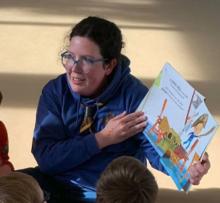
 

Steve Barton

Steve smiling holding a certificate

Steve reflects on his long-serving contributions to the Group, which began in the 2000s, initially as a parent helper and subsequently as a Scout Leader, and remembers his daughter’s participation in the 30th Scout section.

Steve-BARTON.mp3
Audio file

00.34 - Where were you born?

“In Surbiton in Surrey.”

00.40 - Were you raised in Davidson's Mains?

“No”

00.49 - Can you describe to us the community you grew up in?

“It was a London suburb, not very different from Davidson's Mains or Silverknowes”

01.07 - Can you please tell us about your family, parents, siblings?

“My Father was Ted, my mother was called Beryl. They were married a couple of years before I was born. I have a brother two years younger called Tony, and a sister who is seven years younger than me and she’s called Sarah.”

01.26 - How did you become involved with the Davidsons Mains Scout Troop?

“My daughter, Harriet, was offered a place in the Scouts. She hadn’t been in Cubs or Beavers but she was offered a place and then there was a cycle ride and I came along to help and generally sort of get in way and then I came along because they seemed a little short of parents, so I became a parent/helper and then the previous Leader decided to stand down and at the same time, his Assistant decided he was moving to the south coast of England.

This left the Troop with no Leaders and the GSL, who was Liz Leslie. She became the Acting Scout Leader while Mike Pontin started training to be the Leader, and I was training to become the Assistant Leader.”

02.32 - What were your first impressions of the Scout Troop?

“They seemed very pleasant. I knew many of the boys. There were just two girls, my daughter and one other, who was Liz Leslie’s daughter, and the rest were boys. I hadn’t got much experience of boys that age. I knew a lot of friends, and by chance, they had a lot of girls, and I also helped at a riding stable for a short while, and girls are worse than boys.

I quickly had to learn their names, which is not as easy as it sounds and then just fit in where it was needed.”

03.21 - Did you ever attend Scouts or Cubs as a child?

“Yes, I started in Cubs when I was eight, and I stayed in the Cub Pack for three years, and when I was eleven, I moved to the Scouts Group, but I only stayed until I was fourteen, normally, it was fifteen in my day because I had too many other calls on my time.”

03.47 - What were your favourite memories when you were in the Scouts?

“I enjoyed camping most of the time. I’ve still got a few memories, like it was raining a lot and we were singing a song which was ‘Our tent’s got a leak in it so we might drown’, and at that point we realised our tent had got a leak in it. We’d chosen to have the camouflage tent, and there was no reason not to, but it hadn’t been checked out to be waterproof, so we decided we’d better have one of the normal ones, which are a bit like today’s Stonehavens.”

04.27 - Do you have any favourite memories of being at Scout Camp?

“I remember we went canoeing on Coniston Water that was quite good. It was greenfield camping, so we had to dig a pit for both the dry and wet waste and our wet waste pit filled up with water and we were wondering what best to do so we tried to dig a bit deeper and we got one of the older Scouts who’d be a sixteen to eighteen year old, came along with a heavy shovel and he started digging and one good hit and the spade disappeared downwards and all the water suddenly disappeared and a few minutes later it was out in Coniston Water, we’d hit the underground stream. So, our wet pit never filled up.”

05.30 - In relation to Davidson’s Mains, are there any particular favourite activities at camps that you’ve been on?

“Probably the ones I’ve enjoyed are the organised sites where the Scouts get to do things like Jacob’s Ladder, Kayaking, Raft Building and it’s quite interesting to see how well people do and quite importantly it’s not just the ones who make it to the top of Jacob’s Ladder, there’s always some and you can usually guess which ones it will be, but it’s the one who will just be persuaded that he or she can do one more rung of the ladder and sometimes you just see a very nice one, it was somebody who just didn’t want to do Jacob’s Ladder but you may know as well as that you have to get one of the Scouts on the safety rope and he never shirked doing his turn on the safety rope. He didn’t want to climb the ladder, but when it was his turn on the safety rope, he did it, and that is always a nice thing to see. It’s surprising if they don’t like what’s happening, either something in the food they don’t like, they just go without, without complaining, and they are really a pleasure to have at camps. I’ve been to a number; sometimes we’ve been doing most of it ourselves, and sometimes it’s been with the Adult Support Unit. The Leaders have got a very easy task. The one thing I tend to have to do when we’re doing it ourselves is ensure we’ve got enough gas because if a gas bottle is empty it’s got to be refilled and for the last ten years I haven’t gone out to work, I’ve worked from home and I can just take half an hour off and drive over to Sighthill to collect a full one. Again, it’s to watch people, in many cases always helping others, and it’s usually not the ones you’d expect.”

08.02 - What is the difference in badges between now and when you were a kid?

“There were two main badges in the Scouts. The Second Class and the First Class badge, and there was a stage before the Second Class, and you had to do half a dozen or so basic things, one of which was to learn the Scout promise. I can’t remember what the rest were, and you had to do the first few before you were invested. Cameras were expensive in my day, so parents weren’t invited to the investiture, and in fact most Scouts didn’t want their parents there. Then you did the Second Class badge, which was about ten or fifteen things, including the safe use of a hand axe, safe use of a Scout knife, various knots, some first aid, about fifteen things, and when you’ve got all of those ticked off on your record card, you got your Second Class badge. Then you had another lot to get your First Class badge, one of which was known as the Scout Journey, it was a bit like the Duke of Edinburgh bronze, bear in mind most people didn’t leave Scouts until they were fifteen and I think you had a hike, it was just one night under canvas but you walked, followed a map, and if you were lucky you managed to get round and get picked up at the right place at the end. You had proficiency badges. I actually managed to get my First Class badge fairly quickly, I think, but I never got any of the proficiency badges. I was quite busy with schoolwork and stuff like that, and I just never picked them up, but in the Cubs, you got various badges. I got six of the fifteen proficiency badges. My brother did all fifteen, and the local paper had a picture of him. He was determined to do it, he’d seen older boys had done it.”

10.40 - Have the Scouts changed since you were a child, and if so, how?

“Quite a few changes. The most important one is that it was known as The Boy Scouts in my day, and that meant boys; there were no girls in the Scouts at all. Girls went to Guides or Brownies. The Scouts wore short trousers, and the Leaders also wore short trousers, although, for modesty, lady Leaders wore a skirt. There were Scout shorts, Scout belt, the badges were slightly different, and the scouts also wore a beret, like some of the Army berets. There were very few badges, and this was done with a record card because it cost a lot of money to make badges in those days.”

11.50 - Did any of your experiences with the Scouts influence your career path?

“I’m not aware of any, but I suppose you learn to be able to cope with situations you weren’t expecting, and that can sometimes help, but no not really.”

12.14 - What did you do after leaving the Scouts, like university or college?

“I went to university to study chemistry, and then immediately I finished that course, I studied toxicology, which is about looking for unwanted side effects of drugs and other chemicals.”

12.40 - What do you think the impact of the Davidsons Mains Scouts is on the area?

“I couldn’t really begin to say but it certainly has gone from a Troop of approximately twenty Scouts to two troops of about thirty to thirty-five each. So, the Scouts are much more involved with the community. They’ve always been involved at the Remembrance Day Parades, the Gala and more recently, at the Christmas Lights, and they’ve become well known. There’s a lot of Leaders who have put in a lot of time and particularly Dylan, to make sure that the Scouts are involved with things, and a lot of parents too. If it wasn’t for the parents, we would have no Scout Troop.”

13.42 - Can you sum up what you think is the most important thing about the Scouts?

“That’s difficult. I would think it’s bringing on people to learn new skills and go on. When I first meet people, either as a very quiet, shy, or very noisy ten-year-old and gradually you see they become more capable, and I’ve met several of them who’ve went on to be Explorers. I went to an Explorer Camp and saw former Scouts that were far more grown up than they were Scouts, and some have gone on to be Leaders, they’ve gone to university, they’ve studied, and I expect that sooner or later one of my former scouts will turn up and say, ‘Do you remember me?’. I’ll struggle, and they’ll say, ‘This is my little boy, or this is my little girl, ’ starting in Beavers or little Squirrels.”

15.01 - That’s all our questions. Have I missed anything, or would you like to add anything?

“If I was asked to give a message to people, it was, some people have been a Leader for quite a while, and some are fairly new, but we all started out knowing very little other than what we came to it with, either as a parent or having been through Scouts and they in turn will go on to become the new Leaders.”

15.37 - Thank you very much for sharing your memories with us.

“You’re very welcome.”

All content on this site is openly licensed under CC-BY4.0, enabling reuse with attribution: https://creativecommons.org/licenses/by/4.0/