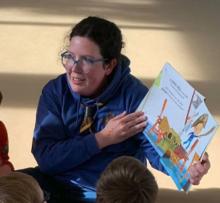
0.00 - The Respondent was welcomed to the interview and asked where she grew up and how she was involved with the 30th Craigalmond Scout Group.
0.51 - She explained that she was born in Memphis, Tennessee, and grew up outside of St. Louis, Missouri. She first came to Edinburgh for university and then returned to settle in Silverknowes in 2020 with her husband and young family. She wanted to get involved in the local community and had heard that there was a Scouting group that was highly regarded. She reached out to inquire about adding her daughter to the waiting list for Beavers and to explore the possibility of volunteering as a leader, which she stated she had begun in November 2021 and has been doing weekly ever since.
03.40 - The Interviewer asks what a typical night as a leader in the Scout Group is like.
“A typical Beaver's evening. Well, it's quite loud, and we try to get the Beavers in a calm state. It works best if you can get them in and kind of get them in a circle right away, but that doesn't always happen, so usually there's quite a bit of drift in and leaders' kids are there early sometimes, and they kind of start playing games and stuff like that. The typical evening, once everybody's kind of in, we have 20 beavers on a Thursday night, which is the Beavers night that I do, usually there's a few missing or, kind of, for various reasons, but up to 20. We always start off getting them in a circle and singing the opening song, which I won't sing for you, but you probably know it. [laughs] Then we introduce the topic or the theme that we're going to do, and kind of tell them a little bit about the activities we're going to do, and then we do activities for 45/50 minutes, and that can be kind of anything. Sometimes we meet outside the hall and go to the park or go to other local places. If we're in the hall, we usually set up tables kind of in four different quadrants, so we can split them into groups more easily, or maybe have an outside bit and sort of an inside bit, and we do all sorts. We do crafts, games, quizzes, like, little, kind of, learning opportunities, cooking sometimes, or food elements, like decorating cakes and stuff like that. If we're outside, we do a lot of nature stuff, like trying to get them to gather up stuff, do scavenger hunts, or just do walks and get them to go around different places, and we often end by trying to end with like a sort of wide game that they can all play. We often play Dodgeball, that's the sort of most popular favourite at the minute, and then we sing the closing song, and yeah, that’s pretty much it.”
05.42 - The Interviewer asks if the opening and closing songs at Beavers are part of a regular routine.
“Yeah, absolutely, yeah, they get really upset if you forget, which I have done in the past, and then they get kind of on you, yeah, absolutely, they hate to not sing the opening and closing songs. Oh, and we have, on our night, I think Mondays do this as well, we have Bob the Beaver, who's a little plush beaver toy. He gets given, at the end of the night, to the Beaver that's been kind of best behaved, or maybe tried something new, or we try to make sure everyone definitely gets him once, kind of within, like, a 6-month period. Then we try and go around again, but it's not always, you know, sometimes Beavers say they've never had them, and they actually have, and that sort of thing. So we just try to make sure that it's evenly spread, and that it's a reward for some kind of good behaviour, so they love that as well, and sometimes they'll come back the week after with Bob and say what, you know, have pictures of what they did with Bob, or what Bob got up to with them.”
06.44 - The Respondent is asked if he recalls any of the ceremonies that take place during the year with the Beavers.
“Yeah, so every term, at the end of the term, we invest the new Beavers, so that's very ceremonial, or we try to make it so, but they're usually, like, not very, uh, well-behaved during it, but that involves them doing their Beaver Promise, and getting their necker and their first badges, like the ones that go on the arms to identify what group they are in, and the Promise Badge for doing their Beaver Promise. We do that at the end of the term, and then usually we've Beavers moving on to Cubs as well. For them, we award the Bronze Award if they've achieved it, or any other badges they've earned that term. And usually kind of trying to make a little bit of a fuss over them and have them shake our hands, and say, well done, everybody claps, and then we get all the other Beavers to go into a kind of tunnel with their arms, you know, in pairs, like, holding their arms up like a tunnel. And then we have the Beavers that are moving on, the Cubs run through the tunnel, and shake the hand of, we try and invite a Cub leader to come along and shake their hand and say ‘Welcome to Cubs’, which they all really like.”
08.00 - The Interviewer asks about the Beavers’ progress on their Bronze Award and other badges during their time in the section. At this point, the Respondent adds that she forgot to mention her involvement in establishing the Squirrel Section of the 30th Craigalmond Scouts before returning to discuss the Beavers’ badge work.
“We do all sorts of badges. We have done, we have a very capable admin, Helen, who kind of keeps us on track with what badge requirements are for each term, so we can plan out a bit. Let's see, we like to do the International Badge, because we have, like, quite a good night set up for that that we can repeat, that's, like, they visit different countries and learn a little bit of the language, try food from that country, learn about Scouting in that country, and then they all get on a plane, which is set up in the middle of the hall, and they pretend to fly to the next country and kind of go around like that. So that gets your International Badge, which I like. I really like doing the Cooking Badge stuff, they have to do, I think, three dishes - I think one has to be savoury, and two have to be sweet or something. It's always fun to do a cooking night, we did that recently, had them make pancakes on Pancake Day, that was fun.
Let’s see, what other badges do I like? Fitness Badge we've done, that's a fun one, because you can do, like, fitness in the park, or you can do little sports day type of stations in the hall, which they all really enjoy and get on with. Then there are the nights, I should really know more about these, but like Challenge Badges that they get, that are red backgrounds. They get those usually kind of over the course of the time they are at Beavers, so it's like kind of doing an outside adventure, like going on a trip, or when we do camps, they often tick off a lot of requirements for that, because you have to sort of help make a campfire, or I think one of them is you're supposed to help erect a tent, so when we do a camp prep night, we always try and get them to set up a tent, but, you know, really they're not doing much, but they're at least experiencing it.”
10.14 - The Interviewer then asks whether the young people are involved in planning the term’s activities. The Respondent explains that there is a strong emphasis within the Scouting movement on youth participation. While the leaders make an effort to include the Beavers in planning, she notes that this can be challenging given their age. Typically, this planning takes place on the welcome night after the holidays, when the Beavers are invited to vote on activities they’d like to do during the term, or to suggest special events or trips. Past choices have included activities such as Ninja Warrior and a sleepover in the Scout Hall. The respondent adds that many of these activities and trips are designed to support specific badge requirements. The Interviewer then asks her to share any particularly memorable outdoor adventures or trips.
“You know, we do lots of fun outdoor stuff. Let's see, the thing that we've most recently done that I like the most is we did orienteering at Cammo Estate, so that was actually really fun, we just split into groups, and each, I think, we had a couple of leaders, or a leader and a young leader with each group, and we gave them a map of the different kind of things that they can see at Cammo, like the old stables and the big tower and stuff, it was all kind of within the front half of the estate, but they really, really enjoyed that. They got on with it kind of much better than I had kind of felt like we were looking at the map and trying to work out where everything was, that was really fun. We've done walks, like, along the River Almond, I really like doing, that's a decent kind of walk-in, you can end at the beach, which they like. We've done beach trips as well, we do lots of stuff in the park, like litter picks and stuff like that, and we also do camps and sleepovers. Yeah, so, and I really, really like doing camp, so that's kind of my favourite thing to do.”
12.59 - The Interviewer asks about her favourite camp.
“Maybe the first camp that I did at Bonally was really fun. That would have been in September 2021, I think or maybe 2022 - Yeah, that's right. We just really enjoyed that one, because I think, as it was my first camp, and I was quite nervous because I'd only ever, like, sort of dealt with the Beavers for an hour at a time [laughs], and I was like, what am I gonna do to entertain these kids for a day and a half? It’s kinda crazy, you know [laughs] But, I just ended up having such a good time, and I think it's such a good opportunity to get to know all of them a little bit better, like, you don't get to know the kids as much when you're just there for an hour a week, but over the course of a weekend, like, especially because it's Mondays and Thursdays Beavers together, and unless we have a joint night, I don't often know that much about those Monday kids.
So I think it's really fun and special to get to know them outside of the hall and just do fun activities; we always have lots of fun. It’s a good atmosphere and they love sleeping at Bonally, in the, like, bunk beds and stuff. Yeah, they all just get on really well, and you can see kids kind of really come out of their shell, or kids that are a bit shy, they just get…I don't know. And my favourite part is watching them all come down, like, in their PJs in the morning, and they're so sleepy and cute. I just love it [laughs]”
14.27 - The Respondent is asked if they had any aims as a leader to support the young people in the community.
“I guess I just feel like it's, like with anything in the community, I'm so happy that the Scout Group is here and active, and kind of doing things. It just means well, I mean, from a sort of selfish point of view, it means my kids can engage with Scouting, which I think is really valuable for them, but I think it's valuable for a lot of kids. Like, not all kids take to it, but I think the ones that do, it just can mean so much to them. It can really help them be more self-confident, help them have adventures, help them do things they wouldn't normally do, all that kind of stuff. And so, it's like anything, it's like, I just thought you know, if I want it to continue, then I need to put my money where my mouth is, and kind of help it continue, and I have the time, I only work part-time, and, you know. The leaders are really good, it's such a good team doing Beaver leading, so I really have enjoyed it, and yeah, I just thought -why not get involved and help if I want it to continue, which I do, and then, pleased that the group is – yeah, continuing [laughs]”
15.43 - The Interviewer asks about her fellow leaders and how they work together.
“I think we've got a really great team, to be honest -Beaver leaders. There are quite a few of us, amazingly enough [laughs]. It's, like, the only volunteer thing I've ever done in my life where there's enough people [laughs] because I've done stuff, like, I've been involved with, like, I don't know, church groups and, school stuff, you know, with the kids' school, or like all of that type of stuff, where it's just the same people are kind of always doing everything, and it kind of gets a bit like, you know, it's a bit of a chore. Whereas with the Beaver Leader Group, I never feel like I have to do, you know, I feel like we all kind of pitch in. Everyone is very keen, and they all give what they can give. Like, when we have our planning nights and kind of come up with plans, people are really jumping in and saying, ‘Oh, we could do this, so I thought of this night.’ Like, you don't just get people sitting with their arms crossed and being assigned something. You really have people who have ideas and bring ideas to the table and say, like. ‘Well, I thought we could do a trip here, ’ or ‘I've looked into this and, you know, I thought maybe we could do a sleepover here’ or something, like, it's just a really cool, kind of collaborative group, because there's enough of us, there's, like, a good team. It doesn't feel like, you know, if I had to miss a night, which I sometimes do, or if I was sick or something, that there wouldn't be, ‘oh, it can't go on’. Like, it would be like, ‘oh yeah, there are enough people that if you miss a few, it's not a problem. Turn up when you can. And yeah, I think everyone is also really good at different stuff, like Scott Henderson, because he's got his Night’s Away Permit, and because he's keen, I guess, he always, like, kind of plans, takes the lead on planning the camps, and that's extremely valuable to have somebody who is willing to, like, do the work of planning the camp, and it probably means that he doesn't plan as many nights, but none of us mind because that seems good, he always turns up, and then, you know, some people who are kind are a bit more casual and can turn up when they can, don’t take on as much leadership role, but then when they do come for a night, they are really good, they’re really engaged, you know, not on their phones or whatever. Everybody's kind of got their own skill set that they bring to it.”
17.57 - She is then asked whether the leadership team stays in contact outside of group nights. She explains that they try to arrange social gatherings throughout the year and mentions that she and several other leaders have gone camping together with their families. She also keeps in touch with many former leaders who have since moved on from Beavers, noting that it remains a friendly and supportive community.
“The uniform we wear is like a beige-coloured shirt. I have a long-sleeve one. I did see someone wearing a short-sleeve one, and I did not know that was an option, because I might have preferred that. It has the badges on it, it's like a button-down, beige shirt, and then there's the necker. Which is brown, blue, and gold, because of our Centenary year, we are all supposed to have that as Beaver leaders, and I wear it, I usually try and wear it, like, well, it just sort of depends on the weather, but there are certain times when I try to wear it, you if we are doing a ceremony or helping at a public-facing event, like the Gala. On most nights, I usually wear my blue hoodie, which has my name on the back, which is kind of handy for the Beavers who can read because you can point to it and say ‘that’s my name’ as sometimes they don’t always know who you are. But yeah, that’s our uniform. The Beavers' uniform is a teal-y kind of coloured jumper. I find that they are quite tight on the wrists, like my kids can never get their hands through the little wrist bits, because they're just, like, the elastic is, like, so tight. It wears pretty well, and it has Beavers in like little embroidery on the bottom, which is also handy, because the Beavers, like if you ask them to write Beavers down, they’ll say ‘I don’t know how to spell it’, and you can tell them it's on their jumper and they can write it down. And then there are lots of badges they can put on it, obviously, the group badges go on the arm, and then there’s the Promise Badge goes on one side, and all the other ones go up and down the other. I'm sure by the time Harriet left the Beavers, she’s almost ran out of room with that arm because there are so many badges they can get.”
20.38 - The Interviewer asks about the games the Beavers enjoy playing. The respondent explains that Dodgeball is a favourite among the group and mentions that she particularly enjoys a game called Red Red River. In this game, a caller shouts out descriptions—such as wearing a certain type of clothing or having a particular hair colour -and those who match the description attempt to cross. She likes this game because when a young person is knocked out, they can take on the role of the caller, which softens the disappointment of being eliminated. She also lists other popular games, including Traffic Lights and various forms of tig, such as Chaos Tig and Toilet Tig. She notes that the Beavers already know many versions of tig from playing it at school.
“Like I said, I really like doing camps, I think that's fun, like, doing campfires and singing songs is really fun. Yeah, my kids and I were away for Easter this weekend, and they wanted to sing campfire songs while we were walking, so they were just singing like ‘Boom, chicka-boom’ and stuff like that. So they, obviously, that makes a huge impression on the Patterson family. [laughs] I'd really like doing camps, I love doing… I quite like doing cultural celebrations. I like the stuff we do for Burns Night, like we usually have them do the ceillidh dancing thing. And we recently did, like, a really fantastic night to celebrate Eid at the end of Ramadan, that one of the leaders planned henna tattoos, and we made these little North African cookies, that was a big hit. I really liked doing that because you can kind of get them. I love doing the parties, we always try and do like a Christmas Party and do a Halloween Party for the kids, and that can be really fun. It's more like a party, and you’re not trying to, like, drill something into them and say you’ve got to learn about this [laughs] I like that, but it's kind of not the most popular with the kids. Anytime we can get out, I think, is really fun, we've done, scavenger hunts at Lauriston Castle or at the park, I think that really fun because it's almost easier to control them when they're outside, weirdly, even though… the hall just gets kind of a bit noisy, and even if it's, like, a joint night and you've got loads of them, for some reason, it's just easier yeah, when they're outside, because, I don’t know, they just seem a little more chill, even though they're outside and you'd think they'd be running off and trying to, like, run into traffic, but they're usually not they just like being outside”
24.09 - The conversation then shifts to community volunteering projects and whether the Beavers have participated in any.
“Yeah, we've done litter picking, we did do a beach clean at Silverknowes Beach, which felt really good, although it was a bit of a bad day for it, because it was really windy that day and cold.[laughs] But that was cool, it was organised by one of the leaders who got in touch with the Marine Conservation Society, I think they're called, and they had someone come out, she was great, and, like, told us a little bit about it, and how to kind of do it, and then we had them all get split into groups and pick up all this litter on the beach in bags. And then she had scales so she could weigh how much there was, and we also had to write down, like, there's this many baby wipes, there's this many, like, plastic bits, and kind of catalogued what's there. And it was very eye-opening for all of us, because of how much baby wipes and, like, or just wet wipes there were on the beach was disgusting, but that was a really good night, I really enjoyed doing that. I liked doing litter picks, I like participating in the Gala, like, we do the parade for the Gala, I think that's fun, and oh, I like doing the parade for the Remembrance Sunday, that's a community event that we're always, like, that Scouts always have a presence at and I think that's good for the kids. We usually try and tie it into a night, you know, to talk about Remembrance Sunday and why it's important, and they, yeah, they seem to really get it, and they're actually, always very well behaved at the ceremony, which I think is nice.”
25.38 - The Respondent was then asked about the role of the Scouts at the Davidson’s Mains annual Children’s Gala.
“Yeah, so for the Gala, we parade down Main Street. Last year, I think we had a float, yeah, I thought it looked good, but we had a balloon that said ‘100’, but then a certain Beaver let go of one of them, and so it just hit ‘zero-zero’. We should have tied it to his wrist but he said it was too tight, don’t know if I believe him, I won’t name names [laughs] Yeah, we start at the Green, and we all just process down in our group, that’s always fun, because the Beavers, it's, like, sort of…. You know, they love to, like, see their moms and dads and their friends from school and stuff along the way. They love to sing the Beaver song as they go. Last year, we did a Centenary Night and me and Layla, one of the Beaver leaders, helped them make this, like banner that says ‘Beavers’ we helped them sew felt letters on, and it looks very cute, and I think that's fun to bring out. We let the oldest Beaver carry the flag at the front, usually, which is a nice thing to let them do. So then at the Gala, we, like, processed with all the other community groups to Lauriston Castle, and then we all form a kind of honour guard, I guess, for the courts, the Gala Court to come and officially open the Gala. And, yeah, the Scouts also usually serve, like, hot dogs and food, and I’ve helped out with that a few times, and I just signed up to do that again this year and think that's quite fun, because. I mean, it's such a big event, you can see loads of people that you know, but also just people that you don't know, it's nice to have a kind of chat with everybody. For Remembrance Day, we do the same thing, kind of, it's a different direction, because we meet at the park and then process down to, like, the little Green across from the Village Bistro. I like that one, it's a bit more solemn, because, you know, it's a more solemn location, but I think the Beavers find it, I don’t know, kind of meaningful to be seen, to be part of this, and then we all, like, wait on the Green and have like a little speech or prayer from a church leader, and a moment of silence. They read out the names of men who fought and died in the War, and I think that's quite meaningful. We always try and impress on the Beavers, like, oh, you can hear addresses that you might be familiar with, like, saying where people lived back then, who died, it's like, connected to the community they still live in, if you know what I mean? So yeah, that's always a kind of nice, gentle morning, and we always do, like, a craft. We used to do wreaths, last year they did those windmill poppies - they liked making those, we kind of make those the week before, and then sometimes we'd have to make a poppy that they can wear, which they all like.”
28.39 - The Respondent is then asked if she has had memorable experiences as a Beaver leader where she felt a sense of accomplishment.
“I think it's always nice to see kids kind of come out of their shells a little bit, like sometimes when Beavers start young, they're only 6, so sometimes they can start off just being a bit shy, I guess, like, they sort of want to sit at the side, or they don't like the noise, and, you know, that kind of stuff, and then, yeah, if you can kind of keep engaging with them with a kind of light touch, then sometimes they do kind of start out to open up to you, and II think that's always really nice, like, especially if they go and do a camp. We often have Beavers that are, like quite homesick, or kind of that their parents warn us, like, what they're going to be really homesick, I'm not sure they'll make it, I'm not sure they'll, like, go to sleep, you know, call me if you need me, whatever, but I don't think we've ever had to call anyone for that reason, like, because they do eventually kind of get it, and its just kind of nice to, sort of, help them, I don't know, realise that they can do something, I guess. I think the last few camps I've been on, we've had a couple of Beavers that have, like, had a hard time really getting to sleep, and we've all, like, taken turns, kind of patting their backs, or reading them a story, or whatever, and then when you see them after they do eventually sleep, and you see them in the morning, and they're so happy that they, like, had a sleepover with their friends, basically, kind of thing. Like, they always feel, it seems to me that they're always kind of really proud that they did something that they weren't sure they could do, and I think that's really good. I also kind of like the badly behaved Beavers, because if you get them alone, like, they're usually quite funny, and interesting, and even though we often have the kind of ones that are a little bit, like, rowdy, I think it's so cool when you kind of chat to them one-on-one and find out what they're into, and they always have, like, really interesting things to say about, like, Marvel movies or, like I don't know, football teams, or any that they're interested in, and once you kind of chat to them, you get to know them a bit better, and then they're kind of like, yeah, these kids are alright, even if they are kind of, like nightmares when it comes to sitting in a circle or being, like at all chilled. But I like that moment of feeling like you've engaged with the kids one-on-one, and have got to know them a little bit, and then you see them around, you can say hi to them, and they can engage with you on a level that isn't just, like, ‘stop doing that, don't do this. Stay away from there,’ kind of thing, yeah, I think that's cool.”
31.18 - The Interviewer then asks if she thinks that Scouting has impacted her life and your personal growth.
“Yeah, definitely, I think, like, despite having my own kids, I wouldn't have said I was very good with kids before I started doing Scouting stuff, and I just thought, oh, well, I'll give it a go, and maybe I'm not still very good with kids. But I think I've come on a bit more in terms of, like, knowing how to handle different personalities of kids, and kind of handle different experiences. Yeah, it's just been really good, and I've loved getting involved in the community. I've met so many people, and you really get to know all these kids, like a lot of whom I do know from my own kids being similar age, but a lot of them I just don't know only through Beavers, and it's really interesting to kind of get to know everybody. Yeah, I think I've grown. I've learned how to toast marshmallows properly, I learned how to start fires properly, I've learned, like, first aid, I think, is really interesting, like, kind of important. I'm renewing that soon, actually. And I've used that, like, I use it to be the first aider at school events, because I'm also involved with, like, the PSA at the school -Parent Staff Association at the school, and yep, it's been good.”
32.37 - The conversation shifts to discuss her thoughts on the current Scouting Movement.
“Well, I think, I don't know, I think, it kind of all depends on the local group, like, I think we've got such a good group here, we've got really engaged volunteers, we've got a great leader in Dylan, like, we've got enthusiastic parents who are usually kind of really willing to help out and become leaders themselves, or just help on nights and stuff like that. So, I think that we've got a really, particularly good group. I think it probably depends, like, I have done trainings and stuff with people from other groups, and sometimes they've said, like, ‘oh, we can't get volunteers to stay’, or like, you know kids kind of start dropping out at a certain point, and I don't know, I would like to diagnose why that is, but I think overall, it's doing well. I know other people who are involved in Scouting in different, kind of areas, or in England, North Wales and stuff, and if they've got a good group, like, with the good volunteers, then they're having a great time, basically, and I think if you don't have the volunteers, then you don't have the group. Lack of leadership in the group, then maybe you're having less of a good time.”
33.45 - The Respondent was then asked about her thoughts on Scouting now compared to the past.
“Well, I don't have much to compare it to, because I didn't grow up in this country, like I did do Girl Scouts, which is the American version of Girl Guides, and it was fine but I feel there’s a bit of a transatlantic divide there. I have been really impressed with how Scouting has kind of moved with the times. I think it's generally, like, I think the training that we do about inclusion and diversity is really good. It seems to me that the kind of national leadership for Scouting is thinking a lot about inclusivity and how to include people with disabilities or with neurodivergence, I think that's good, and I think there are stuff on, like, LGBTQ stuff is also quite good, with the training videos they have and the ideas, they have for running nights around that topic. And I appreciate being part of an organisation that takes, like, a pretty strong stance that those things are important, and that Scouting is for everyone. I think it's great that girls are included now, obviously.”
35.05 - The Interviewer asked if she would recommend it to others, to which she said she quite often recommended it. She was then asked if she had any final thoughts about her time with the 30th.
“I really enjoyed, uh, setting up… helping set up Squirrels, which I did, kind of as an adjunct to being a Beaver leader for a while, and there's a good group, hopefully you get some Squirrels leaders in to do their oral histories. But that's been really fun to kind of start up a whole new section, I guess, within the group. Learning about how it differs from Beavers, because of the age difference, and kind of some of the things that… some of the program ideas, I think are really, like, I think the program, actually, for Squirrels is really good, and I really enjoyed, like, putting some of those into practice, like, some of the activities and stuff that the National Scouting, that Scouts recommends for Squirrel age.”
36.04 - The conversation then turns to the activities that Squirrels take part in and the badges they can work towards, including the Acorn Award, which she feels is well-suited to their age group. Many of the activities are focused on personal development and community engagement.
She notes that, given their young age, the Squirrels are often more interested in simple activities such as visiting local shops or listening to a story than the Beavers are.
She concludes by saying that she thoroughly enjoys being part of the group and hopes to continue her involvement for many years to come. She is thanked for her time, and the interview concludes