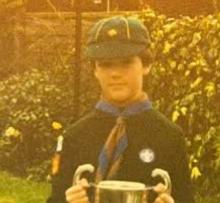
0.21 - The Interviewer asks when the Respondent was born and where he grew up, then asks how he was involved with the 30th Craigalmond Scout Group.
“I was part of the Cubs; there was no Beavers back then, that was my first introduction. Went from joining to becoming a seconder or sixer. Didn’t go on to Scouts.”
1.30 - The interview moves on to talk about a typical night at the Cubs and Scouts
“Good question, you’d want to be there early, as there was an old football that had lost its air that you’d ping around the hall. Then you’d get into our sections, I would be lined up in the red toggle side, and I think there was 4 groups. Was it Akela? Mr Drysdale was running the troop at that time, and he would start it off. Think there was a ceremony with flags, and then it was varied if you were going for a badge. One memory is when we played crab football, you put your hands on the floor and feet and walked like a crab and tried to kick into the goalpost. Very entertaining.”
2.56 - The Interviewer asks if he can remember the name of his group, groups or people.
“There was a guy, Rob Seller, Chris Richardson, can’t remember if he had a yellow woggle. I can’t remember if we had names.”
3.31 - The Interviewer asked if he could remember how they addressed the leaders.
“I think it was all names.”
3.45 - The Interviewer asks if the Respondent remembers any other leaders who were there.
“No, I’ll probably remember it at some silly time in the evening and go ‘Ah!’ but it’ll be too late then, so sorry, no, can’t recall.”
4.02 - The Respondent is asked if he remembers any traditions—for example, songs or moving-up ceremonies.
“Trying to recall, did we all say the pledge at the same time when the flag was getting put up, or something to that degree?”
4.31 - The Interviewer asks if the Respondent can remember badges and badge ceremonies.
“I think that was down by the flag as well, and I can’t remember if that was at the end of every week or at specific times, like when we went to Cub camp and Bonaly, you’d get orienteering badges, which I was very surprised that I got, but hung out with people that knew how to orienteer. It was always down here, and you came up and got applauded.”
5.06 - The Respondent is then asked if he remembers any other badges he received.
“No, sorry.”
5.16 - The interview moves on to ask the Respondent what he remembers about his uniform.
“Yes, I brought some pictures which jogged my memory. We had the cap which was a great source of amusement because we would fling that across to each other across the hall like a big frisbee and try and catch it and throw it back to each other, while trying to set a good example, so you’d have that and your shorts and a green vest or jumper with your badges down the side, and then your necker and woggle.”
6.30 - The Interviewer asks if the hats stayed on throughout the sessions.
“I think so, yeah. Because there were benches along the side where we sat, in our little groups. That was for when you started and when you finished… I think the hat stayed on as part of the uniform.”
7.00 - The Respondent is asked if they wore shorts year-round
“From what I remember. Yeah, cos going into Davidson’s Mains it was shorts traditionally, which was pretty freezing. We were hardier back then!”
7.18 - The Interviewer asks if any young leaders are remembered.
“Probably would have been some from Scouts, no one I can remember.”
7.34 - The Interviewer asks if the Respondent can remember anything about their role as a Sixer or Seconder.
“You had to keep your side of the troop in line and make sure they had their hat on and everything that they needed, and if they needed anything, you would try and source it and make sure everybody had what they should bring.”
8.14 - The Interviewer asks if they were listened to.
“No. Well, sometimes, cos you were older. I remember having a good troop. I can’t remember, other than Rob Seller, as I say, he was the Seconder at the time, and I can’t remember really anybody else in that. But when you were a Sixer, or you were older than the majority in that, it was looking after and showing them the ways. So, I think so, but we probably led some of them astray with throwing caps and things.”
8.51 - The Interviewer then asks if the Respondent felt proud of being a Sixer.
“Oh, absolutely. Yeah. Leader of the house, or whatever it was.”
09.03 - He is then asked what he had to do to get his orienteering badge.
“Yeah, we went up to Bonaly for a Cub Camp, and then we went out, not on a ramble, but we had a map and compasses, and we had to get to sort locations and navigate. I felt a little bit lost, but others knew where they were going, so we got there. We did an interclub event as well. There were various different skills, and you were competing against other troops across the district. I have memories of different halls and having different setups to try and do badge-oriented activities, competing against other troops as well. Trying to think where that was.”
10.24 - They discuss whether it could have been a District camp competition.
“It wasn’t away, it was a day thing, so it wasn’t in Bonaly or anything like that. We had nights where we tried to do the reef knots, and I was absolutely horrendous at that, so I don’t know if I ever got a badge for that, but a bit of goodwill to make me feel better, I wasn’t very good at those.”
10.57 - The Respondent is asked if he remembers doing any activities outside the hall and going to any particular places.
“We did the gala, we marched in the Gala, and we also had a stall when it was in the park. The photo that I found was back in 1988, and you had a big cardboard cutout where you put your face in, and people threw wet sponges and things at you and paid money, and there was a packed lunch, so all the kids would get a brown bag, and there were sandwiches and a drink and maybe a biscuit. I can’t remember if that was the Cubs that did that or another part of the village. I seem to remember it was relevant to where we were at the Gala and where the Cubs were set up.”
11.58 - The Respondent is asked if he remembers where they were walking and how that felt, and also what the uniform was like.
“No, sorry. Did it start off in the Green, and then we walked up to the park? I remember uniform and flags (looks through photos). I am sure I had a picture with the Troop marching with the big flags. Sprinkles/Nail bar used to be a fruit shop, and that’s at the back of the picture.”
13.15 - The Respondent is asked if he remembers District trips to games, and if they were volunteers.
“Yeah, we played a rugby tournament over at Inverleith, we played against other troops in the area. We came second in that. Our rugby acumen was low; instead of tackling, we would slide, but we did it better than other clubs and got to the final, where we got beaten by a club who knew what they were doing, with a really good player, but I thought it was good we got to the final and came runners-up. It was all various groups, volunteers of who wanted to play in that tournament. We also had a football tournament at the old Dunfermline College. We did OK, but a lot of Cub groups came together and did that. You’re representing your 30th, you want to win, you’re all together competing. Put pride in your local.”
15.14 The Interviewer asks about community events such as litter picking, art galleries or Sausage Sizzles.
“I think we went to Drylaw police station and they showed us the cells and took our fingerprints which was cool to see and the background there. We did that as the 30th, the whole group. The Sausage Sizzle was over in Cammo, you would go over there and trek, and get the sausages out on the sticks and cook that. It was just the Cubs, from what I remember.”
16.50 - The Respondent is asked if he came up to Cubs with a group of friends, and were they all local.
“Yeah, my mum would take me and others up to Cubs; they shared the workload. Always fun to come along, it was a nice sociable place. Always came up ourselves or made plans, and parents would pick up. Everyone I remember was all local people who went to D Mains. Going to the Royal High we met people from Blackhall with their own Scout group. Everybody was in the same area, which is really nice as you go on to high school, and it solidifies the friendship.”
18.19 - The Interviewer asks if he is still in touch with any of them.
“I still see Chris Richardson around the village, Andrew Peden. Yeah, coming back and living in Silverknowes, you see a lot of people you grew up with.”
18.54 - The Interviewer is asked if he remembers any favourite activities or memories.
“Sports, mostly. Crab football was a good level. Playing different tournaments against others was fun. The pre-Cubs banter as well. All the activities but seeing everyone and having a kick around. The emergency door was very loud.”
20.10 - The Interviewer asks if there were any girls at the time, and the Respondent replies:
"no"
20.20 - The Respondent is asked to describe his experiences at camps, including Bonaly, and to indicate whether this was his first camp. He is further asked to recall details such as dinners, activities, and events at night.
“P7 at school went to Aberfeldy, would have been older. Bonaly was the first camp I went to. Stayed in dorms, lots of bunkbeds, quite noisy but good fun.
They had a tuck shop with sweets where you could buy sweets. Can’t remember the leaders, but there were activities such as night walks with torches, and the whole 30th was out, and you were walking in the wilderness, and you had to check to not fall.
It was quite wet, so probably no campfires, can’t recall, or what dinners were involved. It was brilliant.”
23.24 - The Respondent is asked if there were any moments he felt a sense of pride, and did he learn any skills that shaped his life.
“In your little Sixer pack, part of the greater club, the red troop or whatever it was, just having that, you’d stand proud when you started, and you were prepared with your hat and woggle and necker. Making sure everyone was presentable and looking good gave pride.
The skills gained were keeping time and learning knots. If not in Cubs, then I’d just have been in the house playing computer games and not making friends.”
25.10 - The interviewer asks whether he views the inclusion of girls as a positive development
“Fabulous. It gives opportunities to everybody, and Elspeth (daughter) loves it. She’s wired and loves it so much, the experiences she is getting are brilliant.”
26.06 - The Respondent is asked why he didn’t go on to Scouts?
“I was busy doing football and chess, and various other things. I had friends in Scouts but was a bit daunted. I would probably have really enjoyed it.”
26.53 - The Respondent is asked if he has any nice memories.
“It’s nice to come to events and pick up my daughter. Walking up the lane is nostalgic, and the murals are fabulous, great to have this in the community.”
27.40 - The Respondent was then informed that this was the end of the interview and thanked for his time and for sharing his memories with the project.