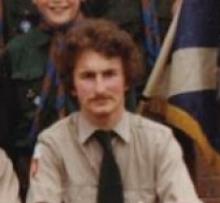
0.00 - The Interviewer welcomes the Respondent to the project and begins by asking about where he was born and raised, to which he said Davidson’s Mains. He was asked how he came to be involved with the 30th Craigalmond Scout Group.
“Well, back then it would have been the 30th Inverleith, and I probably would have joined the Cubs in the mid/late 60s because I moved up to the Scouts in about 1969, no, definitely 69 because I moved up to the Scouts when they were the old Scout hall in the Main Street in Davidson’s Mains, which is where we moved from in the early 70s.
Interviewer: So you began as a Cub and then progressed to the Scouts?
Respondent: Yes, progressed to the Scouts, progressed to the Venture Scouts, and then sometime in that Venture Scout period, I got asked to come back as a leader. So I was effectively involved with the 30th well up until the early 1980s when I left Edinburgh to work up north, but I got asked to come back and help with some of the summer camps.”
2.14 - It was explained that the interview would focus on his time as a leader, and he was asked if he could recall what it was like on a typical Scout evening.
“A typical Scout night, we would start the evening with Flag Break, I think Prayers or Allegiance to the Promise, we would read the previous week’s log, then we would get on to games and activities.
There would possibly be, in the course of the evening, some badge time, which was a pain; the kids didn’t enjoy that, but it was a necessary evil if we were in the hall. But so often, especially in the spring, autumn and summer, then we would be out of doors, up at Davidson’s Mains Park, up in Corstorphine Woods doing something, so that was a typical evening. In the hall – the activities – some of them could be quite ferocious – British Bulldogs, Dodgeball, no holds barred. Great fun for the kids, really, really enjoyed it.
We also, as well as the evenings, we would be here on Sunday afternoon for badge activities and various other things, and there sometimes be nights during the week where we’d be in the hall as well, that would maybe coincide with if we’re getting ready to go to camp – sorting equipment, doing stuff like that. So, it wasn’t just Friday night for Scouts, it was quite a few days a week for Scouts, and I think that’s what a lot of leaders nowadays don’t seem to appreciate - they are committing to be a leader, and it’s not just a one night a week doing something.”
4.48 - The Interviewer asks if he can recall how many Scouts there were at the time he was a leader and how they were divided.
“Well, back then, you were maybe talking about 30, 40 Scouts, maybe divided up into maybe half a dozen patrols or maybe eight patrols. But then in the late 80s, I think we got far too big for one Troop, and so we split up, and we had a Friday night, and I think a Monday night for Troop nights as well. I mean the numbers just grew and grew and grew.”
5.38 - The Respondent was then asked whether, when the Troop split into two meeting nights, any of his fellow Scouts moved to join the Monday night, and whether members were given a choice as to which night they attended.
He said that he could not clearly recall but thought that the Monday night group may have been formed from a subsequent intake of Cubs. He added that there may have been an opportunity for Scouts to choose to move to that night if it suited them better. He went on to say that, for him, Friday night was always Scout night.
The conversation then moved on to whether the Troop had any patrol names.
“Yes, we were birds – Owls, Falcons, Gannets, Peewits, Ravens, Curlews – they’ll be a few others I will have forgotten.”
6.54 - The Interviewer then asks what the Scout Hall was like at that time.
“The Scout Hall layout was very similar to what it is at the moment, where we are sitting to do the interview [back storage area] is actually what I think was the storeroom back then, or was it the office?
It had enormous heavy storage heaters at the four corners of the hall that got a bit of a hammering when we were playing football or anything rough and tough.
The hall, when it first opened, it was just a main hall and the offices and places at this end of the hall we’re in at the moment. They then extended the hall to include the foyer, toilets and the storeroom to the left – that was in the early 70s, when there was just not enough room to store all the gear in the hall where we are at the moment, sorry, the room where we are at the moment.”
8.15 - The Respondent is asked if he can recall any particular Scouting traditions or ceremonies that took place when he was a leader.
“I can’t remember specifically, apart from the bit about joining the Scouts from the Cubs, where you stepped over the rope – that was the over the rope from Cubs into Scouts, that was part of that ceremony. There was the investiture ceremonies, where I think we had to recite the Scout Promise, or was the Law tied into that as well? I can’t remember the detail of that.”
9.11 - The conversation then moves on to the uniforms worn by both the Scouts and the leaders.
“The leader uniform was very similar to what you’ve got here [motions to beige Scout Leader shirt]. Back then, it was with a tie – a green tie. The light uniform top was very similar to the Venture Scouts. The Venture Scouts wore a brown tie, but as a leader, you wore a green tie; nowadays, I think you’ve got a neckerchief.
A Cub uniform was a woollen jumper; the Scout uniform, I think, was a green version of the leader with the two front pockets.
Interviewer: Do you recall if the Scouts had to have any additional equipment or things with them when they came, or they just came with their Scout uniform?
Respondent: I can’t remember specifically – you had your neckerchief and your woggle. Back in those days I think you would walk about with a sheath knife on your belt – yeah, you thought nothing of that – having a penknife of something like that in your pocket, now walking about the street with a knife visible – no chance.”
10.40 - The Interviewer asks about working alongside his fellow leaders.
“We had a leader in the early 70s by the name of Ken Thomson, and myself and a lot of my colleagues, who you’re interviewing today – Ken Deans, Dave Briggs, Bob Armour – there’s a few missing – Alan Donaldson, unfortunately, passed away a number of years ago, we just got on as such a great crowd.
Ken Thomson was very organised with us, and ‘this is what we’re doing’, and we just kind of got on with it and that carried on into Scouts and Venture Scouts. If we were doing something, someone would have a niche with respect to things to be done: you got on with this, he got on with that, somebody called the shots, and things fell into place.
I don’t remember any fallouts with the leaders we just got on so well, and it was a laugh a minute, you know that was it – you just enjoyed everybody’s company.”
12.18 - The Interviewer asked whether the leaders planned the evenings together.
The Respondent explained that they held planning meetings at a leader’s house, where they would sit down and organise the term’s programme and the activities for each night. Responsibility for running the activities was shared among the leadership team.
He was then asked whether Scouts had any input into planning the programme. He said that he could not clearly remember but felt that leaders would take on board comments made by Scouts during the term about the types of activities they did or did not enjoy.
The conversation then briefly touched on badge work, which he described as a “necessary evil.”
The discussion then moved on to how the Scouts treated the leaders.
“It was quite relaxed, and we were distant enough to have an air of authority. Now we might have been in our late teens and I can recollect a conversation where one of the Scouts got asked how old they thought we were and they thought we were late twenties, early thirties but no we got on well, but there was one or two of the leaders – Ken Thomson in particular – if things were getting out of control in the hall, he just needed to open the door and stick his head out, there were certain people who just had that effect on them. Yeah, we had a good relationship with the kids.”
15.20 - The conversation moves on to badge work, and the Interviewer asks if some badges were more popular than others.
“I can’t remember, but you had different levels of badges. You had an interest badge – you were interested in a subject, then you moved on to the next level, where you became proficient in doing something, you know, there was stuff like cooking, ropework, there was things like the Observer’s Badge, there was the more onerous stuff like the Fireman’s Badge when we’d have visits to the fire station and do certain things.”
16.16 - The conversation moves on to talk about other visits the Scouts made within the community.
“We had Bob-a-Job yeah, we used to parade for the Gala, I can’t remember, we probably did loads of stuff, we’d go to the church for the St George’s Day service in April, that was a legacy from south of the border – that was mid/late April, St George’s day, we’d go to church on the Sunday morning. The only reason I remember that specifically was a number of leaders who’d been out on a night out the night before, and I was very ill, and we were bringing the Scouts to the church and the others were all gob-smacked that I’d managed to make it [laughs].
Interviewer: Was the group linked to a particular church in the community?
Respondent: I think it was the Parish Church, it was always the Parish Church, although we have connections with other churches, I’m sure.”
18.40 - The Interviewer then asked whether the Remembrance Day parade was a feature of Scouting at that time.
The Respondent said that he believed it was, although he was not clear on the details.
He was then asked about the Scouts’ involvement in the Davidson’s Mains Gala Day.
“I think it was simply back then a parade on the Main Street where we marched to the Gala, I don’t recollect us doing anything, certainly in my time. Did we actually do anything at the Gala, set up activities or anything – I can’t recollect. Interviewer: Was the Gala still at the park at that time, or had it moved to Lauriston? Respondent: It was at the park, yeah.”
19.41 - The Interviewer then asks the Respondent about his memories from Scout camps.
“I don’t know where you start.
Interviewer: Can we start with how you got there, for example?
Respondent: Minibuses, backs of lorries, maybe your mums or dads took you, buses.
I didn’t do many of the big camps because it always coincided with family holidays at the same time, but there was always weekend camps.
We’d quite often have a camp in the May, I think they used to call it the Victoria weekend, it was a May holiday weekend in May every year where we’d go down the Borders of something like that.
Summer camps were usually further afield, and they were a week or ten days, always a great time. A lot of planning and effort went into them. We used to go to places like Bonally – the local Scout [centre] I think Bonally is Edinburgh Scouts, there was Fordell Firs, which is the Scottish National campsite – we used to go there, and the camps were just Scouts.
They kept you on your toes all the time. As leaders, we were busy and they days went very, very well.
Interviewer: And were these mostly all in tents, or was it different accommodation?
Respondent: Always tents, Stormhaven tents, that’s what we lived in, whether they’ve still got them now – I don’t know. A camp typically was a Stormhaven tent, and then we had groundsheets, we had shelters, cooking shelters, and each patrol did their own cooking, it wasn’t collective, you know it wasn’t communal cooking for the whole site, we each cooked as a patrol – that was part of the camp competition. Leaders walked round and gave you marks out of ten for cooking, gave you marks out of ten for tidiness, your tents would get inspected. And then of course the camp competitions - the games, the pioneering, the projects – the lot.”
22.23 - The Interviewer goes on to ask if the Scouts remained in the same patrols for camp as they did for regular Scout nights, to which he said that it was usually the same patrols for camp, unless the numbers were off, but they could be different.
He went on to elaborate that camp competitions covered everything they did at camp and that it was quite a competitive element that kept the Scouts on their toes. The Respondent goes on to recall a story of when he was a Scout at camp.
“The biggest laugh I had as a Scout was when I had my patrol at the camp, and we’d get the quartermaster, who would blow the whistle for the rations, and he used to send one of the kids to the rations tent to collect the food for that meal and one day, well back then, your potatoes were mash, instant potatoes – and this meal, there were instant potatoes, but there was instant whip, and a kid mixed them together, and we ended up having pink potatoes!
Interviewer: Did the young people manage to cook independently?
Respondent: Yes, I mean the whole thing there was giving them a chance to cook, learn, I mean, we’d be up at the park on Troop nights cooking, twists and dampers on stones. Ok you went to camp, you wanted to eat a bit better than that but in generally when you went to camp, there was usually the patrol leader or assistant patrol leader would be in charge of the cooking, the younger ones in the patrol – they’d be starting to learn, they’d be doing the dishes, fetching firewood and obviously what you’d be doing as patrol leader/assistant patrol leader would rub off on them. Yeah, next camp, they would get on with doing the cooking.”
25.32 - The Interviewer asked if the older Scouts looked out for the younger Scouts within their patrols, to which he said he would like to think so, but a lot would depend on the makeup of the patrol and what your patrol leader was like. The conversation moved on to traditions that took place at camp.
“I think the highlight a lot of times was campfire in the evening, and that was always a great way to end the day. I can’t remember, it might not be every evening, but certainly having campfire in an evening always went down so well.
Interviewer: Can you tell me a little of what happened at a campfire?
Respondent: Well, we used to kick off with the patrols singing ‘We’re all together again’ and your patrol name would be in there, ‘The Gannets are here again, we’re here, we’re here, but who knows when we’ll be all together again singing all together again.’ And that would kick off the campfire and then they’d be the usual suite of our favourites to be sung and then it would only happen once at camp – they’re be the ‘Graveyard Wail’ and that was very much about – let’s see I can’t remember all the words about it – ‘A woman to a graveyard went, she was tall and very thin, she saw the corpses walking about – the worms crept out and the worms crept in…’ and then there were a few other words and then they would ask ‘A woman to a graveyard said will I be like you when I’m dead? And then the corpse to the woman said -ARGGHHHHH!!’ And for the youngsters who’d never been at campfire before, they would jump out their skin, and it was a one-off, you know, it was always a laugh, you know, it really was.”
27.59 - The Interviewer goes on to ask if any other activities took place at campfire.
“There were skits and stories, Ken Thomson would sometimes tell a wee story sometimes. You’re really picking my brains. There was the usual repertoire of songs we would sing.
Interviewer: And did food play a part at all during the campfire?
Respondent: It was usually cocoa, just cocoa and sometimes you’d get a bun.”
28.40 - He was then asked if there were any camps that stuck out for him personally as a good camp.
“There was one camp where we went into a local town, and somebody was going into the local off-license and the Scout leader at the time noticed, and we got rumbled when we got back to the camp [laughs] I won’t comment about that.”
29.12 - The conversation then moved away from camps, and he was asked about other Scout outings, such as the Gang Show or District events.
He said that he was never personally involved in the Gang Show but noted that a significant event for Scouts in the 1970s was the District Flag competition. This was a weekend-long camping competition, held at locations such as Bonaly.
He could not recall how many patrols from each troop were able to attend, but stated that he was part of the first troop to win the District Flag for the 30th Inverleith in either 1971 or 1972. Following a District win, troops would progress to the Edinburgh County Competition, and successful teams would then go on to compete in the Scottish Flag competition. He commented that, at that time, the troop was dominant in the District Flag competitions.
He then went on to provide more detail about what the competition involved.
“It was basically a weekend camping competition, and the winning team, the winning patrol, got a flag, I think they used to call it the County Flag, and I’m sure it was a flag that you actually brought back to your Troop.
Interviewer: So, was this putting your tent up the best? Keeping it clean? That sort of thing?
Respondent: Just everything, a whole weekend's competition from your camping, your cooking, your attending competitive events, pioneering, orienteering, navigation. It was a really competitive weekend and all I can recollect is that, I had a lot of good friends from the Cramond Scouts and in this competition we won, I fell out with them because they usually won the competition [laughs] I came back from this first winning District Flag competition and when I told Ken [Thomson] we had won he did not believe me until my patrol leader came back into the hall with the flag [laughs].
Interviewer: I would imagine that brought a lot of pride to the Troop.
Respondent: Oh yeah, it was, as I said, that was the start of a lot of dominance from the 30th.”
32.41 - The Interviewer asked whether there was much interaction with other Scout troops.
The Respondent said that there was, but that this occurred more at the leader level than at the Scout level. He explained that leaders attended numerous training events at locations such as Bonaly and Fordell Firs, covering the different stages of training required to become a Scout leader.
He was then asked whether he had ever attended any Scout Jamborees or international camps. He said that he had not, but went on to describe spending the summer of 1980 in the United States, where he attended a Boy Scouts of America camp in his capacity as a leader. He then provided further detail about this experience.
“I think you applied, it was a camp leaders programme, sponsored by the Boy Scouts of America, who wanted foreign Scouts or leaders to join them, and I applied to go. What it was – I went over to lead a patrol of a number of boys who went to this camp without their Troop. Across in the States, they had static camp sites where there was a permanent staff who worked there, of Scout leaders, and the Scouts came to the site with their Scout Troops, but there was a lot of Troops who did not have the leaders to take the boys to those camps. So what it was, those boys would come to my Troop, and I would be the leader for them for that week, and I had, I think, six/eight weeks working there. Fantastic.”
34.35 - The Interviewer asked if he was able to acquire any transferable skills from attending the American Camp.
“I think it opened my eyes up to other opportunities and things we could do. For a start, out there we were very water-based, the camp was in sight of a lake, there was a lot of water activities. So, I wish I could have brought a lot of that stuff back here, but different weather out there. Unfortunately, that coincided with me ending my role with the 30th because I moved away from Edinburgh at the time and only came back to help with the odd Summer Camp – I think I came back for a couple of Summer Camps in 1981 and 1982 but after that I didn’t carry on my involvement with the 30th.”
36.02 - The Respondent was then asked if he had any other memorable experiences from his time with the 30th.
“If I look back on the 30th, it was getting together a good crowd of people, and there were things you get involved with that set you up for life, and you carried on with those interests through life. And myself and a lot of other people who wanted to be outdoors and, on the hills, and I think that was infectious among us. And the same applied…I went up to Aberdeen, I helped with the Scout Group up there, I helped with the Venture Unit and the big win with all that was that we just wanted to be outdoors, on the hills all the time. And I would sum up back then – “A weekend in town was a weekend wasted!” So that summed up how life was – you wanted to be away and out and about.”
37.20 - The Interviewer then asked if Scouting had an impact on his life in any way.
“Yeah, definitely. I mean, the only interesting one is - one or two of my friends who haven’t been involved with the Scouts – I get teased a lot about some of the skills I have, getting organised, you know, like just the basics, such as you go away camping, you know what to do. From such basic things as morning inspections – you've got your head around a routine of doing things – cleanliness, tidiness, being orderly about a lot of stuff, and a lot of folk say – ‘You’re too bloody rigid with what you do!’ But you just get into habits of how you do things in life, and so blame a lot of it on Scouts.”
38.21 - The Respondent is asked for his thoughts on Scouting today. He explains that, aside from occasional involvement in leader selection in Aberdeen, he is no longer actively involved with the Scouts. However, he expresses hope that the movement is still thriving as it was in his time, and that young people are continuing to enjoy it and gain valuable experiences. He also acknowledges that modern Scouting faces new challenges, particularly the range of activities and opportunities now available to young people.
He was finally asked if he had any final thoughts on his time with the 30th.
“I think the only thing I want to say is that there’s obviously a good number who are no longer with us. Less fortunate than some of us who are with us today, and they were part of us growing up in our formative years.”
39.35 - The Respondent was thanked for taking part in the project and for sharing his memories of his time with the 30th.