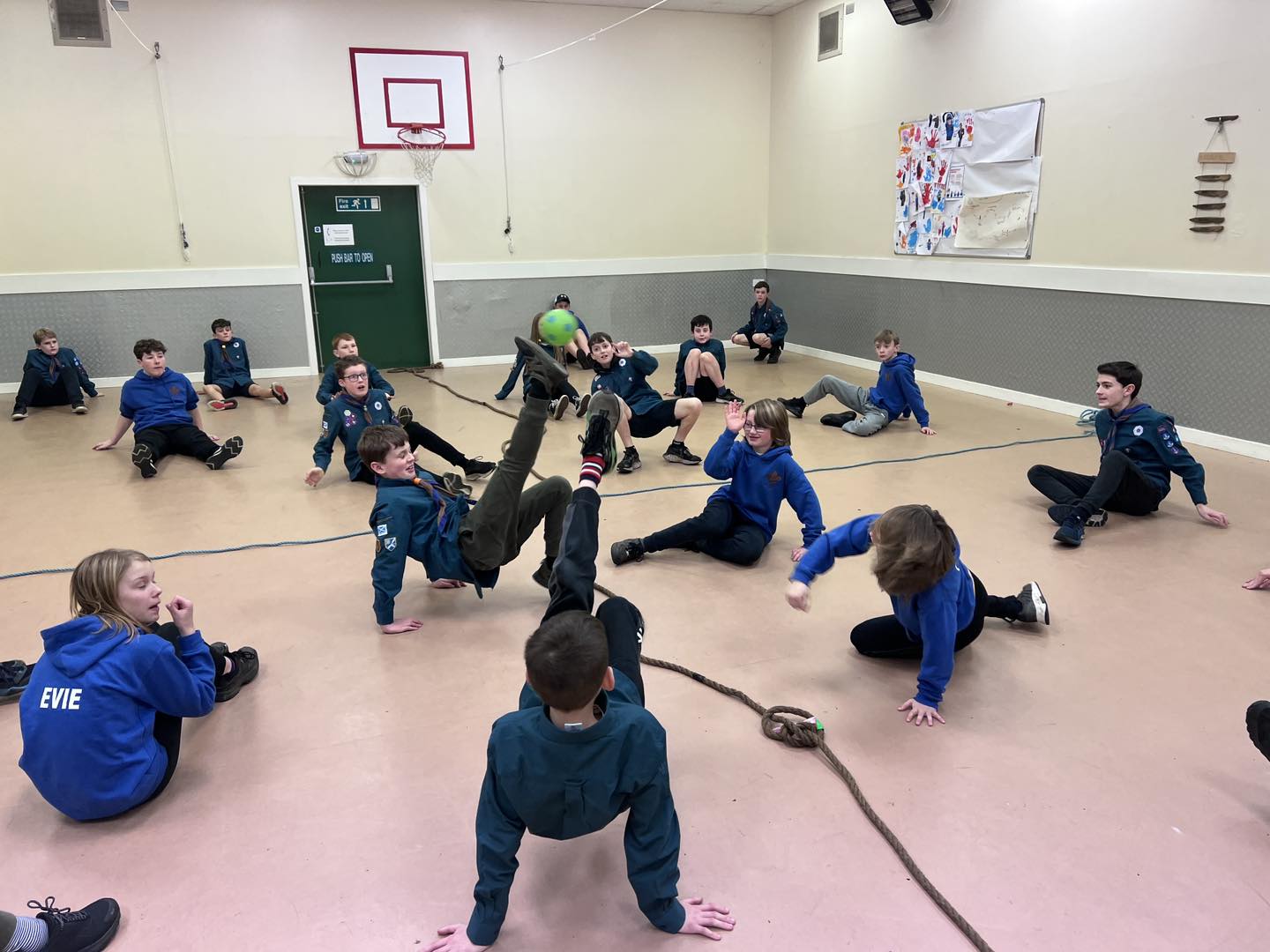
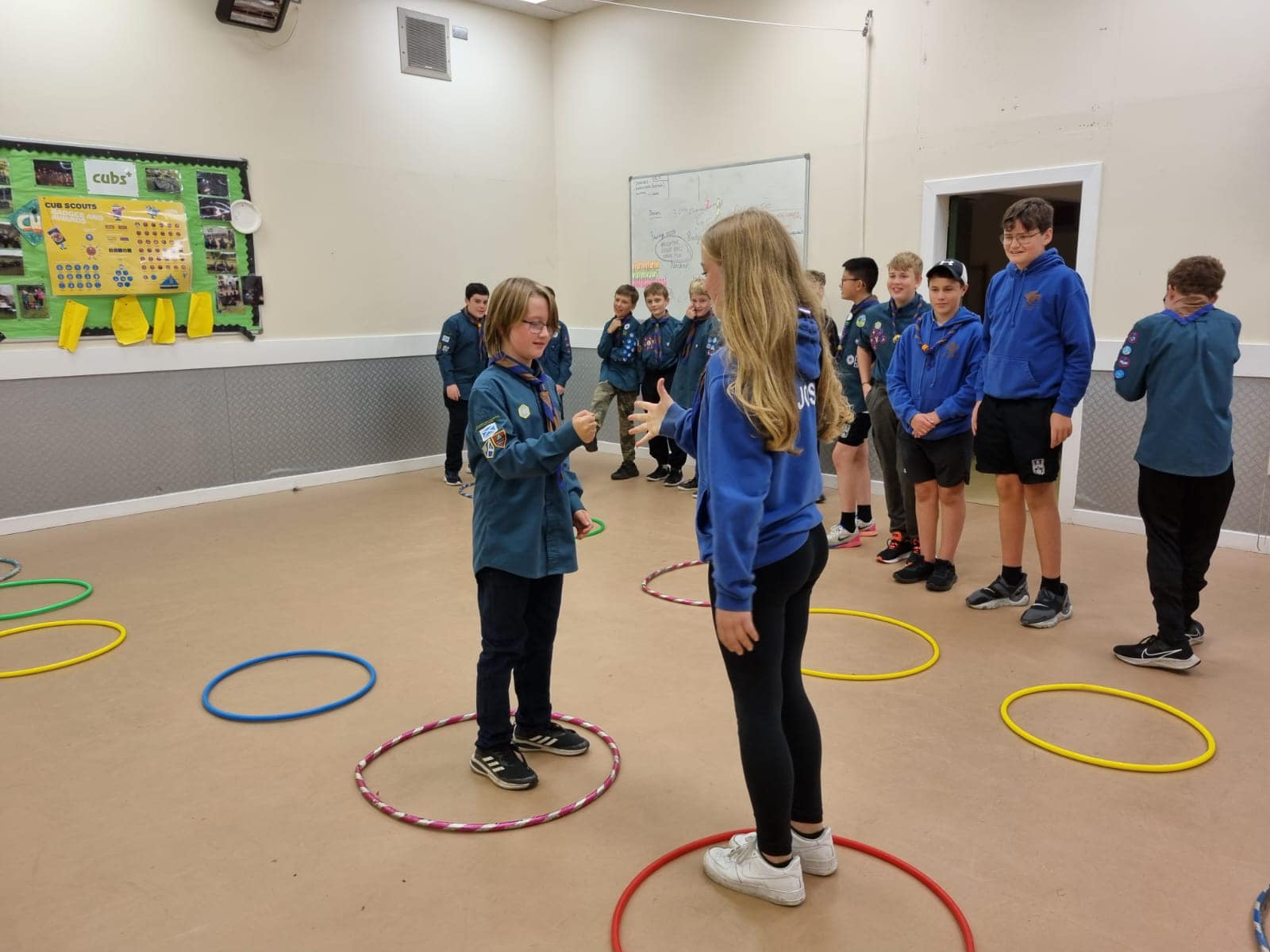
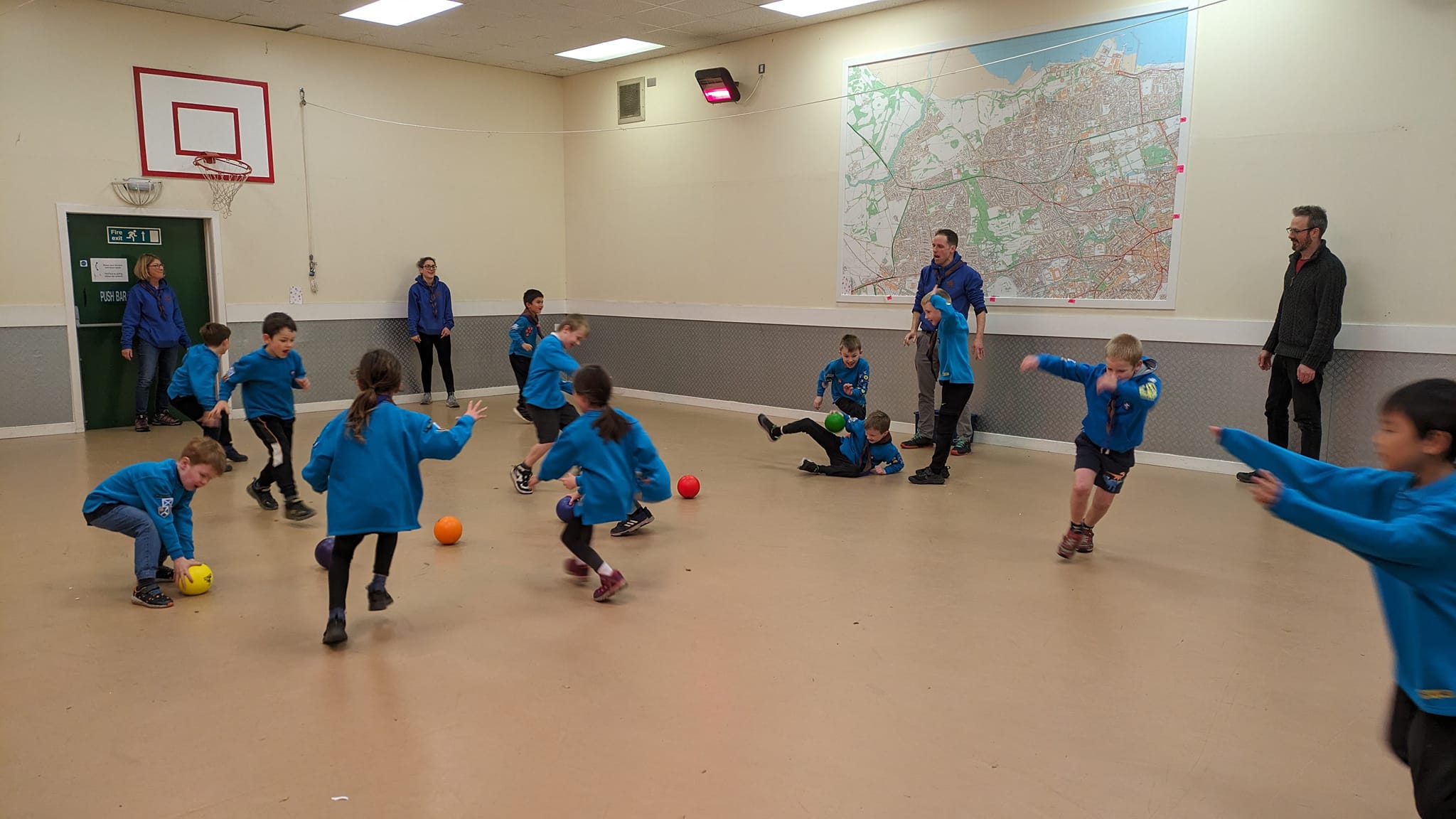
Games have always played an important role in Scouting as it was written by Baden Powell that: the training of Boy Scouts was done mainly by means of games, practices and competitions such as interest them, and at the same time bring into use the attributes of manliness and good citizenship which we desire to inculcate into them... Through these games, apart from their health - and joy giving properties, we can instill the sense of fair play, discipline, and self-control - in a word, good sportsmanship, among our future men.
Many of the original Scouting games were designed to develop certain skills such as
Observation and tracking (tracking, noticing small changes)
Kim’s Game tested observation and memory whereby the Scoutmaster placed a selection of everyday objects on a table and covered them with a cloth. The items were revealed for one minute, then covered again. Each Scout then whispered to the Scoutmaster what they could remember. The Scout who recalled the most items won.)
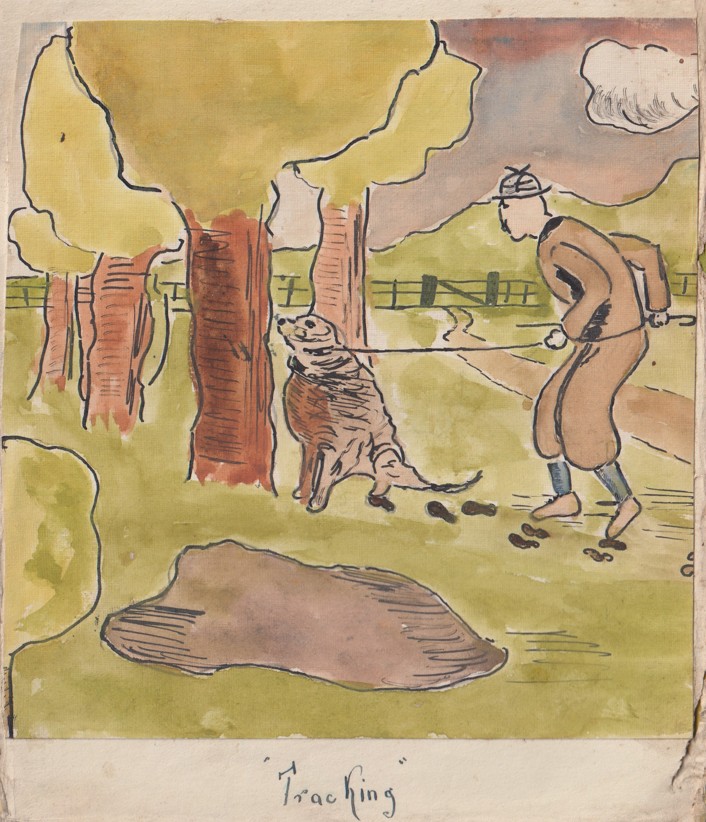
Sometimes in the summer we would have the game outside, so you would go out in your patrols around the area following clues and things they did. I remember doing tracking games where they would have signs with sticks, like arrows to follow, and the circles of stones with the stone in the middle meaning “going home” at the end.
Andrew Marshall (Cub, Scout & Venture Scout 1970s/80s)
Outdoor Survival Skills (fire-lighting races, shelter building challenges)
Teamwork and leadership (patrol competitions, problem-solving tasks)
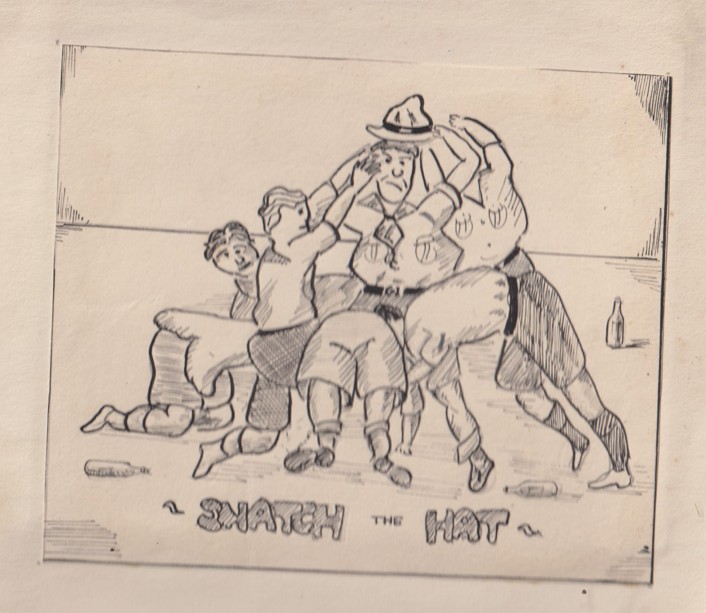
Fitness and endurance (wide game, relay challenges)
Self-reliance and initiative (message-running, map reading, pioneering projects)
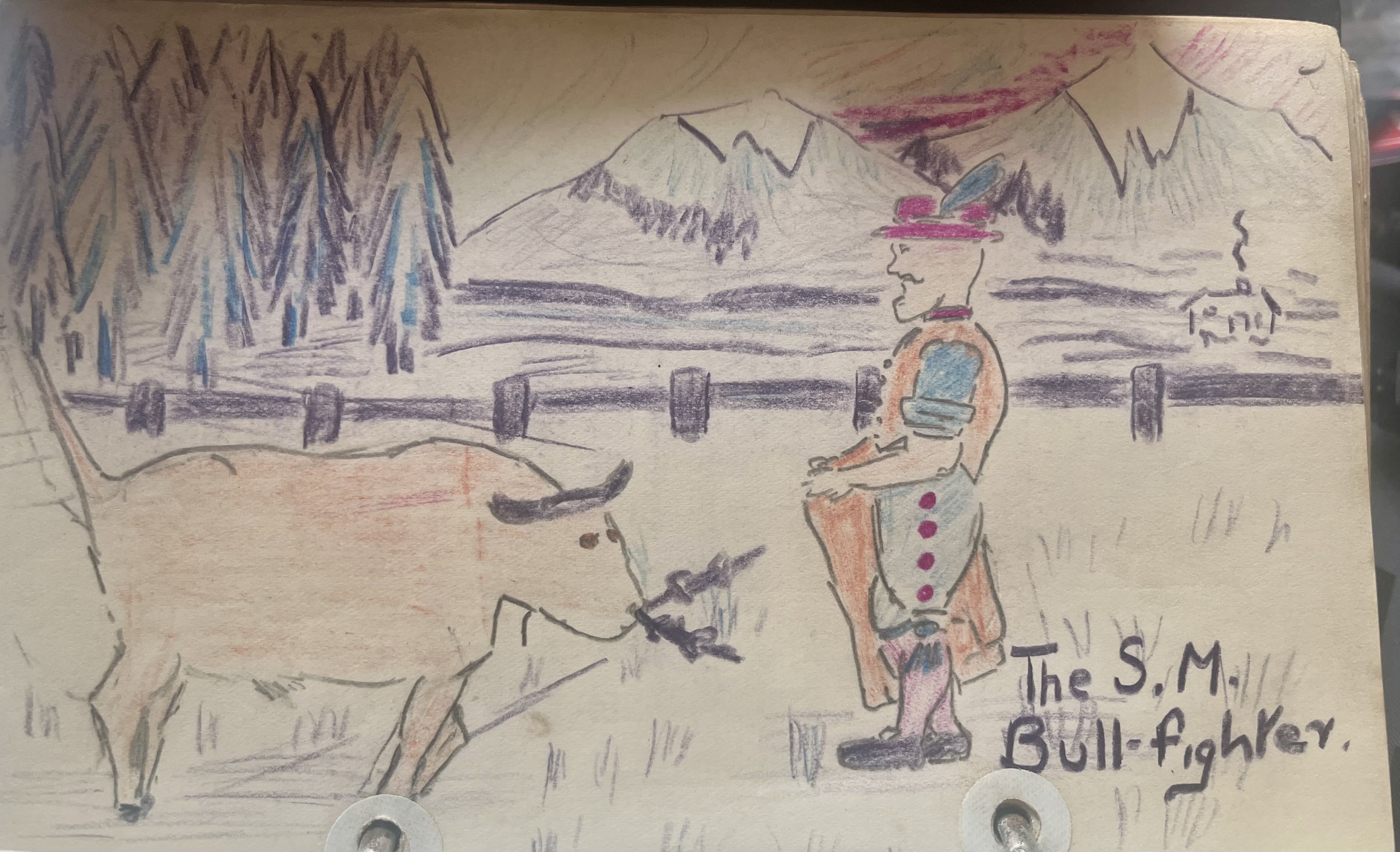
The Bull Fight This game needs twelve players and makes an exciting spectacle. The roles are: one bull, one matador, four Cholos, and six scarf-bearers.
In Part I, the “bull” enters an arena formed by Scouts, with several paper strips pinned to his back. The 'Cholos try to remove the strips without being touched; two touches and they are out. The scarf-bearers distract the bull by waving scarves and drawing him away. Only one strip may be taken at a time. In Part II, once all strips are removed or the Cholos eliminated, the bull is blindfolded and given a scarf around his neck. The matador then enters and must remove the scarf without being touched. If successful, the matador wins.
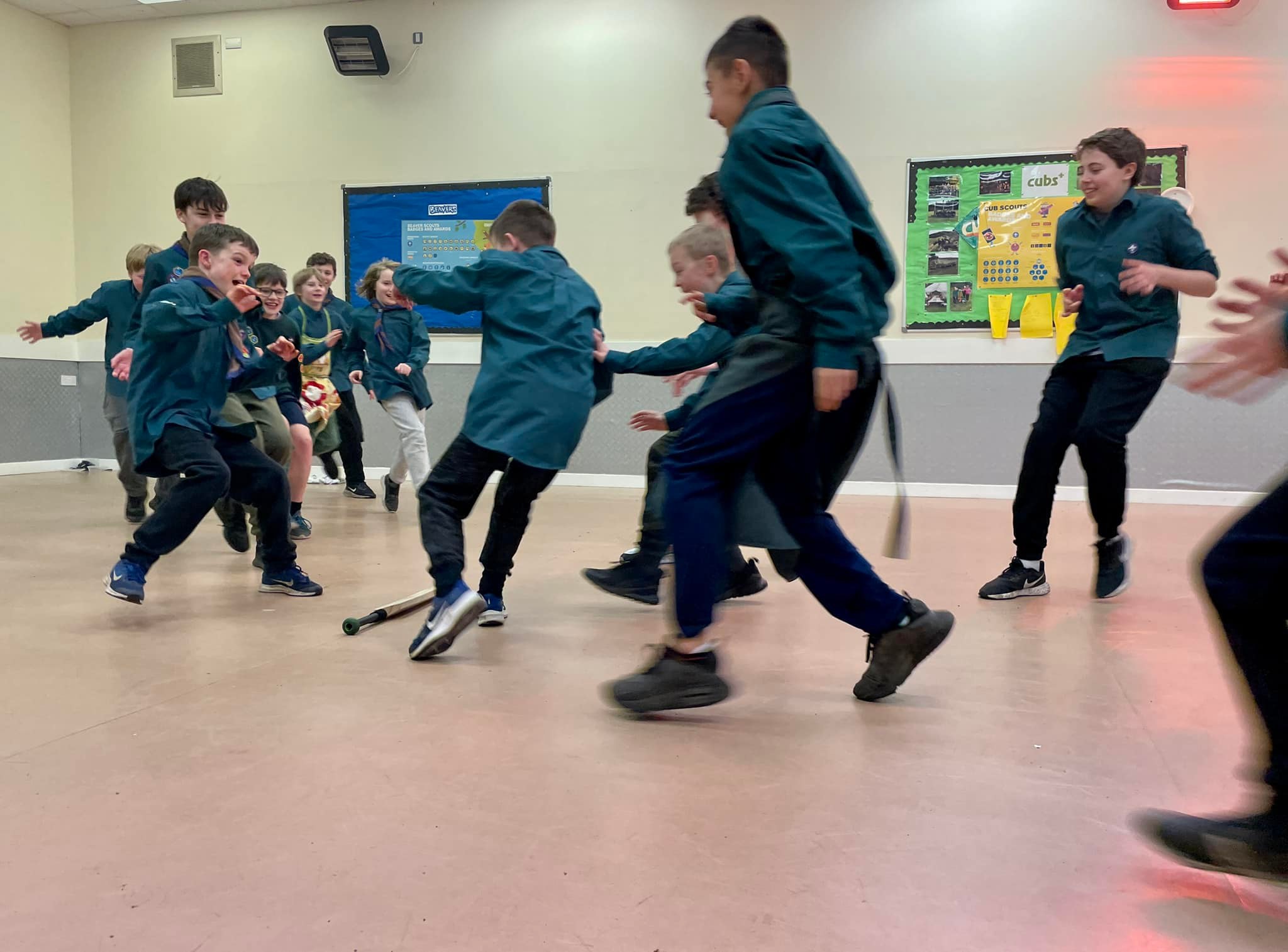
As Scouting spread and matured, the emphasis broadened and by the mid-20th century, games became less militaristic and more inclusive, focusing on teamwork and fun. The Scouts of the 30th Midlothian (now Craigalmond) where particularly competitive and games, which were extremely popular were often quite rough and tumble.
We’d have games, you know, like riotous things such as British Bulldogs and all that sort of stuff we used to do... I’d mentioned British Bulldogs because that was the type of thing that people played all the time, and that could be a bit lively. There was a game that involved throwing beanbags about – I don’t know what it was called now, but you know, of course, beanbags hurt, and they got thrown quite hard, so the kids liked to sling these things with as much effort as possible.
Ian Davidson (Cub & Scout 1960s)
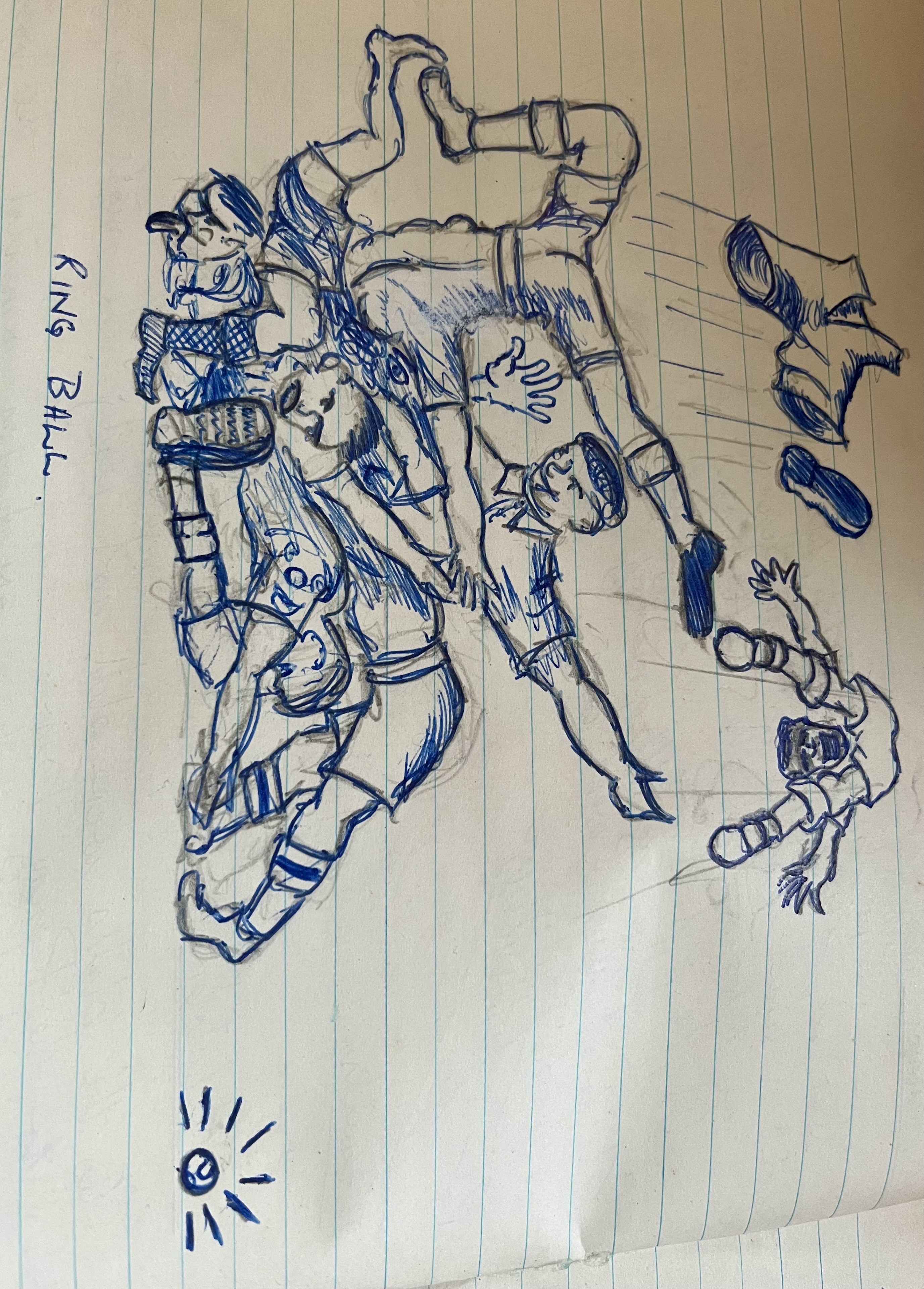
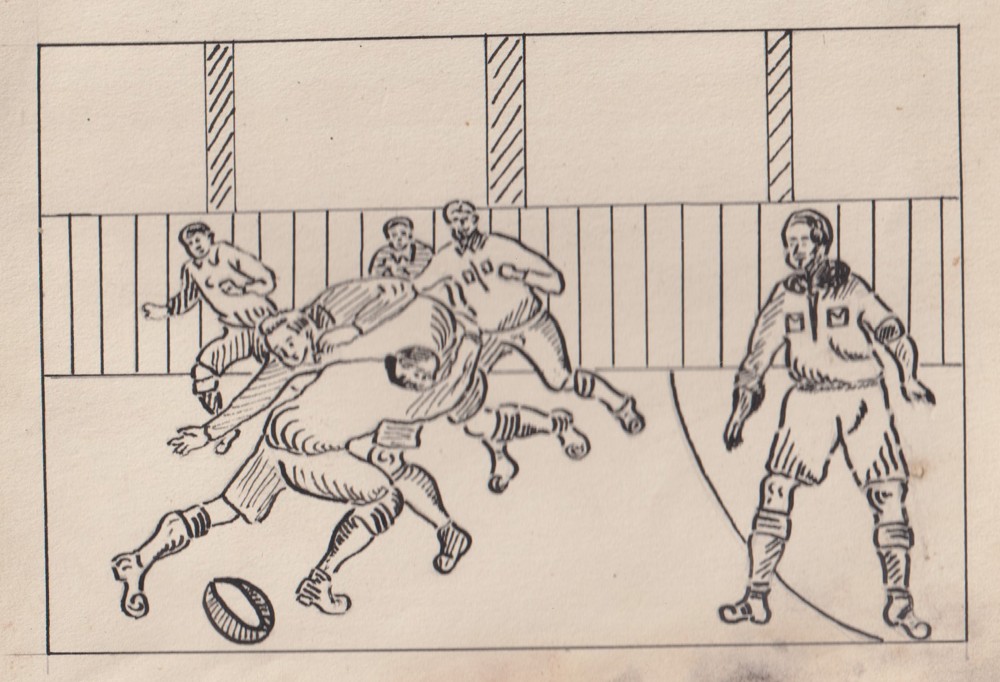
They liked very rugby-based games – Murderball, etc., and there were a few injuries over the period. Far less supervision and no risk assessments and things like that at the time.
Ian Dewar (Scout Leader 1980s, 1990s & early 2000s)
When I was younger, people would always be wanting things like British Bulldogs at the end of the night, and which would involve running down into each other, straight down the hall, and it was quite physical.
Robert Armour (Scout 1970s & Leader 1980s)
So, I think everyone’s favourite, especially the bigger you got, was Murderball and was it the same as British Bulldogs? Similar sort of thing. Very rough. So British Bulldogs was great. Everyone’s at one wall at one end of the hall, someone’s in the middle, you’re trying to person, grab them, lift them off their feet and then you’re in the middle with them and so on until there’s one person standing and that was good.
Andrew Pedan Cub & Scout 1980s
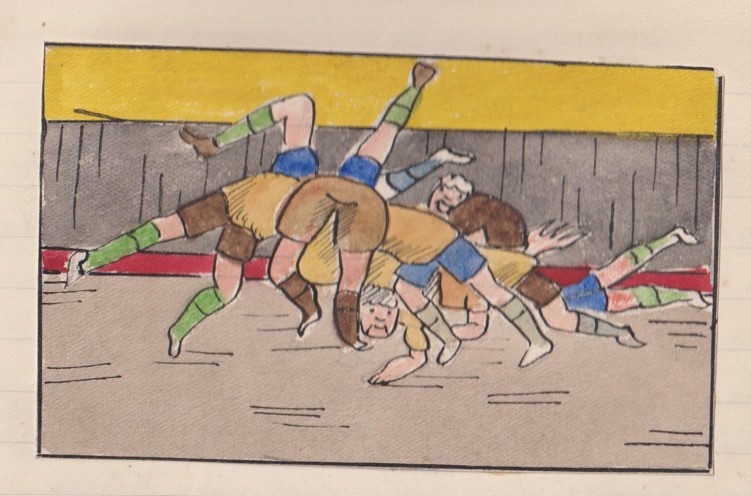
British Bulldogs - In the game one or more players (the “bulldogs”) stand in the middle of a field or playground. The rest of the children ran from one side of the play area to the other. The bulldogs tried to stop or “catch” the runners (sometimes by force) and, once caught, runners joined the bulldogs to help catch others. The last player free typically won and either stayed bulldog or chose the next bulldog.
The playing of the game declined from the late 20th century onwards with many school and youth organisations banning it in playgrounds and halls due to its violent nature.
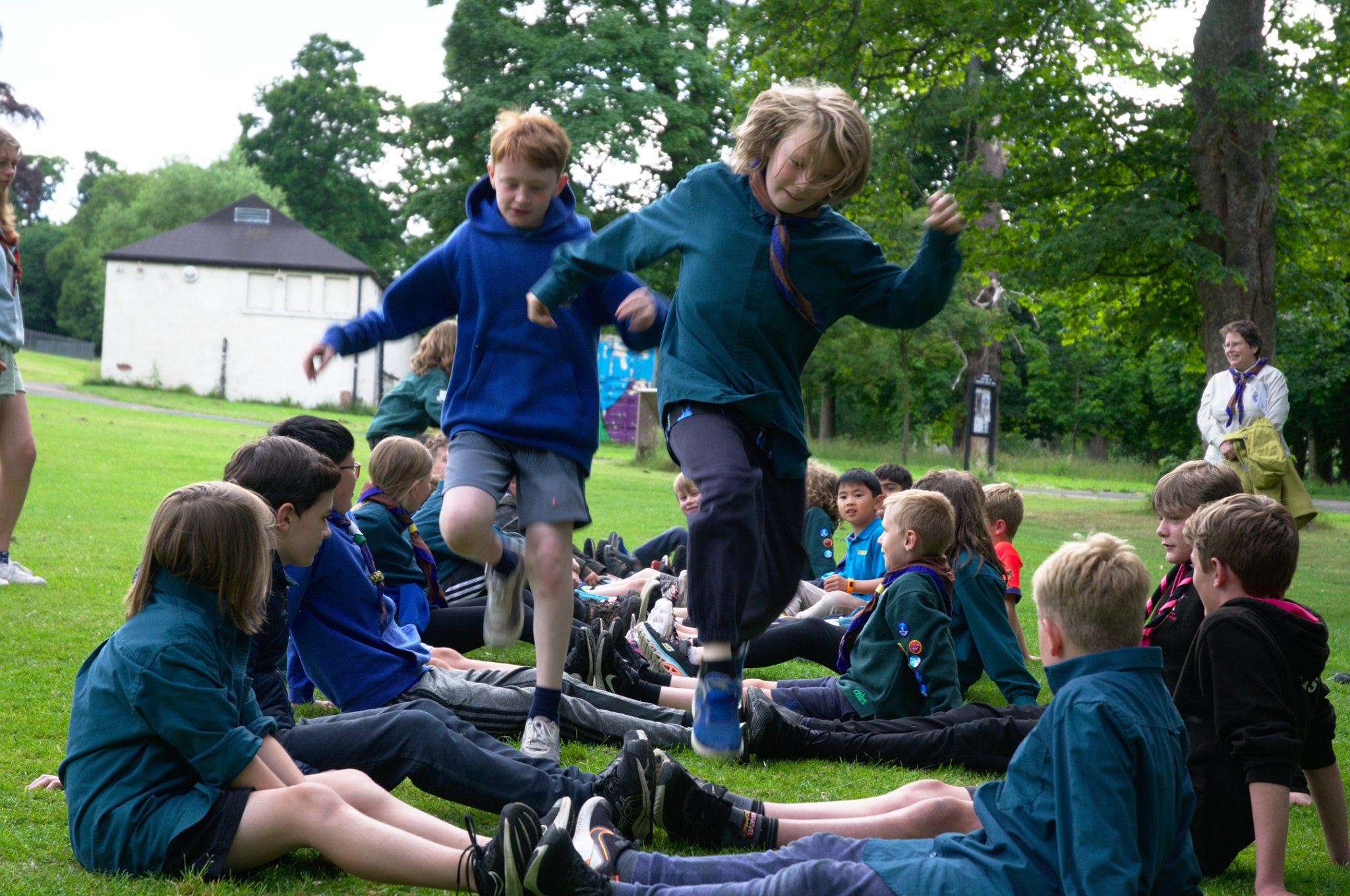
Other traditional games however remained popular including the playing of 'wide games' - which are large, outdoor team games designed to use a wide area such as woods, fields, parks, or an entire campsite. They are one of the most popular parts of Scout activities because they combine adventure, teamwork, and imagination.
When we went to the Monday Scouts, Peter Harden, who was the leader, had a great imagination and was very good at coming up with these games. They were called ‘wide games’ and he was very creative, I seem to remember. I remember one particular one where the scenario was around a spy who had stolen blueprints to somewhere, and you got clues, and you had to go up and collect these blueprints from somewhere…I remember that we ended up in some huge house at Barnton Avenue and we collected these, I seem to remember that they were just a photocopy of the plans for Concorde or something like that - I’m sure he worked for Parsons Peebles, so whether he got it through his work or whatever, this was part of the game. Some of them were quite creative. They were always good.
Andrew Marshall (Cub, Scout & Venture Scout 1970s/80s)
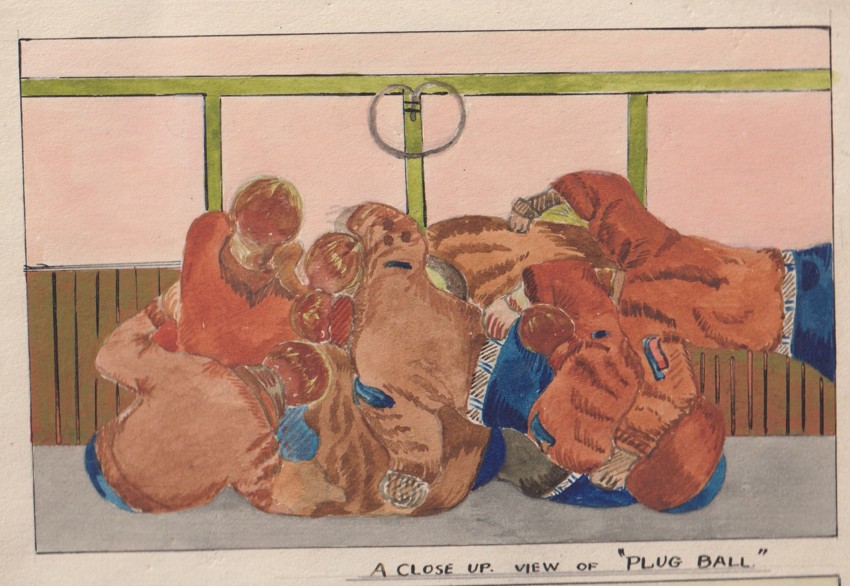
Every Friday night would be Troop night, of course. We had games and badge activities in the hall, and we would often go up to D’Mains Park for wide games and things, and we would be round and about the local area a lot.
David Briggs (Scout 1970s & Leader 1980s)
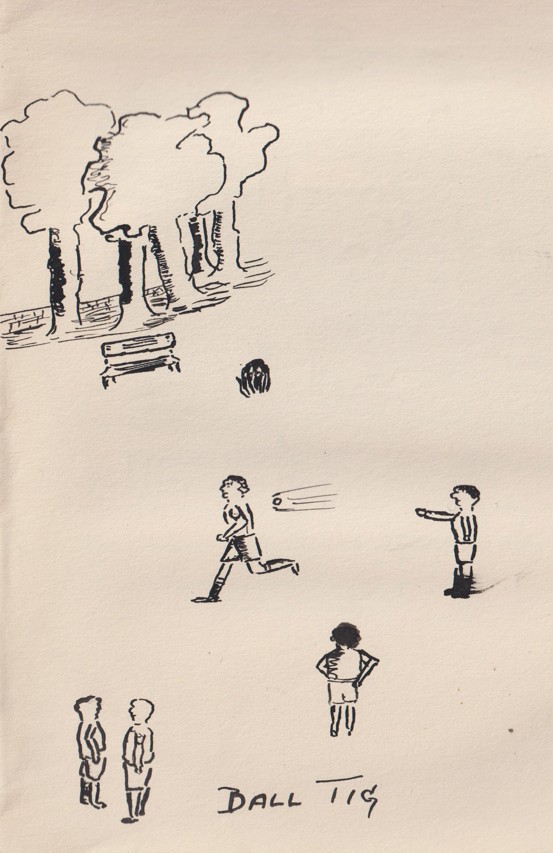
I think we probably we did do Scouting skill games and any kind of blindfold type games and stuff, and they love wide games many times up to the park – playing wide games and even in the middle of winter. Anything to get out the hall for a change, because with a large number of young people in there, you know, it's not always the best, now it's never going to change, you know, in a small hall.
Ian Dewar (Scout Leader 1980s, 1990s & early 2000s)
Patrick Harvey (Scout & Explorer Leader with the Pink Panthers 2010s/2020s) explains the rules of one of his favourite games - Kick the Can
There is a can brackets ball in a marked space, a conned marked space, and to begin the game, you choose, say there are 20 people playing, you pick three or four people to be the defenders of said can. To initiate the game, you kick the can slash ball, and with all one’s strength, and then everyone disperses into the forest or the field or whatever, and the name of the game is not to be caught and not to be put in the jail which is adjacent to the can storage area. The sort of four people who have been selected to chase everyone around and try and find you as you stood buried in whatever mess was in D’Mains Park, hide in a bush or something stupid. And if one of the hunters was to say, “1…2…3 I see Patrick over there”. You would have to run with all your life to try and beat the person who spotted you back to the can area, and if you made it back in time, you wouldn't be put in jail, but if you did, you went in jail. And to release people from the jail, one anonymous person from the sort of being the being hunted category would have to run back to the ball base and kick the ball out. And then one of the hunters would have to come back whilst everyone was released from jail and dispersed. But it was so much fun.
Sports were also a feature of Scouting programmes over the years with activities ranging from informal football matches between patrols to more organised inter-troop events, including rugby games, swimming galas, and athletics at district and county level, as well as camp-based sports days and competitions.
We played football…five-a-side football and all. We had a football team as well, where we played outside, used to play in the park, and we had a rugby sevens team I remember played in a summer competition where the Gyle Retail Park is now, that used to be a big, huge…about 24 rugby football pitches and rugby pitches.
Peter Flanagan (Cub and Scout in the 1950s/1960s)
We played a rugby tournament over at Inverleith, we played against other troops in the area. We came second in that. Our rugby acumen was low; instead of tackling, we would slide, but we did it better than other clubs and got to the final, where we got beaten by a club who knew what they were doing, with a really good player, but I thought it was good we got to the final and came runners-up. It was all various groups, volunteers of who wanted to play in that tournament. We also had a football tournament at the old Dunfermline College. We did OK, but a lot of Cub groups came together and did that. You’re representing your 30th, you want to win, you’re all together competing. Put pride in your local.
Gavin Hunter (Cubs 1980s)
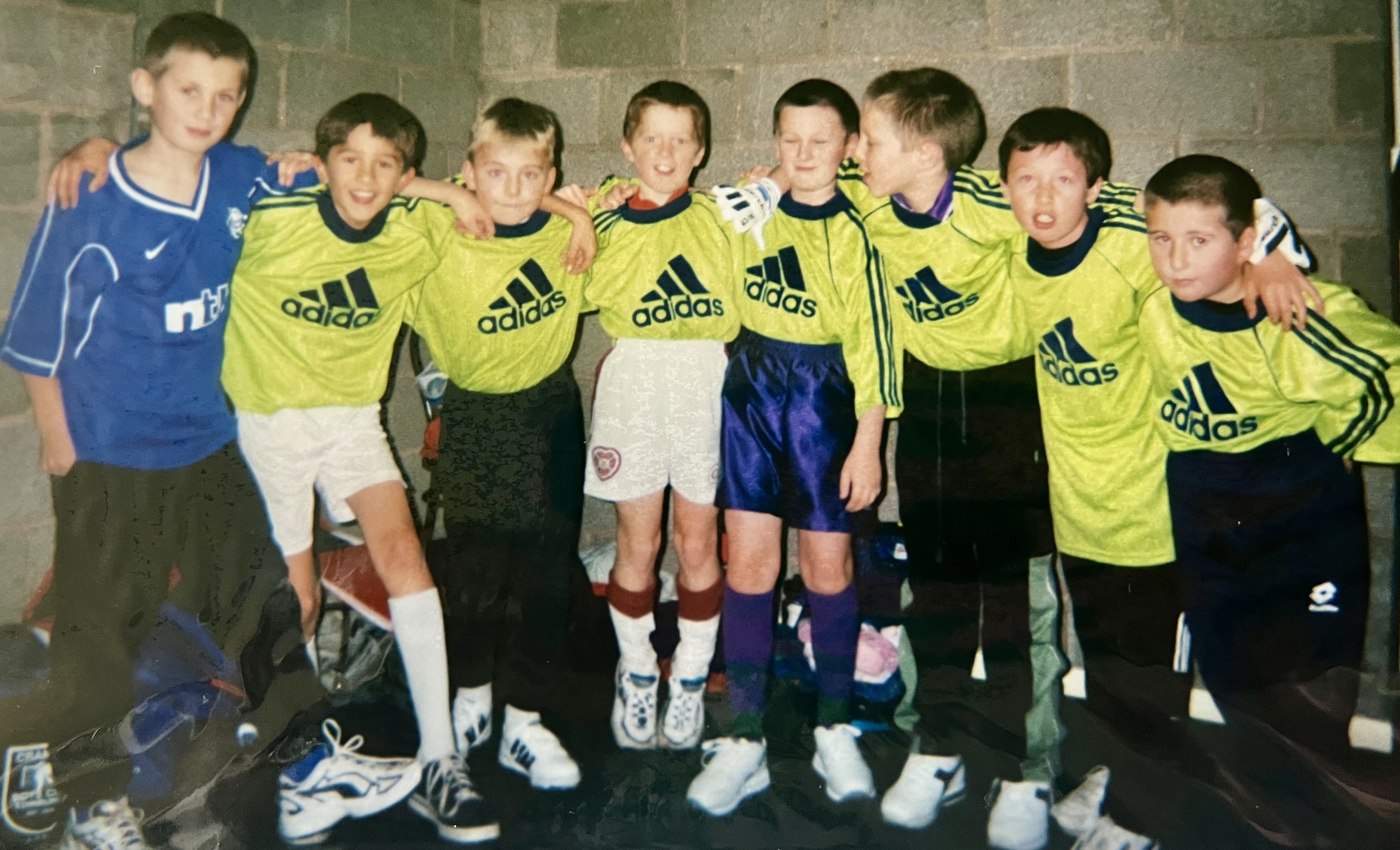
In earlier decades, and right up until the 1990s, Scouts were expected to change into suitable kit for games, and many of the older boys would stay on after meetings to enjoy a football match -often a fiercely competitive affair.
At the end of the evening was probably the most fun for the leaders, because the older boys would stay on and there would be very competitive games of football between the leaders and the older boys and then the leaders would disappear to the Old Inn after that. So, it was terrific fun.
David Briggs (Scout 1970s & Leader 1980s)
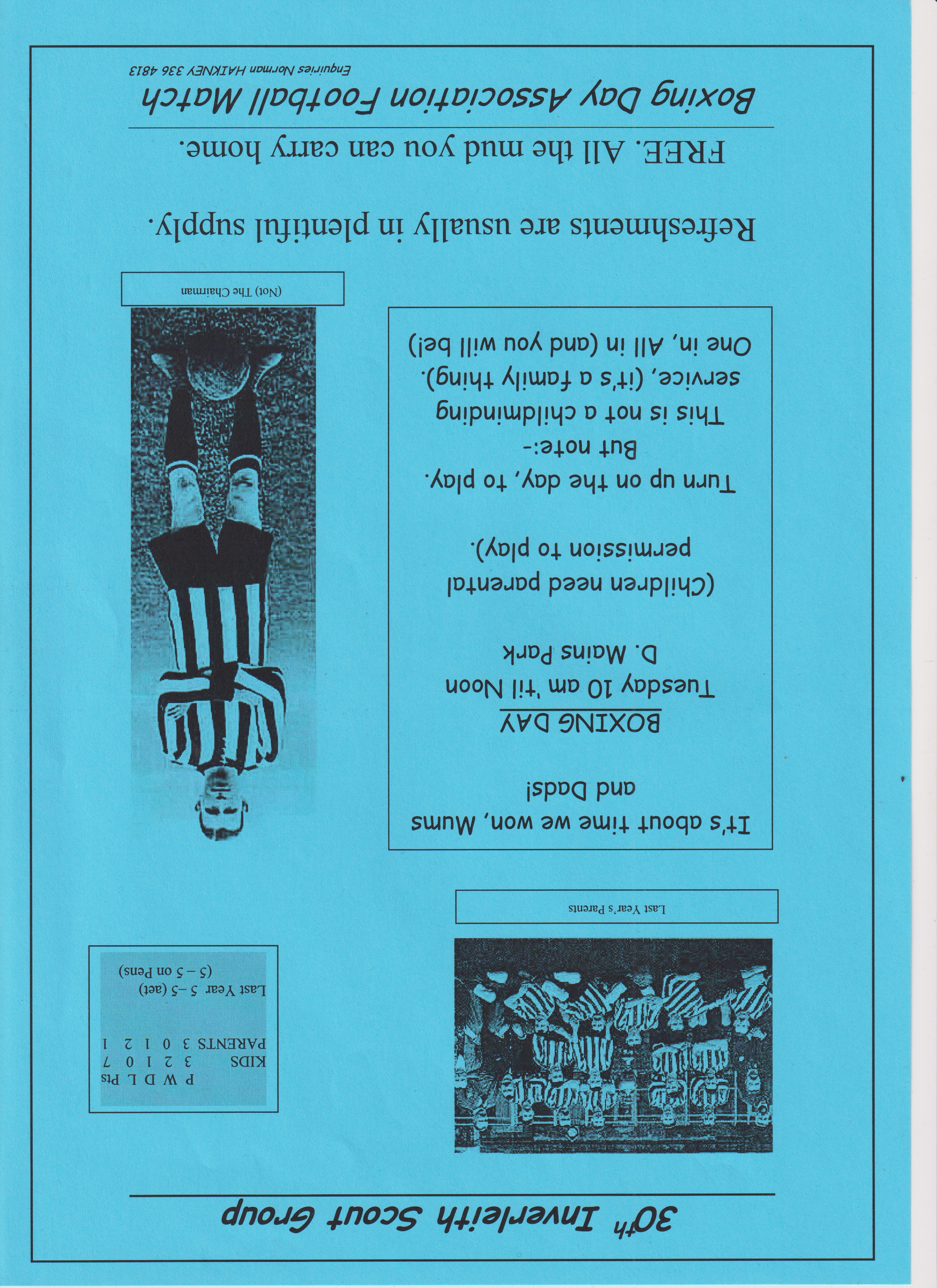
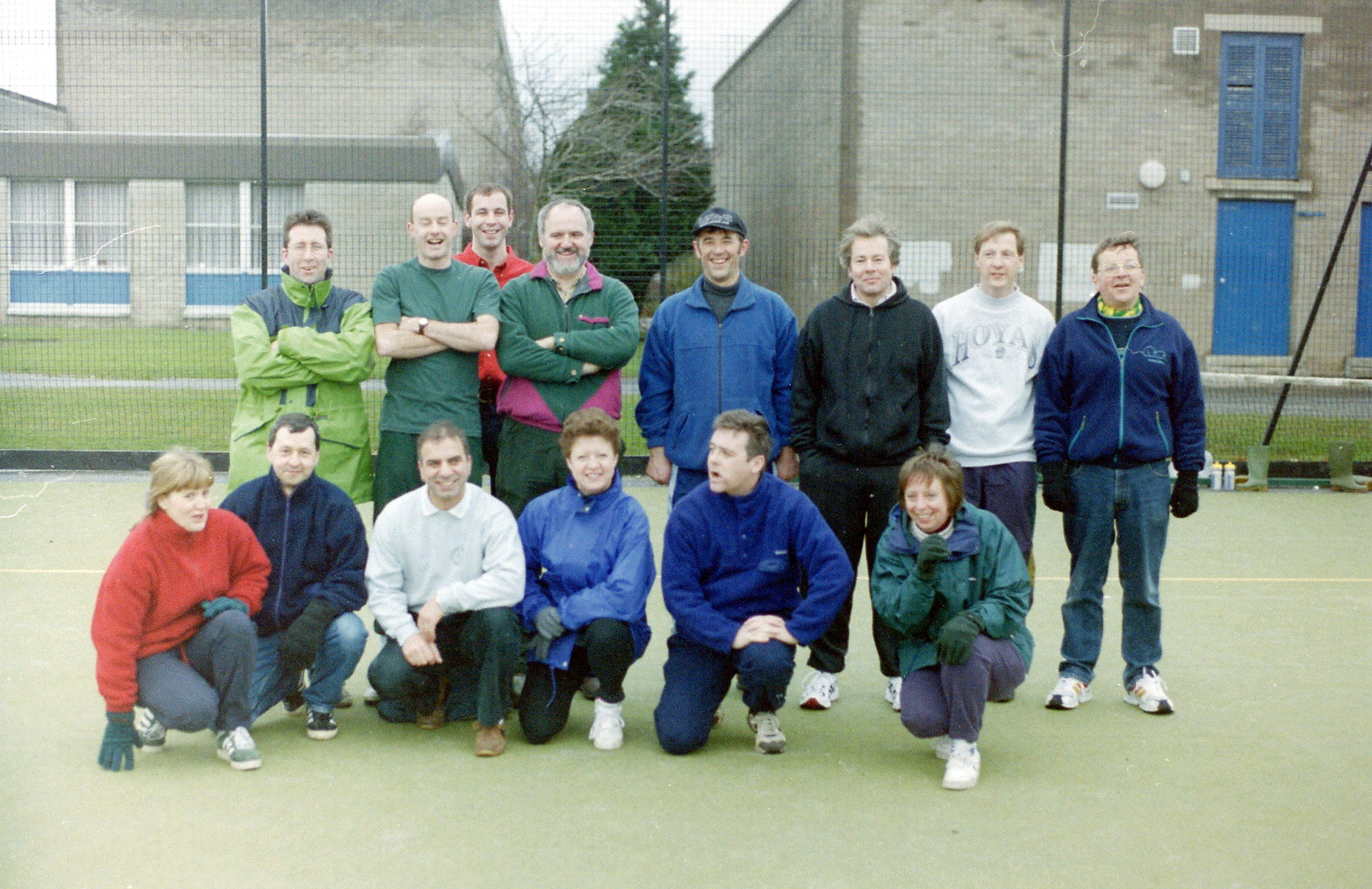
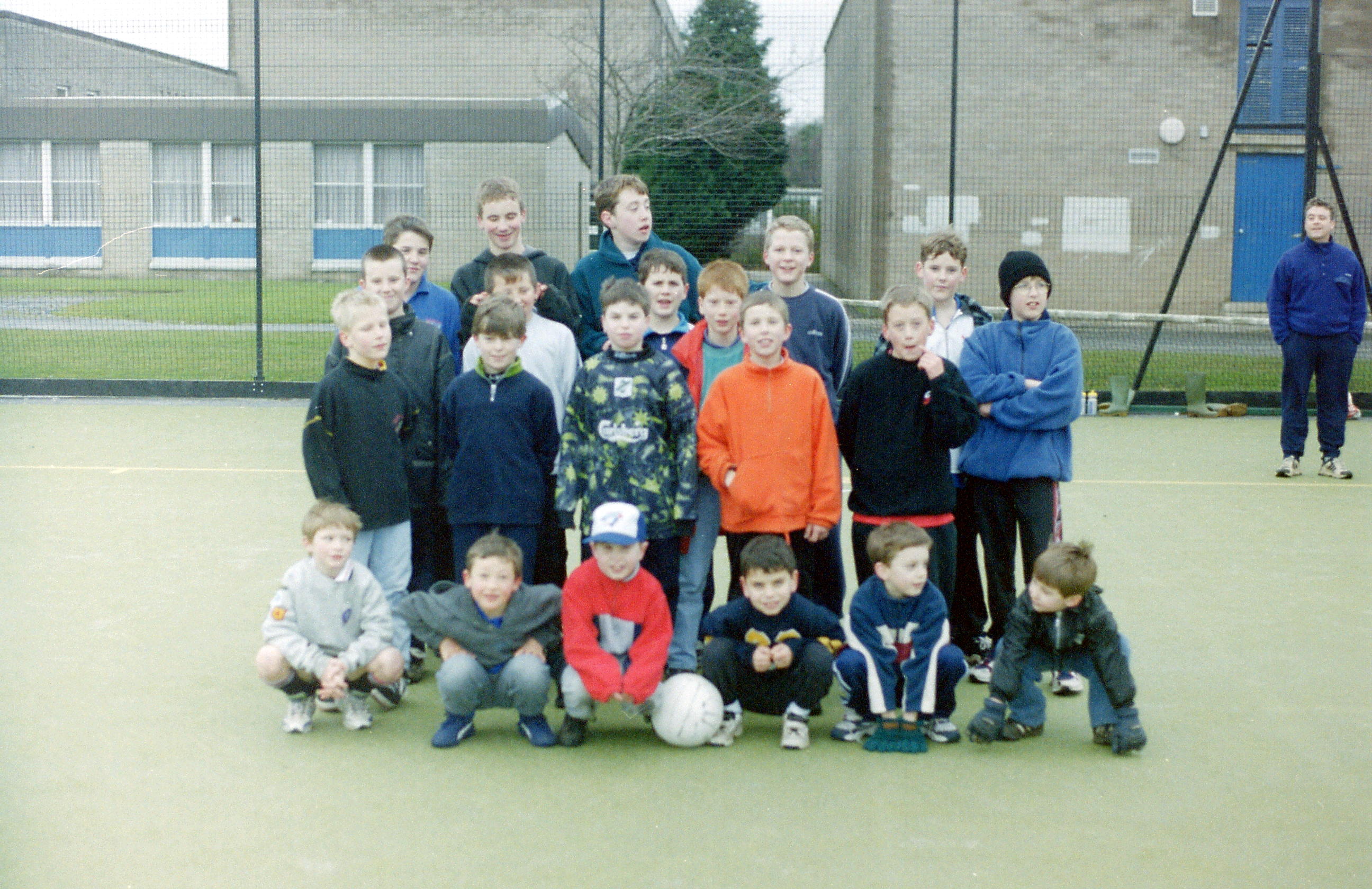
In 1998, the Group began a new tradition with the Boxing Day Football Match in Davidson’s Mains Park, pitting Scouts against parents in what quickly became a much-anticipated annual event.
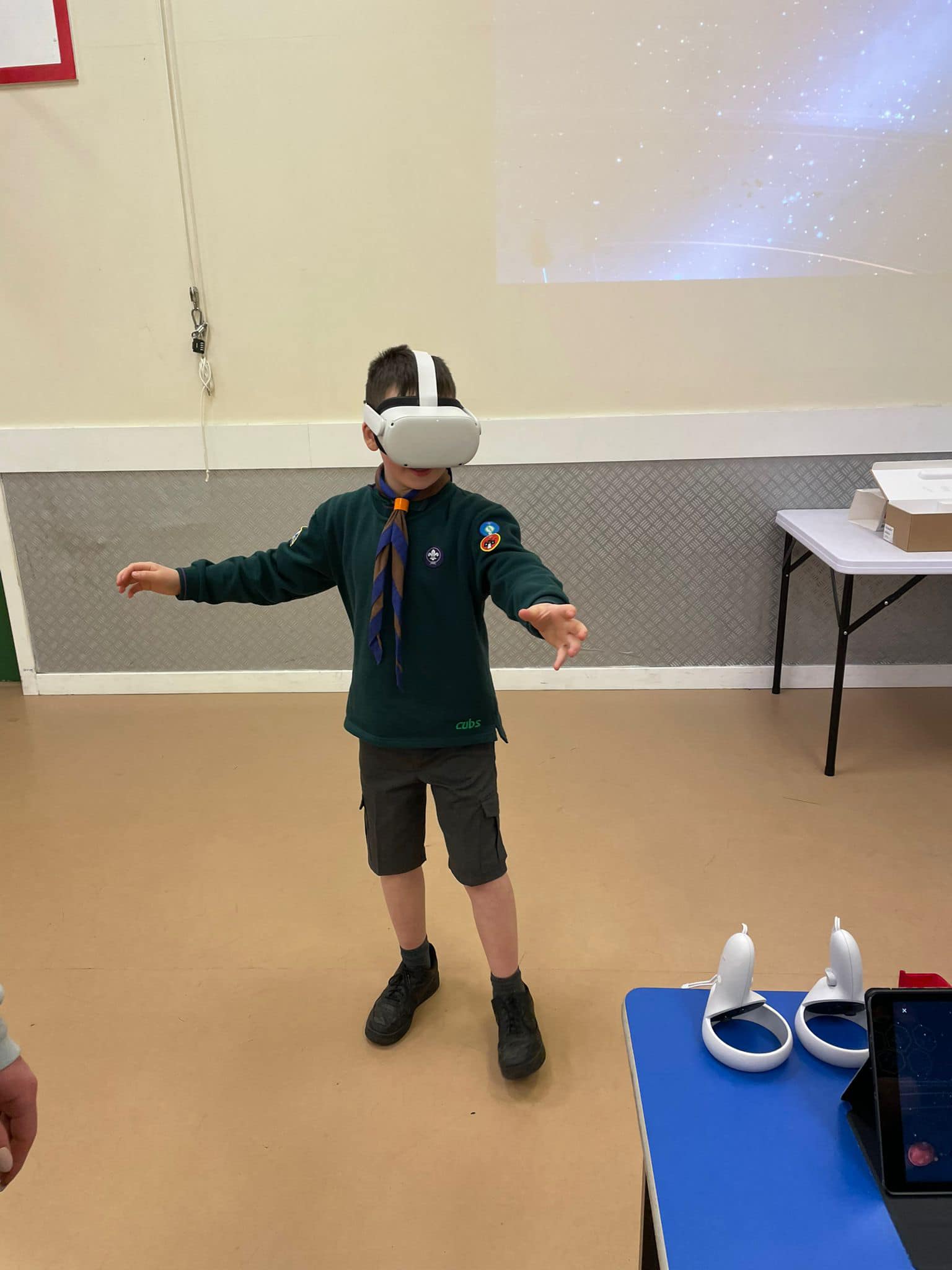
Scout games continued to change with cultural and educational trends. Safety standards increased, competitive elements were balanced with cooperation, and games began to reflect modern interests such as problem-solving challenges, environmental awareness, STEM-based activities, and role-play scenarios and although traditional outdoor games remained, they included games based on films, fantasy worlds, or real-world issues.
“As a Young Leader and a Leader, I always loved to do different games, so I hate running the same game every week. I like different games because we have such a great bank of games that we can run and deliver.
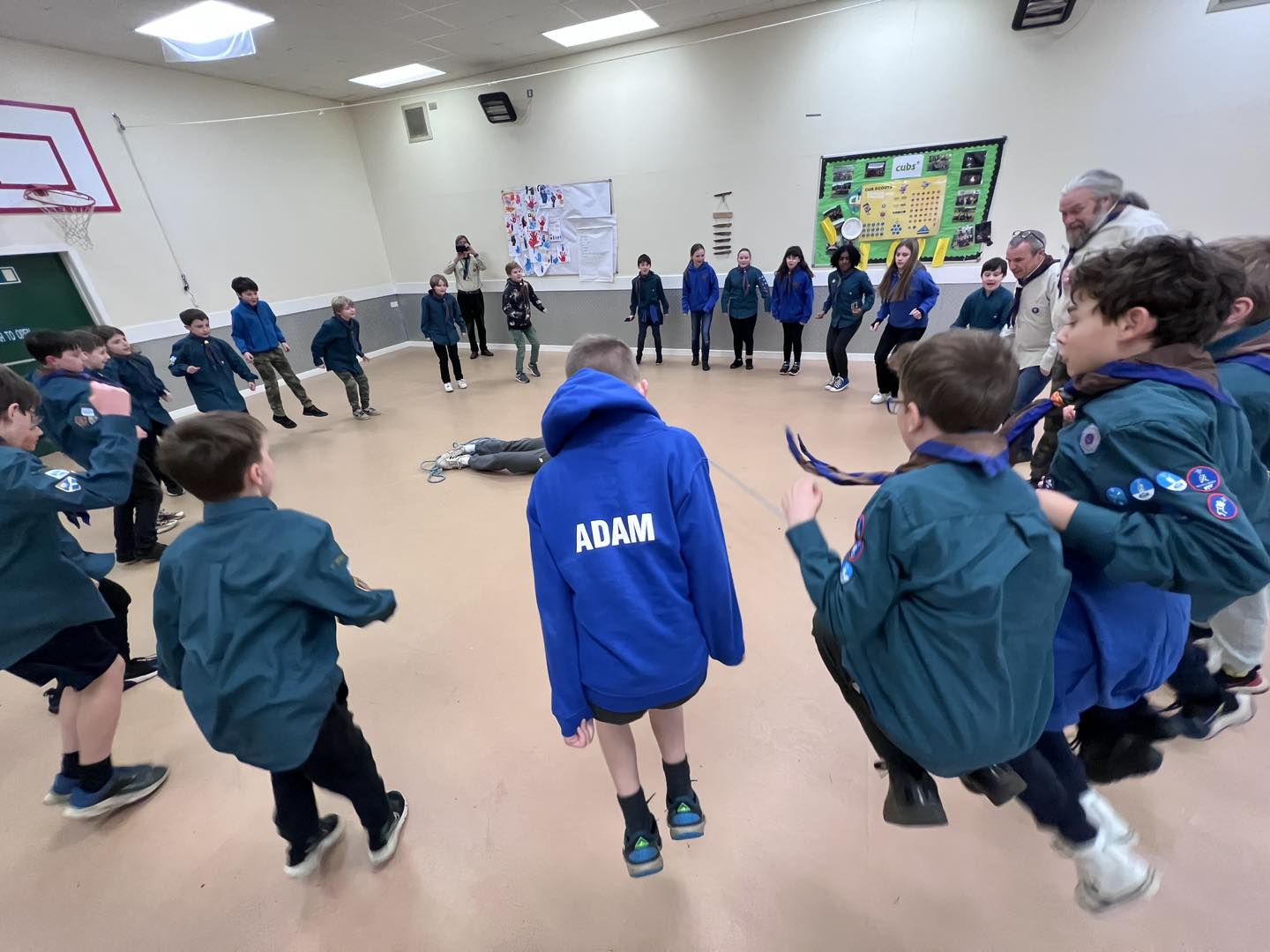
When I was a Scout, I always loved the Poison Game, which is when the chair was in the middle and you had to pull people in and drag them into the chair – that was probably my favourite one. As a Cub, we played Bomb the Bottle and stuff like that, which you always got the excitement, the stress of throwing this beanbag at the bottle, and you’re gonna miss because my coordination is never that good, so they were always fun."
Fraser Dunmore (Beaver, Cub, Scout, Young Leader, & Leader 2010s/2020s)